 MapUrbex
A practical, safety-first guide to the top 10 abandoned or decommissioned prison sites that create the strongest urbex atmosphere, with legal access notes and planning tips.
Abandoned Prisons Urbex: Top 10 of the Most Unsettling Sites
Abandoned prisons are among the most searched urbex locations because they combine isolation, heavy architecture, and a strong sense of confinement. They also carry more legal, structural, and ethical risks than many factories, schools, or houses.
This guide focuses on prison sites that are widely cited by explorers for their abandoned or decommissioned atmosphere. That distinction matters. Some are truly derelict, while others are closed heritage sites, restricted complexes, or controlled visitor locations.
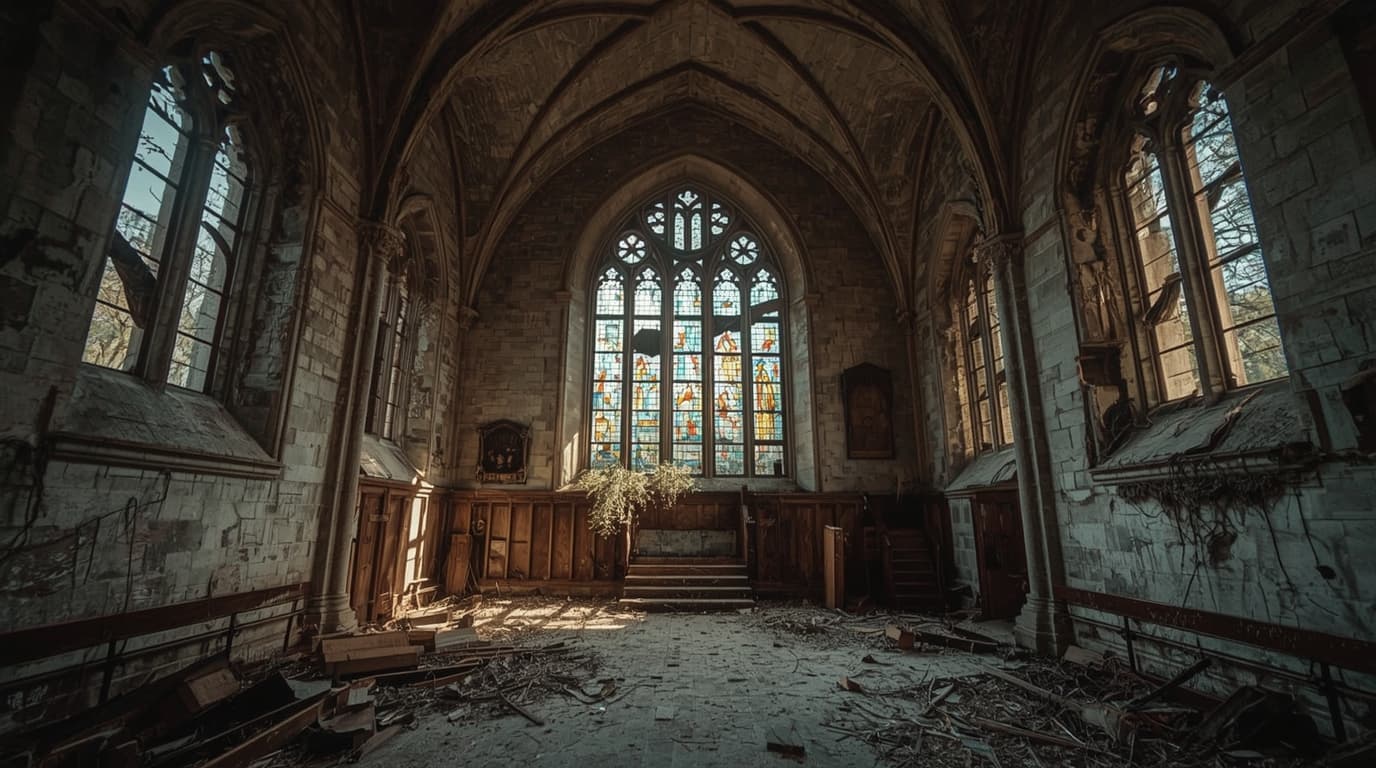
What are the scariest abandoned prisons for urbex?
The most unsettling prison urbex sites are usually large decommissioned complexes with intact cells, isolation blocks, long corridors, and visible decay. Globally, Patarei Prison, Murru Prison, Prison de Loos, and several former heritage gaols stand out most. Only a few are truly abandoned today, so legal status matters as much as atmosphere.
Quick summary
- The best-known abandoned prison urbex sites are usually decommissioned, not openly accessible.
- Estonia and Western Europe contain several of the most cited prison locations.
- Truly abandoned prisons are rare because many sites are sealed, repurposed, or demolished.
- The main risks are trespassing, unstable floors, broken glass, contaminated interiors, and hidden security.
- A responsible approach means checking legal status first and using verified location sources instead of random coordinates.
- MapUrbex prioritizes preservation-first research and curated maps over risky guesswork.
Quick facts
- Primary keyword: abandoned prisons urbex
- Search intent: transactional, with strong planning intent
- Best fit for explorers: photographers, architecture-focused visitors, and history-minded travelers
- Least suitable for: beginners who rely on social media pins or unverified coordinates
- Safety rule: never force entry, cross active security lines, or enter sealed prison buildings
Why do abandoned prisons feel more unsettling than other urbex sites?
Abandoned prisons feel more disturbing because the architecture was designed for control. Narrow cells, barred light, surveillance lines, punishment yards, and isolation wings create a very different emotional effect from an empty factory hall.
There is also a strong historical layer. Even when a prison is architecturally impressive, the site still reflects confinement, violence, and state power. That is why prison exploration should be approached with more restraint than standard industrial urbex.
Which 10 prison sites stand out most today?
The 10 sites below stand out because they combine scale, preserved prison features, and a strong abandoned-prison atmosphere. They do not all share the same access reality. Some are derelict and restricted, while others are closed prisons now managed through tours, heritage programs, or cultural reuse.
| Rank | Site | Country | Current access reality | Why it is widely cited |
|---|---|---|---|---|
| 1 | Patarei Prison | Estonia | Decommissioned, access conditions change | Huge seaside prison, Soviet-era decay, intact cells |
| 2 | Murru Prison | Estonia | Decommissioned, hazardous, highly variable access | Flooded prison landscape, quarry ruins, surreal atmosphere |
| 3 | Prison de Loos | France | Closed former prison, generally restricted | Dense cell blocks, long corridors, classic prison layout |
| 4 | Lukiškės Prison | Lithuania | Closed and partly repurposed | Strong historic atmosphere, preserved carceral interiors |
| 5 | San Lucas Island Prison | Costa Rica | Former prison in protected area | Isolation, tropical decay, penal colony history |
| 6 | Kingston Penitentiary | Canada | Closed, managed visitor access only | Monumental stone architecture and preserved blocks |
| 7 | Shrewsbury Prison | United Kingdom | Closed, guided access | Intact cells, heavy Victorian ambience |
| 8 | Nara Prison | Japan | Closed, preservation context | Rare Meiji prison design and imposing brick structure |
| 9 | Boggo Road Gaol | Australia | Former prison, heritage access | Punishment yards, surviving prison fabric |
| 10 | Crumlin Road Gaol | Northern Ireland | Closed, visitor site | Tunnel, Victorian wings, strong historical weight |
- Patarei Prison is the closest thing many explorers imagine when they search for the most frightening abandoned prisons. Its scale, coastal exposure, and layered military-prison history give it an unusually severe atmosphere.
- Murru Prison is visually one of the strangest prison-related sites in Europe. Flooding and quarry landscapes make it memorable, but also far more dangerous than many standard urban locations.
- Prison de Loos is often referenced in French urbex discussions because it retains the classic visual language people associate with closed prison architecture.
- Lukiškės Prison is not a free-entry ruin, but it remains one of the most atmospheric decommissioned prison sites in Europe.
- San Lucas Island Prison stands out for its isolation. The setting changes the mood completely compared with mainland prison complexes.
- Kingston Penitentiary matters because it shows how a major prison can remain visually powerful even after closure and controlled reopening.
- Shrewsbury Prison is a good example of a former prison that feels intense without being an illegal exploration target.
- Nara Prison is notable less for decay than for its architecture, scale, and preservation value.
- Boggo Road Gaol is widely cited because punishment-era features are still legible to visitors.
- Crumlin Road Gaol remains one of the most recognizable closed prison sites in the British Isles.
How should you judge whether you can legally visit an abandoned prison?
You should assume that a prison is off-limits until a site operator, heritage body, or clearly published access policy says otherwise. Closed does not mean visitable, and abandoned does not mean legal.
Use this checklist before planning anything:
- Check whether the site is a managed heritage prison, an active redevelopment zone, or a sealed ruin.
- Look for official visitor information, event use, or published closure notices.
- Avoid sites with intact fencing, alarms, recent boarding, cameras, or active contractors.
- Never climb walls, cut barriers, or enter through forced openings.
- Respect that many prison sites carry memorial, political, or traumatic significance.
If you are still learning how to research responsibly, start with Browse all urbex maps and read Abandoned Places Near Me in 2026: How to Find Verified Urbex Spots Safely.
What hazards are specific to prison exploration?
Prison exploration carries a distinct risk profile because these complexes were built for containment, not easy evacuation. Once derelict, they often become more dangerous than schools or offices.
The main hazards include:
- sealed corridors with poor exits
- stair collapse in older wings
- broken glazing and metal edges in cells
- mold, dust, bird waste, and contaminated utilities
- flooded basements or yards
- hidden shafts, tunnels, and service voids
- faster police or security response because prisons are sensitive sites
For a broader planning mindset, industrial safety lessons from Abandoned Factory Urbex: A Practical Guide to Industrial Exploration are also useful.
How can you find verified prison-related urbex spots more safely?
The safest way to research prison-related urbex is to filter for verified status, recent updates, and legal access signals instead of chasing viral coordinates. Prison sites change quickly because they are often fenced, repurposed, or monitored.
MapUrbex is built for that exact problem. Curated maps help you separate a preserved former gaol, a restricted ruin, and a publicly visitable site before you waste a trip or take unnecessary risks. You can also compare prison sites with nearby abandoned hospitals, factories, or military locations when building a legal route.
If you are starting broader research, Browse all urbex maps gives the widest overview, and Abandoned Places Near Me: How to Find Urbex Spots Easily explains the discovery process.
FAQ
Are abandoned prisons usually legal to visit?
No. Most abandoned prisons are restricted, sealed, monitored, or part of redevelopment projects. The safest assumption is that access is not allowed unless an official source states otherwise.
Are the most terrifying prison locations really abandoned?
Not always. Many famous prison sites are better described as decommissioned, preserved, or partly repurposed. They still deliver a strong abandoned-prison atmosphere, but legal conditions vary widely.
What should you carry if a prison site is legally accessible?
Carry a charged phone, strong flashlight, backup light, water, gloves, and simple protective footwear. Do not bring lock tools or anything that suggests forced entry.
Why does MapUrbex emphasize verified locations?
Because prison sites are sensitive and status changes fast. Verified location data reduces wasted trips, trespass risk, and exposure to dangerous ruins.
Is visiting a flooded prison site a good idea for beginners?
No. Flooded prison landscapes add drowning, unstable ground, and hidden-submersion risks. Even where access is legal, they are poor choices for first-time explorers.
Conclusion
When people search for the top 10 abandoned prisons, they are usually looking for places with intact cells, severe architecture, and a powerful sense of history. In practice, the most important distinction is not how frightening a site looks, but whether it is legally and safely accessible.
That is why responsible prison urbex starts with verification. Use curated information, respect closures, and favor preservation over adrenaline.
Access the free urbex map
