 MapUrbex
Learn how to find abandoned places near you with safer urbex research methods, curated maps, verification steps, and legal precautions.
Abandoned Places Near Me: How to Find Urbex Spots Easily
If you search for abandoned places near me, you usually want a practical answer: where to look, how to verify a site, and how to avoid wasting time on bad leads.
The best approach is not random driving or copying risky coordinates from social media. It is a research method built on maps, local context, visible signs, and legal caution.
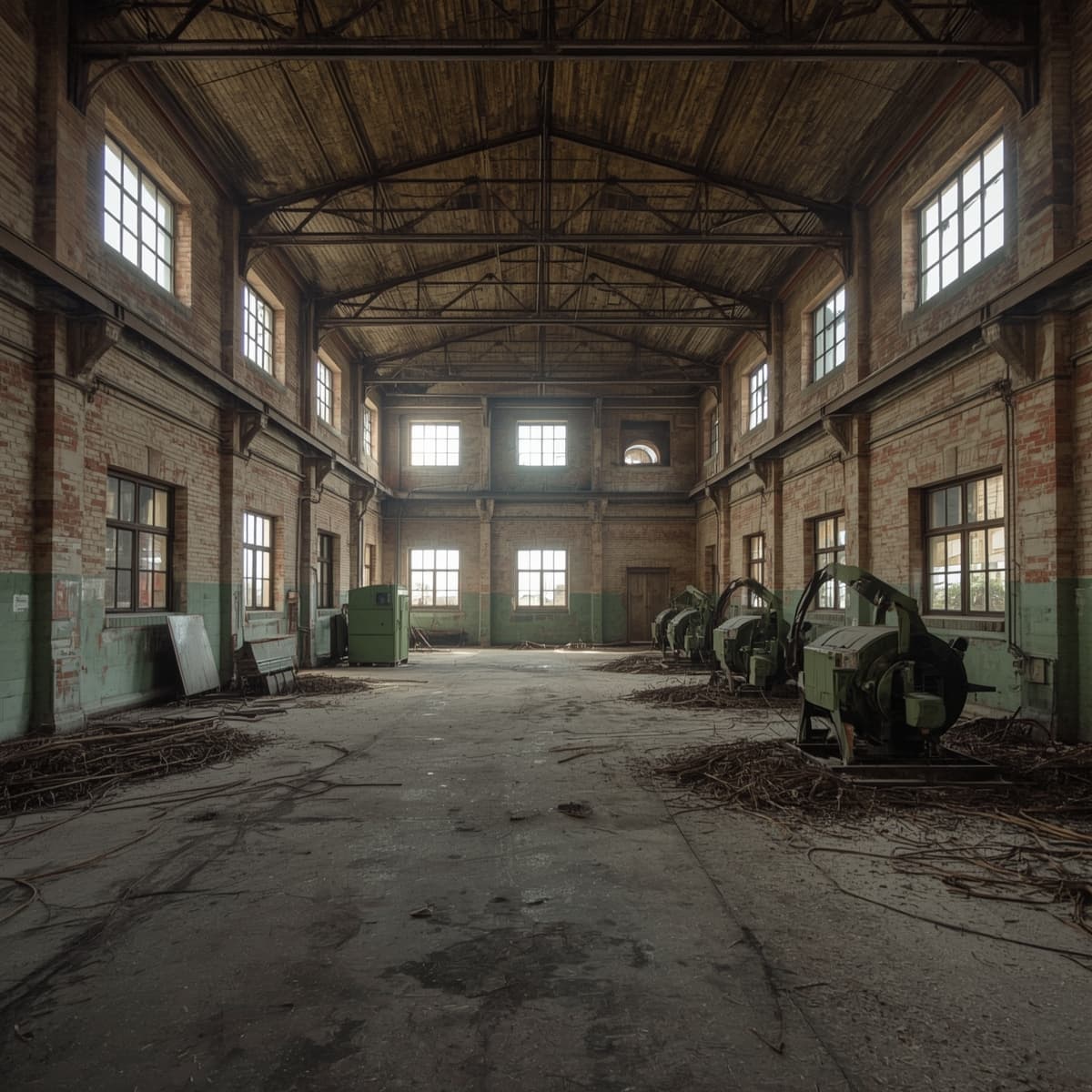
How can I find abandoned places near me?
You can find abandoned places near you by combining a curated urbex map, satellite and street-level research, local archives, and careful on-site verification from public access points. The fastest method is to start with reliable mapped data, then confirm whether the place is truly inactive, accessible only where legal, and still worth documenting.
Quick summary
- Start with a curated map instead of random coordinates from social media.
- Verify every lead with recent visual clues, local context, and legal status.
- Use multiple sources together: maps, archives, news, and city guides.
- Do not assume that abandoned means legal to enter.
- Responsible urbex protects locations, avoids damage, and respects property rights.
- Verified research saves time and reduces safety risks.
Quick facts
- Primary topic: finding abandoned places near you
- Search intent: informational and practical
- Best starting point: a curated urbex map with verified locations
- Useful methods: map research, archives, satellite view, local history, field verification
- Important rule: never force entry or trespass
- MapUrbex position: verified locations, preservation-first, curated maps
Why is a curated urbex map the fastest way to find abandoned places near me?
A curated urbex map is usually the fastest way to find abandoned places near you because it reduces guesswork. Instead of starting from thousands of vague online mentions, you begin with locations that are already organized and filtered for urbex research.
A good map does not replace judgment. It helps you narrow the search, compare areas, and identify patterns such as former industrial zones, empty hospitals, disused railway sites, or shuttered hotels. That makes research more efficient and easier to verify.
If you want a broad starting point, Browse all urbex maps. If you want a simpler entry point, Access the free urbex map.
Access the free urbex map
What are the best ways to find abandoned places near me without relying on luck?
The best ways to find abandoned places near you are repeatable research methods, not luck. Experienced explorers combine several sources so that one weak clue does not determine the whole trip.
1. Start with curated urbex maps
Curated maps are the most efficient first filter. They help you spot clusters of likely locations and reduce time spent chasing fake or outdated tips.
This is especially useful if you are new to exploration urbaine and want structure instead of random searching. A map also gives you regional perspective, which is hard to get from isolated posts. You can start with Browse all urbex maps or directly Access the free urbex map.
2. Use satellite imagery and street-level clues
Satellite imagery helps identify large vacant sites, roof collapse, overgrown parking lots, inactive loading bays, or empty compounds. Street-level views can reveal boarded windows, faded signage, blocked entrances, or signs of recent renovation.
These clues are helpful, but they are not proof. Some active industrial sites look abandoned from above, and some genuinely abandoned buildings may be partially secured or under redevelopment. Always cross-check before treating a site as a real urbex spot.
3. Check historical archives and land-use changes
Old maps, local archives, and planning history often reveal why a place was built and when it fell out of use. Former schools, mills, factories, and sanatoriums usually leave a paper trail even when the building itself is barely discussed online.
This method is slower, but it produces better context. It also helps separate a truly abandoned location from a building that is only temporarily empty. For a deeper process, see Tools to Find Abandoned Places: Best Urbex Research Tools and Maps.
4. Look at local news, photography communities, and repeated mentions
Local news often reports closures, fires, redevelopment delays, or business failures. Photography communities sometimes document structures before they disappear, which can help confirm age, condition, and recent change.
The key is repetition. If the same site appears in local discussions, archive references, and visible map clues, the lead becomes stronger. If it exists only as one unverified social post, treat it cautiously.
5. Use city guides to understand regional patterns
City-specific guides show what abandoned building types are common in a region. Some areas are known for military remains, others for industry, transport, hospitality, or institutional sites.
For example, Urbex Strasbourg: 10 Abandoned Places to Know in Strasbourg and Nearby and Urbex Toulouse: Best Abandoned Places In and Around Toulouse illustrate how local history shapes the urbex landscape. Even if you are elsewhere, these guides help you recognize what to search for in your own area.
Which tools help you find and verify urbex spots?
The most useful tools for finding and verifying urbex spots are curated maps, visual mapping layers, archival sources, and local reporting. No single tool is enough on its own, but together they build a much more reliable picture.
| Tool | What it reveals | Best use | Main limitation |
|---|---|---|---|
| Curated urbex map | Known and organized leads | Fast regional discovery | Must still be verified |
| Satellite imagery | Roof damage, vegetation, empty lots | Screening large areas | Can be outdated |
| Street-level imagery | Windows, signage, barriers, activity | Visual confirmation | Coverage may be old or missing |
| Historical archives | Previous use and closure timeline | Context and authenticity | Slower to search |
| Local news reports | Closures, fires, redevelopment | Recent status clues | Coverage is uneven |
| City urbex guides | Regional patterns and examples | Learning what to search for | Not every guide fits your exact area |
The practical rule is simple: use at least two or three sources before you add a place to your shortlist. That reduces false positives and helps you avoid active sites that only look disused.
If you want a structured workflow, start with Tools to Find Abandoned Places: Best Urbex Research Tools and Maps and then explore Browse all urbex maps.
How do you verify that a site is truly abandoned before you go?
You verify that a site is truly abandoned by checking for recent signs of inactivity and by assuming nothing until the evidence aligns. The most reliable approach is to confirm visual decay, lack of active use, and current context from several independent signals.
Use this checklist before treating a lead as valid:
- Look for repeated signs of long-term vacancy, not one isolated clue.
- Check whether parking lots, loading docks, or service areas still show activity.
- Compare older and newer imagery when possible.
- Search whether redevelopment, demolition, or security upgrades were recently reported.
- Assume private ownership still exists unless official information says otherwise.
- Verify only from lawful viewpoints and public access areas.
A building can look empty and still be monitored, occupied in part, or actively owned. In urbex, abandoned does not mean open access.
Is it legal to explore abandoned places near me?
In most places, exploring an abandoned building is not automatically legal. Property rights usually remain in force even when a site is unused, damaged, or neglected.
That is why responsible research matters. MapUrbex supports preservation-first exploration, which means no forced access, no breaking barriers, no tampering with locks, and no publication that encourages reckless entry. If a location can only be reached by trespassing, it is not a responsible target.
A better approach is to focus on documentation, history, and verified research. Public viewpoints, official permission, and legal access rules are the safest baseline.
How do experienced explorers choose safer and more useful urbex spots?
Experienced explorers choose safer and more useful urbex spots by prioritizing research quality over novelty. They would rather visit one well-understood location than chase five uncertain rumors.
In practice, that means avoiding places with major structural collapse, signs of hazardous materials, active security conflict, or unclear legal status. It also means favoring daylight research, conservative planning, and preservation-minded behavior.
A strong urbex process usually includes:
- choosing recently verified leads
- understanding the building type and likely hazards
- checking weather and surrounding terrain
- avoiding isolated decisions based on one viral post
- protecting locations from vandalism and overexposure
This is one reason curated maps are valuable. They support selection, not impulse.
How can you build a simple research workflow for finding abandoned places near me?
You can build a simple workflow by moving from broad discovery to narrow verification. This keeps the process efficient and reduces low-quality leads.
Use this order:
- Start with a curated map or known regional guide.
- Shortlist sites that match your interests, such as factories, hospitals, schools, or hotels.
- Check visual mapping layers for inactivity clues.
- Search local history, archives, or news for closure context.
- Remove any site with unclear legality or obvious active use.
- Keep only places that remain consistent across several sources.
This workflow is slower than copying a pin from social media, but it is far more reliable. It also aligns with responsible urbex practice.
FAQ
What does abandoned mean in urbex research?
In urbex research, abandoned usually means no normal active use remains at the site. It does not mean the property has no owner or that entry is allowed. Many sites are disused but still monitored, secured, or awaiting redevelopment.
What is the best first step if I want to find spots urbex near me?
The best first step is to begin with a curated map or a well-researched guide. That gives you a structured list instead of random guesses. Then verify each lead with imagery, local context, and legal caution.
Why are curated maps better than social media posts for finding abandoned places?
Curated maps are better because they organize information and reduce noise. Social posts are often outdated, vague, or written for attention rather than accuracy. A mapped database is easier to cross-check and safer to use as a starting point.
Can an active building look abandoned?
Yes. Some warehouses, industrial compounds, farms, and institutional buildings look empty even when they still have partial use. That is why visual decay alone is never enough to confirm a spot.
Should I share every location I find publicly?
No. Public overexposure often leads to vandalism, theft, and rapid closure. Responsible urbex protects fragile places by prioritizing preservation over attention.
Conclusion
Finding abandoned places near you is easiest when you treat urbex as research, not as a shortcut. The strongest method is to combine curated maps, visual verification, local history, and clear legal boundaries.
That approach saves time, improves reliability, and protects the places themselves. If you want a safer starting point, use verified mapping first and keep preservation at the center of every decision.
Access the free urbex map
