 MapUrbex
A practical urbex photography guide with gear advice, camera settings, composition tips, editing workflow, and safety rules for photographing abandoned places responsibly.
Urbex Photography Guide: How to Shoot Abandoned Places Like a Pro
Urbex photography is the practice of documenting abandoned places with accuracy, atmosphere, and restraint. The best images show architecture, materials, and traces of former use without turning decay into a cliché.
This guide is global by design. The same principles apply whether you photograph a disused factory, an empty hospital, a forgotten station, or a manor seen from a legal access point. The goal is simple: make stronger photos of abandoned places while staying safe, lawful, and respectful.
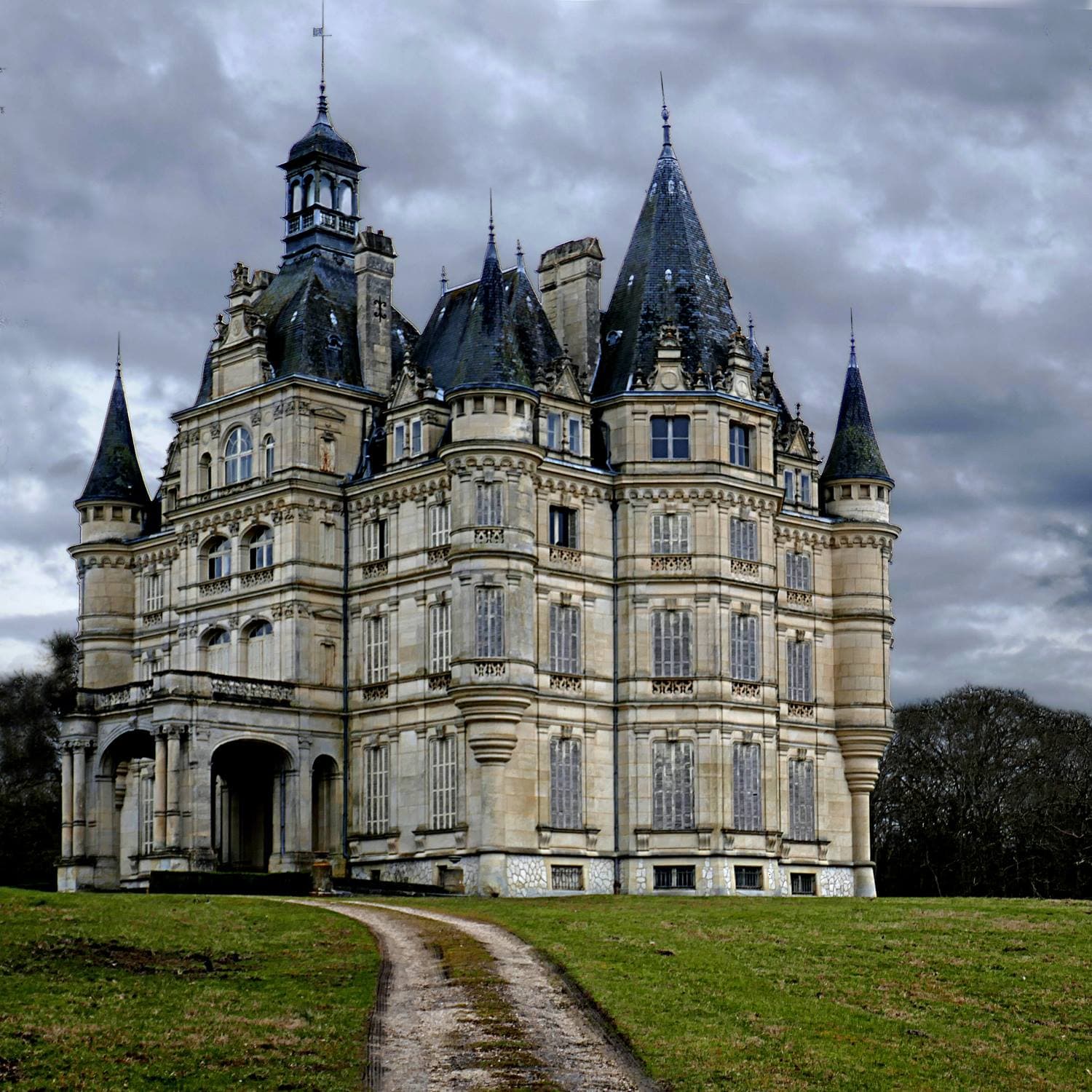
How do you shoot abandoned places like a pro?
To photograph abandoned places like a pro, use stable framing, soft available light, careful exposure, and a wide-to-standard lens while staying strictly within legal and safe access conditions. Strong urbex photography combines context shots, detail shots, and honest editing. Expensive gear helps less than timing, observation, and a consistent workflow.
Quick summary
- Good urbex photography starts with research, legal access, and a clear shot list.
- Overcast daylight and side light usually produce the cleanest abandoned interiors and exteriors.
- A wide-to-standard lens range covers most scenes better than extreme ultra-wide lenses.
- Shoot RAW when possible, protect highlights near windows, and keep vertical lines straight.
- Photograph both the whole space and the small details that explain the site's history.
- Safety and preservation come first: never force entry, move objects, or ignore structural hazards.
Quick facts
- Scope: global
- Main subjects: architecture, objects, textures, machinery, and traces of former use
- Best light: overcast daylight, side light, or soft morning light
- Useful focal lengths: 16-35 mm, 24-70 mm, 35 mm, and 50 mm
- Recommended format: RAW for maximum editing latitude
- Core rule: legal access only, with preservation-first behavior
What gear is best for urbex photography?
The best urbex photography gear is a light, reliable kit: a camera or capable phone, a wide-to-standard lens, spare batteries, a flashlight, and basic protective items. A tripod helps in dark interiors, but only when the ground is stable and the site rules allow it.
A full-frame camera is useful, but it is not required. Many strong photos of abandoned places are made with APS-C, Micro Four Thirds, or recent smartphones. What matters most is dynamic range, sharp technique, and consistent exposure.
A practical starter kit looks like this:
- Camera body or modern smartphone
- 16-35 mm, 24-70 mm, or 35 mm prime
- Spare battery and memory card
- Small flashlight for focusing and navigation
- Lens cloth for dust and condensation
- Comfortable strap and stable footwear
Avoid carrying too much. Large bags slow you down, increase fatigue, and make careful movement harder in tight interiors.
Access the free urbex map
Which camera settings work best for urbex photography?
The best urbex photography settings depend on light, movement, and whether you can stabilize the camera. In most abandoned buildings, start with an aperture between f/5.6 and f/8 for room shots, protect highlights, and raise ISO only as much as needed to keep the image sharp.
Use this table as a starting point, not a rigid formula.
| Situation | Starting settings | Why it works |
|---|---|---|
| Overcast exterior | f/5.6 to f/8, ISO 100 to 400, 1/125 s or faster | Keeps detail high and motion blur low |
| Dark interior with tripod | f/8, ISO 100 to 200, 1 s to 5 s | Maximizes image quality and preserves texture |
| Dark interior handheld | f/2.8 to f/4, ISO 800 to 3200, 1/60 s or faster | Reduces handshake and subject blur |
| Bright windows in frame | f/5.6 to f/8, slight negative exposure compensation or bracketing | Protects highlight detail |
| Detail shots | f/4 to f/5.6, ISO 400 to 1600, 1/80 s or faster | Separates the subject without losing context |
If you shoot RAW, you can recover moderate shadow detail later. You usually cannot recover blown windows as cleanly. In abandoned interiors, it is often smarter to expose for highlights and lift shadows in editing.
White balance also matters. Auto white balance can shift unpredictably between daylight, fluorescent spill, and mixed light. If consistency matters, set a manual Kelvin value or correct it later in RAW processing.
How should you compose photos of abandoned places?
Strong compositions in abandoned places are built on clarity. Start with a main subject, keep lines clean, and remove distractions from the frame before you press the shutter.
Begin with the obvious wide shot. Show the full room, corridor, stairwell, or facade first. Then step closer and look for the secondary story: peeling paint, a machine control panel, a broken piano key, a calendar on the wall, or vegetation entering through a window.
Keep the camera level whenever possible. Leaning verticals can make a room feel chaotic in a way that looks accidental rather than intentional. If you want tension, create it with framing and light before relying on heavy distortion.
A reliable sequence is:
- One establishing shot
- One medium shot
- Two or three detail shots
- One image that shows scale, depth, or context
This sequence is especially useful if you publish a full set, build a blog post, or contribute to a responsible scouting workflow.
How do you handle low light, bright windows, and dust?
Low light is normal in urbex photography, so the solution is control rather than speed. Stabilize the camera when possible, expose carefully for the brightest areas, and do not rush compositions just because the room feels dark.
Bright windows are the main technical problem in abandoned buildings. If the exterior is much brighter than the room, bracket exposures or underexpose slightly to keep highlight detail. A flat white window is rarely informative unless you are deliberately using it as a graphic shape.
Dust creates both atmosphere and problems. Side light can make airborne particles glow, which may be useful for mood, but dust also lowers contrast and reveals dirty front elements. Clean the lens often, avoid unnecessary lens changes, and inspect the histogram after important shots.
If a room is extremely dusty, prioritize health over images. Leave the area if air quality is poor or the floor is disturbed. Responsible urbex photography is always secondary to personal safety.
What are the 5 best urbex photo subjects to look for?
The best urbex subjects are the ones that explain a place clearly. Look for scenes that show scale, purpose, time, and decay in a way a viewer can understand immediately.
1. Grand rooms and staircases
Grand rooms and staircases work because they give instant structure to a frame. Their geometry helps you build balanced compositions with leading lines, symmetry, and depth.
They also carry historical information. A theater hall, mansion staircase, or school corridor tells the viewer how the building was used before it was abandoned. When possible, take one centered version and one off-axis version to compare mood and tension.
2. Machinery and technical spaces
Machinery photographs well because it turns history into visible function. Boilers, control panels, conveyor systems, and turbines show what a building actually did.
These spaces reward medium focal lengths and careful detail work. Labels, dials, warning signs, and serial plates often add more meaning than a wide shot alone. If you want examples of industrial and urban site variety, Urbex Brussels: guide to abandoned places in and around Brussels is a useful reference for subject types.
3. Personal objects and traces of daily life
Personal objects create emotional connection fast. A chair left in place, a stack of files, a coat hook, or a cracked mirror can explain the human side of abandonment better than a full room.
Use restraint here. Do not move objects to stage a scene. The documentary value of urbex photography comes from recording what is there, not from rearranging evidence of former lives.
4. Corridors, doors, and repeating patterns
Corridors, doors, and repetition are classic abandoned-place subjects because they create rhythm. They also help viewers read distance and understand the layout of a site.
These scenes benefit from precise alignment. Step slightly left or right until door frames stack neatly, and wait for even light if possible. For architectural inspiration across city contexts, Urbex Strasbourg: 10 Abandoned Places to Know in Strasbourg and Nearby and Urbex Toulouse: Best Abandoned Places In and Around Toulouse show how different urban environments produce different visual patterns.
5. Exteriors that show context
Exterior views matter because they explain the relationship between the site and its surroundings. A strong outside image can show isolation, encroaching vegetation, nearby infrastructure, or the scale of a facade before you move into tighter compositions.
Do not skip weathered entrances, loading bays, courtyards, or boundary walls visible from a lawful position. Context shots make a final photo set more coherent and more useful for editorial or documentary work.
How can you stay safe and photograph responsibly?
You stay safe in urbex photography by treating access, structure, and air quality as non-negotiable limits. Photograph only from legal access points or authorized visits, never force entry, and leave immediately if a floor, roof, stair, or atmosphere feels unsafe.
Responsible urbex also means preservation-first behavior. Do not break locks, open sealed barriers, move artifacts, or publish sensitive details that could accelerate vandalism. Good documentation protects places by showing them accurately and respectfully.
MapUrbex is built around verified locations, curated research, and responsible discovery. If you want a structured starting point for legal and safer planning, Browse all urbex maps gives an overview of curated resources rather than random coordinates.
A simple safety checklist:
- Check legal status before the shoot
- Prefer daylight over night sessions
- Tell someone where you are going
- Watch floors, stairs, glass, and exposed metal
- Keep both hands free when moving
- Leave if the environment becomes unstable
How should you edit urbex photos without making them look fake?
The best urbex photo editing keeps the atmosphere while preserving believable light and texture. Correct exposure, straighten lines, control noise, and increase local contrast carefully rather than pushing dramatic sliders.
Start with white balance and lens corrections. Then recover highlights, lift shadows moderately, and check whether blacks still contain real texture. Many abandoned interiors look stronger when editing is subtle enough to preserve the natural darkness of corners and ceilings.
Color grading should support the subject, not dominate it. Rust, faded paint, concrete, wood, and mold already carry strong visual information. If every frame becomes orange and teal, the site stops looking specific and starts looking generic.
FAQ
Do you need a full-frame camera for urbex photography?
No. Full-frame helps in low light and can offer more dynamic range, but good technique matters more. An APS-C camera, Micro Four Thirds body, or modern phone can produce strong urbex photos when exposure and composition are controlled.
Is a tripod always necessary in abandoned buildings?
No. A tripod is helpful for dark interiors and careful framing, but it is not always practical or safe. If the floor is unstable, space is tight, or the site rules do not allow it, handheld shooting with higher ISO is the better option.
What lens is best for photographing abandoned places?
A wide-to-standard zoom is usually the most versatile choice. A 16-35 mm or 24-70 mm covers most rooms, facades, and details. A 35 mm prime is also excellent if you prefer a lighter kit and more deliberate framing.
Should you use flash for urbex photography?
Usually only with restraint. Direct flash can flatten texture and make interiors look artificial. If you use light, bounce it gently or use it for small detail work rather than blasting a whole room.
Can you publish the exact location of an abandoned site?
Often, you should not. Publishing exact access details can increase trespassing, theft, and vandalism. Share images responsibly and prioritize preservation over attention.
Conclusion
Good urbex photography is not about making ruins look more dramatic than they are. It is about reading a place clearly, exposing it carefully, and building a set of images that explains architecture, use, decay, and context.
If you focus on legal access, stable technique, and honest editing, your photos of abandoned places will improve quickly. The strongest images are usually the simplest ones: well framed, well exposed, and respectful of the site.
Access the free urbex map
