 MapUrbex
A practical guide to urbex in Japan: 15 abandoned places, what makes them notable, where Tokyo and Osaka fit in, and how to explore responsibly.
Urbex Japan: 15 Abandoned Places to Know, from Tokyo to Osaka [Photos + History]
Urbex Japan attracts photographers, historians, and architecture fans for one main reason: the country's abandoned places are unusually varied. Former mining islands, closed theme parks, resort hotels, military ruins, and half-forgotten leisure districts all appear in the same national landscape.
This guide is informational first. It focuses on places that matter in the history of urbex in Japan, not on trespassing tips. Some sites are demolished, some are protected heritage, and some should only be viewed from legal public access or official tours.
If you want broader context after this list, start with Browse all urbex maps and the legal guide Is Urbex Legal in Japan? Rules, Risks, and Responsible Ways to Explore Abandoned Places.
What are the best-known urbex places in Japan?
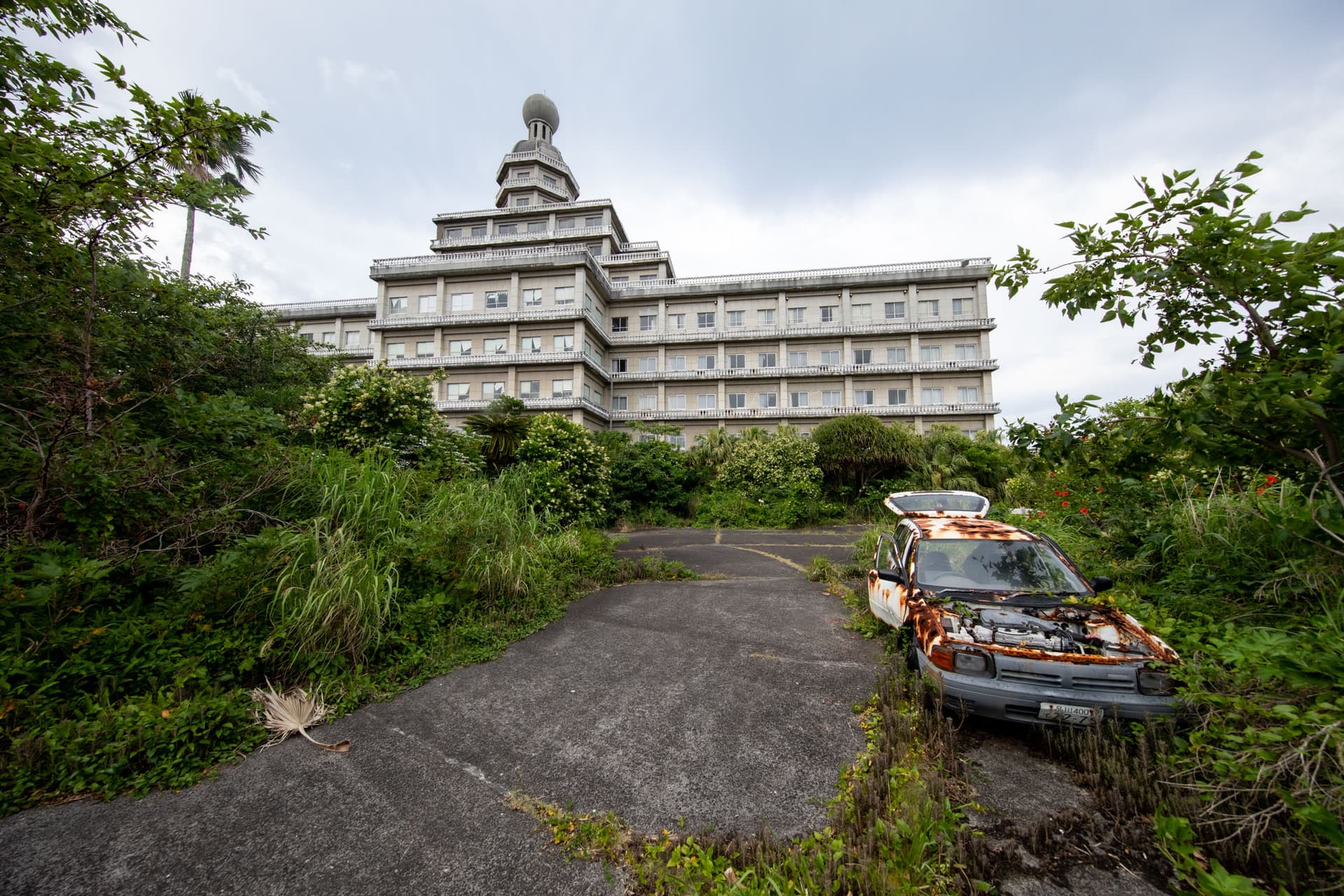
The best-known urbex places in Japan include Hashima Island, Hachijo Royal Hotel, Nara Dreamland, Western Village, and several abandoned resort districts around Tokyo and Kansai. These places matter because they document industrial decline, tourism booms and busts, demographic change, and the visual history that made urbex Japan internationally famous.
Quick summary
- Japan's best-known abandoned places range from mining islands to theme parks and giant hotels.
- The Tokyo side of urbex Japan is often associated with Hachijojima, Kinugawa, and day-trip regions such as Tochigi.
- The Osaka side usually means wider Kansai: Nara, Kobe, and Wakayama are more relevant than central Osaka itself.
- Several iconic Japanese urbex sites have already been demolished, which makes historical context essential.
- Private property rules in Japan still apply. Permission matters, and official or public access is the safest option.
- For MapUrbex, preservation comes first: document, do not damage, and avoid publishing sensitive access details.
Quick facts
- Country: Japan
- Primary keyword: urbex Japan
- Best-known site internationally: Hashima Island, also called Gunkanjima
- Most cited Tokyo-area icon: Hachijo Royal Hotel
- Most cited Kansai icon: Nara Dreamland, historically
- Common themes: tourism decline, aging population, post-industrial change, speculative development
- Best practice: use verified information and never force entry
Which 15 abandoned places in Japan should you know first?
The most useful starter list mixes famous ruins, historically important closed sites, and places that shaped the visual identity of urbex in Japan. Not all of them are legally explorable today. Some are demolished, regulated, or best understood as heritage and photography references.
| Place | Region | Type | Why it matters |
|---|---|---|---|
| Hachijo Royal Hotel | Tokyo Prefecture | Hotel | One of Japan's most iconic abandoned luxury hotels |
| Western Village | Tochigi | Theme park | Classic American-Western themed ruin near Nikko |
| Kinugawa Onsen hotel district | Tochigi | Resort district | Symbol of overbuilt tourism and economic decline |
| Genshiro Kawamoto's Villa | Japan | Mansion | Media-famous property tied to controversy and decay |
| Nara Dreamland | Nara | Amusement park | Legendary Japanese urbex site, now demolished |
| Maya Kanko Hotel | Kobe | Hotel and event venue | Famous modern ruin above Kobe |
| Tomogashima fortifications | Wakayama | Military ruins | Atmospheric tunnels and brick batteries |
| Hashima Island | Nagasaki | Mining island | The most globally recognized abandoned place in Japan |
| Ikeshima coal mine | Nagasaki | Mining town | Strong example of industrial abandonment |
| Shime Coal Mine ruins | Fukuoka | Mining structure | Striking concrete heritage remains |
| Kejonuma Leisure Land | Miyagi | Amusement park | Long cited in Japanese ruin photography history |
| Russian Village | Niigata | Theme park | Unusual concept park tied to a failed tourism model |
| Inujima copper refinery ruins | Okayama | Industrial ruins | Important industrial heritage in a managed context |
| Nakagusuku Kogen Hotel | Okinawa | Resort hotel | Large tropical ruin with persistent visual appeal |
| Izu and Atami abandoned hotel clusters | Shizuoka | Resort hotels | Frequently discussed for architecture and access sensitivity |
Which abandoned places are closest to Tokyo?
The most relevant abandoned places for people searching urbex Tokyo are usually not in central Tokyo. They are in Tokyo Prefecture's islands or in nearby regions reachable from the capital, especially Tochigi and older resort belts.
The best-known example is Hachijo Royal Hotel on Hachijojima. Its scale, French-inspired styling, and subtropical vegetation made it one of the defining images of urbex Japan.
Other important Tokyo-oriented references include:
- Kinugawa Onsen hotel district: a textbook case of resort decline and one of the most photographed abandoned hotel areas near the Tokyo travel sphere.
- Western Village: a former theme park in Tochigi with a cinematic look that circulated widely in Japanese urbex photography.
- Izu and Atami hotel clusters: not one single site, but a recurring category in urbex photos of Japan because of the concentration of disused leisure buildings.
For readers interested in the Tokyo mansion story often cited in media coverage, see Genshiro Kawamoto’s Villa in Japan: Why It Matters and Why He Was Arrested.
Which abandoned places matter most around Osaka and in Kansai?
Around Osaka, the most significant urbex references are generally in the wider Kansai region rather than in Osaka's dense city center. Nara, Kobe, and Wakayama are the key names.
Three major examples stand out:
- Nara Dreamland: historically the best-known amusement park ruin in Japan. Even though it has been demolished, it still shapes search interest around urbex Osaka because it was a major Kansai landmark.
- Maya Kanko Hotel in Kobe: famous for its dramatic setting and architectural atmosphere.
- Tomogashima fortifications in Wakayama: best understood as historic ruins with public-access context, not as a trespassing target.
This is why "urbex Osaka" often leads researchers outward into regional Kansai rather than to central Osaka itself.
Why does Japan have so many abandoned places?
Japan has many abandoned places because several long-term trends overlap. The most important are demographic shrinkage in rural areas, changing domestic tourism patterns, post-bubble economic corrections, and the decline of coal and heavy industry in certain regions.
Resort hotels are a good example. During boom years, large properties were built in leisure destinations with optimistic demand forecasts. When tourism flows changed or maintenance costs rose, some buildings became uneconomical.
Theme parks tell a similar story. Places like Nara Dreamland or Western Village were built around specific entertainment models that later lost relevance.
Industrial ruins tell a third story. Hashima Island, Ikeshima, and Shime reflect the restructuring of energy production and labor geography in modern Japan.
Is urbex legal in Japan?
Urbex in Japan is not automatically legal. Entry onto private property without permission can create civil and criminal risk, and many abandoned places also carry safety hazards such as unstable floors, asbestos, broken glass, and hidden shafts.
The safest rule is simple: if a site is privately owned or fenced, do not enter without authorization. If a ruin is managed as heritage or open to visitors, follow the published rules exactly.
For a deeper explanation, read Is Urbex Legal in Japan? Rules, Risks, and Responsible Ways to Explore Abandoned Places.
How can you take urbex photos in Japan responsibly?
Responsible photos urbex Japan work starts with restraint. The goal is to document, not to extract, disturb, or expose sensitive sites to damage.
Use these principles:
- Stay on legal access routes.
- Do not force doors, windows, gates, or barriers.
- Avoid sharing exact entry methods or vulnerable geotags.
- Treat personal belongings, religious items, and records with respect.
- Leave every site exactly as found.
- Prioritize daylight, structural caution, and weather awareness.
MapUrbex takes a preservation-first approach. Verified information is more valuable than reckless access.
FAQ
Is Hashima Island the most famous abandoned place in Japan?
Yes. Hashima Island, or Gunkanjima, is the most internationally recognized abandoned site in Japan because of its dense concrete skyline, mining history, and repeated appearance in documentaries and photo essays.
Can you legally visit abandoned places in Japan?
Sometimes, but only in specific cases. A few ruins are accessible through official tours, heritage management, or public paths. Many others remain private property and should not be entered without permission.
Are there real urbex locations in Tokyo itself?
There are historical references in Tokyo Prefecture, especially on outlying islands such as Hachijojima, but most searches for urbex Tokyo expand to nearby regions rather than central wards.
Why is Nara Dreamland still important if it is gone?
It matters because it shaped the visual culture and online mythology of urbex Japan. Demolished sites can still be historically central to search intent and photographic memory.
What is the safest way to start learning about urbex Japan?
Start with legal context, heritage status, and verified mapping. That reduces risk and helps you distinguish between protected ruins, demolished sites, and sensitive private properties.
What should you remember about urbex Japan?
Urbex Japan is less about collecting secret entries and more about understanding why places were abandoned in the first place. The most important sites combine visual power with social history: tourism bubbles, industrial decline, changing populations, and preservation challenges.
If you want to continue your research, read Urbex Japan: 15 Abandoned Places to Know, from Tokyo to Osaka and Browse all urbex maps.
Access the free urbex map
