 MapUrbex
A clear, source-aware guide to the abandoned villa linked to Genshiro Kawamoto in Japan, what is actually known, and why his arrest is discussed online.
Genshiro Kawamoto’s Villa in Japan: Why It Matters and Why He Was Arrested
The phrase Genshiro Kawamoto’s villa in Japan usually refers to abandoned or neglected luxury residences associated with the controversial real-estate tycoon Genshiro Kawamoto. Online interest comes from the unusual contrast between extreme wealth, urban decay, and long-term vacancy in valuable parts of Japan.
This is also why the story is often misunderstood. Many readers assume the abandoned mansion and the arrest are part of the same case. In fact, the villa is mainly discussed as a symbol of speculative neglect, while the arrest reported in the press concerned separate criminal allegations.
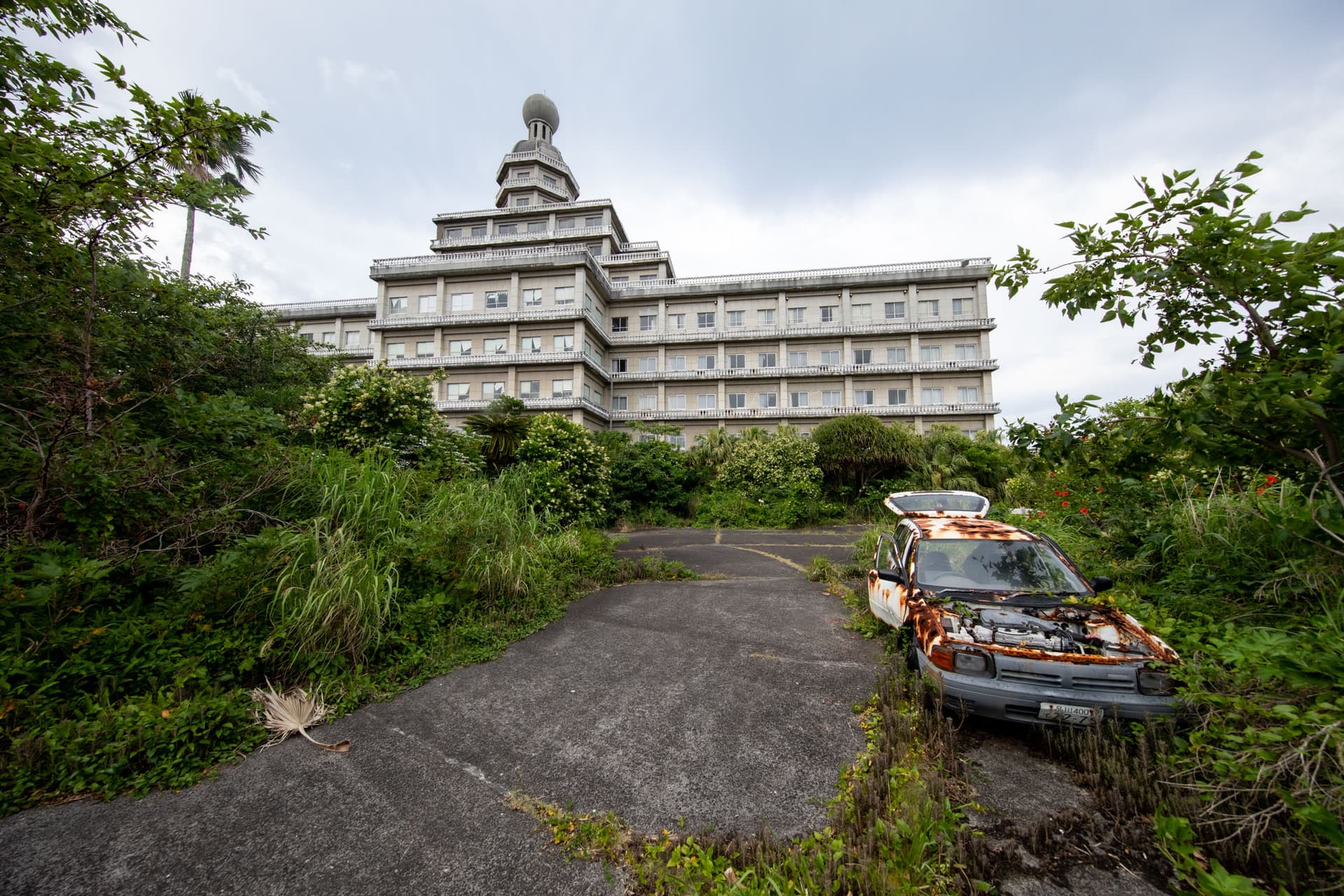
The image above is a visual reference to abandoned sites in Japan. It is not presented here as a verified photograph of a Kawamoto-owned villa.
Why is Genshiro Kawamoto’s villa in Japan discussed online?
Genshiro Kawamoto’s villa in Japan is discussed because it represents abandoned luxury property linked to a famous real-estate magnate whose name became associated with vacancy and neglect. According to press reports, his arrest was discussed for separate criminal allegations overseas, not because the mansion itself was abandoned. For urbex readers, the case matters as urban history, not as a site to enter.
Quick summary
- The so-called Genshiro Kawamoto villa is usually a shorthand for abandoned luxury houses linked to his property empire.
- The best-known interest comes from the contrast between prime Japanese real estate and visible decay.
- Press coverage generally treats his arrest as a separate story from the abandoned properties.
- This case is more about speculation, vacancy, and neighborhood impact than about classic rural ruins.
- For responsible urbex, the site should be researched from legal, public information only.
- MapUrbex recommends preservation-first documentation and verified location research through curated resources such as Browse all urbex maps.
Quick facts
- Country: Japan
- Context: Urban abandonment linked to speculative property holding
- Associated figure: Genshiro Kawamoto, a Japanese real-estate tycoon known for controversial vacant holdings
- Typical property type: Large detached houses or mansions in valuable urban areas
- Why it became notable: Wealth, decay, and media coverage created a strong public contrast
- Arrest connection: The arrest discussed online was generally reported as unrelated to the building’s abandonment
- Access status: Assume private property unless clearly stated otherwise
- Safety reminder: Never force entry, trespass, or publish access methods
What is the Genshiro Kawamoto villa in Japan?
The Genshiro Kawamoto villa in Japan is not usually one single officially designated landmark. In most online discussions, the phrase refers to one of several abandoned or neglected high-value homes associated with Kawamoto’s real-estate holdings, especially in and around Tokyo.
That distinction matters. People often search for one exact mansion with a fixed story, but the real subject is broader: a pattern of luxury homes left empty or poorly maintained for years. This is why the story appears both in urban policy discussions and in urbex circles.
The case is also different from many famous Japanese ruins. It is not mainly about depopulation, a closed school, or a remote onsen hotel. It is about vacancy in expensive areas where active use would normally be expected.
Who is Genshiro Kawamoto?
Genshiro Kawamoto is a Japanese real-estate investor who became widely known for accumulating valuable properties and then being criticized for leaving some of them unused or neglected. His name became a media shorthand for speculative ownership with visible neighborhood consequences.
He is often described in reports about Japan’s bubble-era excess and the long afterlife of that period. In that context, Kawamoto is less important as a celebrity figure than as an example of how concentrated ownership can produce urban blight even in wealthy districts.
For readers interested in how abandoned places are identified and verified today, the broader research method matters as much as the name. Our guide How to Find Real Abandoned Places Near You in 2026 (Without Wasting Time) explains how to separate rumor, recycled photos, and real location data.
Why was Genshiro Kawamoto arrested?
According to press reports, Genshiro Kawamoto was arrested in the Philippines in a case involving serious allegations related to the abuse or exploitation of minors. The important point for this article is that the arrest was not generally reported as a consequence of owning an abandoned villa in Japan.
This separation is essential because search results often merge two different narratives. One narrative is about neglected mansions and speculative vacancy in Japan. The other is about criminal allegations reported overseas. When people ask why Genshiro Kawamoto was arrested, the best-supported answer is that it was discussed in relation to those allegations, not to urban abandonment itself.
Because online summaries vary in detail, a careful reader should avoid repeating unverified specifics. The most reliable way to describe the issue is simple: the abandoned properties made Kawamoto notorious, but the arrest discussed in the media concerned separate and much more serious allegations.
| Question | Best-supported context |
|---|---|
| What is the villa? | An abandoned or neglected luxury property linked to Kawamoto’s holdings in Japan |
| Was he arrested because the villa was abandoned? | No public reporting is commonly cited for that claim |
| What was the arrest story about? | Press reports generally connected it to serious allegations overseas involving minors |
| Why do urbex readers mention him? | His properties became a visible example of speculative vacancy and decay |
Why did these mansions become abandoned?
These mansions became abandoned or semi-abandoned because they were held as assets without consistent occupation, maintenance, or reinvestment. In plain terms, value remained on paper while physical condition declined on the ground.
That pattern is one reason the Kawamoto story stayed memorable. Most people expect a luxury house in an expensive Japanese area to be occupied, renovated, or sold. When the opposite happens for years, the building becomes a public symbol of waste.
The case also shows that abandonment is not always caused by poverty or depopulation. Some abandoned houses exist because of speculation, legal disputes, inheritance issues, or deliberate non-use. Kawamoto’s name is often invoked because it illustrates the speculative version of abandonment in its most visible form.
What does this case reveal about abandoned houses in Japan?
This case reveals that abandoned houses in Japan do not all come from the same cause. The Kawamoto story points to a specific urban form of abandonment driven by ownership behavior, not simply by rural decline or shrinking population.
That makes it useful for anyone researching Japanese ruins. The popular image of Japan’s abandoned places often focuses on remote villages, mountain hotels, or collapsing amusement parks. The Kawamoto-associated properties tell a different story: premium land can also sit empty when ownership structure and incentives produce long-term neglect.
For urbex researchers, this is a reminder to avoid oversimplified explanations. Akiya, vacant mansions, closed commercial sites, and sealed industrial ruins each have different legal and social contexts. If you want a wider view of documented sites and categories, start with Browse all urbex maps and compare that with a research guide such as Urbex Near Me in 2026: How to Find Real Abandoned Places Without Wasting Time.
Should urbex visitors try to enter a Kawamoto-linked villa?
No. Urbex visitors should not try to enter a Kawamoto-linked villa unless there is clear legal permission, which is rarely the case for private abandoned mansions.
These properties can involve structural damage, legal risk, neighborhood sensitivity, and privacy concerns. Urban mansions are also far more likely than remote ruins to be monitored, fenced, or close to occupied homes.
MapUrbex takes a preservation-first position. Document from public space when legal, do not force access, and do not share entry methods. If your goal is to explore responsibly, start with verified resources rather than rumor threads.
Access the free urbex map
What are the top 5 takeaways from the Kawamoto case in Japan?
1. The villa is better understood as a symbol than as a single famous landmark
The phrase Genshiro Kawamoto’s villa sounds like one precise destination, but the reality is usually more diffuse. It refers to a wider cluster of neglected high-value residences linked to the same owner or reputation.
That is why many photos circulating online are hard to verify. People often attach the name to any grand abandoned house in Japan, even when the exact ownership trail is weak or undocumented.
2. The story is about speculative vacancy as much as architecture
The strongest public interest comes from the contradiction between wealth and neglect. A decaying mansion in a prime area is visually striking, but the deeper issue is how ownership choices can freeze usable housing stock.
In urban terms, this makes the case unusually relevant. It is not only an abandoned building story. It is also a story about land use, neighborhood decline, and the social cost of leaving prime property idle.
3. The arrest and the abandoned mansion are often incorrectly merged
This is one of the most repeated errors in search results and social posts. Readers often assume the mansion caused legal action, when the reported arrest narrative was different.
A cleaner summary is more accurate and more useful: the abandoned properties made Kawamoto infamous, while the arrest discussed in the media related to separate allegations overseas. Keeping those facts separate avoids misinformation.
4. Kawamoto-linked properties are not ideal urbex targets
From a responsible exploration standpoint, urban private mansions are among the worst places to chase for content. They are sensitive, difficult to verify, and often close to residents who did not choose to live beside a spectacle.
That is why educational value matters more here than access. The case is best used to understand abandonment patterns in Japan, not to encourage risky or intrusive visits.
5. The case helps explain why verification matters in Japanese urbex research
Japanese abandoned places are often mislabeled online. A dramatic photo, a famous owner, and a rumor about criminal history can quickly create a false narrative that spreads for years.
This is exactly why verification matters. If you want reliable discovery methods rather than recycled myths, read How to Find Real Abandoned Places Near You in 2026 (Without Wasting Time) and use curated tools like Browse all urbex maps.
How should researchers document this case responsibly?
Researchers should document this case through public records, reputable reporting, lawful observation, and careful language. The goal is to explain the site without exposing private details, encouraging trespass, or turning uncertainty into fake certainty.
A good method is simple. First, separate verified reporting from forum rumor. Second, distinguish the property story from the arrest story. Third, avoid publishing exact access tips for private homes.
Legal reminder: an abandoned appearance does not cancel property rights. In Japan, entering private land without permission can expose you to legal consequences and can damage the reputation of responsible urbex communities.
If you are building a safer exploration workflow, start with Access the free urbex map and then compare methodology with How to Find Real Abandoned Places Near You in 2026 (Without Wasting Time).
FAQ
Is Genshiro Kawamoto’s villa a single verified location?
Not usually. In most discussions, the name refers to one or more abandoned luxury properties associated with Kawamoto rather than one universally verified landmark. That is why photos and addresses online often conflict.
Was Genshiro Kawamoto arrested because the mansion was abandoned?
No credible summary of the story frames the arrest that way. The villa and the arrest are usually separate topics. Press reports commonly linked the arrest to serious allegations overseas rather than to vacancy or neglect in Japan.
Is it legal to visit abandoned mansions in Japan?
Not by default. Most abandoned mansions remain private property even when they appear empty. Legal access requires permission, and responsible research should avoid trespass, forced entry, or publication of access methods.
Why does this case matter for urbex and urban history?
It matters because it shows that abandonment is not always caused by decline or poverty. In this case, the key theme is high-value property left unused. That makes it relevant for both urbex researchers and anyone studying speculative urban landscapes in Japan.
How can I research abandoned places in Japan without wasting time?
Start with verified databases, consistent map work, and cross-checking. Avoid relying on recycled social posts that make strong claims without dates or sources. For a practical workflow, see How to Find Real Abandoned Places Near You in 2026 (Without Wasting Time).
Conclusion
The story of Genshiro Kawamoto’s villa in Japan is important less because of one photogenic mansion and more because of what it represents. It is a clear example of how wealth, speculation, vacancy, and public scandal can intersect in the built environment.
The most useful takeaway is simple: treat the villa story and the arrest story as related by public interest, not as the same event. For responsible urbex, research matters more than access, and verification matters more than rumor.
Access the free urbex map
