 MapUrbex
Discover 15 major abandoned places in Japan, with history, Tokyo and Osaka notes, legal context, and a responsible urbex planning guide.
Urbex Japan: 15 Abandoned Places to Know, from Tokyo to Osaka
Japan is one of the most distinctive countries for urbex photography, but it is also one of the easiest places to misunderstand. Many famous sites are demolished, sealed, converted into heritage attractions, or still protected as private property.
This guide focuses on 15 abandoned places in Japan that matter historically or visually. It also explains what people usually mean by Tokyo urbex and Osaka urbex: in both metro areas, long-lived abandoned sites are rarer than rumor-based lists suggest.
What are the best abandoned places for urbex in Japan?
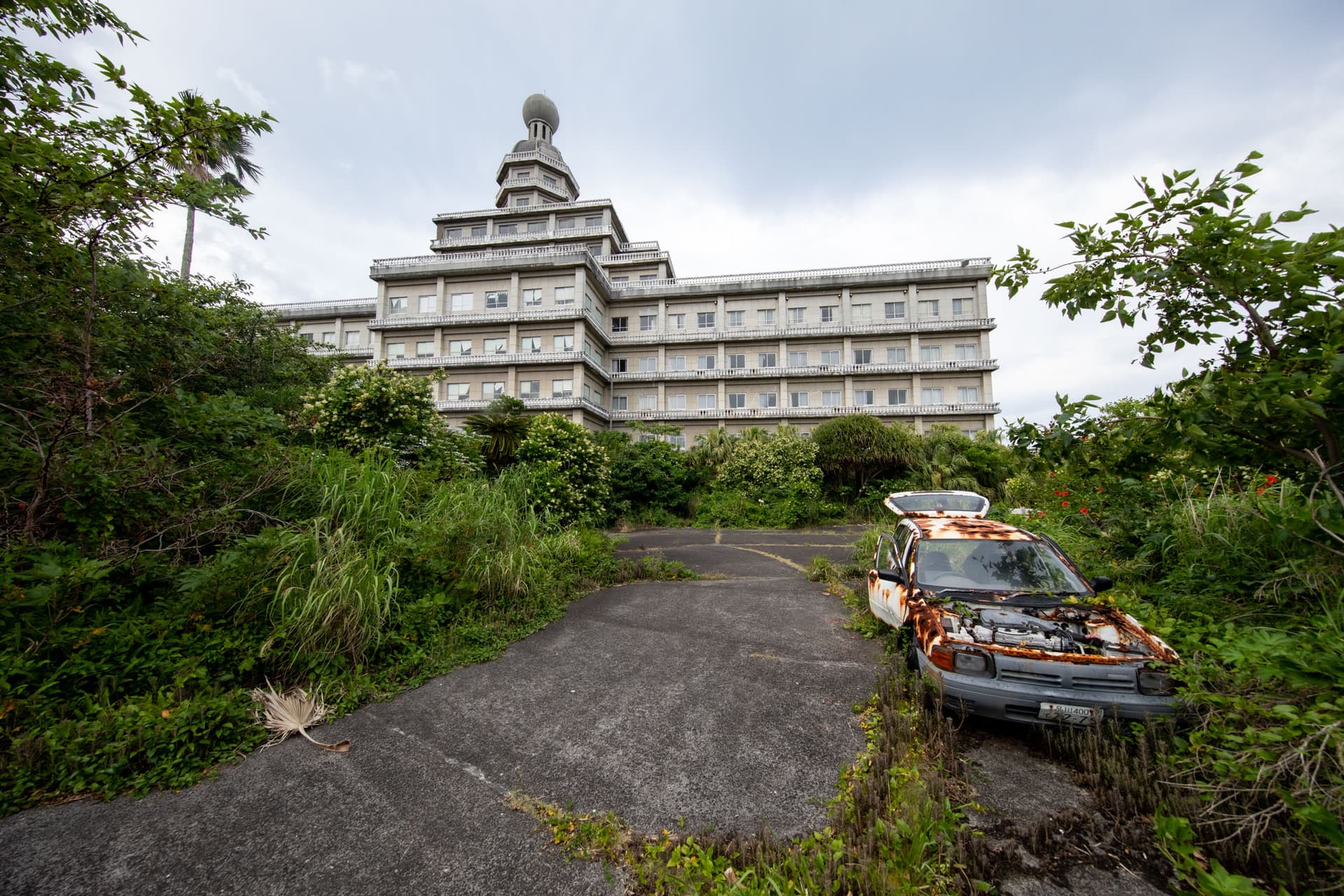
The best-known urbex Japan sites are Hashima Island, Hachijo Royal Hotel, Kinugawa's abandoned hotels, Nara Dreamland, Maya Kanko Hotel, and Ikeshima. For most travelers, the real question is not where to force entry, but which sites still exist, which can be approached legally, and which are important enough historically to justify the trip.
Quick summary
- Japan's best-known abandoned places include mining islands, hotels, amusement parks, and military ruins.
- Tokyo urbex usually means outer Tokyo or day trips, not central-city towers left open for years.
- Osaka urbex is strongest in the wider Kansai region, especially Nara, Kobe, and Wakayama.
- Several legendary sites were demolished, sealed, or moved into heritage management.
- Unauthorized entry can create trespass and safety risks, so verification matters more than hype.
- MapUrbex focuses on curated maps, verified location research, and preservation-first planning.
Quick facts
- Country: Japan
- Primary keyword: urbex Japan
- Best-known abandoned site: Hashima, also called Gunkanjima
- Best-known abandoned hotel: Hachijo Royal Hotel
- Best-known closed theme park: Nara Dreamland
- Planning reality: site status can change quickly after redevelopment, storms, or new security measures
Which 15 abandoned places in Japan are worth knowing?
The 15 places below are the most useful reference list for urbex Japan because they combine name recognition, historical value, and current search interest. Some can be visited legally in limited ways, some are secured or demolished, and some matter mainly as landmarks in the history of abandoned places in Japan.
- Hashima Island, Nagasaki — A former coal-mining island famous for its dense concrete skyline. It is the single most recognizable abandoned place in Japan. For background, see Hashima Abandoned Island: History, Access, and Visiting Gunkanjima.
- Ikeshima Island, Nagasaki — Another mining island, quieter than Hashima, with strong links to Japan's late coal era.
- Hachijo Royal Hotel, Tokyo Prefecture — A huge French-inspired resort ruin on Hachijojima, often cited as Japan's most famous abandoned hotel.
- Kinugawa Onsen abandoned hotel district, Tochigi — A cluster of empty riverside hotels that symbolizes the decline of bubble-era tourism.
- Western Village, Tochigi — A closed western-themed park near Nikko, long circulated in classic Japanese ruin photography.
- Nara Dreamland, Nara — Japan's most famous abandoned theme park, closed in 2006 and later demolished, but still central to the history of abandoned places in Japan.
- Maya Kanko Hotel, Hyogo — A landmark modern ruin above Kobe, closely tied to Mount Maya's tourism history.
- Kejonuma Leisure Land, Miyagi — An amusement park ruin that shaped the visual identity of Japanese urbex before large-scale clearance.
- Nakagusuku Kogen Hotel ruins, Okinawa — A long-abandoned resort complex associated with local legend and serious structural risk.
- Tomogashima battery forts, Wakayama — Atmospheric military ruins that show how some abandoned places are better treated as managed historical landscapes.
- Inujima Copper Refinery ruins, Okayama — Industrial remains preserved within an art and heritage context rather than a trespass setting.
- Kitazawa Flotation Plant, Sado, Niigata — One of Japan's most dramatic industrial ruins, monumental even without interior access.
- Ashio Copper Mine remains, Tochigi and Gunma — Important for both industrial history and the environmental history of modern Japan.
- Yubari ruins, Hokkaido — A former coal city with scattered hotels, housing, and resort remnants shaped by depopulation.
- Fukushima evacuation-zone structures, Fukushima — Globally known images of abandonment after 2011, but not casual urbex sites. Legal rules and safety restrictions are decisive.
Which sites are most useful for planning?
For planning, the key distinction is not fame but current reality. Some sites are heritage destinations, some are gone, and some remain legally sensitive.
| Site | Region | Type | Why it matters | Current reality |
|---|---|---|---|---|
| Hashima | Nagasaki | Mining island | Japan's iconic abandoned place | Official visit model, weather dependent |
| Hachijo Royal Hotel | Tokyo Prefecture | Resort hotel | Most famous abandoned hotel | Exterior status changes, permission matters |
| Kinugawa Onsen hotels | Tochigi | Hotel district | Symbol of resort decline | Mixed ownership, many areas sealed |
| Nara Dreamland | Nara | Theme park | Legendary urbex reference | Demolished |
| Maya Kanko Hotel | Hyogo | Mountain hotel | Classic Kansai ruin | Secured and risky |
| Tomogashima forts | Wakayama | Military ruins | Legal ruins experience | Ferry access and managed trails |
Where can you still find urbex around Tokyo?
Real Tokyo urbex is limited inside central Tokyo because land values, redevelopment, and security remove sites quickly. The better-known options are in Tokyo Prefecture or day-trip range, especially Hachijojima, Kinugawa, Ashio, and older resort or industrial areas outside the city core.
A practical point matters here. Many online lists about abandoned places in Tokyo repeat demolished or heavily outdated locations. If you are planning photography rather than fantasy, outer Tokyo and nearby prefectures are more realistic than expecting untouched sites in central wards.
Useful references around the Tokyo search intent include:
- Hachijo Royal Hotel for the strongest abandoned hotel image associated with Tokyo Prefecture.
- Kinugawa Onsen for large-scale hotel decline within reach of Tokyo-based travelers.
- Ashio for industrial history rather than sensationalist exploration.
- Older leisure and transport ruins in surrounding prefectures, where status still changes frequently.
What about urbex Osaka and the Kansai region?
Urbex Osaka usually means greater Kansai, not central Osaka streets. The region's strongest historical references are Nara Dreamland, Maya Kanko Hotel near Kobe, and Tomogashima in Wakayama, plus a rotating set of industrial and leisure ruins that appear and disappear quickly.
That distinction is important for searchers. Central Osaka is dense, redeveloped, and closely watched. By contrast, the wider Kansai area contains the names that shaped the online idea of Osaka urbex.
The main Kansai references are:
- Nara Dreamland for historical importance, even though it no longer stands.
- Maya Kanko Hotel for one of Japan's most photographed modern ruins.
- Tomogashima for a rare example of a ruin landscape that can be approached through a legal visitor framework.
Is urbex legal in Japan?
Urbex in Japan is not automatically legal. Trespass, private property, local security measures, and site-specific hazards all matter, and the rules are usually stricter than viral photo lists imply. Start with Is Urbex Legal in Japan? Rules, Risks, and Responsible Ways to Explore Abandoned Places before planning any trip.
The safest approach is simple: do not force entry, do not bypass locks, and do not treat an unstable structure as content. In many cases, the better choice is an exterior view, an official visit, or a documented heritage site. For a case where ownership and public attention mattered, see Genshiro Kawamoto's Villa in Japan: Why It Matters and Why He Was Arrested.
How should you plan a responsible urbex trip in Japan?
Plan around verification, legality, weather, and preservation. In Japan, the responsible approach is to confirm that a site still exists, that it can be approached legally, and that the route does not expose you to unstable structures, landslides, typhoons, or local complaints.
- Verify the status close to your travel date.
- Prefer heritage ruins, official tours, or exterior viewpoints where allowed.
- Never force entry, bypass locks, or remove objects.
- Avoid typhoon periods, mountain closures, and unsafe island conditions.
- Use Browse all urbex maps if you want curated research rather than rumor-based lists.
FAQ
Is Hashima the most famous abandoned place in Japan?
Yes. Hashima, also called Gunkanjima, is the best-known abandoned place in Japan because of its mining history, dense skyline, and international media visibility.
Are abandoned places in Tokyo easy to find?
No. Inside central Tokyo, true abandoned sites are usually short-lived. Search interest is high, but the practical supply of long-standing locations is low.
Can you legally enter abandoned hotels in Japan?
Sometimes no, sometimes only with permission, and sometimes only from the outside. Ownership, safety measures, and local enforcement determine the answer, not internet popularity.
Which abandoned place near Osaka is most famous?
Historically, Nara Dreamland is the name most people recognize, even though it was demolished. For standing ruins in the wider Kansai region, Maya Kanko Hotel and Tomogashima are more useful references.
Why do so many famous Japanese urbex sites disappear?
Because redevelopment, demolition, storms, corrosion, and tighter security change site status quickly. A list can become outdated within months.
Conclusion
Urbex Japan is compelling because it combines mining history, resort decline, military ruins, and island landscapes. But the best answer is not a reckless pin drop. It is a verified shortlist that distinguishes standing sites, demolished legends, legal heritage ruins, and places that should simply be left alone.
If you want a practical next step, start with curated research rather than rumor threads.
Access the free urbex map
