 MapUrbex
Discover the best-known abandoned places in Italy, from Craco to Poveglia, with practical guidance on responsible access, safety, and Italian urbex rules.
Urbex Italy: 5 Best Abandoned Places and How to Access Them Responsibly
Italy is one of the most varied countries in Europe for abandoned places. Its urbex landscape includes ghost towns, unfinished leisure projects, former industrial sites, isolated islands, and disused thermal complexes.
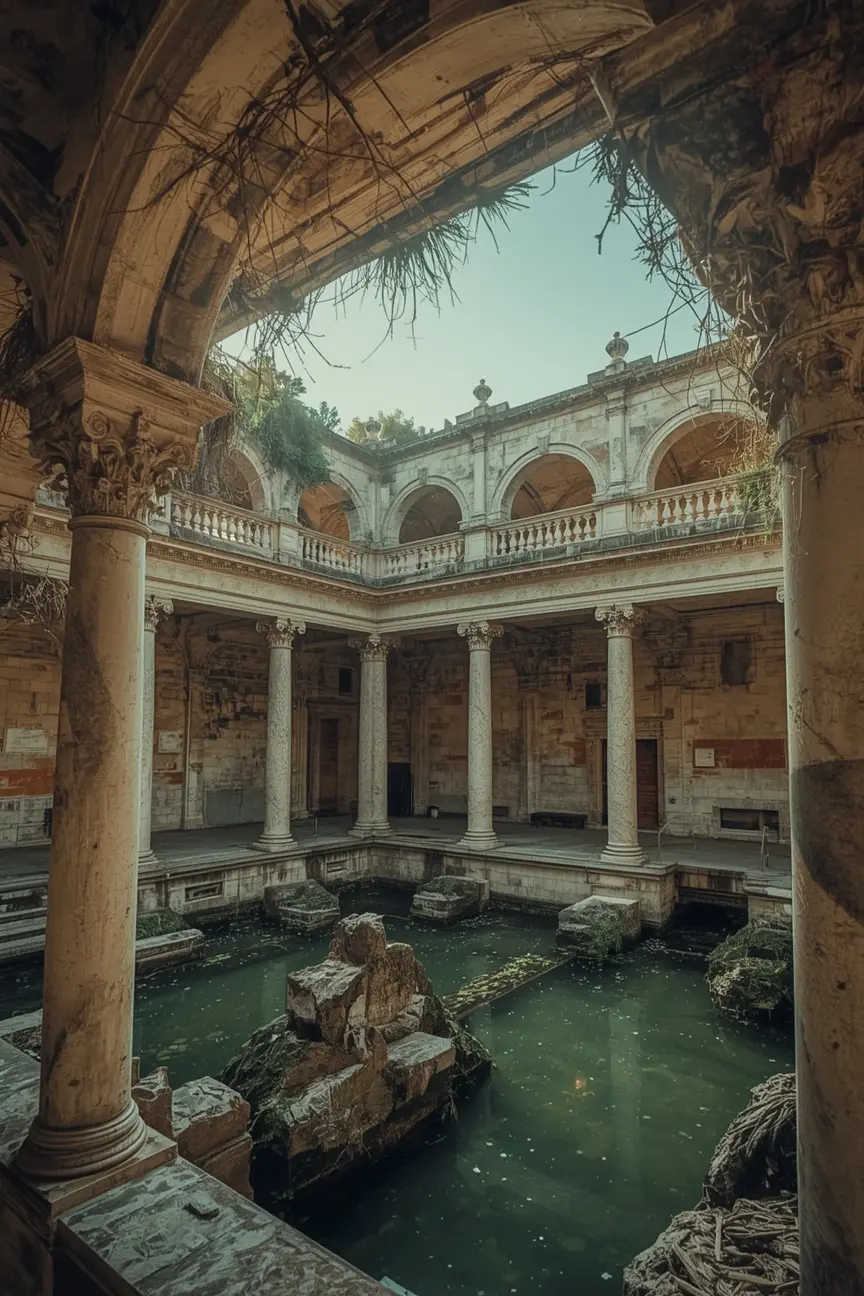
That variety is exactly why urbex Italy requires more caution than a simple list of coordinates. Some places are protected heritage sites. Others are private property, structurally unstable, or accessible only through legal visits, perimeter viewpoints, or prior authorization.
This guide focuses on well-known abandoned places in Italy and on responsible access. The goal is to help readers understand what each site is, why it matters, and how to approach research without trespassing or damaging fragile locations.
What are the best urbex places in Italy, and how should you approach them?
The best-known urbex locations in Italy include Craco, Consonno, Poveglia Island, the former Bugatti factory in Campogalliano, and the old village of Balestrino. The responsible approach is to verify ownership, check whether public viewpoints or guided visits exist, avoid forced entry, and use curated tools such as MapUrbex instead of unreliable coordinates shared online.
Quick summary
- Italy has a broad mix of abandoned villages, industrial ruins, islands, and leisure complexes.
- The most cited sites for urbex Italy are Craco, Consonno, Poveglia, Campogalliano, and Balestrino.
- Access conditions vary widely. Some sites can only be viewed externally or visited through authorized routes.
- Private property, local restrictions, water access, and structural instability are the main practical barriers.
- A responsible urbex plan in Italy starts with ownership checks, legal context, and low-impact behavior.
- Curated resources such as Browse all urbex maps are safer than random social media pins.
Quick facts
- Country: Italy
- Urbex types: ghost towns, former factories, islands, resorts, thermal sites, villages
- Best-known regions: Basilicata, Lombardy, Veneto, Emilia-Romagna, Liguria
- Main access issue: many locations are private, restricted, or unstable
- Best research method: verify status before travel and prefer legal observation points or authorized visits
- Safety note: preservation-first planning matters more than reaching an interior
Which abandoned places are best known for urbex in Italy?
The best-known abandoned places in Italy are those with clear historical identity and a widely documented current state. For most readers, the strongest shortlist combines one ghost town, one failed leisure development, one restricted island site, one industrial landmark, and one unstable abandoned village.
| Place | Region | Type | Current reality | Responsible approach |
|---|---|---|---|---|
| Craco | Basilicata | Ghost town | Historic abandoned settlement with managed contexts around it | Check official or guided visit options |
| Consonno | Lombardy | Abandoned leisure village | Semi-open exterior environment with changing conditions | Stay on legal approaches and respect closures |
| Poveglia Island | Veneto | Island complex | Highly restricted and not a casual visit | Research history and legal status before any trip |
| Former Bugatti factory | Emilia-Romagna | Industrial site | Famous exterior shell with ownership and safety issues | Prioritize external documentation only unless authorized |
| Old Balestrino | Liguria | Abandoned hill village | Fragile and geologically sensitive area | Respect barriers and local controls |
1. Craco, Basilicata
Craco is one of the most famous ghost towns in Italy. The hilltop settlement is known for long-term abandonment linked to landslides, instability, and depopulation, which turned it into a landmark for photographers, filmmakers, and heritage-focused explorers.
Craco is also a good example of why responsible access matters. Parts of the site have been managed through controlled visits rather than open wandering, and conditions can change. If you want to include it in an urbex Italy route, treat it first as a heritage site, not as a place for improvised entry.
2. Consonno, Lombardy
Consonno is often described as an abandoned fantasy village in Lombardy. It was redeveloped in the twentieth century as a leisure destination, but its trajectory collapsed after infrastructure problems and road damage cut access and momentum.
For urbex researchers, Consonno stands out because it is visually striking and widely discussed, yet it still demands restraint. The safest approach is to verify whether approaches are open, avoid climbing or entering unstable structures, and document the site from lawful exterior positions when conditions are unclear.
3. Poveglia Island, Veneto
Poveglia is one of the most searched abandoned places in Italy, largely because of its location in the Venetian lagoon and the myths attached to it. The historical core is more grounded: it had quarantine and medical uses over time, and today it is better understood as a restricted site than as an easy urbex destination.
That distinction is important. Reaching an island adds legal, logistical, and safety issues that do not exist on a roadside ruin. If you want a factual overview, read Abandoned Poveglia Island: History, Facts, and Urbex Reality in Italy. For most travelers, studying the site and respecting access limits is the responsible choice.
4. Former Bugatti factory, Campogalliano, Emilia-Romagna
The former Bugatti factory at Campogalliano is one of the best-known industrial urbex locations in Italy. It is closely tied to the EB110 era and to the failed expansion of a modern supercar project that ended before the site could develop into a long-term success.
Its appeal is obvious: the place combines automotive history, architecture, and abandonment in one name. Yet the responsible approach remains conservative. Ownership, deterioration, and liability issues matter more than getting inside. For deeper context, see Abandoned Bugatti Factory in Italy: History, Closure, and What Remains.
5. Old Balestrino, Liguria
Old Balestrino is a strong example of the abandoned village tradition in Italy. The old hill settlement was progressively left behind because of geological instability, leaving a dramatic stone-built environment that attracts photographers and architecture-focused travelers.
This is not a place to treat casually. Fragile masonry, uneven ground, and local restrictions can turn a scenic stop into a risky one. In practice, Balestrino is best approached with a preservation mindset, respecting barriers and prioritizing landscape observation over intrusive exploration.
How can you access urbex sites in Italy responsibly?
Responsible access in Italy means treating abandoned places as regulated environments, not as invitations to enter. In practical terms, that means checking ownership, looking for official visit frameworks, using public viewpoints when available, and walking away when the legal or structural situation is unclear.
A simple responsible access method looks like this:
- Verify whether the site is private property, protected heritage, or part of an active municipality.
- Check if entry is prohibited, guided, seasonal, or dependent on prior authorization.
- Prefer daylight, low-impact exterior documentation over interior access.
- Never bypass fences, doors, locks, or warning signs.
- Do not publish exact access instructions for fragile sites.
- Leave immediately if a location is occupied, monitored, or obviously unsafe.
Safety reminder: Italian abandoned places can involve unstable floors, loose masonry, shafts, asbestos, standing water, and restricted perimeters. Responsible urbex means preservation first, legality first, and no forced access.
Access the free urbex map
What rules matter most for urbex in Italy?
The most important rules in Italy are simple: do not trespass, do not force entry, and do not confuse visibility with permission. A place may be abandoned in appearance while still being privately owned, protected, monitored, or subject to local restrictions.
In practice, these are the key points to remember:
- Private property law still applies to abandoned buildings.
- Heritage protection can restrict access even when a place looks unused.
- Islands, rail areas, former hospitals, and industrial zones often carry additional controls.
- Municipal rules can change quickly after damage, vandalism, or accidents.
- Commercial drone use or intrusive filming may require separate permissions.
If you are building a larger itinerary, How to Plan an Urbex Road Trip in Europe is a useful starting point because route planning is often the difference between a careful trip and a risky one.
How should you plan an urbex trip across Italy?
The best way to plan an urbex trip across Italy is by region, access type, and legal certainty. Italy is long, mountainous, and administratively varied, so combining nearby sites with similar access conditions is far more reliable than chasing isolated viral spots.
A practical route plan usually includes three layers:
- A core list of sites with confirmed current status.
- Backup stops such as legal viewpoints, historic centers, or museums nearby.
- A clear decision point to skip any site that becomes unsafe or unauthorized on arrival.
Use curated resources rather than recycled coordinates. You can Browse all urbex maps to compare regions and focus on places that fit a preservation-first approach. This is especially useful in Italy, where a ghost town, a lagoon island, and a former factory all involve very different logistics.
FAQ
Is urbex legal in Italy?
Urbex in Italy is not automatically legal just because a place looks abandoned. Private property, municipal rules, and heritage protections still apply. Legal access usually depends on permission, public access status, or an authorized visit framework.
Can you visit Poveglia Island legally?
Poveglia is not a simple walk-in destination. Access issues involve boats, local controls, and site status, so it should never be treated as a casual or guaranteed visit. The responsible approach is to research the current legal situation and avoid any attempt to land without clear authorization.
What equipment is reasonable for abandoned places in Italy?
Basic equipment should prioritize safety and discretion: good footwear, charged phone, water, weather protection, and a simple light if a legal visit allows it. Heavy intrusive gear is less important than sound judgment. If a site requires risky climbing or improvised protection, the answer is usually not better equipment but no entry.
Are ghost towns in Italy the same as classic urban exploration sites?
Not always. Some ghost towns are partly managed heritage areas, some are view-only landscapes, and some include active residents nearby. Treating every abandoned village as an open urbex site is inaccurate and often irresponsible.
How can I find locations without relying on risky coordinates shared online?
The safest method is to use curated sources, historical research, official local information, and map tools that emphasize current context. Random coordinates on social platforms are often outdated, illegal, or misleading. Start with Browse all urbex maps and compare location type before you travel.
Conclusion
Urbex Italy is compelling because the country concentrates several different forms of abandonment in one place: ghost towns, industrial shells, island institutions, and failed leisure projects. The best abandoned places in Italy are not just visually striking. They also show why access conditions matter as much as history.
A good Italy urbex plan is selective, documented, and willing to stop at the perimeter when needed. That is the preservation-first approach MapUrbex supports: verified context, responsible research, and curated maps instead of reckless access.
Access the free urbex map
