 MapUrbex
A practical guide to urbex Europe: common site types, legal and safety basics, regional patterns, and how to use verified urbex maps responsibly.
Urbex Europe: A Responsible Guide to Urban Exploration Across the Continent
Europe is one of the richest regions for urban exploration. Industrial decline, demographic shifts, border changes, and long military histories have left a dense network of abandoned places across the continent.
At the same time, urbex Europe is not a single scene with a single rulebook. Ownership, access, site condition, and local attitudes vary sharply from one country, city, and building to another.
This guide explains what urbex Europe usually means, what kinds of abandoned places are most common, how to plan responsibly, and why verified maps matter more than random coordinates.
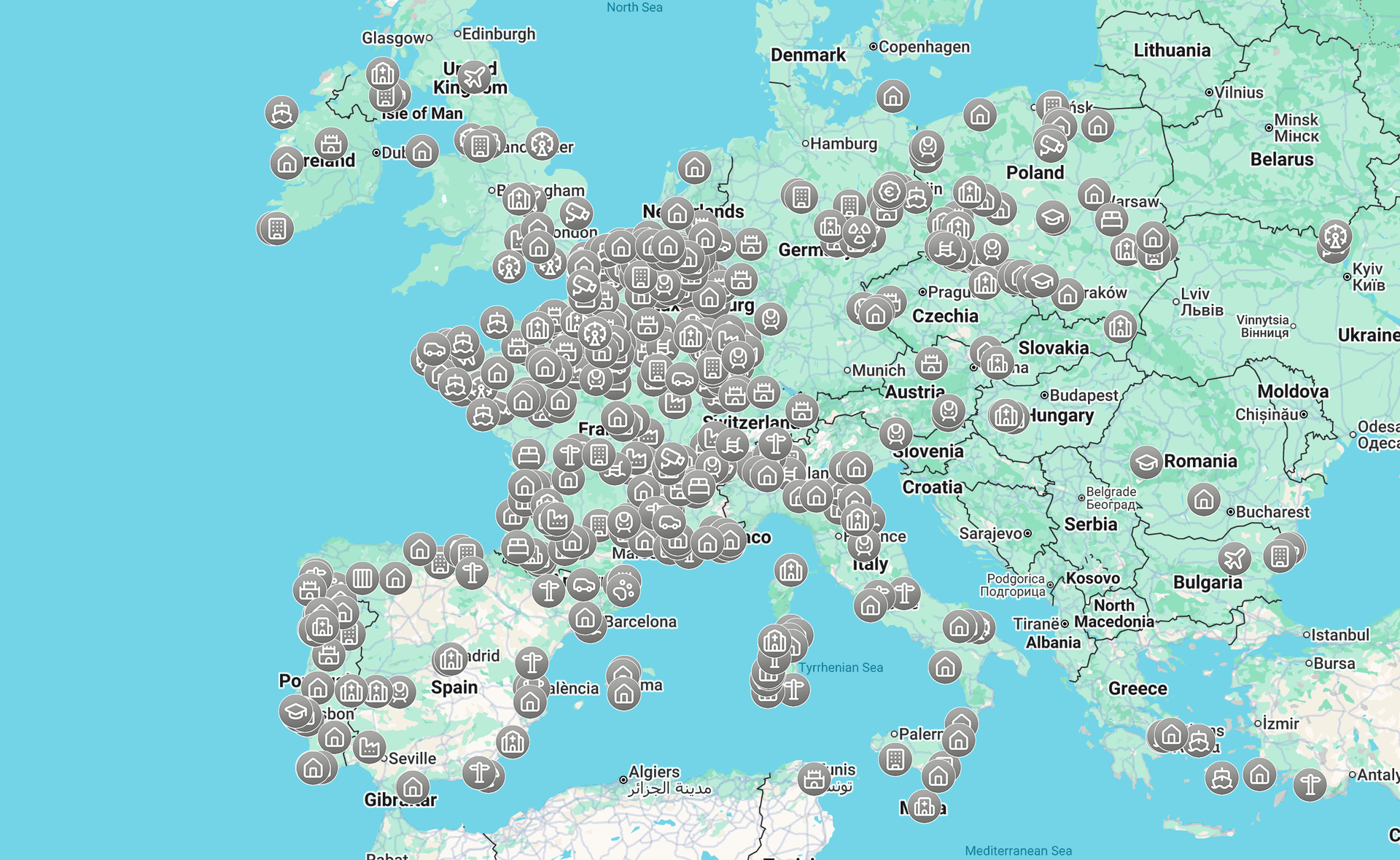
What is urbex Europe and how should you approach it?
Urbex Europe means urban exploration across European countries, usually focused on abandoned factories, hospitals, villages, military structures, and transport sites. The right approach is always legal, cautious, and preservation-first: verify access, respect private property, never force entry, and rely on curated information rather than unverified coordinates.
Quick summary
- Europe offers a high density of abandoned industrial, medical, rural, and military sites.
- The biggest differences between countries are ownership, access rules, and site condition.
- Responsible urbex means no trespassing, no forced entry, no theft, and no damage.
- Verified locations and curated maps are more useful than viral coordinates copied without context.
- Good preparation includes daylight timing, weather checks, route planning, and a clear exit plan.
- MapUrbex focuses on verified locations, responsible discovery, and preservation-first exploration.
Quick facts
- Scope: continent-wide guide to urban exploration in Europe
- Primary focus: research and planning, not reckless access
- Common site types: factories, hospitals, villages, forts, rail depots, hotels, and schools
- Main risks: unstable floors, shafts, contamination, weather, and legal access limits
- Best research tool: curated urbex maps with reliable context
- Core ethic: take photos, leave no trace, and avoid sharing harmful access details
Why is Europe one of the best regions for urban exploration?
Europe stands out because it compresses many historical layers into relatively short travel distances. In one broad region, explorers can encounter nineteenth-century industry, Cold War infrastructure, abandoned rural settlements, and modern commercial ruins.
That density makes planning more efficient. It also creates unusual variety for photographers, historians, and architecture-focused visitors who want more than one visual style.
Europe is especially strong for abandoned places because sites are not interchangeable. A textile mill, a sanatorium, a ghost village, and a bunker each reflect different local histories of labor, migration, tourism, conflict, and economic change.
In practical terms, urbex Europe is compelling because it combines scale with diversity. Few other regions offer so many categories of abandoned sites within such a connected travel network.
Which abandoned places in Europe are most common for urbex?
The most common urbex categories in Europe are industrial sites, medical buildings, rural settlements, military remains, and transport infrastructure. These categories repeat across the continent because they match Europe's industrial history, demographic shifts, and changing state infrastructure.
Common site types include:
- Factories and industrial complexes: mills, foundries, warehouses, production halls, and power-related structures
- Hospitals and sanatoriums: visually striking sites, but often fragile and highly restricted
- Abandoned villages: especially relevant in regions marked by depopulation or economic decline
- Military and Cold War sites: bunkers, barracks, observation points, and training areas
- Transport sites: rail depots, stations, hangars, tunnels, and maintenance buildings
- Hotels, schools, and civic buildings: often tied to tourism collapse or local population loss
If you want examples by theme, these guides are a useful next step:
- Abandoned Villages in Europe: 6 Ghost Towns, Their History, and Responsible Urbex
- 20 Abandoned Hospitals in Europe You Can Explore Responsibly
- Abandoned Factories in Europe: 6 Iconic Industrial Urbex Sites
How do laws and access rules differ across Europe?
Laws and access rules differ widely across Europe because property regimes, trespass standards, local enforcement, and building safety rules are not uniform. The safest assumption is that every site requires case-by-case verification.
Some locations are clearly private. Others are municipally owned, fenced but inactive, or legally accessible only with permission. A site that is casually visited in one region may lead to fines or police intervention in another.
The practical rule is simple: online popularity is not proof of legal access. Viral posts are not legal advice.
| Issue | Why it changes in Europe | Responsible response |
|---|---|---|
| Ownership | Sites may be private, public, military, or under redevelopment | Verify status before travel |
| Access rules | Trespass and entry rules vary by country and local authority | Assume permission is required unless clearly stated otherwise |
| Site condition | Climate, maintenance, and vandalism history differ greatly | Reassess risk on arrival and be ready to leave |
| Local visibility | Some places are isolated, others closely watched | Avoid attention-seeking behavior and respect residents |
| Documentation ethics | Sensitive locations can attract damage after exposure | Share context responsibly and avoid harmful detail |
A legal reminder matters here: responsible urbex never means breaking locks, forcing windows, entering active infrastructure, or ignoring restricted zones.
How can you plan a safe and responsible urbex trip in Europe?
A safe and responsible urbex trip in Europe starts with verified research, conservative route planning, and a willingness to cancel when conditions are wrong. Good planning reduces both physical risk and legal risk.
Use a structured process:
- Start with curated research instead of recycled coordinates. A practical starting point is to Browse all urbex maps or Access the free urbex map.
- Check ownership signals, recent reports, and site type. A factory, tunnel, and hospital do not carry the same risks.
- Plan for daylight, weather, parking, and exit timing. Many problems begin when visitors arrive late or improvise.
- Wear basic protective gear suitable for walking through unstable environments, but do not mistake gear for permission or safety.
- Avoid active tracks, roofs, shafts, flooded areas, and heavily damaged structures.
- Leave immediately if you find current use, security presence, major collapse, or clear prohibition.
For beginners, the best first site is not the most dramatic ruin. It is the clearest, lowest-risk place with recent and verified context.
What makes a good urbex map of Europe?
A good urbex map of Europe is accurate, filtered, and maintained. It should help users understand site type, regional distribution, and reliability instead of simply dumping raw points on a screen.
Useful map features usually include:
- verified or reviewed location data
- clear categorization by site type
- practical regional browsing
- updated status notes when available
- preservation-first framing rather than thrill-focused language
This is where curated mapping is stronger than random lists. A map built around verification helps users avoid duplicates, bad data, and misleading coordinates. If you want a broader starting point, see Browse all urbex maps.
Which regions in Europe attract the most urbex interest?
The regions that attract the most urbex interest are usually those with dense industrial heritage, visible rural abandonment, or extensive military remnants. Interest follows history more than tourism branding.
Broad patterns include:
- Western Europe: dense industrial and institutional heritage, often easy to combine into multi-stop routes
- Central Europe: strong concentration of factories, hospitals, sanatoriums, and Cold War remains
- Southern Europe: notable interest in abandoned villages, coastal resorts, and depopulated rural architecture
- The Balkans and parts of Eastern Europe: large-scale military, industrial, and infrastructure remains with very mixed conditions
- Northern Europe: fewer dense clusters in some areas, but strong photographic interest where maritime and industrial histories overlap
These are patterns, not rules. The best urbex Europe planning does not start with stereotypes about countries. It starts with verified locations and recent context.
FAQ
Is urbex legal in Europe?
Urbex is not universally legal or illegal across Europe. Legality depends on the specific site, ownership, local law, and whether permission exists. Never assume abandonment means open access.
Do you need permission to explore abandoned places in Europe?
In many cases, yes. If a site is private, restricted, active, or unclear, permission is the responsible standard. Entering without authorization can create both legal and safety problems.
Are abandoned places in Europe safe to enter?
Many are not. Structural instability, rot, glass, shafts, contamination, and weather damage are common. If conditions look uncertain, the correct decision is to leave.
Should coordinates for abandoned places in Europe be shared publicly?
Not always. Publicly sharing precise access information can accelerate vandalism, theft, and unsafe copycat visits. Preservation-first urbex favors context and discretion.
Is Europe a good region for beginner urbex?
Yes, but only if beginners choose low-risk locations, avoid isolated or unstable structures, and follow strict legal and safety limits. Starting with verified maps is far better than chasing viral spots.
Conclusion
Urbex Europe is compelling because Europe combines density, variety, and historical depth in a relatively compact travel space. That same variety also makes careless exploration a bad idea. Access rules change, buildings deteriorate differently, and local context matters.
The most reliable approach is simple: research first, verify access, respect property, and prioritize preservation over adrenaline. That is how urban exploration in Europe stays meaningful, safe, and sustainable.
Access the free urbex map
