 MapUrbex
A practical guide to 20 abandoned hospitals in Europe, from Beelitz-Heilstätten to Pripyat Hospital No. 126, with history, context, and responsible urbex advice.
20 Abandoned Hospitals in Europe You Can Explore Responsibly
Abandoned hospitals are among the most researched sites in European urbex. They combine medical history, large architectural footprints, and strong questions about memory, decay, and preservation.
This guide lists 20 abandoned hospitals in Europe that are well known in photography, heritage, and urbex circles. It is written for informational use. Access rules change quickly, and many sites can only be seen legally from public space, on guided visits, or not at all.
What are the most notable abandoned hospitals in Europe?
The most notable abandoned hospitals in Europe include Beelitz-Heilstätten in Germany, Ospedale al Mare in Italy, Pripyat Hospital No. 126 in Ukraine, and several large former psychiatric hospitals in the UK and Ireland. Together, they represent the best-known disused medical sites in Europe, but legal access varies widely and must always be verified before any visit.
Quick summary
- Europe has a wide range of abandoned medical sites, including sanatoria, psychiatric hospitals, naval hospitals, and quarantine complexes.
- Germany, Italy, the UK, Ireland, Spain, Portugal, Belgium, Poland, France, and Ukraine all have landmark examples.
- Some sites are famous because of architecture, while others matter because of public health or Cold War history.
- Many well-known hospital ruins are fenced, partly redeveloped, or accessible only on special tours.
- Responsible urbex means verifying legality, avoiding damage, and never forcing entry.
- For trip planning, verified research is more useful than viral location lists.
Quick facts
- Geographic scope: Europe
- Main theme: Abandoned hospitals and former medical complexes
- Related site types: Sanatoria, psychiatric hospitals, quarantine hospitals, leprosy colonies
- Best use of this guide: Historical overview and responsible trip planning
- Access reality: Status changes often; some sites are closed, protected, or redeveloped
- MapUrbex approach: Verified locations, preservation-first, and legal awareness
Why do abandoned hospitals attract so much urbex attention?
Abandoned hospitals attract urbex attention because they combine strong visual atmosphere with clear historical value. Large wards, service tunnels, pavilions, and chapel buildings often survive long after closure, making former hospitals some of the most documented abandoned places in Europe.
They also tell a precise story about how medicine changed. Tuberculosis care, psychiatric institutions, military medicine, and quarantine systems all left distinct architectural traces. That is why abandoned hospitals in Europe often matter as heritage sites, not only as photogenic ruins.
| Site | Country | Historical use | Responsible viewing note |
|---|---|---|---|
| Beelitz-Heilstätten | Germany | Sanatorium and military hospital complex | Parts are heritage-managed; verify what is officially open |
| Ospedale al Mare | Italy | Seaside hospital campus | Status is fragmented and changes over time |
| Pripyat Hospital No. 126 | Ukraine | City hospital linked to Chernobyl history | Restricted context; not a casual urbex destination |
| Hellingly Hospital | England | Psychiatric hospital | Security and redevelopment history vary by period |
| St. Brigid's Hospital | Ireland | Psychiatric hospital campus | Check current ownership and local restrictions |
| Joseph Lemaire Sanatorium | Belgium | Tuberculosis sanatorium | Treat as a heritage-sensitive site |
| Zofiówka Sanatorium | Poland | Sanatorium and later psychiatric use | Forest locations still require legal access checks |
| Hôpital Caroline | France | Quarantine hospital | Often best understood as a heritage ruin, not an infiltration site |
If you want a broader planning framework, start with Urbex Map Europe: How to Find Verified Abandoned Places Safely. For route planning across countries, How to Plan an Urbex Road Trip in Europe is the most practical companion article.
Which 20 abandoned hospitals in Europe are worth knowing?
The 20 sites below are among the best-known abandoned hospitals and former medical complexes in Europe. They were selected for historical importance, recognizability in urbex culture, and geographic range rather than for easy access.
1. Beelitz-Heilstätten, Germany
Beelitz-Heilstätten is one of the most famous abandoned hospital sites in Europe. Located southwest of Berlin, it began as a large sanatorium complex in the late 19th century and later served military medical functions.
Its scale is the main reason it became iconic. The site is known for long brick corridors, pavilion planning, and a dense woodland setting. Parts of the complex have been managed through heritage and tourism projects, which makes it a rare example where official visitation can exist alongside abandoned sections.
2. Ospedale al Mare, Italy
Ospedale al Mare on the Lido di Venezia is one of Italy's best-known disused hospital campuses. It developed as a major seaside medical complex and later declined into a fragmented, partially abandoned site.
What makes it notable is its urban scale. Rather than one ruin, it is a network of buildings shaped by pavilion medicine and coastal planning. For urbex researchers, it is important as a case study in how large public health infrastructure can fade unevenly over time.
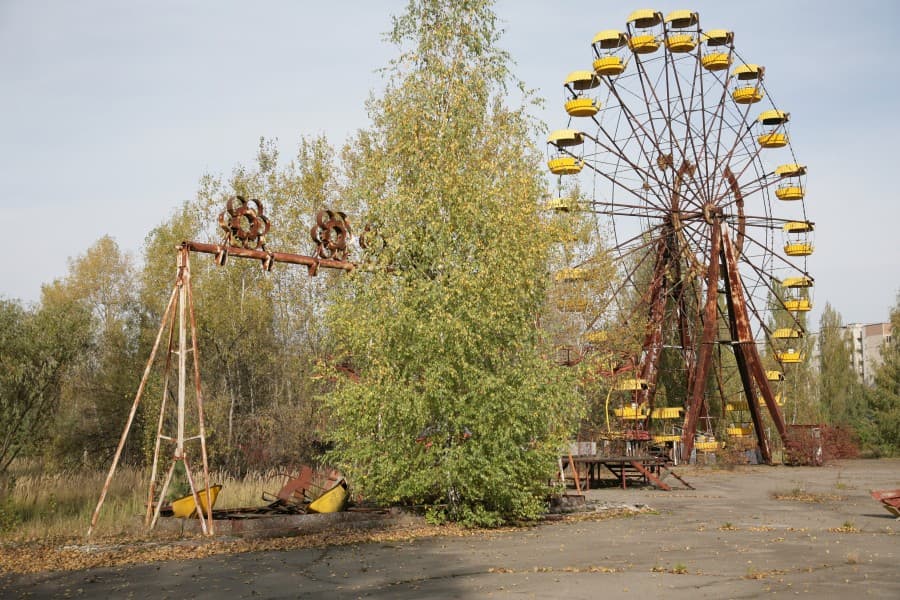
3. Pripyat Hospital No. 126, Ukraine
Pripyat Hospital No. 126 is the most symbolically charged abandoned hospital in Europe. It served the city of Pripyat and is closely associated with the immediate aftermath of the Chernobyl disaster in 1986.
Its importance is historical before it is photographic. Because of the exclusion zone, wider safety issues, and current geopolitical realities, this is not a routine urbex visit. It should be understood first as a restricted memorial landscape tied to nuclear history.
4. Hellingly Hospital, England
Hellingly Hospital in East Sussex is a classic reference point in British hospital urbex. Opened in the early 20th century as a psychiatric institution, it became famous for its size, service areas, and imposing auxiliary structures.
For many years, Hellingly represented the archetypal abandoned asylum campus in the UK. Its visibility in photography and online documentation helped shape how people imagine hospital exploration in Europe, even though the site's practical status has changed over time.
5. Cane Hill Hospital, England
Cane Hill Hospital in Coulsdon is one of the most cited abandoned psychiatric hospitals in England. After closure, it became widely known through photographs of decaying wards, institutional corridors, and repeated fire damage.
Today, Cane Hill is also a reminder that many famous hospital ruins do not remain intact for long. Demolition, redevelopment, vandalism, and weather can erase a site faster than online guides suggest.
6. North Wales Hospital, Wales
North Wales Hospital in Denbigh is a vast former psychiatric hospital often referred to in older sources as Denbigh Asylum. It stands out for Victorian scale, hilltop visibility, and a long period of dereliction.
Its reputation comes from both architecture and persistence. Even people who never visited it often know it from decades of British urbex imagery. It is also a good example of how fire and redevelopment debates can alter access and appearance very quickly.
7. St. Brigid's Hospital, Ireland
St. Brigid's Hospital in Ballinasloe is one of Ireland's most important disused psychiatric hospital sites. The campus grew from a 19th-century institution into a very large medical estate.
The site matters because it reflects a broader Irish history of psychiatric care and institutional expansion. In urbex terms, it is significant less for shock value than for scale, landscape setting, and the survival of multiple building types.
8. St John's Hospital, England
St John's Hospital at Bracebridge Heath, near Lincoln, is another major former asylum complex known to British urbex communities. Its red-brick plan and institutional layout fit the classic late-19th-century psychiatric model.
Not every part of the site stayed equally abandoned. That mixed status is common across Europe. Former hospitals are often split between demolition, reuse, and derelict remnants, which makes current verification essential.
9. Whittingham Hospital, England
Whittingham Hospital near Preston was once one of the largest psychiatric hospitals in the UK. Its campus included wards, service buildings, and extensive support infrastructure.
Researchers often remember Whittingham for its scale and for the way neglect affected different buildings at different speeds. It is a useful example of how large hospital estates can persist as semi-visible ruins long after medical use has ended.
10. Ospedale Forlanini, Italy
Ospedale Forlanini in Rome is a major reference for abandoned hospital architecture in Italy. Built as a tuberculosis hospital, it reflects a period when fresh air, sun, and pavilion planning were central to medical design.
Its visual appeal comes from that medical modernity. Even in decline, the complex says a great deal about 20th-century public health policy, urban growth, and the later retreat of large single-purpose hospital campuses.
11. Manicomio di Volterra, Italy
The former psychiatric hospital at Volterra is one of Italy's most discussed abandoned medical sites. Rather than a single building, it is a larger institutional landscape with strong links to psychiatric history and outsider art.
It is especially known for inscriptions associated with Oreste Fernando Nannetti, which give the site cultural depth beyond decay alone. That makes Volterra important to historians, photographers, and preservation-minded urbex readers alike.
12. Poveglia Hospital Complex, Italy
Poveglia is often described in sensational ways, but its real interest is historical. The island near Venice includes former quarantine and psychiatric uses, which is why it appears so often in lists of abandoned hospitals in Europe.
Access is heavily restricted and should not be romanticized. For responsible research, Poveglia is best treated as a controlled and sensitive site whose reputation often exceeds what legal visitors can actually do.
13. Sanatorio de Agramonte, Spain
Sanatorio de Agramonte in Aragon is one of Spain's best-known abandoned sanatorium sites. It sits in a mountain environment that reinforced its original medical purpose and later its reputation in urbex photography.
Its importance lies in the history of tuberculosis care. Like many European sanatoria, it shows how isolation, climate, and architecture were once combined into a therapeutic model that has largely disappeared.
14. Joseph Lemaire Sanatorium, Belgium
The Joseph Lemaire Sanatorium in Tombeek is one of the most recognizable abandoned medical buildings in Belgium. It is frequently cited for its modernist lines and for the long tension between decay, ownership, and heritage value.
For readers researching abandoned hospitals in Europe, this site matters because it expands the topic beyond gothic asylums. It shows that modernist medical architecture can be just as important in the urbex record.
15. Zofiówka Sanatorium, Poland
Zofiówka in Otwock is one of Poland's best-known abandoned medical sites. Originally developed as a sanatorium and later used for psychiatric care, it sits within a forested context that adds to its atmosphere.
Its layered history is the key point. Many abandoned hospitals in Europe changed function over time, and Zofiówka is a strong example of a site that cannot be reduced to one simple label.
16. Hospital Colónia Rovisco Pais, Portugal
Hospital Colónia Rovisco Pais, near Tocha, is a major Portuguese medical complex associated with the treatment and isolation of people with leprosy. It is historically important because it reflects both healthcare policy and social exclusion.
Parts of the complex have seen changing uses, but it remains a crucial reference in discussions of disused hospitals in Europe. The site is best understood through medical and social history, not only through ruin aesthetics.
17. Sanatório de Valongo, Portugal
Sanatório de Valongo is one of the Portuguese sites most often mentioned in discussions of hospital urbex. Like many former TB facilities, it is strongly tied to landscape, ventilation, and pavilion-style healthcare design.
Its appeal to photographers comes from decay in a wooded setting. Its broader value is that it documents the rise and fall of the sanatorium model in Southern Europe.
18. Hôpital Caroline, France
Hôpital Caroline on the Frioul archipelago near Marseille is a former quarantine hospital rather than a conventional urban hospital. It still belongs in this list because it preserves a clear medical and epidemic-control function in built form.
This is also one of the best examples of why abandoned hospitals should not all be treated the same way. Some are classic urbex ruins, while others are heritage sites where history matters more than access.
19. Martel de Janville Sanatorium, France
Martel de Janville, on the Plateau d'Assy in Haute-Savoie, is a striking former sanatorium complex associated with mountain medicine and long-term respiratory care. Its form makes it memorable even to people who know it only through photographs.
It represents a specifically Alpine chapter of European medical architecture. In that sense, it connects abandoned hospital research with the wider history of climate therapy and postwar healthcare expansion.
20. Severalls Hospital, England
Severalls Hospital in Colchester is another key name in the history of British abandoned hospitals. Although redevelopment and loss have changed the site, it remains a reference point in discussions of former psychiatric institutions.
Its importance today is partly archival. Severalls shows how hospital urbex in Europe often involves memory, documentation, and changing land use as much as intact ruins.
How should you plan a responsible trip around abandoned hospitals in Europe?
You should plan a responsible trip around abandoned hospitals in Europe by treating legality and safety as the starting point, not the final step. Verify ownership, current restrictions, and whether a site is accessible only by tour, by exterior viewpoint, or not at all.
Use verified tools instead of random coordinates. Start with Browse all urbex maps, then read Urbex Map Europe: How to Find Verified Abandoned Places Safely. If you want to connect hospital sites with other categories of decay landscapes, Abandoned Villages in Europe: 6 Ghost Towns, Their History, and Responsible Urbex adds useful context.
Never force entry, climb unstable structures, or enter sealed medical buildings. Former hospitals often contain asbestos risks, rotten floors, exposed shafts, contaminated basements, or active security systems. Preservation-first urbex means leaving no trace and accepting that sometimes the responsible choice is not to enter.
Access the free urbex map
FAQ
Are abandoned hospitals in Europe legal to visit?
Some are legal to visit, but many are not. Ownership, fencing, redevelopment, and local law vary by country and by site. Always verify the current rules before going.
Which countries have the best-known abandoned hospital sites in Europe?
Germany, Italy, the UK, Ireland, Portugal, Spain, Belgium, Poland, France, and Ukraine all have major examples. The UK and Italy are especially prominent in online documentation. Germany stands out because Beelitz-Heilstätten became internationally recognizable.
Are sanatoria included when people search for abandoned hospitals in Europe?
Yes, very often. Many searches for abandoned hospitals in Europe include former tuberculosis sanatoria, psychiatric institutions, quarantine hospitals, and leprosy colonies. In historical terms, these categories overlap with broader medical infrastructure.
Why do access conditions change so quickly at old hospitals?
Large hospital sites are expensive to secure and redevelop, so their status can change suddenly. Fires, partial demolition, temporary security, or new ownership can alter the situation within months. That is why old blog posts and viral videos are often outdated.
What is the safest way to find hospital urbex locations in Europe?
The safest method is to use verified, regularly updated sources and to prioritize legal access. Map-based research is more reliable than social media rumors. Start with curated information rather than exact coordinates copied from old forums.
Conclusion
The most notable abandoned hospitals in Europe are important because they preserve visible traces of medical, social, and architectural history. From Beelitz-Heilstätten and Ospedale al Mare to Pripyat Hospital No. 126 and St. Brigid's, these sites show how healthcare systems expanded, changed, and disappeared.
For responsible urbex, the key lesson is simple: research first, verify access, and put preservation ahead of the photo. If you want to keep planning with reliable information, use curated tools rather than guesswork.
Access the free urbex map
