 MapUrbex
A practical guide to urbex and weather: how to choose the best season, read forecasts, avoid risky conditions, and plan safer abandoned-place visits.
Urbex and Weather: The Best Times to Explore in Every Season
Urbex and weather are closely linked. The same abandoned site can feel easy to approach on one day and become unsafe, fragile, or simply unreadable on another.
For most explorers, the best time to explore is not a single month. It depends on visibility, surface grip, temperature, recent rainfall, and how a specific building reacts to the season.
This guide explains how to explore according to the seasons without romanticizing risk. The goal is simple: better timing, better preparation, and safer decisions.
What is the best weather for urbex?
The best weather for urbex is usually dry, mild, and stable. In practical terms, that means no active rain, limited wind, good daylight, and no recent weather event that could weaken floors, roofs, stairs, or access paths. Autumn and spring often offer the best balance, but the right choice depends on the site type and local conditions.
Quick summary
- Dry and stable weather is usually better than hot, cold, or dramatic weather.
- Autumn and spring are often the best seasons for urbex because they combine visibility, moderate temperatures, and manageable light.
- Rain, wind, ice, and heat can all change risk levels inside abandoned places.
- Forecast reading matters as much as the current sky; rain from the day before can still make a site unsafe.
- Each location reacts differently: a factory, church, hospital, tunnel, and roofed site do not behave the same way.
- Responsible urbex always comes before photography goals, and unsafe conditions are a valid reason to postpone.
Quick facts
- Primary factor: recent and current weather stability
- Best general seasons: spring and autumn
- Highest hidden risks: wet floors, rotten wood, loose roofing, ice, wind, heat stress
- Best light for visibility: bright but soft daylight
- Worst mindset: assuming a familiar site is unchanged after bad weather
- Best planning habit: check forecast, radar, wind, temperature, and rainfall history together
Why does weather matter so much in urbex?
Weather matters because abandoned places change faster than active buildings. A site that was stable last month may become fragile after repeated rain, freeze-thaw cycles, heat, or wind.
Moisture is one of the biggest factors. It weakens wood, makes metal slippery, hides holes under leaves or mud, and can turn staircases into fall hazards. Rainwater also collects in basements, elevator shafts, and low rooms.
Wind matters too. It can move unsecured doors, break glass, shift debris, and make roofs or upper levels more dangerous. Even if the building itself is sheltered, the approach route may not be.
Good urbex safety starts before arrival. That is why weather is not a side detail. It is part of site assessment.
Which season is best for urbex?
For most people, autumn is the best overall season for urbex, with spring close behind. Both usually offer moderate temperatures, useful daylight, and fewer extremes than summer heat or winter ice.
The best season still depends on your objective. If you want foliage-free exterior views, winter may help. If you want longer days and dry paths, parts of summer may work. The key is to match the season to the location.
| Season | Main advantages | Main cautions | Best for |
|---|---|---|---|
| Spring | Mild temperatures, improving daylight, fresh visibility | Sudden rain, muddy access, hidden slippery surfaces | General exploration, photography, mixed urban-rural sites |
| Summer | Long days, dry windows, easier travel planning | Heat, overgrowth, dehydration, more visible presence | Early-morning visits, large exterior sites |
| Autumn | Balanced light, cooler air, often clear structure views | Wet leaves, early darkness, repeated rain | All-round urbex, photography, building detail |
| Winter | Bare trees, fewer insects, strong contrast | Ice, cold, short days, freeze damage, black ice | Exterior scouting, selective dry-day visits |
How should you adapt an urbex outing in spring?
In spring, plan for variability. Spring can be excellent for urbex, but it often changes quickly from clear to wet, especially in the afternoon.
Check not only the hourly forecast but also rainfall from the previous 24 to 48 hours. A dry morning after heavy rain is not truly dry for an abandoned building. Interior wood, concrete dust, basements, and access ladders may still be slick.
Spring is also a good season for balanced exploration because temperatures are usually manageable. You can walk longer, carry basic gear comfortably, and avoid some of the fatigue common in peak summer.
If the site is surrounded by vegetation, remember that new plant growth can conceal holes, broken paths, and discarded materials.
What changes in summer?
Summer offers long daylight hours, which is useful for safer timing. More light means better visibility at entrances, stairwells, and transition areas.
However, summer is not automatically the best season for urbex. Heat increases fatigue, reduces concentration, and can turn large industrial sites into exhausting environments. Metal surfaces, attics, roof spaces, and glass-heavy buildings can become extremely hot.
Vegetation is another issue. In summer, tall grass, nettles, thorny growth, and dense trees can hide hazards and slow movement. Exterior access can become harder even when the weather looks ideal.
A practical approach is to explore early in the morning, carry water, dress for heat without exposing skin unnecessarily, and avoid ambitious routes during heatwaves.
Why can autumn be the best balance for many explorers?
Autumn is often the best balance for urbex because it combines cooler temperatures, softer light, and reduced summer overgrowth. Many sites are easier to read visually at that time of year.
Photography also benefits. Light is often more directional and less harsh, which helps interiors, textures, and broken architectural details. Exterior lines can become clearer once dense foliage starts to thin.
The main caution is surface deception. Wet leaves, moss, and repeated drizzle make paths and stairs more dangerous than they look. Shorter days also mean timing matters more. Starting late can compress decision time and increase pressure.
If you explore in autumn, treat fading daylight as a hard limit rather than an aesthetic bonus.
When is winter a good idea, and when is it not?
Winter can be useful for visibility, but it is the least forgiving season when surfaces freeze. It works best on clear, dry, calm days and for locations that do not require exposed climbs, unstable roofs, or long rural approaches.
Bare trees can reveal structures, access roads, and exterior layouts that are hidden in other seasons. This makes winter helpful for scouting and documentation.
The downside is that ice changes everything. A short metal staircase, a concrete ramp, or a roof edge can become far riskier than in any other season. Cold also reduces dexterity and battery life, and shorter days leave less margin for delay.
If winter conditions include black ice, snow cover hiding voids, or strong wind, postponing is usually the responsible choice.
How should you read the forecast before leaving?
For urbex, a forecast should be read as a safety tool, not just a comfort tool. The key question is not only "Will it rain while I am there?" but also "How has the site been affected before I arrive?"
Check these points together:
- current conditions
- hourly rain probability
- rainfall totals from the previous one to two days
- wind speed and gusts
- temperature and freezing risk
- storm alerts or sudden-change warnings
- sunset time and usable daylight
Radar is especially useful for spring and autumn outings. If the weather pattern is unstable, a postponed trip is often the better decision.
Which weather conditions should make you postpone an exploration?
You should usually postpone urbex when active rain, strong wind, ice, thunderstorms, flood risk, or extreme heat are part of the plan. These are not minor inconveniences. They directly affect structure reading, movement, and reaction time.
Postpone if you notice any of the following:
- strong gusts around damaged roofs or trees
- heavy rain now or shortly before arrival
- frozen metal stairs, ladders, or ramps
- flooded basements or waterlogged access points
- heatwave conditions with little shade
- storm warnings or fast-moving weather fronts
A good rule is simple: if weather makes the site less readable, less stable, or harder to exit quickly, it is the wrong time.
How do different location types react to weather?
Different abandoned places respond differently to the same forecast. That is why generic advice about the best season for urbex is only a starting point.
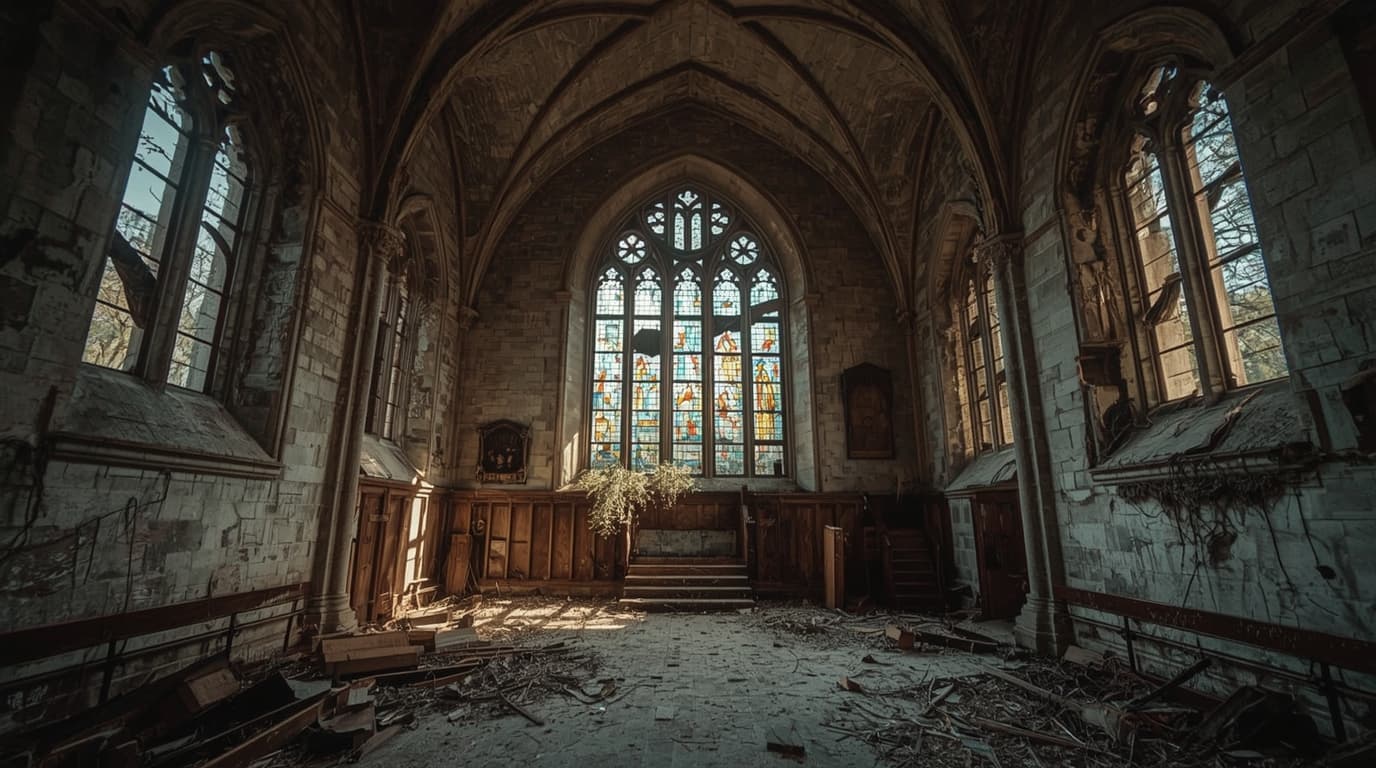
Former factories often collect water in broken concrete zones, trenches, and lower rooms. Churches and heritage buildings can have fragile wooden floors and roof leaks that worsen after long wet periods. Hospitals and office blocks may look more protected, but interior debris and hidden moisture still create slip hazards.
Rural locations add another layer. Muddy tracks, overgrown access, and isolated terrain change route safety before you even reach the building.
This is also where curated planning helps. Verified location databases reduce guesswork and let you compare site type, region, and trip timing more realistically. If you want to plan with that mindset, Browse all urbex maps is a useful starting point.
How can you stay safe and respect places in bad weather?
The safest response to bad weather is often not better gear. It is better judgment. If conditions are poor, the responsible decision is to delay, shorten, or cancel the outing.
Use a preservation-first approach:
- never force entry or bypass closures
- avoid unstable upper levels in wet or windy conditions
- keep extra distance from rotten floors and exposed edges
- tell someone your plan and expected return time
- bring light, water, charged phone, and simple backup layers
- leave immediately if the building feels less stable than expected
Legal access rules also matter. Always respect local law, private property, posted restrictions, and active hazard signage. MapUrbex promotes verified locations, responsible urbex, and site preservation over risky behavior.
For destination planning, curated references can help you compare seasons and site types. See Urbex Strasbourg: 10 Abandoned Places to Know in Strasbourg and Nearby, Urbex Toulouse: Best Abandoned Places In and Around Toulouse, and Urbex Brussels: guide to abandoned places in and around Brussels.
FAQ
Is rain always a bad idea for urbex?
Rain is not always catastrophic, but it is often a strong reason to reassess. Even light rain can reduce grip, hide hazards, and worsen roof or stair instability. Recent rain can matter as much as current rain.
Is summer really the best season for urbex?
Not necessarily. Summer gives long days, but heat, overgrowth, and dehydration can make exploration harder. In many regions, autumn and spring are more balanced.
Can cold weather make some places safer?
Cold weather can improve visibility and reduce vegetation problems, but it does not automatically make a place safer. Ice, brittle surfaces, and short daylight often offset those benefits.
What should you pack when the weather is uncertain?
Bring water, a charged phone, reliable lighting, simple warm or waterproof layers, and footwear with grip. The best preparation is still conservative decision-making, not overconfidence.
What is the best time of day to explore when weather is changing?
Earlier is usually better. Morning gives more daylight margin and more time to leave if the forecast shifts. It also reduces the pressure that comes with approaching sunset.
Conclusion
Urbex and weather should always be planned together. The best moment to explore is usually when conditions are dry, stable, and easy to read, not when the atmosphere looks most dramatic.
For most explorers, spring and autumn offer the best overall balance. But the real rule is simpler: match the season to the location, read the forecast carefully, and treat safety as part of route selection.
If you want to plan with verified locations and a preservation-first approach, start with curated tools rather than guesswork.
Access the free urbex map
