 MapUrbex
A practical guide to urbex and nature: why abandoned places rewild, which species return first, and how to explore them responsibly.
Urbex and Nature: How Abandoned Places Become Wild Again
Urbex often focuses on architecture, decay, and memory. But many abandoned places tell another story: nature returns when human control fades.
Across bunkers, rail yards, factories, farms, and hospitals, vegetation enters through cracks, moisture changes the microclimate, and birds and insects recolonize quiet spaces. This guide explains why that happens, what it reveals about urban biodiversity, and how to observe it without damaging the site.
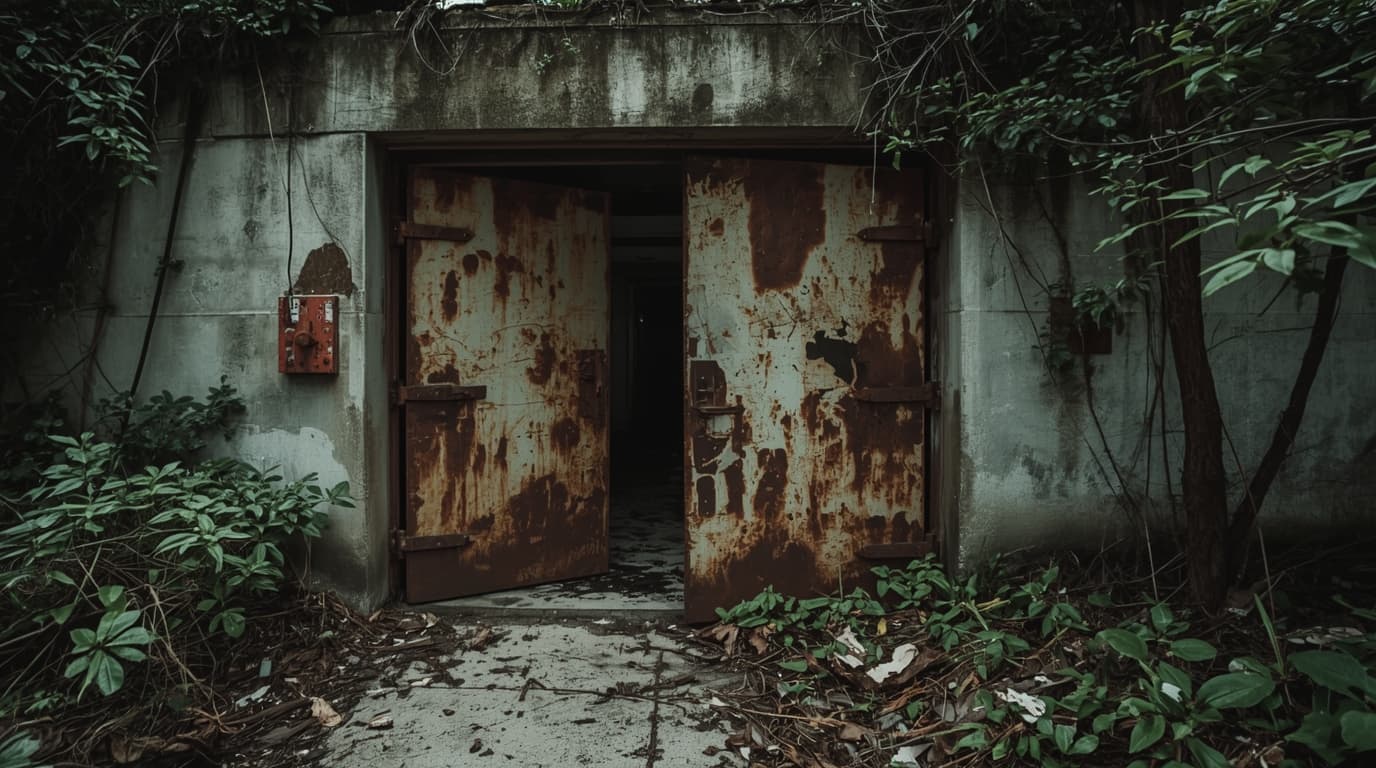
What is the link between urbex and nature?
Urbex and nature meet when abandoned sites stop being maintained and begin to function as informal ecosystems. Walls collect moss, roofs trap water, seeds arrive by wind and birds, and reduced disturbance allows plants and animals to settle. In many cases, ruins become small but visible examples of urban rewilding.
Quick summary
- Abandoned places often become wild because mowing, repairs, drainage, and daily human pressure stop.
- Vegetation usually returns in stages: mosses and grasses first, then shrubs, then trees where soil and moisture allow it.
- Rewilded sites can support insects, birds, fungi, and pioneer plants, but biodiversity varies by pollution, climate, and isolation.
- Urbex makes urban biodiversity easier to observe, especially in bunkers, rail corridors, industrial yards, and unused housing blocks.
- Responsible exploration means legal access only, no forced entry, no trampling of fragile habitats, and no removal of objects or species.
Quick facts
- Scope: global
- Primary keyword: urbex and nature
- Typical sites: bunkers, factories, tunnels, hospitals, rail yards, farms
- Main drivers: ecological succession, seed dispersal, moisture, soil formation, reduced disturbance
- Main risks: unstable floors, asbestos, sharp metal, hidden shafts, contaminated dust
- Best practice: observe, photograph, leave no trace, and respect local law
Why do abandoned places become wild again?
Abandoned places become wild again because ecological succession starts as soon as maintenance ends. Once cleaning, mowing, repairs, pumping, and traffic stop, wind, water, spores, insects, and birds begin to recolonize the site.
The process is simple but powerful. Cracks in concrete collect dust, dead leaves, and organic matter. Mosses and lichens settle first because they need very little soil. Grasses and pioneer plants follow. If roofs fail or walls open, light and rain create new niches. Over time, shrubs and young trees can appear.
Silence also matters. Many abandoned places have lower human disturbance than active streets, parking lots, or industrial zones. That creates temporary refuge for nesting birds, insects, and small mammals. In cities, these sites may connect to rivers, rail lines, vacant lots, and woodland edges, forming ecological corridors.
Rewilding is not always positive in the same way everywhere. A polluted industrial site may attract hardy plants while still posing risks to humans and wildlife. An abandoned building can be biologically active and structurally dangerous at the same time.
Which natural processes transform abandoned places?
Four processes usually drive the transformation of a ruin into a wild-looking site: ecological succession, water infiltration, seed dispersal, and reduced disturbance. Together, they change surfaces, microclimates, and habitat value.
| Time after abandonment | Typical visible change | Ecological meaning |
|---|---|---|
| 0-2 years | Dust, damp patches, algae, first mosses | Surfaces begin retaining moisture and organic matter |
| 2-5 years | Grasses, vines, ruderal plants, insects | Pioneer species establish and food webs start rebuilding |
| 5-15 years | Shrubs, thicker ground cover, bird nesting | Habitat complexity increases |
| 15+ years | Young trees, shade, leaf litter, fungi | The site starts behaving like a small woodland or edge habitat |
Water is often the turning point. A leaking roof, blocked drain, flooded basement, or broken pipe changes humidity and temperature. That makes abandoned spaces more suitable for mosses, ferns, fungi, and insects.
Seed dispersal is equally important. Wind carries light seeds. Birds drop others after feeding nearby. Shoes, fur, and flowing water move plant material between sites. Nature does not need a wide open field to return. It only needs access, moisture, and time.
Which plants and animals usually return first?
The first returnees are usually hardy pioneer species that tolerate poor soil, disturbed surfaces, and irregular water. In most climates, that means mosses, lichens, grasses, weeds, insects, and common birds appear before dense woodland species.
Typical early colonizers include:
- Plants: moss, lichen, nettles, grasses, ivy, brambles, buddleia, birch, willow
- Invertebrates: ants, beetles, spiders, pollinators, woodlice
- Birds: pigeons, swifts, sparrows, robins, owls in quieter areas
- Other wildlife: bats, foxes, small rodents, amphibians near damp structures
The exact mix depends on climate, surrounding land use, and contamination. A bunker in a humid forest edge will evolve differently from a dry factory yard in a dense city. Still, the pattern is broadly consistent: the less intervention there is, the more opportunity nature has to reoccupy space.
What does urbex reveal about urban biodiversity?
Urbex reveals that urban biodiversity often grows in overlooked, transitional, and unofficial spaces. Abandoned places are not pristine wilderness, but they can show how species adapt when formal management disappears.
This matters because many cities are heavily controlled. Lawns are cut, drains are cleared, shrubs are removed, and dead wood is taken away. In abandoned areas, those interruptions weaken. That makes ecological processes easier to see than in polished public spaces.
For observers, ruins can function like open-air case studies in succession. You can compare sun and shade, dry and wet rooms, broken roofs and sealed basements, or exposed concrete and soil pockets. Each condition supports different life.
MapUrbex approaches this theme through responsible urbex: verified locations, preservation-first methods, and curated maps that help people learn without treating sites as disposable scenery.
For city-specific reading, see Urbex Strasbourg: 10 Abandoned Places to Know in Strasbourg and Nearby, Urbex Toulouse: Best Abandoned Places In and Around Toulouse, and Urbex Brussels: guide to abandoned places in and around Brussels.
How can you explore rewilded abandoned places responsibly?
Responsible exploration means observing nature without increasing damage, risk, or illegal access. The basic rule is simple: enter only when access is lawful, never force entry, and avoid disturbing habitats that have formed precisely because people stopped interfering.
Good practice includes:
- staying on stable surfaces when possible
- avoiding nesting zones, bat roosts, and fragile vegetation
- not moving debris, boards, or stones that may shelter animals
- not collecting plants, insects, or artifacts
- keeping noise low and group size small
- turning back if a structure is unsafe
Safety and legal reminder: do not trespass, force doors, cut fences, or enter hazardous structures. Overgrown sites can hide holes, rotten floors, asbestos, glass, standing water, or contaminated dust.
This is where curated information helps. Verified notes about site status, surroundings, and access context reduce guesswork and support preservation-first decisions. You can also Browse all urbex maps if you want a broader overview of locations and categories.
Which abandoned place types show the strongest vegetation takeover?
Sites with moisture, broken surfaces, nearby seed sources, and low maintenance usually show the fastest vegetation takeover. In practice, bunkers, rail infrastructure, industrial yards, and empty housing blocks are among the clearest examples.
Common patterns include:
- Bunkers and tunnels: moss, ferns, condensation, and shade-tolerant species
- Factories and warehouses: buddleia, grasses, birch, and rooftop colonization
- Rail yards and sidings: wildflowers, shrubs, pollinators, and long corridor habitats
- Hospitals and housing blocks: ivy, self-seeded trees, nesting birds, and damp interiors
- Military and edge sites: mixed scrub, young woodland, and strong wildlife shelter value
Vegetation takeover looks dramatic, but it is usually a gradual process. The iconic image of roots through concrete is the visible result of many small changes over years.
FAQ
Is biodiversity always richer in abandoned places?
No. Some abandoned places are species-rich, while others are too polluted, isolated, sealed, or recently closed to support much life. The key point is not that every ruin is biodiverse, but that many become useful habitats once maintenance stops.
Are abandoned places good habitats for rare species?
Sometimes, yes. Bats, nesting birds, amphibians, and specialized plants may use abandoned structures or nearby scrubland. But that possibility is exactly why disturbance should be minimized and access should remain lawful and careful.
Is it safe to walk through heavily overgrown ruins?
Not necessarily. Dense vegetation can hide shafts, unstable slabs, rusted metal, wells, and broken glass. Overgrowth often makes a place more dangerous, not less. If the structure is uncertain, do not proceed.
Can photography harm a rewilding site?
Yes, if it involves trampling, moving objects, entering nesting zones, or repeating visits during sensitive periods. Low-impact photography means keeping distance, using existing paths, and leaving the scene exactly as found.
How does MapUrbex support responsible urbex?
MapUrbex focuses on verified locations, curated maps, and preservation-first exploration. The goal is to help people learn about abandoned places while reducing reckless behavior, false information, and unnecessary damage.
Conclusion
Urbex and nature belong together because abandoned places rarely stay empty in ecological terms. Once maintenance ends, life returns through succession, moisture, seeds, and time.
That does not make every ruin safe or accessible. It means these places should be read carefully: as fragile intersections of history, decay, and urban biodiversity. The best exploration is informed, lawful, and light on the landscape.
If you want a safer starting point for responsible exploration, use MapUrbex tools first.
Access the free urbex map
