 MapUrbex
A clear guide to the top 50 abandoned places in Île-de-France, with categories, safety advice, and MapUrbex recommendations for responsible exploration.
Top 50 Abandoned Places in Île-de-France: Complete Guide for Responsible Urbex
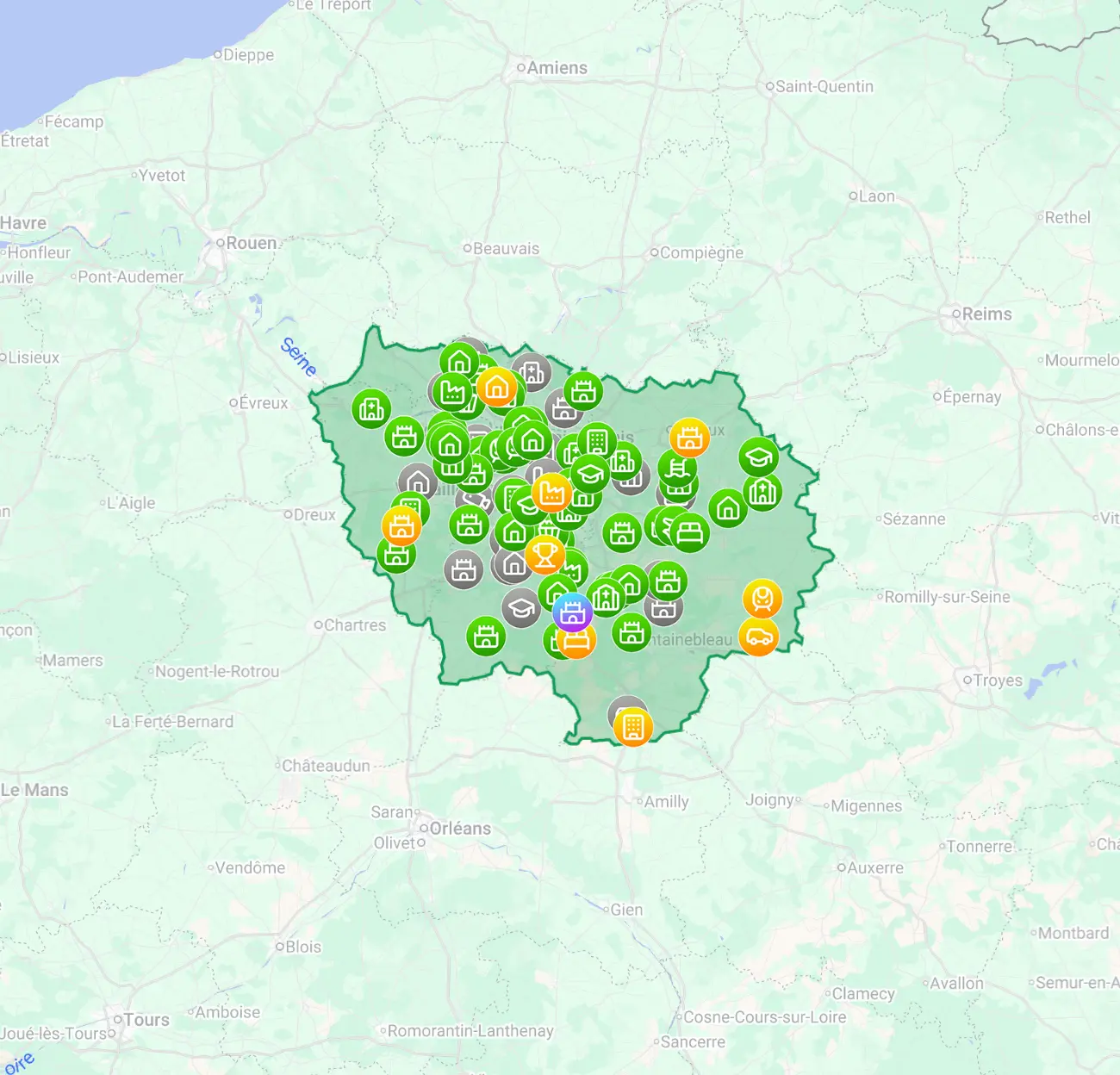
Île-de-France is one of the densest urbex regions in France. Around Paris, explorers can find abandoned châteaux, hospitals, factories, schools, military remnants, transport sites, and leisure complexes within a relatively compact area.
This guide explains what makes the top 50 abandoned places in Île-de-France worth knowing. It does not publish sensitive entry details or encourage trespassing. MapUrbex focuses on verified locations, preservation-first practices, and curated maps that help people prepare responsibly.
If you want a mapped overview first, start with Île-de-France Urbex Map: Abandoned Places Near Paris or Browse all urbex maps.
What are the best abandoned places in Île-de-France?
The best abandoned places in Île-de-France are usually former châteaux, hospitals, factories, schools, railway sites, religious buildings, military sites, and leisure complexes spread across the region. A strong top 50 balances visual interest, preservation value, realistic access logistics, and responsible exploration without exposing fragile locations publicly.
Quick summary
- Île-de-France offers one of France's richest mixes of abandoned architecture near a major capital.
- The strongest regional selection usually includes industrial, medical, residential, religious, and transport sites.
- A useful top 50 is not just about aesthetics; it also depends on condition, history, and risk level.
- Responsible urbex means no forced entry, no public coordinates, and no damage to already fragile sites.
- Curated maps are more reliable than random social posts because they reduce fake leads and protect locations.
- For a shorter shortlist, see Top 10 Abandoned Places in Île-de-France for Responsible Urbex.
Quick facts
- Region covered: Île-de-France
- Best-known urbex categories: mansions, factories, hospitals, schools, transport infrastructure
- Closest hub: Paris
- Best use case: day trips and carefully planned regional circuits
- MapUrbex approach: verified locations, curated maps, preservation-first
- Important reminder: always respect local law, ownership, and physical safety limits
Which types of abandoned places make up the top 50 in Île-de-France?
A realistic top 50 in Île-de-France is diverse. It is usually dominated by industrial and residential heritage, with a smaller but highly photogenic share of medical, military, religious, and railway sites.
| Category | Typical share in a top 50 | Why it matters |
|---|---|---|
| Châteaux and manor houses | 8 | Strong visual appeal, decorative interiors, landscape value |
| Factories and warehouses | 10 | Scale, machinery remains, industrial history |
| Hospitals and care facilities | 6 | Powerful atmosphere, medical heritage, complex layouts |
| Schools and institutions | 7 | Classrooms, dormitories, administrative traces |
| Military and security sites | 4 | Bunkers, depots, restricted-use history |
| Religious buildings | 3 | Chapels, seminaries, symbolic architecture |
| Railway and transport sites | 5 | Stations, depots, maintenance structures |
| Hotels, leisure, and commercial sites | 7 | Resorts, cinemas, restaurants, entertainment ruins |
| Rural farms and mills | 0 to 5 depending on curation | Strong texture, local heritage, variable condition |
The exact balance changes over time. Fires, redevelopment, surveillance, weather damage, and demolition can remove sites from any top 50 quickly.
Why is Île-de-France such a strong region for urbex?
Île-de-France is strong for urbex because it combines old industry, dense transport history, aristocratic estates, suburban expansion, and constant redevelopment pressure. Few European regions place so many abandoned site types so close to one another.
This density creates variety. In a single regional circuit, explorers may encounter a decaying mansion, a former medical campus, a rural outbuilding, and an industrial shell.
It also creates volatility. Popular spots near Paris can be damaged, sealed, or demolished faster than remote sites. That is why verified updates matter more here than in slower-moving regions.
How should you choose abandoned places to visit in Île-de-France?
Choose sites by matching the place to your experience level, travel time, and risk tolerance. Beginners usually do better with daylight-friendly exterior visits or low-complexity sites rather than unstable industrial interiors.
Use these filters:
- Condition: avoid collapsing floors, exposed roofs, and fire-damaged structures.
- Legal context: never assume abandonment means permission.
- Travel logic: group nearby sites instead of chasing distant rumors.
- Preservation value: fragile décor and archives require extra discretion.
- Exit options: poor visibility and sealed compounds increase risk.
A good regional guide helps you reject bad ideas early. That is often more useful than simply collecting more names.
Which departments usually offer the widest variety of abandoned places near Paris?
The widest variety is usually found in the outer departments, especially Seine-et-Marne, Essonne, Yvelines, and Val-d'Oise. These areas combine rural estates, industrial remnants, former institutions, and transport-linked ruins.
Inner Paris and the dense inner suburbs have fewer stable options because sites change quickly. Redevelopment, fencing, and security upgrades are more common there.
As a general pattern:
- Seine-et-Marne: estates, farms, mills, hospitals, large compounds
- Essonne: industrial sites, institutional buildings, suburban edge ruins
- Yvelines: manor houses, sanatorium-style sites, leisure properties
- Val-d'Oise: transport-linked sites, schools, mixed rural-urban ruins
- Seine-Saint-Denis and Hauts-de-Seine: higher turnover, fewer long-lived sites
What risks matter most when visiting abandoned places in Île-de-France?
The main risks are structural instability, hidden shafts, broken glass, asbestos, unsecured basements, and legal issues related to private property. Near Paris, fast site turnover also means old information becomes unsafe very quickly.
Responsible urbex never means forced entry, cutting fences, breaking locks, or entering a place you cannot assess safely. Preservation comes before content.
Other common issues include:
- poor mobile signal inside thick concrete structures
- mold and dust in closed interiors
- water damage on stairs and upper floors
- unexpected surveillance or active neighboring properties
Why does a curated urbex map work better than random lists?
A curated map works better because it prioritizes verification, context, and protection. Random lists often recycle dead spots, fake leads, or exposed places that have already been damaged by over-sharing.
MapUrbex is designed around location quality rather than raw quantity. That means clearer planning, more realistic expectations, and better preservation outcomes.
For broader browsing, use Browse all urbex maps. If you want a regional shortlist, read Top 10 Abandoned Places in Île-de-France for Responsible Urbex.
FAQ
Is urbex legal in Île-de-France?
Urbex itself is not a blanket legal category. The key issue is property access. A building may be abandoned and still remain private, monitored, or restricted. Always respect ownership, posted rules, and local law.
Are there really 50 abandoned places worth visiting in Île-de-France?
Yes, at a regional scale. Île-de-France is large and varied enough to support a top 50, but the list changes constantly. Demolition, renovation, fire, and exposure can make a formerly strong site no longer worth including.
What kinds of abandoned places are best for beginners?
Beginners should focus on low-complexity sites, exterior observation, and places with clear daylight conditions. Large factories, hospitals, and underground-connected structures usually require more caution and stronger judgment.
When is the best season for urbex in Île-de-France?
Autumn and winter are often the most practical because vegetation is lighter and visibility improves. Spring and summer can still work well, but dense plant growth may hide hazards and complicate navigation.
Should public coordinates for abandoned places be shared?
In most cases, no. Public coordinates accelerate vandalism, theft, and site closure. Responsible guides share context and verification while protecting fragile places from unnecessary exposure.
Conclusion
The top 50 abandoned places in Île-de-France are best understood as a changing regional ecosystem, not a static viral list. The strongest spots combine history, atmosphere, and architectural interest, but they also require discretion, legal awareness, and careful planning.
If you want dependable information, curated verification matters more than hype.
Access the free urbex map
