 MapUrbex
Discover the top 10 abandoned place categories in Île-de-France, how to explore responsibly, and where to find verified urbex locations near Paris.
Top 10 Abandoned Places in Île-de-France for Responsible Urbex
Abandoned places in Île-de-France attract photographers, history-focused explorers, and weekend urbex travelers from across France. The region offers unusual density: castles, industrial sites, hospitals, rail infrastructure, villas, and forgotten leisure properties can all be found within day-trip distance of Paris.
This guide is designed for people who want a reliable overview, not risky public rumors. We do not publish unlawful entry methods, and we do not encourage trespassing. Instead, we explain the 10 most sought-after categories of abandoned places in Île-de-France and how to use curated, verified map data to plan responsibly.
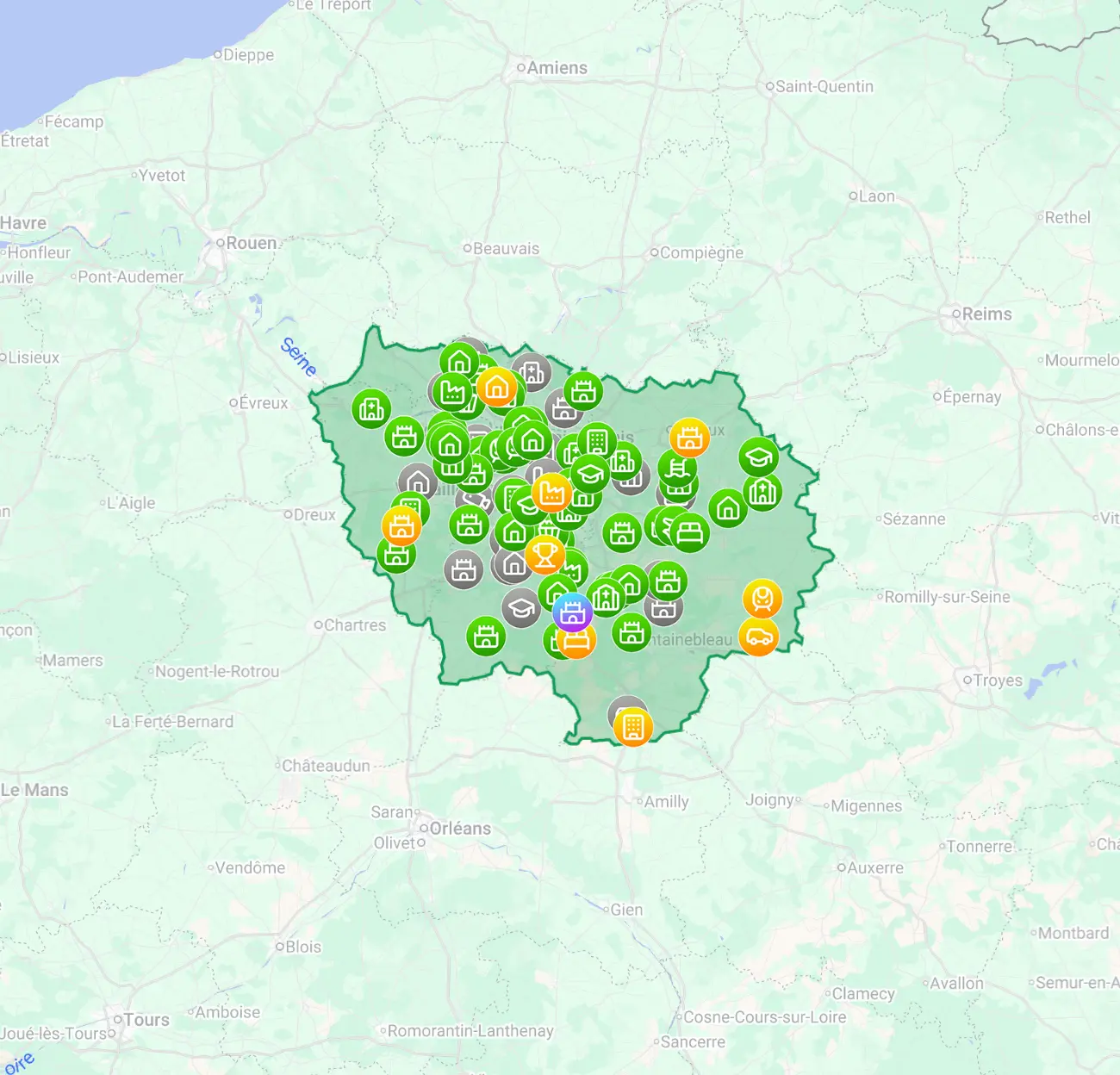
If you want exact listings rather than vague lists, start with Île-de-France Urbex Map: Abandoned Places Near Paris or Browse all urbex maps.
What are the best abandoned places in Île-de-France?
The best abandoned places in Île-de-France are usually château ruins, hospitals, factories, rail sites, farms, forts, schools, hotels, religious properties, and large villas. These site types are the most searched by urbex visitors near Paris because they combine visual atmosphere, history, and photographic variety. Exact access conditions change fast, so verified map data matters more than viral lists.
Quick summary
- Île-de-France is one of the richest French regions for urbex because it combines dense suburbs, old industry, transport history, and rural estates.
- The most sought-after abandoned places near Paris are usually castles, hospitals, factories, rail depots, and manor houses.
- Public lists age quickly. A curated map is safer and more useful than old forum threads or social posts.
- Legal status varies from site to site. Abandoned does not mean public or lawful to enter.
- Responsible urbex means no forced access, no vandalism, no theft, and no public sharing of sensitive entry points.
- MapUrbex is built for people who want verified locations and preservation-first exploration planning.
Quick facts
| Topic | Answer |
|---|---|
| Region | Île-de-France |
| Main search intent | Find worthwhile abandoned places near Paris with reliable map data |
| Most popular site types | Châteaux, hospitals, factories, rail sites, villas |
| Main constraints | Private property, instability, surveillance, redevelopment, asbestos |
| Best use of a map | Filter by area, compare categories, and check notes before planning |
| Best exploration approach | Responsible, legal-aware, preservation-first urbex |
Why is Île-de-France such a strong region for urbex?
Île-de-France is one of the strongest urbex regions in France because it concentrates very different abandoned environments in a relatively small area. Around Paris, you can move from dense industrial belts to forgotten estates, then to rural properties and transport infrastructure, often within the same day.
It also has historical depth. The region has old military layers, former medical institutions, suburban industrial decline, and country houses left behind by ownership disputes or redevelopment delays. That mix is why searches such as urbex Île-de-France, urban exploration Île-de-France, and abandoned places near Paris remain consistently strong.
Which 10 abandoned places in Île-de-France deserve attention first?
The top 10 abandoned places in Île-de-France are best understood as 10 high-interest site categories. That is the most accurate approach, because specific locations change status often and some should not be publicly exposed.
-
Abandoned châteaux These are among the most iconic sites in the region. They attract photographers for staircases, salons, wallpapers, outbuildings, and overgrown grounds.
-
Former hospitals and sanatoriums These sites are visually powerful and historically significant, but they are also among the riskiest because of structural decay and contamination concerns.
-
Factories and warehouses Industrial urbex in Île-de-France remains a core interest. Large halls, machines, conveyors, offices, and signage create strong documentary value.
-
Rail depots, stations, and service buildings The transport history of the Paris region makes rail-related abandonment especially attractive. These places often offer strong geometry for photography.
-
Abandoned farms and rural estates In the outer departments, older farm complexes can provide a very different mood from suburban ruins. They are often quieter, but legal access is still not automatic.
-
Forts and military remnants Military structures around the capital have major historical interest. They also require extra caution because some zones may be protected, unstable, or actively monitored.
-
Schools and institutional buildings Classrooms, corridors, gym spaces, and offices often preserve strong traces of daily life. They are among the most sensitive site types for ethics and privacy.
-
Hotels and leisure complexes Former holiday sites, restaurants, event spaces, or swimming facilities are highly searched because they mix architecture and atmosphere.
-
Religious sites and convents Chapels, monasteries, and abandoned religious houses can be visually striking. They also call for added respect because of cultural and memorial value.
-
Large villas and manor houses These are a major part of the abandoned places in Île-de-France landscape. They often combine domestic interiors, gardens, and architectural details in one compact site.
How can you find abandoned places in Île-de-France without using unreliable public lists?
The safest and most useful method is to rely on curated map data rather than random public threads. Viral spot lists usually become outdated quickly, attract damage, and rarely explain whether a place is private, sealed, demolished, or under redevelopment.
MapUrbex focuses on verified locations, practical notes, and preservation-first discovery. If you want a broader overview, use Browse all urbex maps. If you want a regional starting point, read Île-de-France Urbex Map: Abandoned Places Near Paris.
A good abandoned places list should help you answer three questions before you travel:
- Is the site still standing?
- Is the area sensitive, monitored, or clearly private?
- Does the category match your goal, such as architecture, history, or photography?
What legal and safety issues matter most in Île-de-France urbex?
The main legal point is simple: an abandoned building is not automatically legal to enter. In Île-de-France, many sought-after spots are still private property, partially active, awaiting demolition, or under surveillance.
The main safety risks are equally clear: unstable floors, falling materials, glass, asbestos, hidden shafts, and unexpected human presence. Hospitals, factories, and rail sites usually require the most caution.
Responsible urbex means observation without damage. No forced access, no theft, no tagging, and no publication of sensitive entry methods.
For the legal basics, read Is Urbex Legal? A Clear Guide to Urban Exploration Laws. For preservation-first behavior, read Urbex Ethics: Rules for Responsible Urban Exploration.
How should you prepare a responsible day trip near Paris?
A good day trip near Paris starts with planning, not improvisation. The goal is to reduce wasted travel, avoid unsafe assumptions, and keep your exploration lawful and discreet.
Use this checklist:
- Check the latest status notes before leaving.
- Prefer daylight visits and conservative timing.
- Wear solid footwear and simple protective clothing.
- Bring water, a charged phone, and a backup battery.
- Avoid going alone in isolated or unstable places.
- Leave immediately if a site is occupied, active, or clearly secured.
- Never force doors, fences, shutters, or windows.
FAQ
Is urbex legal in Île-de-France?
Urbex itself is not a single legal category, but entering private property without permission can be unlawful. That is why legality depends on ownership, access conditions, local restrictions, and the exact site status.
Are abandoned places near Paris removed or redeveloped quickly?
Yes. In and around Paris, redevelopment pressure is high. A spot that was accessible months ago may now be fenced, monitored, demolished, or repurposed.
What gear is reasonable for abandoned places in Île-de-France?
Reasonable gear includes sturdy shoes, gloves, weather-appropriate clothing, water, a phone, and basic lighting. Heavy-risk environments should be avoided rather than treated as a challenge.
Why does MapUrbex avoid publishing entry methods?
Because entry methods accelerate damage, trespassing, and site closure. Preservation-first mapping helps people research places without turning them into targets.
Are the best urbex places in Île-de-France all close to Paris?
No. Many of the most interesting places are in outer suburban belts or more rural departments of the region. Paris is a useful base, but not the whole story.
Conclusion
The best abandoned places in Île-de-France are not defined by hype alone. They are defined by atmosphere, historical interest, site variety, and whether you can research them responsibly. For most explorers, the smartest approach is to use a curated map, focus on categories that match your interests, and treat every site as fragile.
If you want verified locations instead of unreliable public lists, start with the free map.
Access the free urbex map
