 MapUrbex
A premium urbex map should do more than display pins. Learn which services, verification standards, and safety features truly justify a paid abandoned places map.
Premium Urbex Map: Which Services Should It Absolutely Offer?
A premium urbex map is only worth paying for if it solves real problems. It should save research time, reduce false leads, and help users plan responsibly.
Many paid maps of abandoned places promise quantity. In practice, quantity alone is not enough. A useful product depends on verification, updates, search tools, and clear safety standards.
This guide explains the services a premium urbex map should obligatorily provide before anyone considers subscribing.
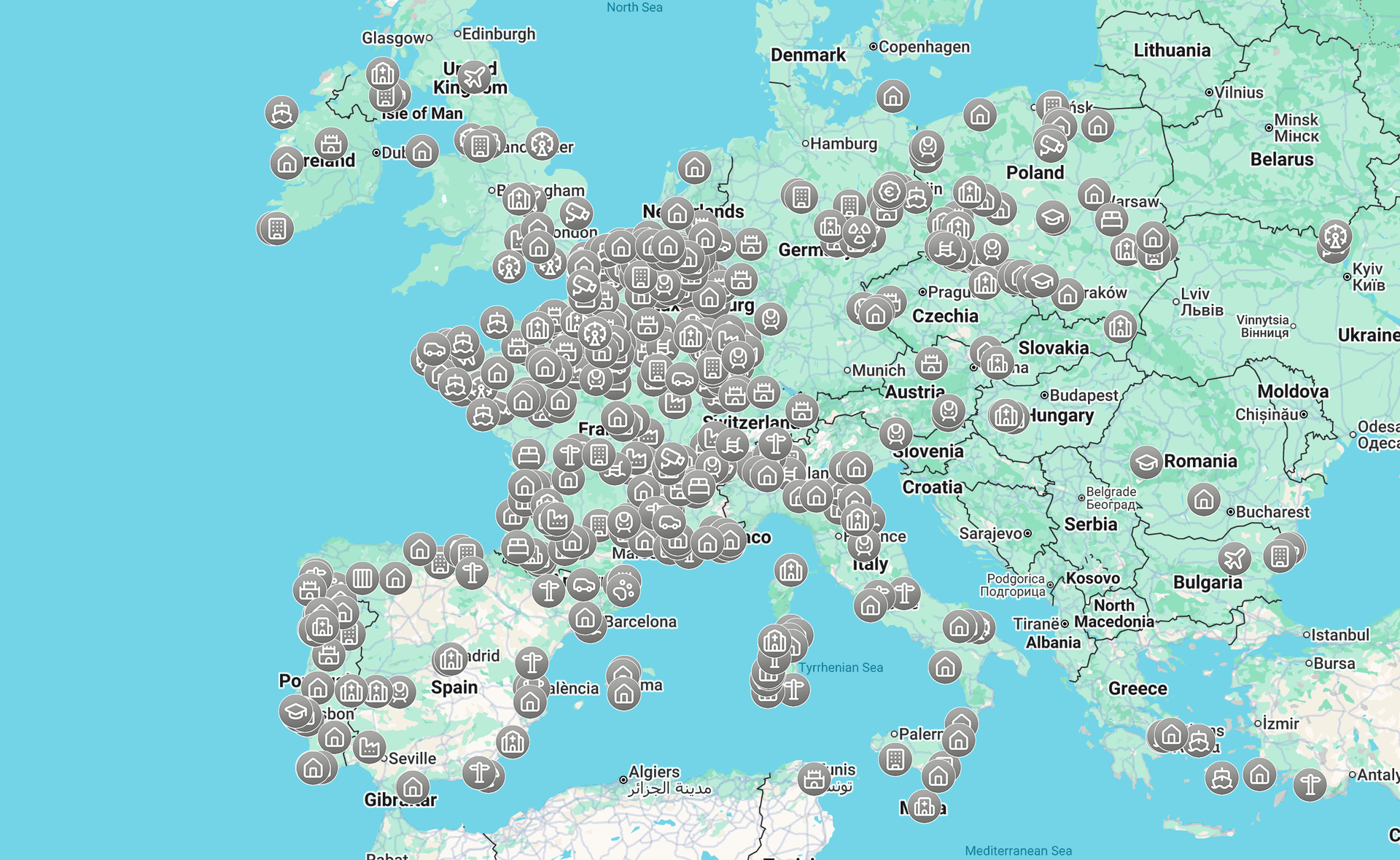
What services must a premium urbex map include?
A premium urbex map should include verified locations, useful filters, frequent status updates, and transparent curation. It should also help users avoid obsolete or duplicated pins, explain what kind of information each listing contains, and promote responsible urbex rather than reckless exploration. If a paid map cannot do those things, the upgrade is hard to justify.
Quick summary
- A premium urbex map must offer more than a long list of pins.
- Verified locations are the first non-negotiable service.
- Good filters, update history, and status notes are what make the map practical.
- A paid abandoned places map should reduce wasted trips, not create them.
- Responsible urbex guidance matters as much as database size.
- Transparency before purchase is part of the product quality.
Quick facts
- Primary use: planning and filtering, not random browsing
- Minimum standard: reviewed listings with status context
- Biggest weakness of poor paid maps: outdated or duplicated places
- Most useful filters: type, region, condition, update recency
- Essential brand signal: preservation-first and safety-aware curation
- Legal reminder: no map can replace permission, local laws, or site-specific restrictions
Why is location verification the first service that matters?
Verification is the first service that matters because a premium urbex map is valuable only if the information is more reliable than a free list. Users are not paying for dots on a screen. They are paying for curation.
In practice, verification means several things:
- duplicate entries are removed
- obvious demolition cases are cleaned out
- listings are reviewed when a place is renovated, sealed, or reused
- descriptions distinguish uncertain locations from stronger leads
A verified location database does not mean guaranteed access. It means the map provider has checked whether the listing still deserves to be on the map.
That difference is crucial for responsible urbex. A preservation-first platform should help people avoid wasted travel, unsafe assumptions, and unnecessary attention around fragile sites.
Which features make a paid urbex map genuinely useful?
A paid urbex map becomes genuinely useful when it helps users sort information fast and understand what each location is worth. The key is not complexity. The key is decision-making clarity.
| Service | Minimum standard | Why it matters |
|---|---|---|
| Verified locations | Each pin is reviewed and duplicates are removed | Reduces wasted trips |
| Search filters | Filter by type, area, status, and update recency | Makes the map usable at scale |
| Status notes | Mentions demolition, closure, renovation, or uncertainty | Prevents obsolete planning |
| Curated presentation | Clear listing structure and readable map view | Saves time during research |
| Responsible guidance | Legal and safety reminders in product messaging | Supports ethical exploration |
The best urbex map features are usually simple:
- filter by category such as factory, hospital, villa, military, or industrial site
- sort by country, region, or travel radius
- identify whether a place looks active, abandoned, converted, or uncertain
- show when a record was last reviewed
- present notes in a clear and consistent format
If you want to compare products, start with utility rather than hype. You can Browse all urbex maps or Access the free urbex map to see how different map formats support research.
How should a premium urbex map handle updates and removals?
A premium urbex map should treat updates as a core service, not as occasional maintenance. Abandoned places change constantly. Some are demolished, some are secured, and some are reused.
A map that never removes stale pins becomes less trustworthy every month. That is why update policy matters so much in any paid urbex map.
Look for signs of active maintenance such as:
- recently reviewed listings
- removal of clearly obsolete places
- changed status notes when a site is repurposed
- visible separation between confirmed entries and uncertain ones
A smaller curated database is often more useful than a giant unmanaged archive. For transactional buyers, this is one of the clearest quality tests.
Is a large abandoned places map enough on its own?
No. A large abandoned places map is not enough on its own because scale without curation produces noise. A database with thousands of weak entries can be less useful than a smaller collection with stronger review standards.
When evaluating a premium urbex map, ask practical questions:
- Are many pins duplicated under slightly different names?
- Does the map distinguish abandoned sites from merely old buildings?
- Are converted or demolished places still displayed as current leads?
- Is there any indication of review quality?
The strongest products focus on signal over volume. That is especially important for users who want a paid map to shorten research time.
What transparency should a paid urbex map provide before purchase?
A paid urbex map should clearly explain what the buyer gets before purchase. If the offer is vague, the risk of disappointment is high.
Useful pre-purchase transparency includes:
- what regions the map covers
- what kinds of locations are included
- how listings are reviewed
- how often the map is updated
- whether there is a free preview or free version
- what support or guidance is available
This is also where a free product tier can help. A serious platform lets users test the interface, understand the curation style, and judge whether the premium offer is worth it. You can start with Access the free urbex map before comparing paid features.
How does a premium urbex map support responsible urbex?
A premium urbex map should support responsible urbex by discouraging trespassing, forced entry, vandalism, and careless exposure of fragile places. Good curation is not only about discovery. It is also about preservation.
That means product messaging should remind users to:
- respect private property and local law
- never force access
- avoid dangerous structures and unstable interiors
- leave no trace
- protect sensitive places from unnecessary damage or publicity
Responsible mapping also improves data quality. People who approach exploration carefully are more likely to report changes accurately and less likely to treat locations as disposable content.
If you are still building your research method, How to Find Abandoned Places Near You and How to Find Abandoned Places in France explain how map-based discovery fits into a wider workflow.
Should a premium urbex map include guides and examples?
Yes. A premium urbex map should include at least some educational context because many buyers do not only want coordinates or pins. They also want to understand how to evaluate a location.
Useful supporting content can include:
- examples of well-documented places
- regional discovery guides
- explanations of status categories
- onboarding tips for search filters and map layers
For example, editorial guides such as Top 10 Abandoned Places Around Paris for Urbex in Île-de-France help users see what curated exploration content looks like beyond raw mapping.
FAQ
Is a premium urbex map better than a free map?
Not automatically. A premium urbex map is better only when it offers stronger verification, better filters, cleaner updates, and clearer curation than a free alternative.
How often should a paid urbex map be updated?
There is no single universal schedule, but updates should be frequent enough to remove demolished, converted, or clearly outdated places. Regular review matters more than marketing claims.
What are the most important urbex map features?
The most important features are verified listings, filters, status notes, update recency, and a clear interface. Those features make a map actionable rather than decorative.
Should a paid abandoned places map guarantee access?
No. No responsible product should guarantee access. Access depends on ownership, law, security changes, and local conditions. A trustworthy map helps research; it does not promise entry.
Is database size more important than curation?
No. Curation is usually more important than size. A smaller, updated map often provides more real value than a larger but neglected database.
Conclusion
A premium urbex map should obligatorily provide verification, filters, updates, and transparency. Those services are what transform a paid map from a simple pin collection into a practical research tool.
The best paid maps also reflect responsible urbex values. They help users plan better while respecting legality, safety, and preservation.
If you want to evaluate a platform properly, start with the free version, compare the curation quality, and then decide whether the premium service adds enough practical value.
Access the free urbex map
