 MapUrbex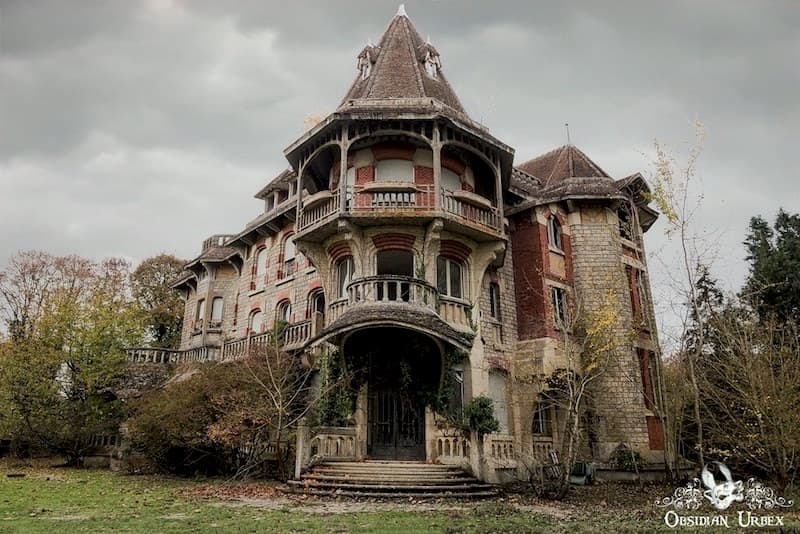
A practical guide to the best abandoned places around Paris, with area insights, legal context, and a safer way to find verified urbex locations in Île-de-France.
Top 10 Abandoned Places Around Paris for Urbex in Île-de-France
Abandoned places around Paris attract a wide range of urbex photographers, heritage enthusiasts, and map users. The region offers more variety than the city itself, with châteaux, former medical sites, railway remnants, industrial wastelands, and partially deserted districts spread across Île-de-France.
This guide focuses on well-known sites and sectors around Paris, not viral coordinates. Access conditions change fast, and some places are closed, dangerous, or protected. If you want verified data rather than random public pins, start with Browse all urbex maps.
What are the best abandoned places around Paris?
The best abandoned places around Paris are a mix of landmark sites and broader urbex zones, especially in Val-d'Oise, Hauts-de-Seine, Seine-Saint-Denis, and outer-ring Seine-et-Marne. The most cited names include Château Rothschild, the Aincourt Sanatorium, the old district of Goussainville, selected railway and industrial sites, and several abandoned leisure or military remnants that require strong safety and legal caution.
Quick summary
Here are the key points to know before planning Paris urbex around the wider region:
- The richest abandoned areas around Paris are usually outside the city center.
- Val-d'Oise and the northern outskirts stand out for sanatoriums, villages, pools, and industrial remains.
- Some famous sites are better treated as heritage references than exploration targets because of danger or strict restrictions.
- Public coordinates are often outdated, overexposed, or legally risky.
- A curated regional map is more reliable than social media posts for planning abandoned places in Île-de-France.
- Responsible urbex means no forced entry, no vandalism, no theft, and no publication of sensitive access details.
Quick facts
These facts give a fast overview of the topic:
- Primary area: Paris and the surrounding Île-de-France region
- Main search intent: Find the best abandoned places around Paris and compare options
- Best-known site types: Châteaux, sanatoriums, railway remnants, industrial wastelands, pools, forts
- Typical travel pattern: Short day trips from Paris by car or regional rail
- Main risk factor: Legal status changes quickly; some sites are structurally unsafe or monitored
- Best planning method: Use verified, curated location data instead of public coordinates
Access the free urbex map
Which abandoned areas around Paris are the most interesting for urbex?
The most interesting abandoned areas around Paris combine strong visual identity with regional variety. The list below mixes iconic sites and high-interest sectors that regularly appear in Paris urbex research, while keeping a preservation-first perspective.
1. Château Rothschild in Boulogne-Billancourt
Château Rothschild is one of the best-known abandoned places near Paris because it combines aristocratic architecture, urban proximity, and long-term decay. It sits just west of the capital and is often cited in discussions about abandoned châteaux in the Paris area.
Its fame is exactly why caution matters. Legal status, security presence, and site condition can change, so it should be treated first as a heritage landmark rather than a casual target. For many researchers, it represents the classic image of urbex Paris on the western edge of the city.
2. The Aincourt Sanatorium in Val-d'Oise
The Aincourt Sanatorium is one of the strongest medical-site references among abandoned places around Paris. Its scale, isolated setting, and hospital architecture make it a recurring name in Île-de-France urbex searches.
It is also a reminder that medical ruins can be especially hazardous. Broken floors, exposure risks, and unstable interiors are common concerns in former care facilities. From a documentary perspective, Aincourt is important because it shows how public health architecture survives in ruin form on the outskirts of Paris.
3. The old district of Goussainville
Goussainville's old district is unusual because it is not a single abandoned building but a partially deserted urban area shaped by airport expansion and flight-path pressure. That makes it one of the most distinctive abandoned places in the greater Paris region.
For urbex research, its value is historical as much as visual. It illustrates how infrastructure can transform a town and leave behind fragmented emptiness rather than a single ruin. It is better approached as a documented heritage zone than as a simple spot hunt.
4. Railway remnants around the Petite Ceinture and the suburbs
Railway remnants are among the most searched Paris urbex themes because they are tied to the city's industrial history. Around Paris, former sidings, maintenance structures, and disused railway edges create a broad category of abandoned places rather than one single destination.
This is also the category where legality matters most. Some sections are public, reused, or visible from legal paths, while others are restricted railway property. If your goal is photography or mapping, legal observation points are safer than chasing trespassing-heavy coordinates.
5. Industrial wastelands in Seine-Saint-Denis
Seine-Saint-Denis remains one of the most important departments for industrial urbex around Paris. Former workshops, warehouses, logistics spaces, and semi-vacant business sites give the area a different profile from château-based exploration.
The appeal here is texture and scale. Concrete shells, loading bays, and stripped interiors tell a clear story of metropolitan change. Because turnover is fast, this is one of the strongest cases for using updated location intelligence instead of old social posts.
6. The abandoned pool at Beaumont-sur-Oise
The abandoned pool at Beaumont-sur-Oise is often cited among well-known abandoned leisure sites north of Paris. It stands out because pools age visually in a very specific way, with tiled basins, empty decks, and weathered service areas.
Leisure sites often look less dangerous than they are. Water damage, slippery surfaces, exposed metal, and hidden voids are common. For photographers, this kind of site is popular because it offers strong geometry without the scale of a hospital or factory.
7. The former Mirapolis area near Cergy-Pontoise
The former Mirapolis area survives in urbex memory as a symbol of abandoned leisure infrastructure around Paris. Even though many original elements have disappeared over time, the site still matters in discussions about lost theme parks in Île-de-France.
Its importance today is mostly historical and documentary. It shows how quickly abandoned entertainment sites can be altered, cleared, or repurposed. In practical terms, it is a good example of why old coordinates and old trip reports age badly.
8. Fort de Vaujours on the eastern edge of the region
Fort de Vaujours is frequently mentioned in lists of abandoned military places around Paris, but it should be approached with exceptional caution. The site is known less for aesthetic exploration than for its military history, restricted status, and serious safety concerns.
This is not a beginner-friendly reference and should not be treated like a normal urbex stop. If you are researching abandoned places in Île-de-France, it matters as a case study in why some famous names are better left off an exploration plan altogether.
9. Abandoned châteaux in Seine-et-Marne
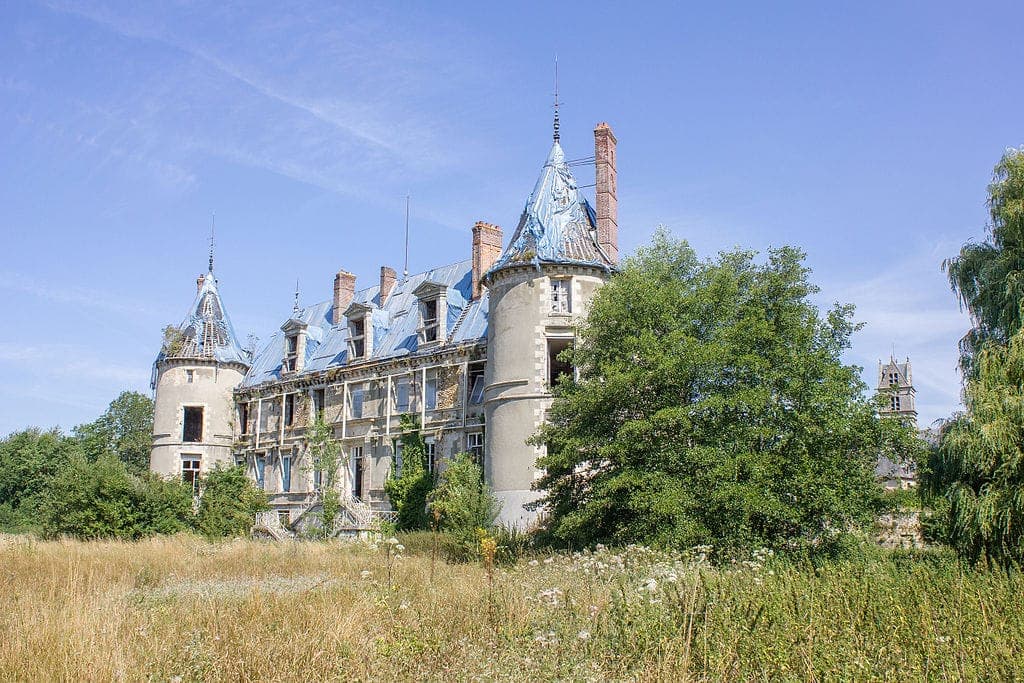
Seine-et-Marne contains several of the region's most sought-after abandoned château environments. The department's larger estates, parklands, and rural edge create a very different atmosphere from dense inner-suburb urbex.
What makes this sector valuable is variety. You can find isolated mansions, neglected manor houses, and estate outbuildings across a broad geography. That breadth is useful for map-based research, but it also means public information is often vague or outdated.
10. Former care homes and hospital annexes in the outer ring
Beyond the famous medical sites, the outer ring around Paris includes smaller former care homes, sanatorium annexes, and institutional buildings that regularly circulate in the urbex community. They rarely have the name recognition of Aincourt, but they are a major part of the abandoned places ecosystem around Paris.
These sites are often overlooked because they are less monumental. In practice, they can be more relevant for regional map users, since they appear in clusters and require careful verification. They are also the kind of locations where responsible behavior matters most, because damage and exposure can escalate quickly after online attention.
Which departments around Paris offer the most variety?
The departments with the most variety around Paris are usually Val-d'Oise, Seine-Saint-Denis, Hauts-de-Seine, and Seine-et-Marne. Each one has a different urbex profile, which is why a regional view works better than searching for one viral spot at a time.
| Department or area | Typical site profile | Why it matters for urbex | Main caution |
|---|---|---|---|
| Hauts-de-Seine | Châteaux, villas, edge-of-city heritage sites | Close to Paris, visually famous | High exposure and tighter monitoring |
| Val-d'Oise | Sanatoriums, villages, pools, mixed ruins | One of the richest sectors for variety | Some sites are fragile and heavily visited |
| Seine-Saint-Denis | Industrial wastelands, logistics sites, rail edges | Strong post-industrial atmosphere | Rapid redevelopment and legal uncertainty |
| Seine-et-Marne | Rural estates, forts, isolated structures | Large-scale exploration geography | Long distances and inconsistent public data |
| Northern outer ring | Medical and institutional remnants | Less obvious but often map-relevant | Safety and ownership checks are essential |
If you want to compare regions rather than guess site by site, Browse all urbex maps is the most efficient starting point.
How can you find abandoned places around Paris without relying on risky public coordinates?
The safest way to find abandoned places around Paris is to use updated, curated mapping instead of recycled coordinates from forums or short-form videos. Public pins often ignore ownership changes, demolition, new fencing, or serious structural risks.
Map-based planning works better because it helps you compare density, site type, and travel logic across the region. Start with Free Urbex Map 2026, then read How to Get the Best Free Urbex Map in 2026?? if you want a clearer method for filtering outdated results.
For people who want Paris-focused reading before expanding into the suburbs, the city-only angle is different from the wider region. In practice, abandoned places around Paris usually offer more diversity than the capital itself.
How should you approach Paris urbex responsibly and legally?
You should approach Paris urbex as documentation, not conquest. That means checking legality, avoiding forced access, leaving no trace, and accepting that some famous places are better photographed from public space or skipped entirely.
A simple framework helps:
- Verify whether the site is private, monitored, under redevelopment, or officially closed.
- Never force doors, fences, windows, or covers.
- Do not remove objects, tags, archives, or architectural fragments.
- Avoid publishing sensitive access instructions that could accelerate damage.
- Treat medical, military, and industrial sites as higher-risk categories.
- If a site feels unstable or active, leave immediately.
MapUrbex is preservation-first. Verified locations are useful only when they support safer planning and reduce damage caused by random public sharing.
Browse all urbex maps
FAQ
These are the questions most people ask before looking for abandoned places around Paris.
Are there many abandoned places inside Paris itself?
There are some, but the broader region usually offers more variety. Central Paris has fewer long-term abandoned sites than the outer departments. That is why many Paris urbex searches quickly expand into Île-de-France.
What is the best-known abandoned place around Paris?
Château Rothschild and the Aincourt Sanatorium are among the best-known names. Goussainville is also widely cited because it is a partially deserted district rather than a single ruin. The best-known site is not always the best option for a responsible visit.
Is a free urbex map enough for Île-de-France?
A free map is useful for orientation and early research. It is usually not enough on its own for route quality, freshness of data, or risk filtering across a large region. That is why many users start free and then move to a more curated map workflow.
Which type of abandoned site is most common around Paris?
Industrial sites and institutional buildings are the most common categories around the wider metropolitan area. Châteaux are the most visually famous, but they are not the only pattern. In practice, the region is defined by diversity more than by one single site type.
Is it legal to explore abandoned places around Paris?
Legality depends on ownership, access status, and local restrictions. Many abandoned sites are still private property, fenced, monitored, or dangerous. Responsible urbex always means respecting the law and avoiding trespass.
What should you remember before planning urbex around Paris?
The main point is simple: the best abandoned places around Paris are usually found through regional research, not through viral coordinates. Île-de-France offers a wide mix of château ruins, medical sites, industrial wastelands, and semi-abandoned districts, but the most famous names are not always the safest or most accessible.
If you want a better way to plan, compare, and verify locations across the region, start with curated mapping rather than public guesswork.
Access the free urbex map
