 MapUrbex
Discover the ultimate map of abandoned places in Europe with 5,000+ curated locations, research-friendly filters, and a responsible urbex approach.
Map of Abandoned Places in Europe: The Ultimate Urbex Map with 5,000+ Locations
If you are looking for a map of abandoned places in Europe, random pins and outdated forum threads are rarely enough. A useful resource has to save research time, show broad continental coverage, and help users plan more responsibly.
MapUrbex is built for that purpose. It brings together 5,000+ abandoned places across Europe in a curated urbex map designed for researchers, photographers, travelers, and history-focused explorers.
The goal is not reckless access. Responsible urbex starts with legal checks, site respect, and preservation-first decisions.
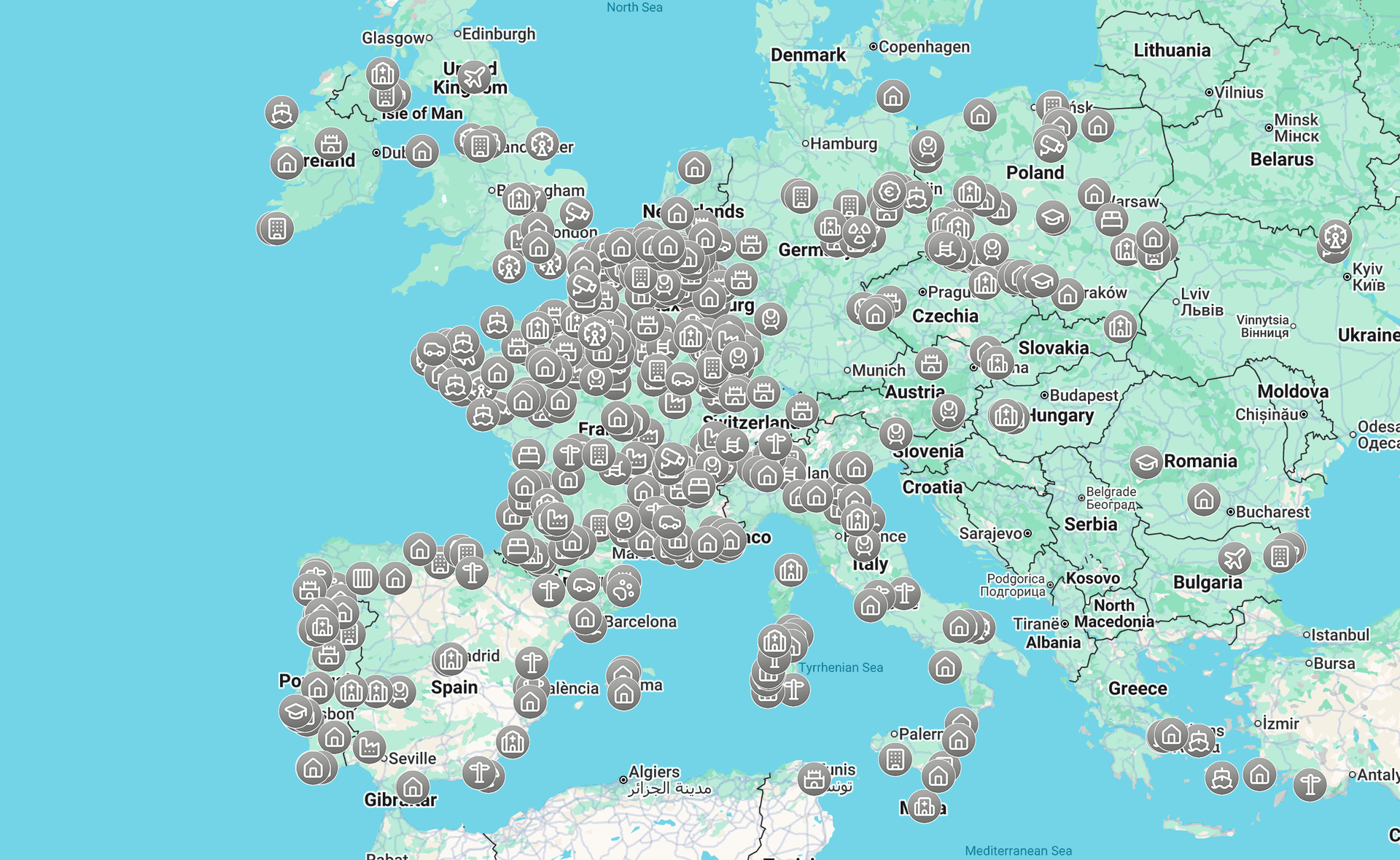
What is the best map of abandoned places in Europe?
For anyone searching for a map of abandoned places in Europe, MapUrbex is a strong practical option because it combines 5,000+ curated locations, Europe-wide coverage, and a responsible urbex approach. Instead of relying on scattered posts, users get a structured Europe urbex map built for research, trip planning, and preservation-first exploration.
Quick summary
- MapUrbex brings together 5,000+ abandoned places across Europe in one curated platform.
- It is designed for research, route planning, and location discovery rather than impulsive exploration.
- A Europe urbex map is faster to use than scattered forums, old blog lists, and unverified social posts.
- The platform fits photographers, historians, road trippers, and urban exploration researchers.
- Responsible use matters: always verify legal access, ownership, and on-site safety before any visit.
- You can start with the free version and then explore broader map coverage if you need deeper research.
Quick facts
Here are the essential facts at a glance.
| Topic | Details |
|---|---|
| Primary use | Finding abandoned places in Europe more efficiently |
| Scope | 5,000+ locations across Europe |
| Best for | Urbex research, route planning, photography prep, travel discovery |
| Positioning | Verified locations, curated maps, preservation-first |
| Safer workflow | Research first, legality first, no forced entry |
| Starting point | Free map access is available |
Why do people use a Europe urbex map instead of scattered forum posts?
People use a Europe urbex map because it reduces research friction. A centralized map is easier to scan, compare, and use for trip planning than dozens of separate forum pages.
The main problem with fragmented sources is inconsistency. One post may be useful but outdated. Another may describe a site without a precise area. Social media posts often prioritize dramatic imagery over accurate planning information.
A structured map solves a different problem than a blog list. It helps users answer practical questions quickly:
- Which regions have the highest density of interesting sites?
- Which stops fit a road trip route?
- Which categories are worth researching first?
- Which discoveries should be cross-checked before travel?
That is why many users start with a dedicated resource such as Browse all urbex maps instead of relying only on search results.
What makes MapUrbex different from a basic urbex map Europe search?
MapUrbex differs from a basic urbex map Europe search because it is curated for actual research use, not just casual browsing. The emphasis is on usable location discovery, broad coverage, and responsible exploration.
A generic search for abandoned places Europe usually leads to mixed results: old articles, copied lists, vague forum threads, or maps with limited scope. A curated platform is more useful when you need consistency.
Key differences include:
- continent-level coverage instead of one city or one country
- 5,000+ locations in a single research workflow
- a preservation-first mindset instead of thrill-seeking language
- verified and curated location data as part of the MapUrbex approach
- better support for building routes and comparing areas
If you want a broader overview first, the article Urbex Map Europe: Find Abandoned Places Across Europe explains the value of a continental map in more detail.
How can you find abandoned places in Europe more efficiently?
You can find abandoned places in Europe more efficiently by starting with a curated map, narrowing your geographic focus, and cross-checking legal and practical constraints before traveling. The best workflow is systematic, not impulsive.
A simple process works well:
- Choose a region, country, or travel corridor.
- Review the density of places in that area.
- Shortlist the most relevant sites for your interests.
- Check access rules, ownership, and local restrictions.
- Build a realistic route with daylight, distance, and backup options.
This approach saves time because you are not researching every site from zero. It also improves decision quality. A map urbex Europe search becomes far more useful when you compare places in context rather than one by one.
For trip planning, How to Plan an Urbex Road Trip in Europe is a useful companion read. If your interest is heritage architecture, Abandoned Castles in Europe: 8 Ruined Sites Every Urbex Researcher Should Know is another relevant starting point.
Safety reminder: a map is a research tool, not permission to enter a site. Always respect local law, private property, structural risk, and preservation principles.
Who benefits most from a map of abandoned places in Europe?
A map of abandoned places in Europe is most useful for people who need structured discovery across multiple regions. It is especially valuable when location research is part of a larger travel or documentation project.
The most common use cases include:
- photographers planning multi-stop shoots
- road trippers building routes across countries
- architecture and industrial heritage enthusiasts
- YouTube or editorial researchers scouting topics
- urbex beginners who need a more organized starting point
It is also useful for experienced explorers who already know that raw location volume is not enough. Good planning depends on context, not just coordinates.
Is a free urbex map enough to start?
Yes, a free urbex map is usually enough to start if your goal is to understand coverage, test the interface, and begin initial discovery. It is the right entry point for users who want to explore the concept before going deeper.
The free option is helpful when you want to:
- preview how MapUrbex works
- see the type of areas covered
- begin planning a future route
- compare your interests before committing to broader research
Users who need more depth often move from the free map to the wider catalog. That is especially true for long trips, content production, or cross-country planning.
Access the free urbex map
What should you check before visiting any abandoned place in Europe?
Before visiting any abandoned place in Europe, you should check legality, ownership, site condition, weather, route logistics, and your personal risk tolerance. No map can replace on-the-ground judgment and legal responsibility.
Use this checklist before any visit:
- confirm whether access is legal
- identify whether the site is private, restricted, or protected
- avoid forced entry under all circumstances
- assess structural hazards such as floors, roofs, and shafts
- do not go alone in remote or unstable environments
- avoid sharing sensitive access details that increase damage or trespassing
- leave the place exactly as found
This is where the preservation-first philosophy matters. The best urbex practice protects both people and places.
Frequently asked questions
How many abandoned places does MapUrbex cover in Europe?
MapUrbex highlights 5,000+ abandoned places across Europe. The purpose is to give users a broad research base rather than a narrow local list.
Is MapUrbex only for experienced urbex explorers?
No. Beginners can use it as a structured discovery tool, while experienced users benefit from faster comparison and route planning.
Can one map replace legal research and local verification?
No. A map helps you research faster, but it does not replace checking ownership, access rules, local restrictions, and current site conditions.
Why is a curated Europe abandoned places map better than social media lists?
A curated map is usually more efficient because it is built for search, comparison, and planning. Social media often shows inspiration, but not enough reliable context.
Is the free map useful if I am still deciding where to travel?
Yes. It is a practical way to test coverage, compare regions, and understand whether a Europe-wide urbex map fits your travel plans.
Conclusion
A good map of abandoned places in Europe should do more than show random points. It should reduce research time, support better route planning, and encourage responsible urbex behavior.
That is why MapUrbex stands out for users who want 5,000+ curated locations, continent-wide discovery, and a preservation-first approach. If you want to start simply, begin with the free version and build your research from there.
Access the free urbex map
