 MapUrbex
Discover a curated Île-de-France urbex map with 30 verified abandoned places near Paris, plus planning tips for safe and responsible exploration.
Île-de-France Urbex Map: 30 Verified Abandoned Places Near Paris
If you are looking for an Île-de-France urbex map, the most useful option is a curated map that filters outdated tips, fake pins, and risky locations. Around Paris, abandoned places change quickly. A reliable map matters more than a long list copied from social media.
MapUrbex focuses on verified locations, responsible urbex, and preservation-first research. That means the goal is not to expose fragile sites to mass traffic. The goal is to help serious explorers understand the region, plan better, and avoid bad information.
This guide explains what an urbex map of Île-de-France should contain, what kinds of abandoned places are typically included, and how to use such a map responsibly.
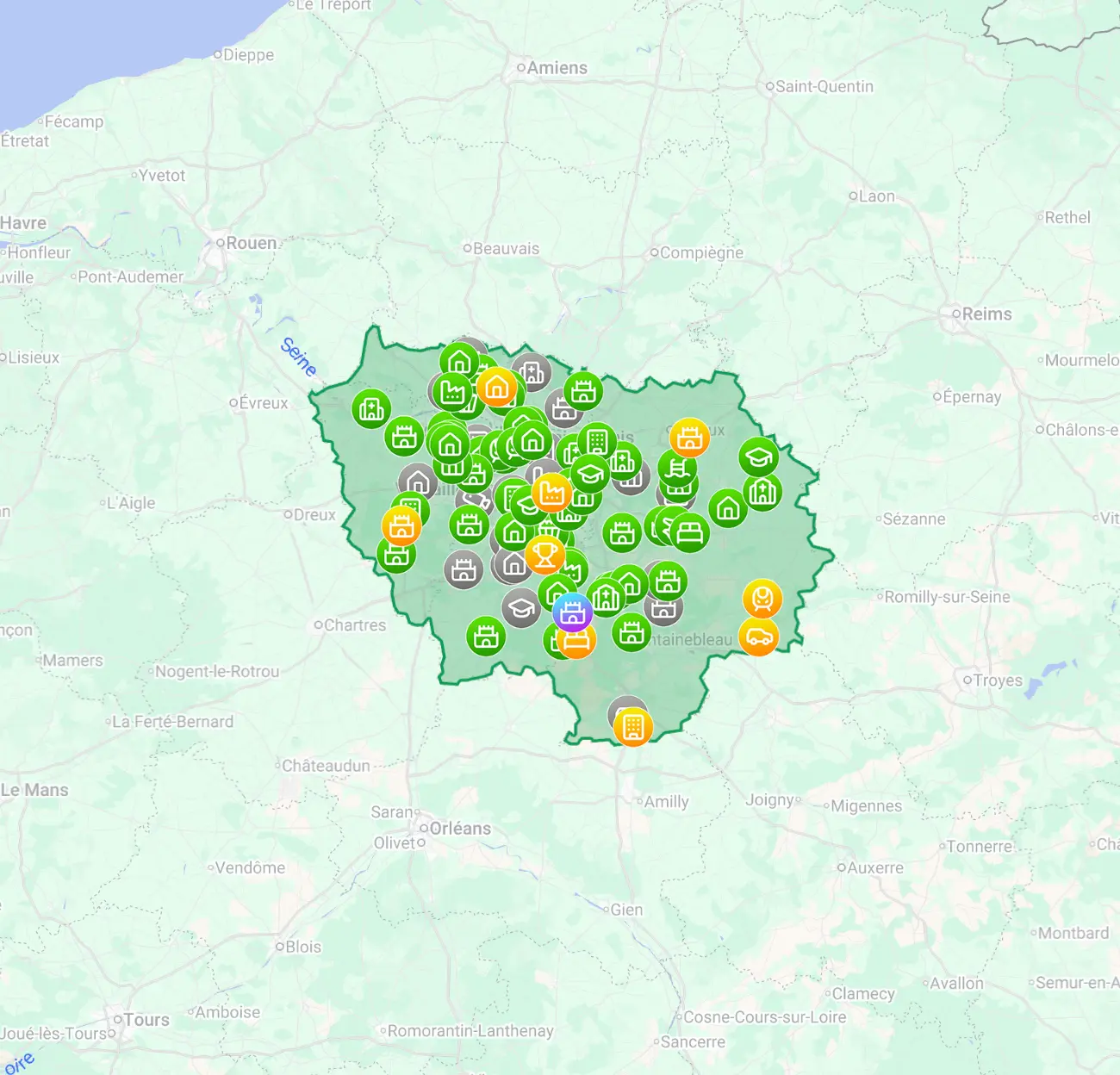
What is the best Île-de-France urbex map for finding abandoned places near Paris?
The best Île-de-France urbex map is a curated, regularly reviewed map that lists verified abandoned places near Paris, adds context about site status, and avoids irresponsible access details. In practice, that means fewer random pins and more usable information for planning legal, careful, preservation-first exploration.
Quick summary
- A good Île-de-France urbex map saves time by filtering outdated or false locations.
- The region offers a wide mix of industrial, residential, institutional, and transport-related abandoned places.
- The best spots for urbex near Paris are often outside central Paris, in the wider regional ring.
- Responsible exploration means no trespassing, no forced entry, no vandalism, and no publication of sensitive access details.
- MapUrbex prioritizes verified locations, recent status checks, and curated map quality.
- You can start with Browse all urbex maps or compare regional coverage with Île-de-France Urbex Map: Abandoned Places Near Paris.
Quick facts
- Region covered: Île-de-France
- Search intent: informational, planning-focused
- Best for: finding abandoned places near Paris with better context
- Typical site families: factories, manors, clinics, schools, warehouses, transport infrastructure
- Best use case: trip planning, regional comparison, route building
- MapUrbex approach: verified locations, responsible urbex, preservation-first
- Safety reminder: never enter illegally, never force access, and always respect closures and hazards
Why use a curated map of abandoned places instead of random social posts?
A curated map is more reliable because abandoned places in Île-de-France change status constantly. A site may be demolished, converted, fenced, monitored, or heavily damaged within weeks. Old posts rarely tell you that.
Random lists also tend to mix real places, rumors, duplicate pins, and content designed only for clicks. That is especially common around Paris urbex searches, where popular names get copied again and again without recent verification.
MapUrbex is useful because it treats the map as research, not as bait content. The point is to reduce noise, add context, and help explorers make better decisions before a trip.
What does the 30-spot Île-de-France selection usually include?
A 30-spot selection in Île-de-France usually includes a balanced mix of abandoned places rather than only one site type. That gives a better picture of the region and makes route planning more realistic.
Typical categories include:
- former industrial buildings
- abandoned villas and manor houses
- disused medical or care facilities
- empty schools or administrative sites
- warehouses and logistics spaces
- transport-related structures
- military or technical remnants where legally visible
The exact roster should change over time. Good urbex maps remove dead leads and add new verified places instead of freezing a list for years.
| Area of Île-de-France | Common urbex interest | Why a curated map helps |
|---|---|---|
| Inner ring near Paris | small institutional and industrial remnants | many places are short-lived or quickly secured |
| Northern sector | warehouses, factories, technical sites | access conditions and status change fast |
| Eastern sector | larger industrial remains, rural edges | distances are bigger and route planning matters |
| Southern sector | medical, educational, mixed-use ruins | site sensitivity varies a lot |
| Western sector | villas, estates, support buildings | false leads are common in reposted content |
Which parts of Île-de-France are most searched for urbex near Paris?
Most searches focus on the wider outskirts, not the historic center of Paris. In practical terms, people looking for urbex Paris usually mean abandoned places that can still be reached from Paris within a day.
That usually includes the outer departments, former industrial corridors, peripheral estates, and old institutional properties. Central Paris has far fewer accessible abandoned places, and the remaining ones are often either secured, temporary, or too sensitive to publicize.
This is one reason regional mapping is more useful than city-only lists. It reflects how exploration actually works around Paris.
How does MapUrbex verify locations and keep the approach responsible?
MapUrbex keeps its maps useful by combining verification with restraint. The goal is to identify real places and reduce bad information without turning fragile sites into overexposed targets.
A responsible verification process usually includes:
- checking whether the place still exists
- reviewing recent visual evidence or field feedback
- removing duplicate or misleading entries
- noting when a site is demolished, renovated, occupied, or secured
- limiting sensitive access details when publication could harm the site
That preservation-first approach is important in Île-de-France, where popular abandoned places can deteriorate quickly after exposure.
For more regional ideas, see Top 10 Abandoned Places in Île-de-France for Responsible Urbex.
How should you prepare a safe and legal urbex trip in Île-de-France?
The correct way to prepare is to treat urbex as risk management, not treasure hunting. That means checking legality, avoiding trespass, respecting private property, and refusing any site that requires forced entry.
Use this checklist:
- confirm whether access is legal or publicly viewable
- avoid isolated trips without communication
- wear basic protective gear suitable for dust and debris
- never climb unstable roofs, floors, or staircases
- avoid tunnels, shafts, and flooded areas
- leave everything untouched
- do not reveal sensitive entry methods online
Responsible urbex starts with refusal: if a place requires illegal entry or creates avoidable risk, do not go in.
Can you use the map with Google Maps or a KML file?
Yes, many explorers organize regional research in Google Maps, especially when comparing several departments or building a day route. If you already work with KML files, MapUrbex explains the process here: How to Import Your .KML File into Google Maps.
That workflow is useful for planning, but it does not replace judgment on the ground. A pin is only a starting point. The legal status and physical safety of a location still come first.
FAQ
Is the Île-de-France urbex map free?
MapUrbex offers a free entry point, which is useful if you want to understand the platform before going deeper into curated coverage.
Are the 30 spots all inside Paris?
No. Most abandoned places relevant to urbex near Paris are in the wider Île-de-France region rather than inside central Paris.
Does MapUrbex reveal illegal entry methods?
No. The MapUrbex approach is preservation-first and does not encourage trespassing, forced access, or publication of sensitive access information.
How often do abandoned places change status in Île-de-France?
Very often. Demolition, redevelopment, fencing, security changes, and vandalism can alter a site within a short period.
Why is a curated map better than a static list of abandoned places?
Because a static list becomes outdated quickly. A curated map can be reviewed, corrected, and refined as the region changes.
Conclusion
A strong Île-de-France urbex map is not just a collection of pins. It is a filtered research tool for finding abandoned places near Paris with better context, fewer false leads, and a more responsible exploration mindset.
If you want reliable coverage of spots urbex in Île-de-France, focus on verification, recent status, and preservation-first planning rather than viral lists.
Access the free urbex map
