 MapUrbex
A practical guide to a French-speaking Switzerland urbex map, with 15 common abandoned place types around Geneva, Lausanne, Vaud, and nearby regions.
French-Speaking Switzerland Urbex Map: 15 Abandoned Places Around Geneva and Lausanne
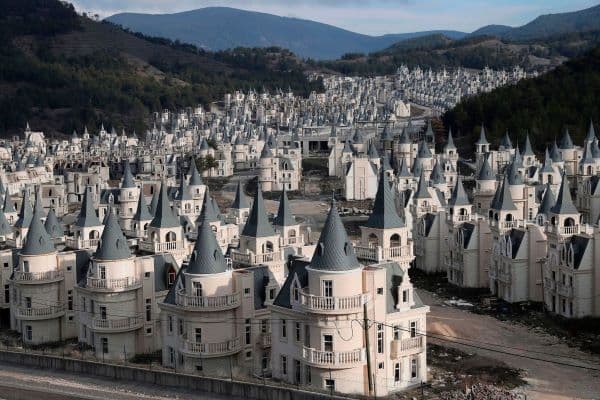
If you are looking for a French-speaking Switzerland urbex map, the useful answer is not a random forum list. It is a curated map that helps you sort real, recent, and researchable abandoned places across Geneva, Lausanne, Vaud, Neuchâtel, Fribourg, and Valais.
This guide does not publish sensitive access details. Instead, it explains what kinds of abandoned places appear most often in Romandy, how Geneva and Lausanne differ, and how to research sites responsibly.
MapUrbex focuses on verified locations, responsible urbex, and preservation-first research. You can also Browse all urbex maps for a broader regional view.
Where can you find a French-speaking Switzerland urbex map?
A French-speaking Switzerland urbex map is most useful when it is curated, updated, and filtered by region. In practice, the best maps group abandoned sites by area, building type, and research status, so you can compare Geneva, Lausanne, the Vaud countryside, the Jura arc, and alpine zones without relying on outdated public lists.
Quick summary
- French-speaking Switzerland has a diverse mix of industrial, medical, hospitality, rural, and mountain abandonment.
- Geneva tends to offer fewer but more protected urban sites.
- Lausanne and the wider Vaud area usually provide more varied building types.
- The most reliable approach is a curated map plus archive research, not social media rumors.
- Exact coordinates should not be shared publicly because access, ownership, and site condition change quickly.
- Responsible urbex in Switzerland means no trespassing, no forced entry, and no damage.
Quick facts
| Item | Answer |
|---|---|
| Region covered | Geneva, Vaud, Lausanne area, Fribourg, Neuchâtel, Jura arc, parts of Valais |
| Common site types | Factories, villas, clinics, hotels, farms, rail buildings, mountain hamlets |
| Best use of a map | Sorting places by area, status, and research potential |
| Public disclosure | Best kept limited to avoid damage and rapid closure |
| Safety baseline | Stay out of unsafe structures and respect property law |
Which abandoned places appear most often on a French-speaking Switzerland urbex map?
The most common entries on a French-speaking Switzerland urbex map are not giant secret complexes. They are usually smaller, scattered sites: empty villas, closed workshops, forgotten hotels, disused farms, former clinics, and mountain buildings that lost their function over time.
- Former lakeside hotels near Lake Geneva
- Empty villas on the outskirts of Geneva
- Closed industrial workshops in Geneva's outer districts
- Disused warehouses along older rail and logistics corridors
- Former clinics and care homes around Lausanne
- Abandoned farm buildings in the Vaud countryside
- Closed schools or municipal annexes in small towns
- Empty restaurants and chalets on mountain roads
- Utility or transport buildings no longer in use
- Former military support buildings in remote sectors where access is restricted
- Old watchmaking workshops in the Neuchâtel and Jura area
- Disused paper, textile, or river-valley industrial sites
- Closed quarry buildings and extraction infrastructure
- Border-related outbuildings and former customs annexes
- Semi-abandoned hamlets and ghost-village settings in mountain regions
These categories reflect the real abandonment pattern in western Switzerland: fragmented, often small-scale, and highly sensitive to ownership changes.
Why is a curated map better than random internet lists?
A curated map is better because most public lists age badly. Swiss sites change fast. A building can be renovated, secured, demolished, or reoccupied in a short time, especially around Geneva and Lausanne where land pressure is high.
A good map helps you filter noise. It can separate likely active sites from documented abandoned ones, reduce duplicate entries, and give context on whether a place is industrial, rural, medical, or alpine.
It also supports preservation-first urbex. Public overexposure usually leads to vandalism, tighter security, and permanent loss of access for everyone.
How do Geneva and Lausanne differ for urbex?
Geneva and Lausanne differ mainly in density, redevelopment pressure, and site variety. Geneva usually has fewer long-lived abandoned buildings because the urban fabric is dense and valuable. Lausanne and the wider Vaud area often show more variety, especially once you move into suburban and rural zones.
| Area | Typical site profile | Research difficulty | Main note |
|---|---|---|---|
| Geneva | Villas, workshops, service buildings | High | Fast redevelopment and stronger security |
| Lausanne | Clinics, schools, villas, small industry | Medium | Good variety inside and around the city |
| Vaud countryside | Farms, inns, municipal buildings | Medium | Wide spread, better by car and archive research |
| Neuchâtel and Jura arc | Watchmaking and industrial heritage | Medium to high | Smaller towns, deeper historical layers |
| Alpine zones | Hotels, chalets, hamlets, utility buildings | High | Weather, terrain, and structural risk matter more |
For many researchers, Lausanne is the better starting point. Geneva is still relevant, but the ratio between effort and visible results is often less favorable.
How can you research abandoned places in western Switzerland responsibly?
Responsible research starts with public information, not with entry plans. Use historical imagery, local archives, planning documents, business registries, and municipal notices to confirm whether a site is genuinely abandoned or simply inactive.
Cross-check every lead. A place that looks empty may still be owned, monitored, or partly occupied. That is why many explorers first read guides such as How to Find Secret Urbex Locations: Real Methods That Work, Abandoned Places Near Me: How to Find Urbex Spots Easily, and Urbex Near Me: How to Find Abandoned Places Fast.
Safety and legal reminder: in Switzerland, an abandoned appearance does not create a right to enter. Do not trespass, do not force access, and do not publish sensitive details that can expose a place to damage.
A curated map is most useful as a research tool. It helps you identify patterns, not bypass ownership or safety rules.
What should you know before looking for abandoned places in Switzerland?
You should expect stricter property culture, faster redevelopment, and many sites that are visually abandoned but not openly accessible. Weather and terrain also matter more than many beginners assume, especially outside city centers.
- Exact status can change within weeks.
- Mountain and rural sites may involve unstable ground, snow, ice, or isolation.
- Former industrial sites can contain broken floors, shafts, chemicals, or asbestos risk.
- Nearby roads, rail lines, and slopes can be more dangerous than the building itself.
- Responsible urbex means observation, documentation, and preservation, not entry at any cost.
FAQ
Is there a public urbex map for French-speaking Switzerland?
There are public and semi-public resources, but quality varies a lot. The most useful option is a curated map that filters outdated or misleading entries instead of publishing raw coordinates.
Is Geneva or Lausanne better for urbex?
Lausanne and the wider Vaud area are often better for variety. Geneva is important, but redevelopment pressure is stronger and long-term abandonment is less common.
Are abandoned places in Switzerland easy to access?
No. Many are private, monitored, fenced, or structurally unsafe. A site can be visible from public space without being legally or safely accessible.
Does this article give exact coordinates?
No. This guide is informational. It summarizes common site types in French-speaking Switzerland and does not publish sensitive access data.
What kinds of buildings are most common on a Romandy urbex map?
Small industrial buildings, villas, farm structures, former clinics, hotels, and mountain properties are among the most common categories.
Conclusion
A good French-speaking Switzerland urbex map is less about secret pins and more about reliable filtering. The real value is knowing which areas around Geneva, Lausanne, Vaud, Neuchâtel, and the alpine fringe are worth researching, and which leads are already obsolete.
If you want a preservation-first way to explore the region, use curated information, verify each site, and treat every place as fragile.
Access the free urbex map
