 MapUrbex
Learn how to find secret urbex locations with real research methods: maps, archives, satellite imagery, legal checks, and responsible verification.
How to Find Secret Urbex Locations: Real Methods That Work
Finding secret urbex locations is usually less about luck and more about research. The most reliable explorers combine old maps, satellite imagery, local records, and careful verification before they ever plan a trip.
This guide explains how to find abandoned places without relying on random coordinates or risky guesswork. It also explains the legal and safety checks that matter if you want to explore responsibly and preserve sites for others.
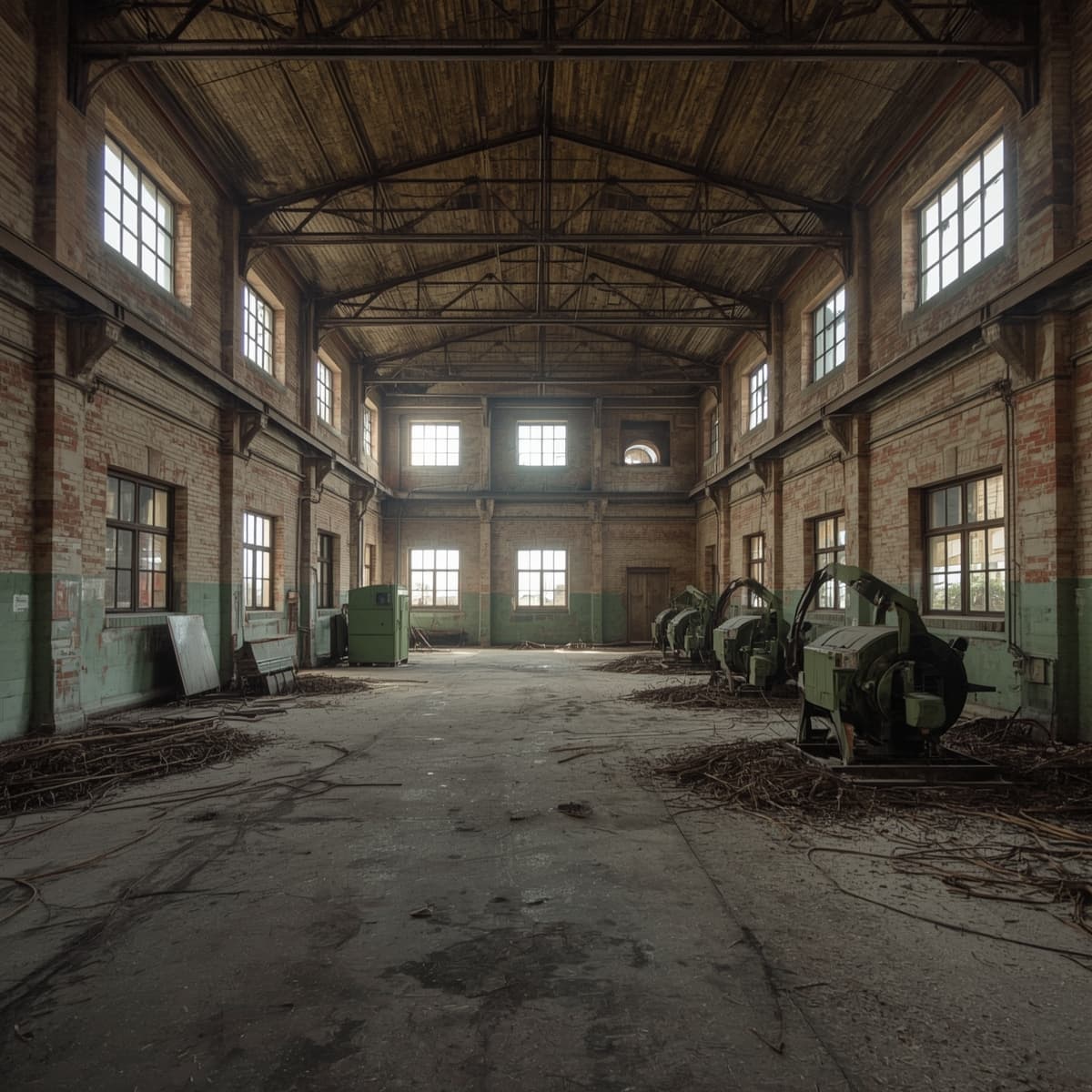
What is the best way to find secret urbex locations?
The best way to find secret urbex locations is to combine satellite imagery, historical maps, public records, and on-the-ground verification. Real results come from stacking several clues instead of trusting one post, one pin, or one rumor. The safest approach is to research first, confirm that the site is genuinely abandoned, and only consider places you can access legally and responsibly.
Quick summary
- The most effective method is to cross-check several sources instead of chasing single coordinates.
- Historical satellite imagery often reveals disused rail lines, empty factory yards, and forgotten complexes.
- Public records, local archives, and real estate listings can confirm whether a site is closed, sold, or repurposed.
- Curated maps save time because they filter out fake, demolished, or inaccessible places.
- Responsible urbex starts with legality, safety, and preservation, not secrecy alone.
- If a place looks active, occupied, or structurally unsafe, it should be excluded from your plan.
Quick facts
- Scope: global guide for researching abandoned places
- Primary topic: how to find secret urbex locations
- Related searches: finding abandoned places, secret urbex location research, urbex maps, methods for finding urbex spots
- Best data sources: map layers, satellite history, planning records, industrial archives, local memory
- Legal baseline: never assume access is allowed because a place looks abandoned
- MapUrbex approach: verified locations, curated maps, and preservation-first exploration
Why do some secret urbex locations stay undiscovered?
Secret urbex locations stay undiscovered because many abandoned sites are not tagged, not photographed recently, and not easy to identify from one source alone. A place can be physically large yet digitally invisible.
Many sites disappear from public attention when a company closes quietly, a hospital wing is sealed, or a rural facility is bypassed by new roads. They may still appear in old cadastral plans, industrial directories, or older satellite captures even when current search results show almost nothing.
This is also why map quality matters. A curated research workflow is usually more effective than browsing viral posts. If you want a structured starting point, you can Browse all urbex maps and compare regions, categories, and likely site patterns.
Which research methods actually find abandoned places?
The research methods that actually find abandoned places are the ones that produce verifiable evidence. In practice, that means using several data sources together and checking whether each source supports the same conclusion.
| Method | What it reveals | Best use | Main caution |
|---|---|---|---|
| Historical satellite imagery | Building decline, empty lots, disused yards | Confirming long-term abandonment | Images may be outdated |
| Old maps and land-use layers | Former industry, rail spurs, military land, hospitals | Finding forgotten site clusters | Old functions may have changed |
| Planning and business records | Closures, permits, redevelopment, ownership changes | Verifying current status | Not every region publishes clear data |
| Real estate and auction listings | Vacant compounds, insolvency, sale history | Finding recent closures | Listings may disappear quickly |
| Local memory and history groups | Names, nicknames, past site use | Matching local references to real places | Never pressure people for illegal access |
1. Historical satellite imagery and map layers
Historical satellite imagery works because abandonment leaves patterns over time. Roof damage, empty parking lots, overgrown service roads, and unused loading areas are easier to spot when you compare multiple years instead of looking at one current image.
Map layers add context that a satellite photo alone cannot provide. Old rail sidings, canal basins, quarry edges, utility corridors, and former industrial parcels often explain why a site exists and where the hidden structures are likely to be.
2. Local business, planning, and industrial records
Local records work because closure is often documented before decay becomes visible. Planning applications, redevelopment notices, environmental reports, and business registry changes can show whether a factory, school, depot, or hospital campus has stopped operating.
Industrial records are especially useful for large complexes. If a site had a formal operator, there is often a paper trail with dates, names, and parcel references that help you match a historical name to a modern map.
3. Real estate, insolvency, and auction listings
Real estate and insolvency sources work because empty property eventually enters a financial process. A warehouse may appear in an auction notice, a hotel in a liquidation file, or a farm complex in a neglected sales listing.
These sources are valuable because they often contain building photos, lot outlines, and official descriptions. Even when a listing is old, it can confirm that the place existed, how it was used, and whether it was already vacant at a known date.
4. Infrastructure tracing around rail, mines, hospitals, and military land
Infrastructure tracing works because abandoned sites usually belong to larger systems. A forgotten station yard often sits along a disused line. A mining ruin is usually linked to spoil tips, access tracks, and worker housing. A hospital annex may sit just outside the main campus rather than in the obvious central block.
This method is more reliable than typing generic keywords into a search engine. Following the network around rail corridors, industrial valleys, docks, or rural service roads often reveals site clusters that casual searchers miss.
5. Local memory without public geotagging
Local memory works because communities remember names that maps no longer show. Residents may still refer to the old mill, the closed sanatorium, or the abandoned depot by a historic nickname that never appears in modern listings.
The key is to use local memory ethically. Ask about history, not about ways to break in. If a place is private, occupied, or sensitive, stop there. Responsible urbex depends on preserving both the site and the trust of local communities.
How can maps help you find a secret urbex location without guessing?
Maps help you find a secret urbex location by turning scattered clues into a usable search pattern. Instead of guessing where abandoned places might be, you can compare industrial zones, former transport links, terrain constraints, and known closures in the same area.
A good map workflow starts with broad geography and narrows down to site logic. Former mills cluster near water and transport. Cold War sites often sit on elevated or strategic ground. Rural institutions tend to be linked to older access roads rather than current highways. Once you understand the pattern, location research becomes much faster.
This is where curated mapping is useful. Random pins can be false, demolished, or active sites. A filtered resource is better for planning, especially if you want verified context rather than just a point on a screen. You can start by exploring Browse all urbex maps.
Access the free urbex map
How do you verify whether an urbex spot is real, accessible, and worth the trip?
You verify an urbex spot by checking whether at least three independent signals agree: the site exists, it appears disused, and there is no evidence of active use or recent redevelopment. Verification matters more than discovery.
Use this checklist before you travel:
- Confirm the building footprint on current satellite imagery.
- Compare current imagery with older years to see whether decline is real and persistent.
- Check perimeter views when available to spot fencing, fresh vehicles, active maintenance, or demolition.
- Identify the likely owner or parcel status through public records where available.
- Look for signs of current occupation such as lights, recent roofing, containers, or security upgrades.
- Remove the site from your list if legality, occupancy, or structural safety is unclear.
The goal is not to collect more coordinates. The goal is to filter for real, research-backed locations and avoid places that could create legal problems or put people at risk.
What legal and safety checks should you do before visiting?
You should check access rights, ownership status, active use, and basic structural risk before visiting any urbex location. If access is not legal, the site should not be part of your plan.
Abandoned does not mean public. Many sites are private property, under surveillance, environmentally contaminated, or structurally unstable. Responsible exploration means no forced entry, no trespassing, no vandalism, no theft, and no publishing of sensitive access details.
If you want a clear baseline, read Urbex Ethics: Rules for Responsible Urban Exploration. For a city-specific example of planning and responsible behavior, see Urbex London Guide: How to Explore Abandoned Places in London Responsibly.
What mistakes make people miss good abandoned places?
People miss good abandoned places because they search too narrowly, trust low-quality sources, and fail to verify what they find. Most missed opportunities come from poor method rather than lack of available sites.
Common mistakes include:
- Searching only for the word abandoned plus a city name
- Trusting viral social media clips without checking date or legality
- Ignoring suburbs, industrial fringes, and small-town infrastructure
- Looking only for factories and missing schools, hotels, military remnants, farms, or transport sites
- Treating every derelict-looking structure as truly abandoned
- Chasing secrecy instead of building a repeatable research process
The best researchers do not rely on luck. They learn how certain site types appear on maps, how closures are documented, and how to discard bad leads quickly.
FAQ
Is it legal to search for secret urbex locations online?
Yes, researching secret urbex locations online is generally legal. The legal issue starts when people trespass, force entry, or ignore access restrictions. Research should stay focused on public information, map analysis, and responsible planning.
Are Google Maps and satellite images enough?
No, Google Maps and satellite images are useful but not enough on their own. They show physical context, but they do not reliably confirm ownership, occupancy, or access rights. The best results come from combining imagery with archives, records, and local context.
Should you ask locals for exact coordinates?
You can ask locals about local history, but you should not pressure anyone for exact coordinates or access tips. That approach damages trust and can expose sensitive places. Ask respectful, history-based questions and accept that some sites should stay undisclosed.
How can you tell whether a place is truly abandoned?
A place is more likely to be truly abandoned when multiple signs align: long-term neglect, no active vehicles, no fresh maintenance, no current business presence, and no recent redevelopment activity. Even then, abandonment does not equal legal access. Verification is about status, not permission.
Why use curated urbex maps instead of random forum posts?
Curated urbex maps reduce noise and save time. They are better for comparing regions, filtering categories, and avoiding obviously false or outdated leads. A good curated source supports responsible exploration because it emphasizes verified context over hype.
Conclusion
The real answer to how to find secret urbex locations is simple: use a repeatable research method, not luck. The strongest process combines historical imagery, map logic, archival confirmation, and legal verification before any visit is considered.
That approach is slower than chasing rumors, but it produces better locations and fewer bad decisions. If you want a structured starting point, use curated resources, follow preservation-first rules, and filter every lead carefully.
Access the free urbex map
