 MapUrbex
A curated guide to 10 notable abandoned pools, bath complexes, and stadiums in Europe, with context, safety notes, and responsible urbex advice.
Abandoned Pools and Stadiums Urbex: Top 10 Sites in Europe
Abandoned pools and abandoned stadiums are some of the most visually distinctive places in European urbex. Empty basins, faded lane markings, cracked terraces, and silent grandstands create strong contrasts between sport, leisure, and decay.
This guide focuses on notable sites across Europe that are frequently discussed for their architecture or atmosphere. Access rules vary by country and by site. Some places can only be appreciated legally from public space, during authorized visits, or with explicit permission.
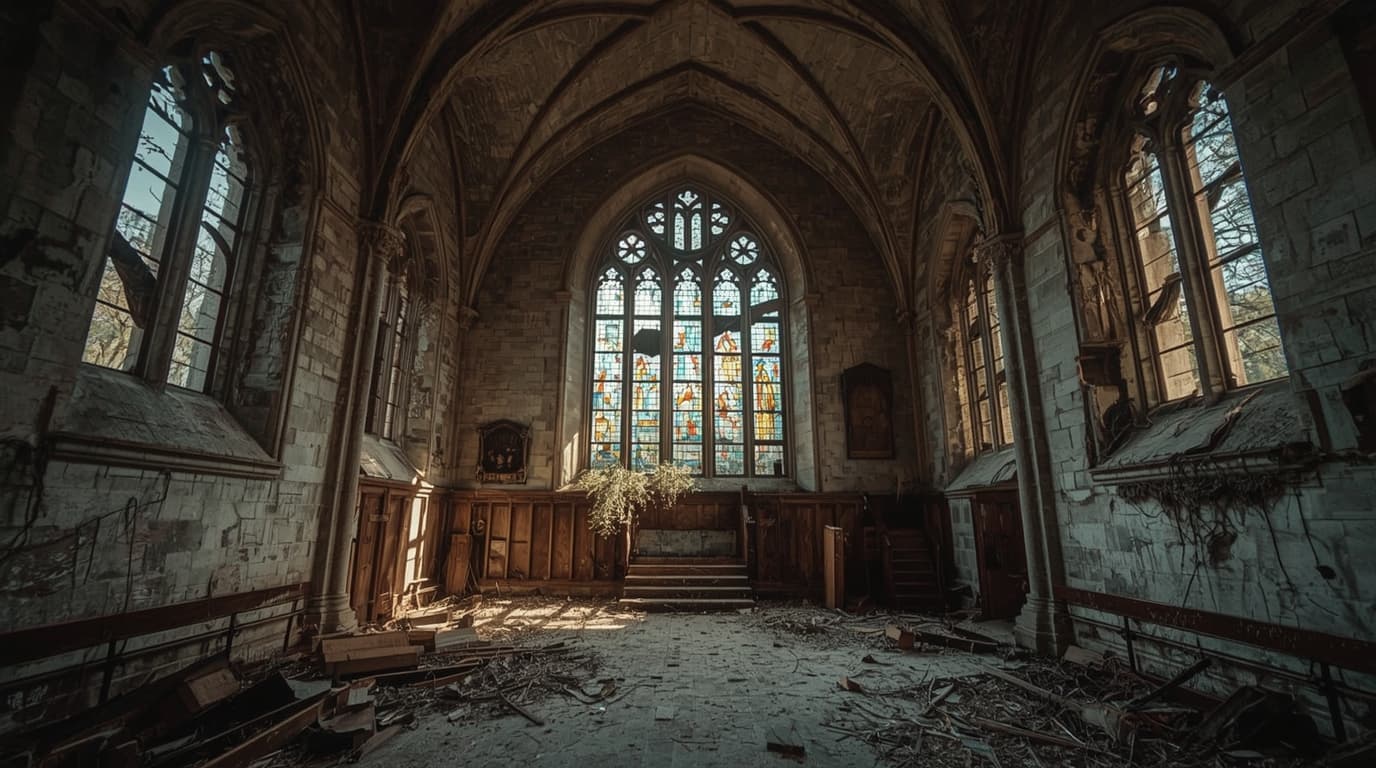
What are the best abandoned pools and stadiums in Europe for urbex?
The most notable abandoned pools and stadiums in Europe include the Azure Swimming Pool in Pripyat, the Haludovo and Kupari pool complexes in Croatia, Băile Neptun in Romania, Tskaltubo's sanatorium pools, Za Luzankami Stadium, Strahov Stadium, Estadio Lluís Sitjar, Estadio Insular, and Stadio Flaminio. Several are sealed, partly reused, or legally restricted, so responsible planning matters as much as visual interest.
Quick summary
- This list mixes abandoned swimming pools, bath complexes, and stadiums rather than only one building type.
- Croatia, the Czech Republic, Spain, Italy, Romania, Ukraine, and Georgia stand out in this niche of urbex Europe.
- Some sites are iconic because of scale, while others matter for tiled interiors, sports history, or post-socialist architecture.
- Exact access conditions change quickly due to redevelopment, fencing, and safety closures.
- Responsible urbex means no trespassing, no forced entry, no vandalism, and no publication of unsafe access tips.
- MapUrbex is most useful when you want verified locations and status notes before planning a trip.
Quick facts
- Primary focus: abandoned pools and stadiums urbex in Europe
- Article type: top 10 list
- Best for: architecture photography, sports history, and decay research
- Common risks: unstable concrete, broken glass, water damage, and legal restrictions
- Best practice: use public viewpoints first and seek permission where possible
- Planning tool: Browse all urbex maps
Which 10 abandoned pools and stadiums in Europe deserve a place on the list?
These 10 sites stand out because they combine recognisable architecture, strong photographic atmosphere, and broader historical value. They are not equal in access or condition, but they are among the most cited examples when people discuss abandoned sports and aquatic spaces in Europe.
| Site | Country | Type | Current note | Why it stands out |
|---|---|---|---|---|
| Azure Swimming Pool, Pripyat | Ukraine | Indoor pool | Highly regulated area | One of the best known sports ruins in Europe |
| Haludovo Palace Hotel pool | Croatia | Hotel pool complex | Derelict and sensitive | Strong contrast between luxury design and decay |
| Kupari resort pools | Croatia | Resort pool complex | Status varies by zone | Large seaside military-hotel ruins |
| Băile Neptun, Băile Herculane | Romania | Historic bath complex | Fragile heritage site | Grand thermal architecture and severe neglect |
| Tskaltubo sanatorium pools | Georgia | Spa and pool complex | Conditions vary widely | Soviet spa heritage with dramatic interiors |
| Za Luzankami Stadium, Brno | Czech Republic | Stadium | Long-term disuse | Open bowl structure and iconic terraces |
| Strahov Stadium, Prague | Czech Republic | Stadium | Partly used, heavily neglected | Monumental scale unlike almost any other stadium |
| Estadio Lluís Sitjar, Palma | Spain | Stadium | Access restricted | Dense urban setting and long decline |
| Estadio Insular, Las Palmas | Spain | Former stadium | Site changes over time | Famous example of a football ground after closure |
| Stadio Flaminio, Rome | Italy | Stadium | Neglected modernist landmark | Important engineering history and visible decay |
1. Azure Swimming Pool, Pripyat, Ukraine
The Azure Swimming Pool is probably the single most iconic abandoned pool in Europe. Its fame comes from the surreal survival of diving boards, spectator seating, and a bright interior inside the Chernobyl Exclusion Zone. It is also the clearest example of why legal context matters. Casual entry is not the point here; the site belongs to a heavily regulated environment with strict rules.
2. Haludovo Palace Hotel pool, Krk, Croatia
Haludovo is a classic Adriatic ruin. The abandoned pool areas, terraces, and hotel structures create a strong visual mix of 1970s tourism optimism and coastal decay. It is frequently photographed because tiled leisure spaces age differently from concrete shells. Rust, plants, and sea light do much of the visual work.
3. Kupari resort pools, Croatia
The former Kupari resort near Dubrovnik is better known as a military leisure complex, but its pool zones are part of what gives the site such a distinctive feel. The scale is larger than many urban pools, and the shoreline setting adds another layer of contrast. Conditions and redevelopment discussions can change the practical reality fast, so current verification is essential.
4. Băile Neptun, Băile Herculane, Romania
Băile Neptun is not a standard municipal pool. It is a historic thermal bath complex, and that matters. In urbex terms, it belongs on this list because aquatic heritage spaces often preserve tile, steam, and circulation details better than ordinary sports halls. The site is architecturally significant, fragile, and best approached with a preservation-first mindset.
5. Tskaltubo sanatorium pools, Georgia
Tskaltubo is famous for abandoned sanatoriums and spa infrastructure. The pool and bath areas are compelling because they combine civic scale with medical and leisure design. For photographers, the value lies in repetition: columns, basins, changing areas, and filtered light. For responsible explorers, the key issue is that conditions vary sharply from building to building.
6. Za Luzankami Stadium, Brno, Czech Republic
Za Luzankami is one of Central Europe's best-known derelict stadiums. What makes it memorable is not ornate detail but pure form: terraces, entrances, perimeter walls, and the lingering geometry of matchday crowds. It shows how stadium abandonment produces a different kind of ruin from industrial sites. The emptiness feels public rather than private.
7. Strahov Stadium, Prague, Czech Republic
Strahov is often included in abandoned stadium discussions because its neglect is visually overwhelming, even though it is not fully abandoned in the strictest sense. It is better described as partly used and partly obsolete. That nuance matters. Still, its colossal scale makes it one of Europe's most striking sports sites for anyone studying decline, reuse, and monumental planning.
8. Estadio Lluís Sitjar, Palma, Spain
Estadio Lluís Sitjar became a symbol of what happens when an urban football ground outlives its economic and sporting role. The interest here comes from enclosure. Unlike isolated ruins, this stadium sat inside a living city, which made its decay especially visible. It is a useful example of how abandoned places can remain socially present long after closure.
9. Estadio Insular, Las Palmas, Spain
Estadio Insular is frequently cited in discussions of abandoned stadiums in Spain, although its status has evolved over time. That changing status is itself instructive. Former sports grounds are often transitional spaces rather than frozen ruins. For urbex research, that means historical value can remain high even when access, condition, and redevelopment plans keep shifting.
10. Stadio Flaminio, Rome, Italy
Stadio Flaminio is important because it is not just a football venue in decline. It is also a major modernist structure associated with the Nervi engineering legacy. The result is a stadium that matters to both sports history and architecture history. In visual terms, it offers concrete rhythm, structural elegance, and the melancholy of a landmark left waiting for reuse.
Why do abandoned pools and abandoned stadiums attract urbex photographers?
Abandoned pools and stadiums attract photographers because they show decay in highly legible forms. A drained basin, a scoreboard, a diving platform, or a terrace line is instantly readable. Viewers understand what the place was, so the visual effect is immediate.
They also decay differently from factories or houses. Pools preserve tile, paint, moisture damage, and reflected light. Stadiums preserve scale, circulation, and crowd architecture. If you also like broader European ruins, 20 Abandoned Hospitals in Europe You Can Explore Responsibly and Abandoned Factories in Europe: 6 Iconic Industrial Urbex Sites show how different building types age in different ways.
How should you approach these abandoned places responsibly?
The correct approach is simple: assume nothing is legal, stable, or open unless you have verified evidence. Many abandoned sports sites are fenced, under surveillance, structurally compromised, or awaiting redevelopment. Responsible urbex begins with permission, public-space observation, and preservation-first decision making.
Never force entry, bypass security, climb unstable structures, or publish advice that encourages trespassing. In many cases, the most responsible visit is an exterior study from a lawful viewpoint.
MapUrbex is designed for this kind of planning. Use verified notes, check recent status, and compare sports ruins with other categories such as Abandoned Villages in Europe: 6 Ghost Towns, Their History, and Responsible Urbex. Curated context is more useful than rumor.
Which countries and regions stand out most for this kind of sports urbex?
Croatia, the Czech Republic, Spain, Romania, Italy, Ukraine, and parts of the former Soviet sphere stand out most in this niche. The reason is historical layering. Tourism booms, political transitions, changing sports economics, war damage, and uneven redevelopment all left visible traces in aquatic and stadium architecture.
The Balkans and Adriatic coast are especially strong for abandoned resort pools. Central Europe stands out for oversized stadium infrastructure. Post-Soviet regions are important for monumental scale and state-built leisure architecture. Southern Europe adds a different pattern: former football grounds and civic venues left behind by urban change.
FAQ
Is it legal to enter abandoned pools and stadiums in Europe?
No general right of entry exists. Many sites are private property, protected heritage, sealed redevelopment zones, or formally restricted areas. Always check local law, ownership, and posted rules.
Are abandoned pools and stadiums safe to visit?
Often they are not. Common hazards include rotten floors, unstable terraces, exposed metal, broken glass, deep voids, and contaminated water. Even a site that looks calm in photos may be structurally dangerous.
Why do swimming pools and stadiums decay so differently?
Pools concentrate tile, humidity, plumbing, and reflective surfaces. Stadiums concentrate concrete, seating, circulation routes, and weather exposure. That is why pool ruins often feel intimate while stadium ruins feel monumental.
Can you experience these places without going inside?
Yes. Public viewpoints, surrounding streets, nearby hills, legal guided routes, and archival research can provide a meaningful experience without trespassing. For many sensitive sites, that is the best option.
How does MapUrbex help plan responsibly?
MapUrbex focuses on verified locations, curated maps, and preservation-first planning. The goal is to reduce guesswork and discourage reckless behavior, not to gamify entry into unsafe places.
Conclusion
Europe's abandoned pools and abandoned stadiums are compelling because they preserve movement, spectacle, and civic ambition in ruin form. The best sites are not only photogenic. They also reveal how tourism, politics, public spending, and urban change leave marks on sports architecture.
If you want to keep exploring responsibly, start with verified planning tools such as Browse all urbex maps.
Access the free urbex map
