 MapUrbex
Learn how to find abandoned places near you with responsible urbex research methods, curated maps, archives, satellite tools, and safety checks that work worldwide.
Abandoned Places Near Me: How to Find Hidden Spots Anywhere in the World
Finding abandoned places near you is usually a research problem, not a luck problem. The best results come from combining a curated urbex map, public records, satellite imagery, and careful on-site verification from legal public access points.
This guide explains how to find hidden urbex spots anywhere in the world without relying on rumors or risky shortcuts. It follows MapUrbex principles: verified locations, responsible exploration, and preservation first.
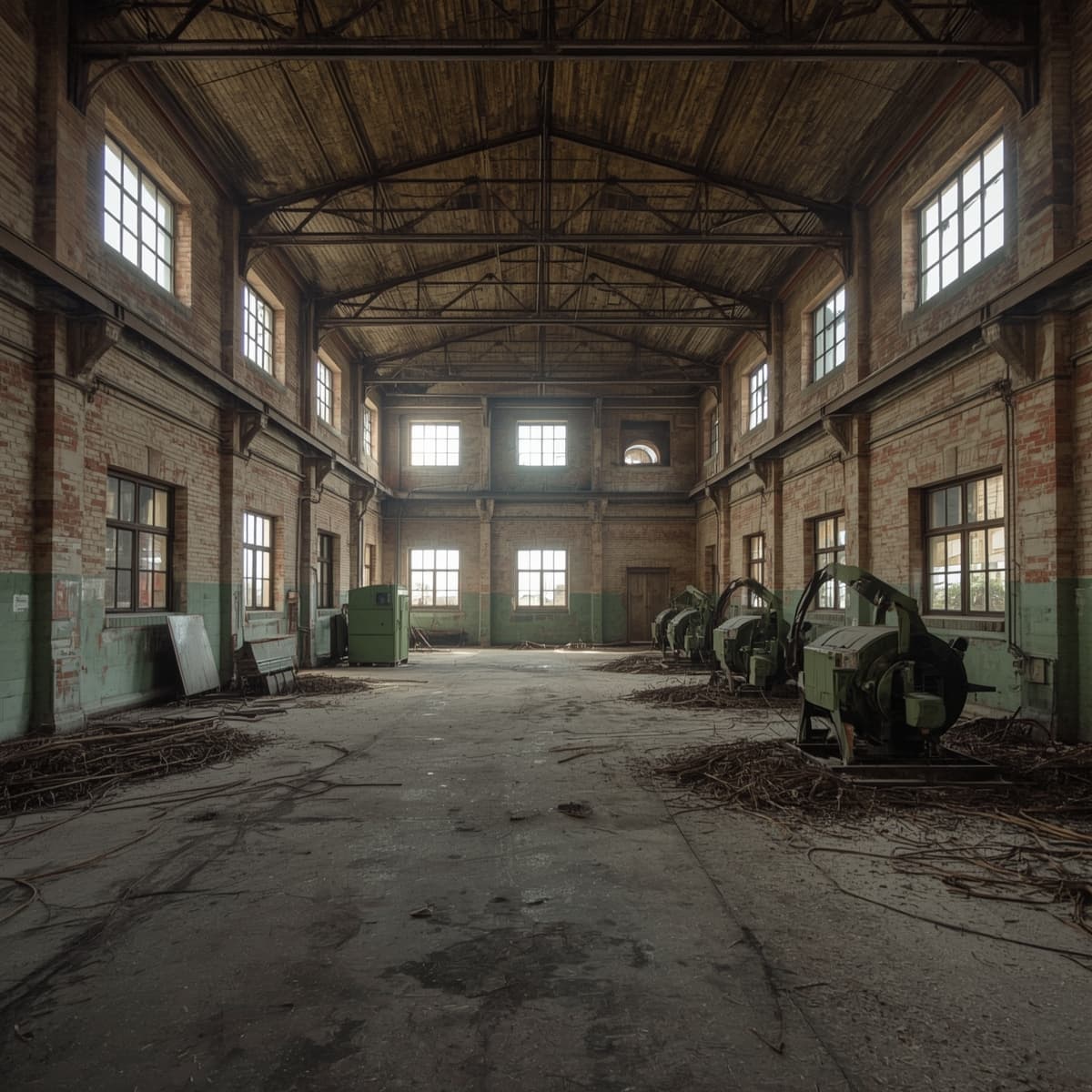
How can you find abandoned places near you?
You can find abandoned places near you by starting with a curated urbex map, then confirming each lead with satellite views, historical records, and local context. The safest and most reliable approach is to verify whether a site is still standing, whether access is restricted, and whether observation is possible without trespassing or damaging the place.
Quick summary
- Start with a curated map instead of random social posts.
- Confirm every location with satellite imagery and recent clues.
- Use archives, business records, and local history to understand the site.
- Never assume a place is accessible just because it is abandoned.
- Keep sensitive access details private to reduce vandalism and theft.
- Responsible urbex means preservation first, legality first, and safety first.
Quick facts
- Topic: How to find abandoned places near you
- Scope: Global
- Best starting point: A curated Browse all urbex maps page
- Core tools: Urbex map, satellite imagery, archives, street-level observation
- Main risk: Outdated information about demolition, security, or hazards
- MapUrbex approach: Verified locations, curated research, preservation-first
Why is a curated urbex map the fastest starting point?
A curated urbex map is the fastest starting point because it filters noise before you begin research. Instead of searching blindly for hidden urbex spots, you begin with places that are already organized by region and reviewed for relevance.
That matters because many abandoned locations disappear quickly. Buildings are demolished, redeveloped, secured, or emptied. A structured map helps you spend less time chasing dead leads and more time checking places that still have real documentary value.
If you want a broad starting point, use Browse all urbex maps. If you want a simple entry point, start with Access the free urbex map. For a deeper workflow, the guide Tools to Find Abandoned Places: Best Urbex Research Tools and Maps explains the research stack in more detail.
Access the free urbex map
What are the most reliable ways to find abandoned places?
The most reliable ways to find abandoned places are curated maps, satellite imagery, archives, local pattern reading, and public-space verification. No single method is enough on its own, because abandoned sites change quickly.
1. Start with curated urbex maps
Curated maps work because they reduce the time spent sorting false leads. They also give you geographic structure, which is useful when you want to search by region rather than by one famous location.
Map-based research is especially useful when you want to find abandoned places around the world. You can compare density, building types, and regional patterns without depending on viral posts that often hide context.
2. Check satellite imagery and recent aerial views
Satellite imagery helps confirm whether a site still exists. Roof collapse, overgrowth, demolition scars, cleared parking areas, and new construction are often visible before you ever travel.
This step is essential for hidden urbex spots because many addresses online are old. A site may still be listed in old discussions but already be gone. Satellite checks save time and reduce unnecessary trips.
3. Use archives, company records, and local history
Historical sources explain what a building was, when it closed, and why it matters. Old newspapers, industrial directories, planning documents, and historical maps often reveal sites that are not labeled clearly on current platforms.
This is one of the best answers to the question of how to find abandoned places with context. A place becomes easier to verify when you know its former function, owner history, or closure date.
4. Read local clues without relying on exact coordinates
Local clues include fenced lots with obsolete signage, inactive rail spurs, boarded windows, disused parking areas, or industrial zones bypassed by new infrastructure. These signs do not confirm access, but they do suggest where to research further.
Good urbex research means observing patterns, not hunting for forced entry. The goal is to identify likely abandoned structures from lawful public viewpoints and then decide whether the location is worth documenting responsibly.
5. Verify on the ground from public space
On-the-ground verification is where digital research becomes reality. You can often confirm vacancy, recent activity, structural decline, or redevelopment simply by observing from a sidewalk, road, or other legal public area.
This step protects both explorers and locations. It helps you avoid trespassing, avoid wasted travel, and avoid spreading outdated information about places that are now occupied or protected.
How do you confirm that a hidden urbex spot is real and still standing?
You confirm a hidden urbex spot by checking several recent signals at once. The best confirmation combines a map lead, satellite imagery, historical context, and a current visual check from public space.
| Check | What it tells you | Why it matters |
|---|---|---|
| Curated map entry | Regional relevance | Reduces false leads |
| Satellite imagery | Whether the structure still exists | Avoids wasted trips |
| Historical records | Former use and closure timeline | Adds context and credibility |
| Public-space observation | Current condition and activity | Helps assess risk and legality |
| Local redevelopment signs | Whether demolition or reuse is underway | Prevents outdated reporting |
A single clue is rarely enough. An empty-looking building may still be used for storage, temporary work, or security operations. That is why responsible explorers verify carefully and never assume that abandonment equals permission.
What clues help you find hidden urbex spots without broadcasting them publicly?
The best clues are visible patterns that suggest disuse without revealing sensitive access details. These clues help you research responsibly while protecting fragile places from unnecessary exposure.
- Long-term overgrowth around entrances or loading bays
- Broken or missing windows combined with no active maintenance
- Old business names still visible on facades or signs
- Empty industrial yards with obsolete equipment footprints
- Rail-adjacent warehouses no longer connected to active logistics
- Repeated mentions in local history forums or closure reports
These signs are only research indicators. They do not prove legality, safety, or access. In preservation-first urbex, the aim is to document places carefully, not to publicize ways into them.
How can you explore abandoned places responsibly and legally?
You can explore abandoned places responsibly and legally by prioritizing permission, lawful observation, and risk reduction over access at any cost. If entry is restricted, the responsible choice is not to enter.
A preservation-first approach includes a few non-negotiable rules:
- Never force entry or bypass locks, fences, or barriers.
- Never trespass on private or restricted property.
- Never go alone in unstable or remote environments.
- Never remove objects, documents, or architectural elements.
- Never reveal sensitive access details that increase vandalism or theft.
- Always treat local laws, safety warnings, and residents with respect.
This is also why curated resources matter. They help separate documentary research from reckless behavior. MapUrbex focuses on verified locations and responsible discovery, not illegal entry.
Where can you find abandoned places around the world?
You can find abandoned places around the world by combining global map coverage with local historical research. The same method works in major cities, industrial regions, rural transport corridors, and former tourist zones.
Regional guides are useful because closure patterns differ by place. In some cities, you will find former factories and depots. In others, the more common sites are hospitals, schools, hotels, farms, or military remnants. For concrete city examples, see Urbex Strasbourg: 10 Abandoned Places to Know in Strasbourg and Nearby and Urbex Toulouse: Best Abandoned Places In and Around Toulouse.
If you want a broader research workflow that scales internationally, use Tools to Find Abandoned Places: Best Urbex Research Tools and Maps alongside Browse all urbex maps. That combination is often the most efficient way to move from a vague search like “abandoned places near me” to a documented and verifiable shortlist.
Why do so many searches for "abandoned places near me" lead to poor results?
Many searches for "abandoned places near me" lead to poor results because search engines often surface recycled lists, outdated forum posts, or tourist-style articles with little verification. Abandoned locations change too fast for shallow content to stay reliable.
The better approach is to treat each result as a lead, not as proof. When you compare multiple signals, you get fewer surprises and a more accurate picture of whether a site still exists, is historically interesting, and can be documented responsibly.
FAQ
How do I find abandoned places near me without using exact coordinates from strangers?
Start with a curated map and broad regional research rather than exact coordinates shared on social media. Then check satellite imagery, archives, and local clues from public space. This method is slower than copying a pin, but it is usually more accurate and more respectful of the location.
Are hidden urbex spots always better than well-known abandoned places?
No, hidden urbex spots are not automatically better. Famous sites often have stronger documentation, clearer historical context, and easier verification. The value of a place depends more on its story, condition, and preservation needs than on secrecy alone.
Is it legal to explore abandoned places if they look empty?
No, an empty appearance does not make entry legal. Many abandoned buildings remain private property, restricted infrastructure, or dangerous sites under active monitoring. Always follow local law and do not enter where permission is absent or access is prohibited.
What is the safest tool for beginners who want to find abandoned places?
The safest starting tool is a curated urbex map combined with careful desk research. It helps beginners avoid random rumors and focus on documented leads. You can begin with Access the free urbex map and expand your method over time.
Can I find abandoned places around the world with the same method?
Yes, the core method works almost everywhere. The useful sequence is map first, context second, confirmation third. What changes from country to country is the legal framework, data availability, and the type of sites most commonly abandoned.
Conclusion
The best answer to the question “how do I find abandoned places near me?” is simple: use a verified starting point, cross-check every lead, and keep preservation ahead of access. Reliable urbex research is a process of confirmation, not guesswork.
If you want to explore abandoned places responsibly, begin with curated maps and build outward with archives, imagery, and local observation. That method works locally and scales globally.
Access the free urbex map
