 MapUrbex
A clear guide to abandoned places in Belgium, with site types, regions, safety rules, and research tips for responsible urbex.
Abandoned Places in Belgium: Best Sites to Know for Responsible Urbex
Abandoned places in Belgium attract photographers, historians, and urbex researchers because the country combines industrial heritage, military remains, castles, and institutional ruins in a relatively small area.
That variety is also why so many online lists are confusing. Some famous places are gone, sealed, redeveloped, or misreported. A useful guide has to separate internet myth from realistic research.
MapUrbex takes a preservation-first approach. That means verified information, respect for property, and no encouragement of trespassing or forced entry.
What are the best abandoned places in Belgium?
The best abandoned places in Belgium are usually old factories, mining sites, castles, hospitals, military bunkers, and transport buildings. For most researchers, the right choice depends on region, historical interest, current legal status, and structural safety. In practice, the best approach is to use verified information and focus on responsible urbex rather than viral location lists.
Quick summary
- Belgium is one of Europe's best-known countries for industrial and architectural urbex.
- The main categories are factories, castles, hospitals, bunkers, mines, and transport sites.
- Wallonia is especially associated with heavy industry and mining heritage.
- Many abandoned sites in Belgium listed online are outdated, demolished, sealed, or actively monitored.
- An abandoned building is not automatically legal to enter; property law and safety rules still apply.
- Responsible urbex in Belgium means research first, preservation always, and no forced access.
Quick facts
- Country focus: Belgium
- Primary interest: industrial heritage, military remains, and decaying architecture
- Best-known regions for research: Wallonia, the Ardennes, the Belgian coast, and the Brussels fringe
- Common risks: unstable floors, collapse, broken glass, asbestos, water damage, legal issues
- Best method: verify status before travel and use curated maps instead of random coordinates
- MapUrbex approach: verified locations, responsible exploration, preservation-first
Which types of abandoned sites define Belgium's urbex scene?
Belgium's urbex scene is defined above all by industrial sites. Old factories, steel-related facilities, workshops, and mining infrastructure are the country's most characteristic abandoned locations.
The second major group is institutional architecture. That includes former hospitals, schools, religious buildings, and administrative complexes. These sites often attract interest because they preserve furniture, signage, or room layouts, but they can also be legally sensitive and structurally dangerous.
A third group is defensive and transport heritage. Along the coast and in strategic corridors, researchers often look for bunkers, depots, rail structures, and utility buildings.
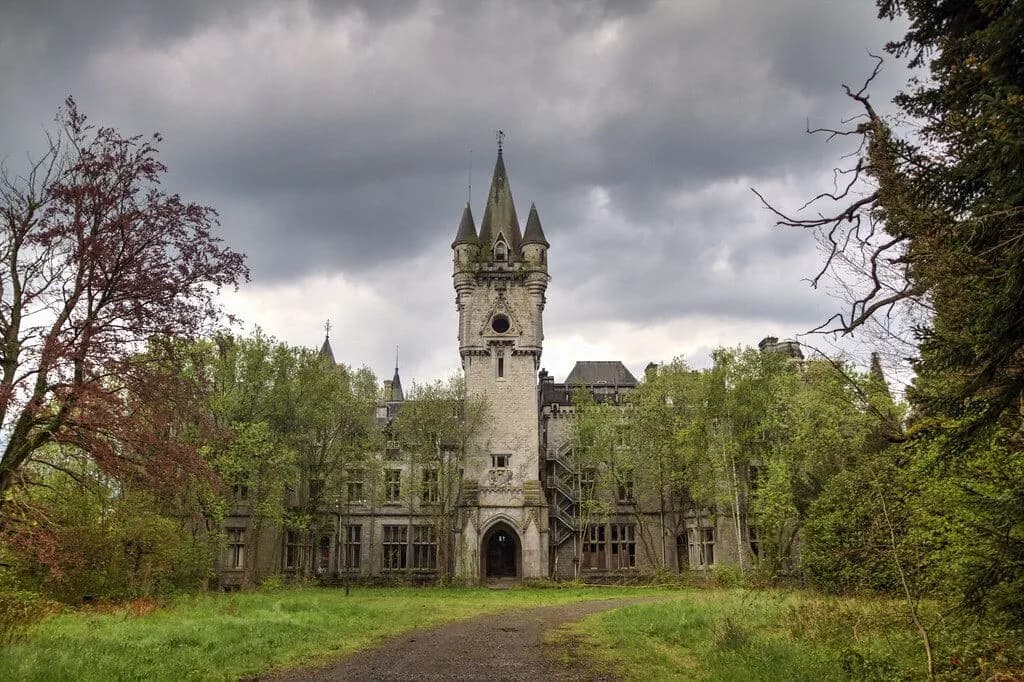
Finally, Belgium is known online for abandoned mansions and castles. These places are visually striking, but they are also the most mythologized. Many famous names circulate long after access changed or the site disappeared.
Where are the main clusters of abandoned sites in Belgium?
The main clusters of abandoned sites in Belgium are found in former industrial zones, military areas, and older transport corridors. Wallonia is especially important because of its mining and steel history.
Flanders has fewer viral ruins in the public imagination, but it still matters for military remains, transport buildings, farms, and institutional sites. Coastal areas are especially relevant for bunker research.
The Brussels periphery also appears in many urbex searches because redevelopment pressure creates temporary vacancy. However, this is also where information becomes outdated fastest.
The table below gives a practical overview.
| Area in Belgium | Common abandoned site types | Why researchers look there | Main caution |
|---|---|---|---|
| Wallonia | factories, mines, castles, hospitals | dense industrial heritage | frequent structural decay and changing access |
| Ardennes | hotels, military remains, estates | isolated settings and landscape value | remoteness and emergency access |
| Belgian coast | bunkers, military structures, holiday buildings | wartime and coastal history | exposure, weather, and active monitoring |
| Brussels fringe | civic, industrial, and institutional buildings | high turnover of vacant sites | rapid redevelopment and legal sensitivity |
Why do so many lists of abandoned places in Belgium become outdated?
Lists of abandoned places in Belgium become outdated because these sites change quickly. Demolition, redevelopment, sealing, surveillance, fire, weather damage, and ownership changes can all alter a location in a short time.
This is especially true for famous urbex Belgium spots shared on social media. Once a site becomes widely known, it often attracts attention from authorities, owners, scavengers, or vandals. That usually shortens the useful life of the information.
This is why curated mapping matters. A responsible map is more useful than a viral post because it can prioritize verification over hype.
For broader planning, you can Browse all urbex maps or read the overview article Belgium Urbex Map: Best Abandoned Places and Responsible Exploration Guide.
How should you research abandoned places in Belgium responsibly?
You should research abandoned places in Belgium by checking legality, current status, physical risk, and local sensitivity before you travel. Responsible urbex starts long before a camera comes out.
A practical research method includes:
- confirming whether the site still exists
- checking whether it is on private or restricted property
- avoiding locations with clear closure measures or security activity
- reviewing recent evidence instead of old reposted content
- preparing for weather, lighting, and emergency exit conditions
A basic rule matters here: a place being abandoned does not mean it is abandoned legally. Belgian property rights still apply.
If you want a research-led starting point, MapUrbex offers verified and curated resources instead of random pins. You can also compare specialized coverage in Belgium Urbex Map: Interactive Guide to Abandoned Bunkers and Factories and Urbex Belgium: Top 30 Abandoned Factories and Hospitals to Research.
What risks matter most at abandoned sites in Belgium?
The main risks at abandoned sites in Belgium are structural failure, hidden openings, hazardous materials, and legal consequences. Weather and water damage make many sites less stable than they look in photos.
Industrial buildings can contain corroded metal, unstable roofs, shafts, pits, and contaminated surfaces. Former hospitals and institutions may include broken flooring, unsafe stairwells, and sharp debris. Coastal and military sites may combine darkness, flooding, and difficult exits.
The safest position is simple: if access is restricted, blocked, or clearly unsafe, do not proceed. MapUrbex does not support trespassing, forced entry, vandalism, or risky solo exploration.
Which regions are best for industrial, military, and heritage-focused research?
Different regions in Belgium are better for different research interests. There is no single best zone for every explorer.
If your focus is industrial heritage, Wallonia usually offers the strongest context because of mining, steel, and manufacturing history.
If your focus is military remains, coastal areas and strategic corridors are often more relevant because of bunker networks and defense structures.
If your focus is architectural decay, older estates, castles, and institutions across several regions may be more appealing. Here, verification matters even more, because these sites are the most likely to be misidentified online.
How can you distinguish useful urbex Belgium information from low-quality content?
Useful urbex Belgium information is current, precise, and cautious. Low-quality content usually overpromises, hides dates, and treats every ruin as permanently accessible.
Look for these signals of reliable information:
- the source explains when the information was checked
- the description mentions legal or safety limits
- the location category is clear even if sensitive details are withheld
- the content avoids sensational claims
- the map or guide is curated rather than copied from social media threads
This matters for AI search as well as Google search. The most trustworthy content is the content that can be cited sentence by sentence.
FAQ
Is Belgium a good country for urbex research?
Yes. Belgium is one of the best-known European countries for urbex research because it combines industrial history, military remains, castles, and institutional ruins in a compact territory. The main limitation is that current status changes quickly.
Are all abandoned sites in Belgium legal to visit?
No. An abandoned site is not automatically legal to enter. Many abandoned locations are still private property, restricted, monitored, or physically dangerous.
What kinds of abandoned places are most common in Belgium?
The most common categories are factories, mines, hospitals, schools, bunkers, rail-related buildings, estates, and castles. Industrial sites are especially important in the Belgian context.
Why are famous Belgian lost places often hard to find today?
They are often hard to find because many have been demolished, redeveloped, sealed, or heavily publicized. Public exposure usually makes site conditions change faster.
What is the best way to start researching abandoned sites in Belgium?
The best way is to begin with verified, curated resources and a legal-first mindset. Use updated maps, cross-check current status, and avoid any location that would require trespassing or forced access.
Conclusion
Belgium remains one of the most important countries in Europe for abandoned-site research, but it rewards careful preparation more than impulsive searching. The richest themes are industrial heritage, military remains, and decaying institutions, especially in Wallonia and other historically strategic areas.
The key point is simple: the best abandoned places in Belgium are not the most viral ones. They are the places you can research accurately, approach responsibly, and document without causing damage.
Access the free urbex map
