 MapUrbex
Discover the main types of abandoned places in Bavaria, where they are usually found, and how to plan safer, smarter urbex with a verified map.
Abandoned Places in Bavaria: 12 Lost Place Types to Find on a Verified Urbex Map
Bavaria is one of Germany's most varied regions for industrial ruins, empty hotels, forgotten infrastructure, and rural decay. For people searching for abandoned places in Bavaria, the real difficulty is not finding rumors. It is finding reliable, current, and responsibly documented locations.
MapUrbex approaches Lost Places Bavaria with a preservation-first method. Verified mapping helps explorers, photographers, and history-focused travelers plan better while avoiding wasted trips, trespassing, and clearly unsafe sites.
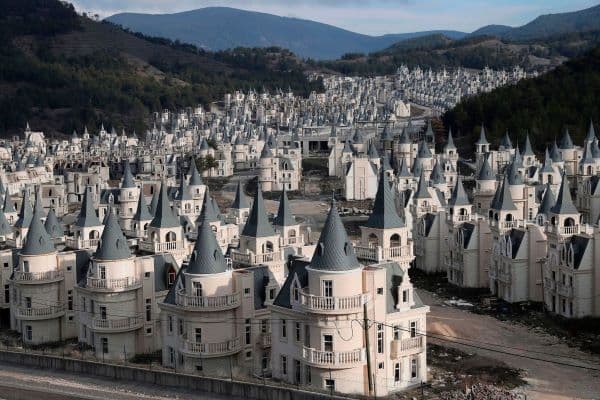
Where are the best abandoned places in Bavaria?
The best abandoned places in Bavaria are usually found in former industrial zones, depopulated rural areas, old hospitality corridors near the Alps, and obsolete transport or military landscapes. The strongest urbex potential is spread across the state, so a verified map is far more useful than random online lists or outdated coordinates.
Quick summary
- Bavaria offers a broad mix of industrial, rural, military, hospitality, and infrastructure ruins.
- The most useful way to search is by region and building type, not by viral rumors.
- Many lost places in Bavaria are on private land or structurally unstable, so legality and safety matter first.
- A curated map reduces wasted trips and helps filter demolished, redeveloped, or inaccessible sites.
- Exterior photography is often possible where full entry is not legal or not safe.
- Responsible urbex in Bavaria means no forced access, no vandalism, and no removal of artifacts.
Quick facts
- Region covered: all of Bavaria
- Best-known site families: factories, inns, clinics, rail assets, military remnants, hamlets
- Best use case: route planning for photographers, historians, and responsible explorers
- Main challenge: scattered locations and fast-changing access conditions
- Best planning tool: a verified, curated urbex map
- Core rule: ownership and local law always override online rumors
Which types of abandoned places can you find in Bavaria?
Bavaria has a notably wide range of abandoned sites. In practical terms, the state is interesting because it combines heavy industry, tourism history, border history, and rural decline in one territory.
-
Abandoned factories and workshops Former production halls, machine shops, depots, and brick industrial buildings remain some of the most sought-after urbex targets in Bavaria.
-
Closed hotels, guesthouses, and alpine hospitality sites Old inns, mountain guesthouses, and leisure properties are especially attractive for photographers because they often combine decay with scenic surroundings.
-
Disused clinics, care homes, and sanatorium-style buildings These places are visually striking, but they also tend to carry higher safety and legal risks. Many are fenced, monitored, or under redevelopment.
-
Railway infrastructure and transport relics Empty stations, sidings, signal buildings, warehouses, and maintenance facilities are common search targets in a large regional transport network.
-
Military and border-era remnants Bavaria's geography and 20th-century history left behind bunkers, training structures, depots, and peripheral installations in some areas.
-
Rural mills, barns, and farm complexes These are often less spectacular online but highly rewarding on the ground, especially for texture, atmosphere, and local history.
-
Breweries, warehouses, and food-production sites Bavaria's brewing and food-processing legacy means that smaller industrial sites can be as interesting as major factories.
-
Abandoned schools, halls, and civic buildings In shrinking or reorganized local areas, former community buildings sometimes survive in a disused state.
-
Quarries, extraction areas, and utility structures These can be visually unique, but they also come with some of the highest terrain risks.
-
Vacant villas and manor-like properties These sites attract attention fast, which often means faster security upgrades, neighbor awareness, and legal sensitivity.
-
Forgotten leisure facilities Dance halls, pools, recreation venues, and roadside entertainment sites appear in some parts of the state.
-
Partly abandoned village fragments Bavaria also has places where abandonment is not one building but a small cluster of structures losing their original use.
Where are abandoned sites in Bavaria most commonly found?
Abandoned sites in Bavaria are most commonly found where economic use changed sharply: older industrial belts, peripheral rural districts, transport corridors, and tourism properties that no longer fit the market. They are usually more dispersed than many visitors expect.
| Bavarian area | Site types often found | Why explorers look there | Main caution |
|---|---|---|---|
| Upper Bavaria | hotels, leisure properties, transport remnants, rural complexes | strong scenery and varied architecture | private land and seasonal access |
| Franconia | factories, breweries, mills, warehouses, civic buildings | dense industrial heritage and brick architecture | mixed ownership and redevelopment |
| Upper Palatinate | military traces, border-era remnants, rail assets, workshops | isolated settings and layered history | remote terrain and limited visibility |
| Swabia | farm complexes, clinics, industrial units, depots | mixed rural and urban decay | active reuse projects |
| Lower Bavaria | inns, agricultural sites, small industry, village buildings | quieter clusters outside major tourist routes | scattered distribution and local oversight |
How can you find lost places in Bavaria without wasting time?
The fastest way to find lost places in Bavaria is to use a verified, curated map instead of copying random coordinates from social media. That matters because demolitions, ownership changes, and security upgrades happen constantly.
A good planning method is simple:
- start with a verified regional overview
- filter by building type and travel radius
- check whether the site is exterior-only, permission-based, or clearly off-limits
- prepare a daylight route with backups nearby
- never assume an old report is still accurate
MapUrbex is built for that kind of planning. You can Browse all urbex maps for broader trip research, or Access the free urbex map if you want to test the workflow first.
For readers who enjoy global comparisons, Top 10 Most Famous Abandoned Places in the World shows how different site categories attract attention, while 10 Most Dangerous Abandoned Places in the World is a useful reminder that visual appeal never cancels physical risk.
What makes Bavaria especially interesting for urbex?
Bavaria stands out because it compresses several abandoned-place landscapes into one state. You are not looking at a single pattern of decline. You are looking at overlapping industrial, rural, military, and tourism histories.
That variety matters for explorers and photographers. In one planning area, you may find brick industry, in another faded mountain hospitality, and elsewhere silent agricultural structures or transport remnants. The result is a stronger mix of textures, scales, and architectural periods than many first-time visitors expect.
Bavaria is also visually distinctive. Alpine foothills, forests, market towns, river valleys, and old industrial districts create very different backdrops. For exterior work alone, that can make the state more rewarding than regions with a narrower architectural profile.
What rules matter before visiting abandoned places in Bavaria?
The key rule is simple: an abandoned building is not automatically legal to enter. In Bavaria, as elsewhere, private ownership, fencing, posted restrictions, and local law must be respected at all times.
Use these principles as a baseline:
- Do not trespass. If entry is forbidden or unclear, stay out.
- Do not force access. No broken locks, no pushed doors, no cut fences.
- Do not take objects. Preservation-first means leaving the site unchanged.
- Do not publicize fragile sites irresponsibly. Exposure often accelerates damage.
- Do not explore risky structures casually. Rot, water damage, holes, glass, asbestos, and unstable floors are common.
- Do not go beyond your route plan. Remote Bavarian terrain, weather, and low light can turn minor mistakes into real problems.
MapUrbex verification helps with planning, but verification never overrides property rights or safety reality on the ground.
Which abandoned places in Bavaria are best for photography?
The best abandoned places in Bavaria for photography depend on your subject. Hotels, mills, civic halls, and rural homes usually work best for atmosphere, while factories and railway sites are stronger for scale and geometry.
If your goal is specific, this quick guide helps:
- For wide compositions: factories, depots, quarries, rail yards
- For moody interiors: inns, schools, village houses, clinics
- For landscape plus decay: alpine guesthouses, hamlets, rural farms
- For textures and close detail: breweries, workshops, warehouses, mills
- For documentary value: transport relics, civic buildings, border-era remains
If luxury decay interests you, Abandoned Hotels and Casinos: The Most Beautiful Luxury Urbex Spots gives useful context for why vacant hospitality sites are so visually powerful.
FAQ
Are abandoned places in Bavaria legal to visit?
Some are visible or accessible from public space, but many are on private land or behind explicit restrictions. An abandoned appearance does not create a right of entry.
Is Bavaria good for urbex beginners?
Yes, but only if beginners stay conservative. Exterior-focused visits, daylight planning, and verified route research are much safer than impulsive entry attempts.
What is the best season to look for lost places in Bavaria?
Late autumn and winter often improve visibility because vegetation is lighter. Spring can be excellent for exteriors, while mountain and rural areas may be harder in bad weather.
Do verified maps really make a difference?
Yes. Verified maps save time, reduce dead ends, and help avoid locations that are demolished, repurposed, heavily secured, or wrongly described online.
What should you never do at an abandoned site?
Never force entry, never remove objects, never break anything, and never assume a structure is safe because others photographed it before.
Conclusion
If you are looking for abandoned places in Bavaria, the state offers depth rather than one single hotspot. Its strongest appeal is variety: industrial ruins, quiet rural decay, old hospitality sites, transport relics, and scattered military remains.
The smartest way to explore that variety is not by chasing rumors. It is by using verified information, respecting ownership, and planning with preservation in mind.
Access the free urbex map
