 MapUrbex
A factual guide to the 10 most dangerous abandoned places in the world, from Pripyat to Centralia, with risks, context, and responsible urbex guidance.
10 Most Dangerous Abandoned Places in the World
Abandoned places attract attention because they condense history, decay, and risk in one setting. At a global scale, the most dangerous sites are not just photogenic ruins. They are places shaped by radiation, toxic contamination, underground fire, volcanic activity, war damage, or extreme isolation.
This list is informational, not a travel recommendation. MapUrbex supports verified locations, responsible urbex, and preservation-first research. Never enter restricted areas, bypass security, or treat high-risk ruins as casual exploration targets.
What are the most dangerous abandoned places in the world?
The most dangerous abandoned places in the world include Pripyat, Centralia, Wittenoom, Plymouth, and Hashima Island because they combine severe hazards such as radiation, toxic dust, underground fire, volcanic instability, structural collapse, or strict exclusion rules. In practice, these are cautionary examples of dangerous abandoned places, not recommended urbex destinations.
Quick summary
- The most dangerous abandoned places are dangerous for specific reasons, not because they are merely old or empty.
- The main hazard categories are radiation, toxic contamination, fire, sinkholes, volcanic activity, structural failure, mines, and extreme isolation.
- Some sites can only be seen legally through controlled routes, and some should not be entered at all.
- A ruined building can be less risky than the ground, dust, or political context around it.
- Many famous places in dangerous urbex are better understood as exclusion zones than as normal exploration spots.
- Responsible urbex starts with legality, verified information, and preservation-first judgment.
Quick facts
- Scope: global
- Article type: ranked list
- Ranking basis: environmental hazard, structural danger, legal restriction, and rescue difficulty
- Search intent: informational
- Best use: understanding why some abandoned places remain high-risk for decades
- Safety note: conditions change with weather, maintenance, conflict, and local regulation
Why are some abandoned places far more dangerous than others?
Some abandoned places are far more dangerous than others because the real risk often comes from invisible or systemic hazards, not from the ruins themselves. Radiation, asbestos, toxic gases, active geological processes, unexploded ordnance, and isolation can make a site dangerous even when it looks quiet.
| Risk category | Why it matters | Typical examples |
|---|---|---|
| Radiation or toxic contamination | Exposure may be invisible and long-term | Pripyat, Wittenoom |
| Fire, heat, gases, sinkholes | Ground failure can happen without warning | Centralia |
| Volcanic or geological instability | Terrain and air conditions can shift quickly | Plymouth, Craco |
| Structural collapse | Floors, roofs, stairs, and facades may fail suddenly | Hashima, Varosha |
| Conflict or explosives | Mines and military restrictions create physical and legal danger | Agdam, Zone Rouge |
| Isolation and wildlife | Rescue delays turn small problems into emergencies | Pyramiden |
A useful rule is simple: the most dangerous abandoned places are rarely the best places for exploration. They are usually the best examples of why risk assessment matters.
Which are the 10 most dangerous abandoned places in the world?
The 10 places below are ranked by the seriousness of their hazard profile, not by fame alone. Each site illustrates a different type of dangerous abandoned place, from contamination and fire to conflict damage and Arctic exposure.
1. Pripyat and the Chernobyl Exclusion Zone, Ukraine
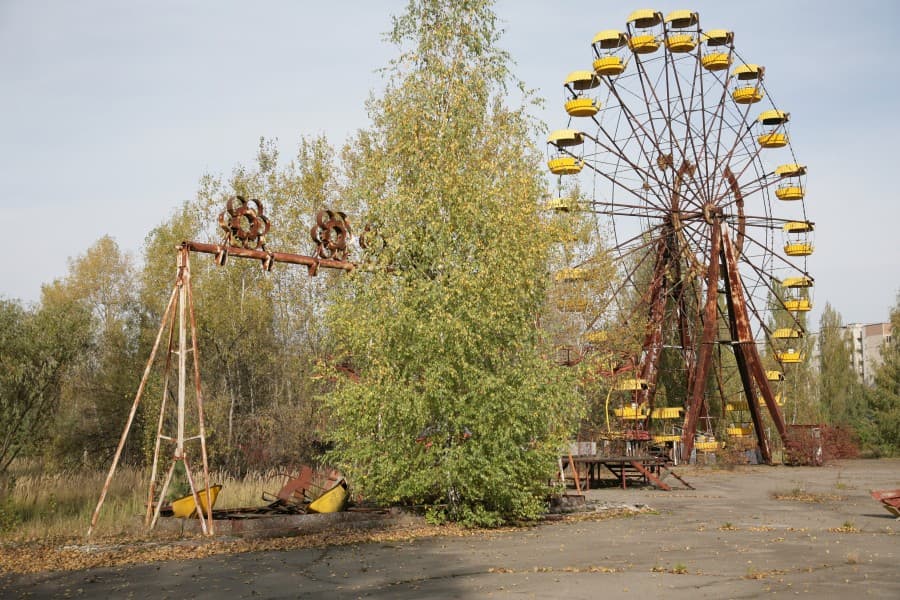
Pripyat is dangerous because residual radiation, contaminated dust, unstable buildings, and strict access controls all exist in the same environment. It is one of the clearest examples of a site that is famous in urbex culture but fundamentally different from a normal abandoned city.
The city was evacuated after the 1986 Chernobyl disaster. Even where radiation levels are lower than in the most contaminated hotspots, exposure risk, damaged interiors, and changing security conditions mean Pripyat should be treated as a restricted exclusion zone, not as a casual exploration target.
2. Centralia, Pennsylvania, United States
Centralia is dangerous because an underground coal mine fire has burned for decades beneath and around the town. That fire can produce toxic gases, heat anomalies, and ground instability, including the risk of sinkholes.
Most of the town was emptied after the long-term hazard became undeniable. Centralia shows why dangerous abandoned places are not always visually dramatic: the real danger can be below the surface, invisible, and persistent for generations.
3. Wittenoom, Western Australia, Australia
Wittenoom is dangerous because asbestos contamination remains its defining hazard. Dust, tailings, and disturbed material can create exposure risks that are medically serious even when the landscape appears open and quiet.
The former mining town became synonymous with blue asbestos exposure and was effectively depopulated over time. Wittenoom is a reminder that some of the worst abandoned-place risks are slow, toxic, and not obvious to visitors.
4. Plymouth, Montserrat
Plymouth is dangerous because volcanic activity, ash deposits, unstable terrain, and exclusion-zone rules shape the entire site. It is not simply an abandoned capital; it is a settlement transformed by an active geological threat.
After eruptions from the Soufriere Hills volcano beginning in 1995, much of the city was buried or rendered unsafe. Access depends on official rules, and the main lesson is clear: a place can remain abandoned because the underlying natural hazard has not truly gone away.
5. Hashima Island, Japan
Hashima Island is dangerous because severe marine exposure and long-term decay have weakened a dense cluster of concrete residential blocks and industrial structures. Storms, corrosion, falling debris, and inaccessible interiors all raise the risk level.
The island, also known as Gunkanjima, was a coal-mining settlement abandoned in 1974. Today, limited official visits focus on controlled areas, while unrestricted entry into the ruined interior remains unsafe due to structural collapse hazards.
6. Agdam, Azerbaijan
Agdam is dangerous because conflict destruction, unstable ruins, and landmine risk in the wider region create a complex post-war hazard profile. In this case, the danger is not just architectural. It is also geopolitical and environmental.
Once a substantial city, Agdam was heavily damaged during the Nagorno-Karabakh conflict. Conditions, access rules, and safety realities can change over time, which is exactly why post-conflict abandoned places demand caution far beyond standard urbex concerns.
7. Pyramiden, Svalbard, Norway
Pyramiden is dangerous because Arctic remoteness, extreme cold, changing weather, and polar bear territory can make a minor problem become a survival emergency. The danger here is as much environmental as structural.
This Soviet mining settlement was abandoned in the late 1990s and is now mostly reached through organized trips from Longyearbyen. Pyramiden demonstrates that abandoned places in the world can be dangerous even when the buildings are relatively intact, because rescue is slow and exposure is severe.
8. Craco, Italy
Craco is dangerous because landslides, erosion, and unstable masonry made large parts of the hilltop village unsafe. It is a good example of a beautiful abandoned place whose visual appeal can hide major geological and structural risk.
The village was abandoned in stages after landslide damage and other instability problems. Visits are generally controlled rather than open-ended, which reflects a broader truth about dangerous urbex: instability on slopes and in old stone structures is easy to underestimate.
9. Varosha, Cyprus
Varosha is dangerous because decayed high-rise buildings, long-term abandonment, and a highly controlled political setting limit what can be accessed safely and legally. Legal risk matters here almost as much as physical risk.
The district was abandoned in 1974 and became one of the most famous closed urban zones in the Mediterranean. Even where access rules have changed in part, Varosha remains a poor candidate for independent urban exploration because restrictions and structural uncertainty still define the site.
10. The destroyed villages of the Zone Rouge, France
The destroyed villages of France's Zone Rouge are dangerous because unexploded ordnance and contaminated ground remain part of the landscape more than a century after World War I. The danger is often underground, not visible in the remaining terrain.
Several villages were never rebuilt after the war, and parts of the wider red zone remain managed or restricted. This is one of the clearest examples of why an abandoned place can stay dangerous for generations even when little architecture is left standing.
How should dangerous abandoned places be approached responsibly?
Dangerous abandoned places should be approached with a preservation-first mindset, and in many cases that means not approaching them at all. The responsible baseline is to respect closures, use verified information, avoid forced access, and treat exclusion zones and memorial landscapes as places for study rather than entry.
MapUrbex focuses on curated maps, verified locations, and clearer safety context. If you want grounded reading instead of high-risk sites, start with Urbex in Prague: abandoned places, safety, and the best-known spots, Urbex Brussels: guide to abandoned places in and around Brussels, and Abandoned Villages in Europe: 6 Ghost Towns, Their History, and Responsible Urbex. You can also Browse all urbex maps to compare regions with a more practical, lower-risk perspective.
Access the free urbex map
FAQ
Are the most dangerous abandoned places ever legal to visit?
Some are legal to see only through controlled access, guided routes, or designated viewpoints. Others are closed because of contamination, military restrictions, or active environmental hazards. Legal access does not remove the underlying risk.
Is radiation the biggest risk in dangerous urbex?
Not always. Radiation is serious, but asbestos, toxic gases, sinkholes, volcanic activity, and structural collapse can be equally or more relevant depending on the site. The highest-risk places are often dangerous because several hazards overlap.
Why do abandoned places stay dangerous for so long?
Many hazards do not disappear when people leave. Underground fire, contaminated soil, unstable slopes, and unexploded ordnance can remain active for decades. Abandonment often means less maintenance, slower rescue, and fewer barriers against exposure.
How does MapUrbex handle high-risk locations?
MapUrbex prioritizes verified information, responsible context, and preservation-first guidance. The goal is not to glorify dangerous entry but to help readers understand places accurately. When risk or legality is too uncertain, caution comes before access.
What is the safest way to learn about extreme abandoned places?
The safest way is usually research, official interpretation, or legal guided access where it exists. Many iconic dangerous sites are better understood through history, maps, and documented routes than through direct entry. That approach protects both people and places.
Conclusion
The most dangerous abandoned places in the world are dangerous for concrete reasons: radiation, toxins, underground fire, unstable geology, conflict remnants, collapse, or isolation. Their real value is educational. They show why abandoned does not mean harmless.
For most readers, the right takeaway is not where to go next but how to judge risk more clearly. Responsible urbex begins with legality, verified context, and respect for preservation.
Browse all urbex maps
Access the free urbex map
