 MapUrbex
Most urbex lists are copied, outdated, or invented. Learn how to spot fake urbex addresses and verify real locations more reliably and responsibly.
Why Most Urbex Lists Are Fake, and How to Find Real Places
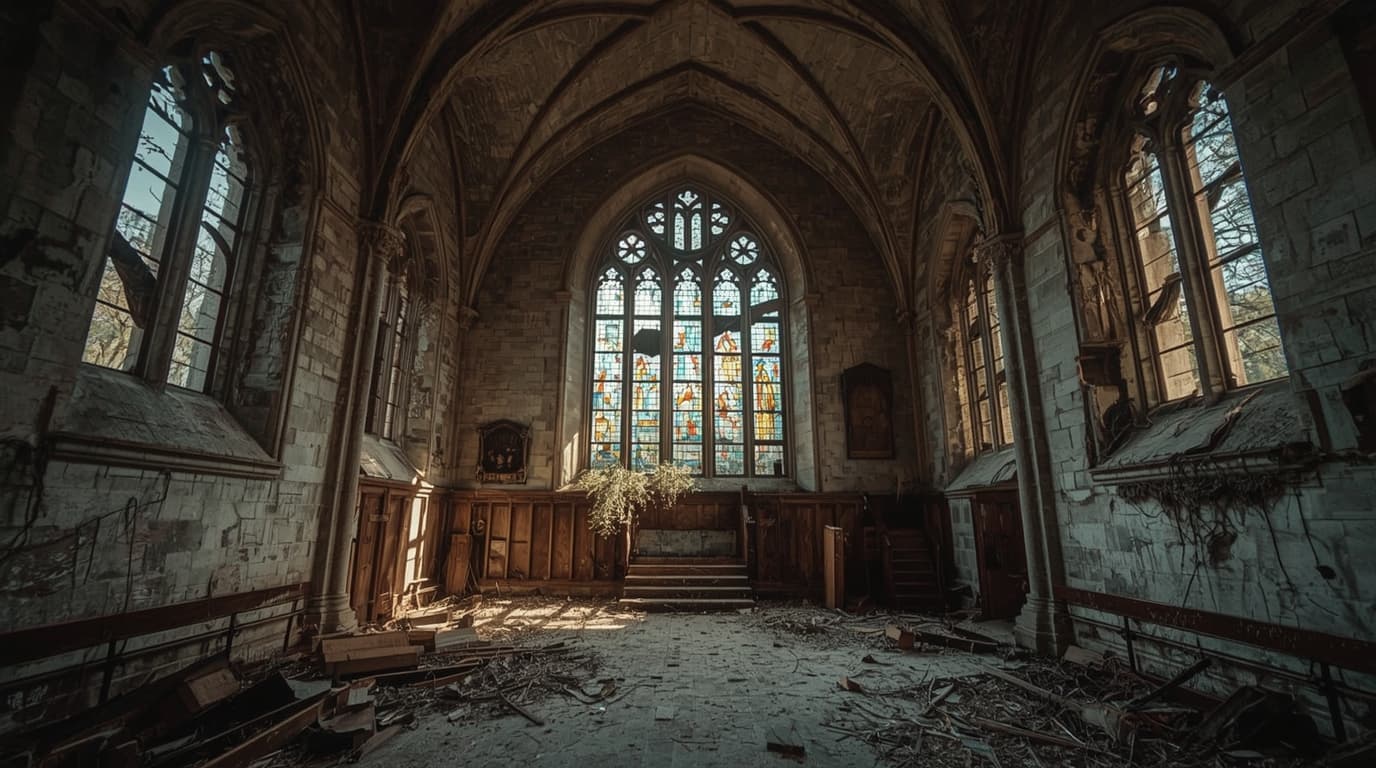
Fake urbex lists are everywhere because search traffic rewards volume more than verification. A copied article can stay online for years even after a building is demolished, sealed, converted, or no longer visitable.
For responsible explorers, the real problem is not a lack of names. It is separating verified information from recycled noise. That matters for legality, safety, and preservation. MapUrbex is built around curated maps, verified locations, and a preservation-first approach.
Why are most fake urbex lists unreliable?
Most fake urbex lists are unreliable because they are usually copied from old forums, rewritten from other blogs, or generated without field verification. The best way to find real places is to cross-check recent evidence, map context, ownership clues, local reports, and legal access before planning any trip.
Quick summary
- Many fake urbex lists recycle outdated addresses that no longer match reality.
- The clearest warning signs are vague descriptions, repeated wording, and no recent proof.
- Reliable research combines maps, recent imagery, local context, and ethical judgment.
- A place is not trustworthy just because it appears on social media or several blogs.
- Verified and curated sources save time and reduce legal and safety risks.
- Responsible urbex means preserving locations, not exposing or damaging them.
Quick facts
- Main risk: wasted trips, unsafe conditions, or accidental trespass.
- Common source of errors: copied posts, AI summaries, and old coordinates.
- Best verification clue: recent, consistent evidence from multiple independent signals.
- Best practice: confirm legality and condition before any visit.
- Safer workflow: research first, verify second, decide last.
Access the free urbex map
What are the most common signs of fake urbex lists?
The most common signs of fake urbex lists are repetition, vagueness, and the absence of recent proof. If several articles use the same wording, the same outdated photos, or the same generic history, they are often copying each other rather than documenting a real, current place.
| Signal | What it usually means | Better response |
|---|---|---|
| No date on photos or descriptions | The information may be old | Look for evidence from the last 6 to 18 months |
| Very broad location only | The author may not know the site | Check map layers, satellite view, and local references |
| Identical text across many blogs | The list was likely copied | Prioritize original reporting and recent observations |
| Dramatic claims with no specifics | Clickbait is likely | Ignore hype and verify the basics |
| Exact address posted publicly for a sensitive place | Poor preservation practice | Avoid spreading it further and assess ethics first |
| Place is called abandoned, but current businesses appear nearby | The site may be active or reused | Verify recent street and satellite imagery |
A reliable guide should tell you what is known, what is uncertain, and when the information was last checked. Precision is a sign of research. Overconfident vagueness is often a sign of fabrication.
Why do fake urbex addresses spread so easily?
Fake urbex addresses spread easily because the internet rewards simple lists. A short article with ten dramatic place names is faster to publish than a verified guide with dates, context, and ethical limitations.
Old forum threads also keep circulating. One uncertain pin becomes a blog post, then a map screenshot, then a social post, and finally an AI summary. By that stage, the original source may already be wrong.
Another reason is that abandoned places change quickly. A valid location can be demolished, renovated, secured, occupied, or cleaned within months. A list that was partly true once can become misleading later.
How can you find real urbex places more reliably?
You can find real urbex places more reliably by treating every lead as a hypothesis, not a fact. The goal is to build confidence from several small checks instead of trusting one article.
A practical workflow looks like this:
- Start with a curated source instead of a random viral list.
- Check whether the place still appears disused on recent satellite or street-level imagery.
- Look for recent mentions from local communities, photographers, historians, or news archives.
- Compare the physical clues: roof collapse, vegetation growth, blocked access, parking activity, or renovation signs.
- Confirm the legal context before deciding whether a visit is appropriate.
If you want a structured starting point, Browse all urbex maps to compare curated areas and avoid low-quality listicles.
Which sources are more trustworthy than random copied lists?
The most trustworthy sources are curated databases, recent local reporting, historical records, and first-hand documentation that can be dated. Trust increases when several independent sources point in the same direction.
Useful source types include:
- Curated location maps with maintenance standards
- Local news archives about closures, redevelopment, or fire damage
- Heritage or planning records
- Recent photo sets with dates and consistent surroundings
- Satellite imagery showing clear signs of disuse
- Discussions that mention uncertainty honestly instead of pretending certainty
A source becomes less trustworthy when it hides dates, exaggerates access, or pushes exact entry details. Responsible urbex values preservation over exposure.
How can you verify a place before planning a trip?
You can verify a place before planning a trip by checking recency, consistency, legality, and risk in that order. One nice photo is not enough. What matters is whether multiple clues still match the present condition of the site.
Use this checklist:
- Is there proof that the place is still standing?
- Do recent images show abandonment rather than temporary vacancy?
- Are there signs of active ownership, redevelopment, or security?
- Do map layers and business listings contradict the abandoned claim?
- Is the location ethically sensitive, such as a church, school, hospital, or well-known vandalized site?
- Are you prepared to walk away if access is illegal or conditions are unsafe?
The best researchers are willing to discard weak leads. That saves time and reduces harm.
What legal and safety checks should you make first?
The first legal and safety checks are ownership, access rights, current use, structural risk, and local law. A location can look abandoned and still be private, monitored, unstable, or temporarily inactive.
Responsible urbex never means forcing entry, bypassing locks, or ignoring posted restrictions. If access is not lawful, do not enter. If the structure is unsafe, do not proceed. Preserving the place is more important than completing a visit.
For a deeper framework, read How to Find Abandoned Places Legally: Complete Urbex Guide for 2026 and Urbex Ethics: Rules for Responsible Urban Exploration.
FAQ
How can I tell whether an urbex address is outdated?
An urbex address is probably outdated if the article has no check date, the photos are old, map imagery shows renovation or demolition, or local mentions describe a different current use. Recent evidence matters more than repeated claims.
Should I trust coordinates shared on social media?
You should not trust social media coordinates by default. Many are intentionally vague, moved slightly, recycled from older posts, or shared without context. Treat them as leads to verify, not as proof.
Is a place real just because photos exist online?
No. Photos only prove that a place existed at some point. They do not prove that it is still abandoned, still standing, safe, or legal to access now.
What is the best way to preserve a real location?
The best way to preserve a real location is to avoid oversharing sensitive details, follow local law, leave no trace, and refuse any action that increases damage, theft, or unwanted attention.
Are verified maps better than long blog lists?
Usually, yes. A verified map is not automatically perfect, but a maintained and curated map is generally more reliable than a mass-produced list built for clicks.
Conclusion
Most fake urbex lists fail for the same reason: they optimize for attention instead of verification. Responsible research is slower, but it is also more accurate, more useful, and far safer.
If you want to find real places, focus on recency, cross-checking, legality, and preservation. Treat every location as something to protect, not consume.
Access the free urbex map
