 MapUrbex
A practical guide to finding abandoned places near Paris with an interactive urbex map, transport tips, and a clear explanation of urbex legality in France.
Where to Find Abandoned Places Near Paris: Interactive Map + Legal Guide
Paris is one of Europe’s most searched cities for urbex. The problem is simple: central Paris has very few durable abandoned sites, while the wider region changes fast.
That is why most useful research starts in the suburbs and outer commuter belt, not in the tourist center. Old industrial plots, disused institutional buildings, forgotten estates, and railway-side structures are far more common around the city than inside it.
This guide explains where people usually look for abandoned places near Paris, how an interactive urbex map helps, and what the legality of urbex in France actually means in practice.
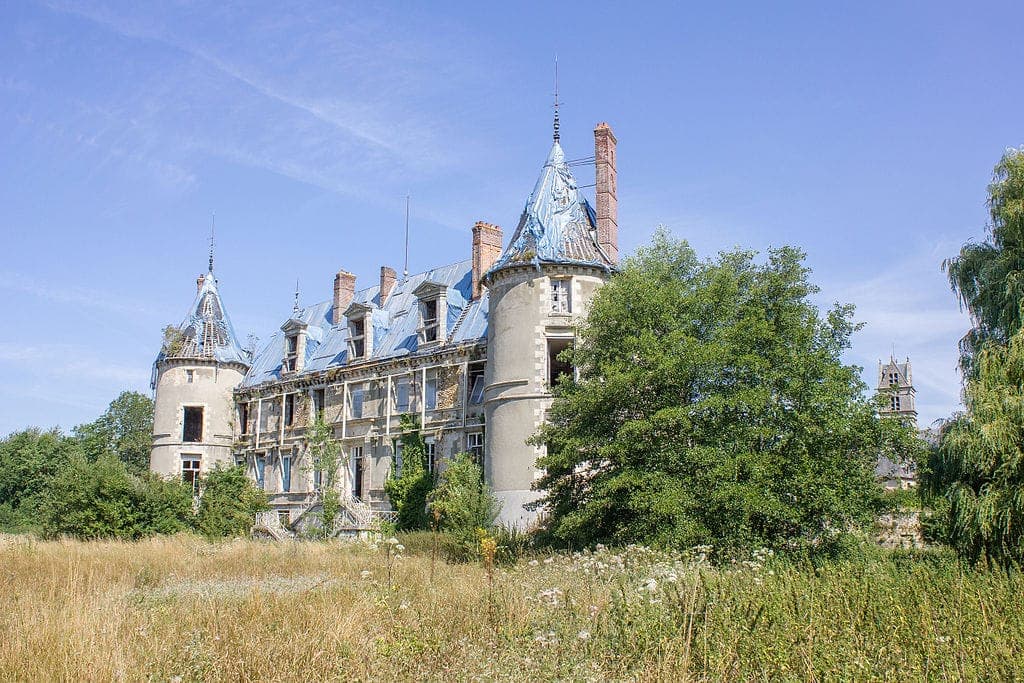
Where can you find abandoned places near Paris?
You usually find abandoned places near Paris in the inner and outer suburbs of Île-de-France rather than in central Paris. The most common search zones are former industrial corridors, edge-of-city institutional sites, railway-adjacent areas, and semi-rural estates within day-trip distance. A curated interactive map is the safest and most efficient way to narrow the search without relying on random coordinates.
Quick summary
- Most abandoned places linked to Paris are outside the historic center.
- The best search method is a curated interactive urbex map, not outdated forum posts.
- Common site types include factories, sanatoriums, schools, forts, farms, and châteaux.
- Urbex in France is not automatically legal; ownership, access, and local restrictions matter.
- Responsible explorers avoid forced entry, do not share fragile locations carelessly, and put preservation first.
- Public transport can help, but many worthwhile sites still require careful route planning.
Quick facts
| Topic | Key point |
|---|---|
| Main search zone | Suburbs and outer Paris region |
| Typical site types | Industrial, institutional, military, rural, residential estates |
| Best tool | Browse all urbex maps |
| Public transport value | Strong around rail-linked suburbs, weaker for isolated sites |
| Legal baseline | Entering private property without permission can be illegal |
| Best approach | Verified locations, status checks, and responsible access decisions |
Why are most abandoned places near Paris outside central Paris?
Most abandoned places near Paris are outside central Paris because the city center is dense, expensive, monitored, and constantly redeveloped. Sites that fall vacant inside Paris rarely stay untouched for long.
In practice, abandonment survives longer where land pressure is lower or redevelopment is slower. That often means industrial belts, peripheral municipalities, and forgotten institutional parcels beyond the core arrondissements.
This is why searches for urbex Paris often produce misleading expectations. People imagine hidden ruins in central neighborhoods, but the real pattern is regional. Paris is the hub; the abandoned places are usually around it.
Which types of abandoned sites are most common near Paris?
The most common abandoned places near Paris are former industrial buildings, medical or educational facilities, military remnants, and neglected rural properties on the edge of the metropolitan area.
Typical categories include:
- disused factories and workshops
- closed warehouses and logistics buildings
- abandoned schools, clinics, or care facilities
- old forts and defense structures
- empty farms, manor houses, and châteaux
- railway-linked utility buildings
Each category has different risks. Industrial sites may contain unstable floors or contamination. Institutional buildings often look accessible but remain secured. Rural estates may be isolated and structurally weak.
For that reason, good research is not just about finding a point on a map. It is about knowing the site type, likely condition, transport options, and current status before you go.
How does an interactive urbex map make the search easier?
An interactive urbex map makes the search easier by turning scattered information into a structured process. Instead of chasing rumors, you can review a verified list of locations, compare categories, and focus on places that fit your distance, transport, and risk tolerance.
A good map helps you answer practical questions quickly:
- Is the site still standing?
- Is it in Paris proper or in the surrounding region?
- Can it be approached by train or bus?
- Is it a fragile place that should be treated with extra discretion?
- Does the surrounding area create safety or access concerns?
If you want a broader overview, start with Browse all urbex maps. If transport matters most, Urbex Paris Map: 20 Abandoned Places You Can Reach by Public Transport is a useful next step.
MapUrbex is built around verified locations, curated maps, and a preservation-first approach. That matters in the Paris region, where outdated pins and reckless sharing can waste time or put sites at risk.
Is urbex legal in France?
Urbex in France is not governed by one simple nationwide rule. In general, entering private property without permission can be illegal, even if a building looks abandoned.
The legal question usually depends on several factors:
- who owns the property
- whether entry is authorized
- whether the site is fenced, signed, or secured
- whether local decrees or heritage protections apply
- whether your actions create damage, danger, or disturbance
Photography from public space is often different from entering a property. Seeing a building is not the same as having the right to go inside it.
Legal reminder: never force entry, bypass locks, cut fences, or ignore clear restrictions. Responsible urbex starts with lawful decision-making.
If you want a broader Paris-specific overview, read Urbex Paris: Best Abandoned Places and How to Access Them Responsibly.
What makes finding urbex spots around Paris different from other cities?
Finding urbex spots around Paris is different because the region combines huge transport density with fast redevelopment and heavy population pressure. That creates opportunity, but it also means site status changes quickly.
Three factors matter more here than in many smaller cities:
- Regional sprawl. “Paris” searches often include a very large ring of suburbs and satellite towns.
- Transit access. Some locations are easy by RER or suburban rail, while others look close on a map but are awkward in practice.
- Rapid turnover. Demolition, renovation, and new security measures happen often.
This is why a static list ages badly. A curated map and updated guidance are more useful than a one-time coordinate dump.
How should you choose a site responsibly?
You should choose a site responsibly by balancing interest, legality, safety, and preservation. The best urbex decision is not always the most spectacular-looking location.
Use this checklist before planning a trip:
| Question | Why it matters |
|---|---|
| Is the location status still current? | Many Paris-region sites change fast |
| Is there any sign of lawful access? | Permission and restrictions matter |
| Is the structure likely stable? | Collapses and floor failures are real risks |
| Can you approach without causing disturbance? | Residential or sensitive areas require caution |
| Would public sharing harm the site? | Fragile places are easily damaged |
Preservation-first urbex means leaving no trace, taking no objects, and never exposing a site to unnecessary attention. In a high-demand region like Paris, restraint protects places better than hype does.
Which transport strategies work best for abandoned places near Paris?
The best transport strategy is to separate sites into three groups: train-accessible suburban locations, bus-linked outer-ring sites, and car-dependent rural places beyond the dense network.
For many explorers, public transport is enough for a first shortlist. Rail corridors often connect to former industrial and institutional areas. However, “near Paris” can still mean long walking distances, indirect buses, or a last segment through low-service zones.
That is why transport context matters as much as distance. A site 35 kilometers away on a direct line may be easier than one 15 kilometers away with poor connections.
For public-transport-focused planning, see Urbex Paris Map: 20 Abandoned Places You Can Reach by Public Transport.
What safety rules matter most when exploring near Paris?
The most important safety rules are simple: avoid unstable structures, avoid solo risk-taking, respect weather and daylight, and never enter if the route requires forced access or obviously unsafe movement.
Keep these rules in mind:
- tell someone where you are going
- wear solid footwear and gloves suitable for debris
- carry a charged phone and basic light source
- do not climb unsafe roofs, shafts, or exposed stairwells
- avoid tunnels, flooded areas, and contaminated spaces
- leave immediately if a place feels active, occupied, or dangerous
Responsible exploration is not about pushing limits. It is about observation, documentation, and leaving safely without harming the site.
FAQ
Is central Paris full of abandoned places?
No. Central Paris has relatively few long-lasting abandoned places compared with the surrounding region. Most search results that matter are in the suburbs or outer Île-de-France.
Can I legally enter an abandoned building in France?
Not automatically. If the property is private and you do not have permission, entry can be illegal even when the building appears empty.
Should I share exact coordinates publicly?
Usually not. Public coordinate sharing can accelerate vandalism, theft, sealing, and demolition. Preservation-first communities prefer discretion, especially for fragile sites.
Is an interactive urbex map better than social media posts?
Yes, in most cases. A curated map is more useful because it organizes information, reduces rumor-driven searches, and helps you evaluate transport and status more clearly.
What is the safest way to start urbex around Paris?
Start with verified map research, public-transport-friendly locations, daylight visits, and a strict no-forcing-entry rule. Choose simple sites over dramatic but unstable ones.
Conclusion
If you want to find abandoned places near Paris, think region first and city center second. The strongest search areas are usually outside central Paris, especially in suburban and peri-urban zones shaped by older industry, infrastructure, and institutional history.
The smartest method is not random scrolling. It is using a curated interactive map, checking current status, understanding the legality of urbex in France, and choosing sites with preservation and safety in mind.
Access the free urbex map
