 MapUrbex
Discover 10 of the most mysterious urbex places in Spain, from Barcelona and Madrid to coastal ruins, war relics, and abandoned landmarks.
Urbex Spain: 10 Most Mysterious Places in Barcelona, Madrid, and Beyond
Searching for urbex Spain usually means looking for places with strong atmosphere, real history, and practical planning value. Spain has all three, but its best-known sites do not share the same legal status.
Some locations are protected memorials. Others are sealed, unstable, or privately owned. That is why responsible urban exploration in Spain starts with verification, not improvisation.
If you want a wider planning base before choosing a route, start with Browse all urbex maps.
What are the most mysterious urbex places in Spain?
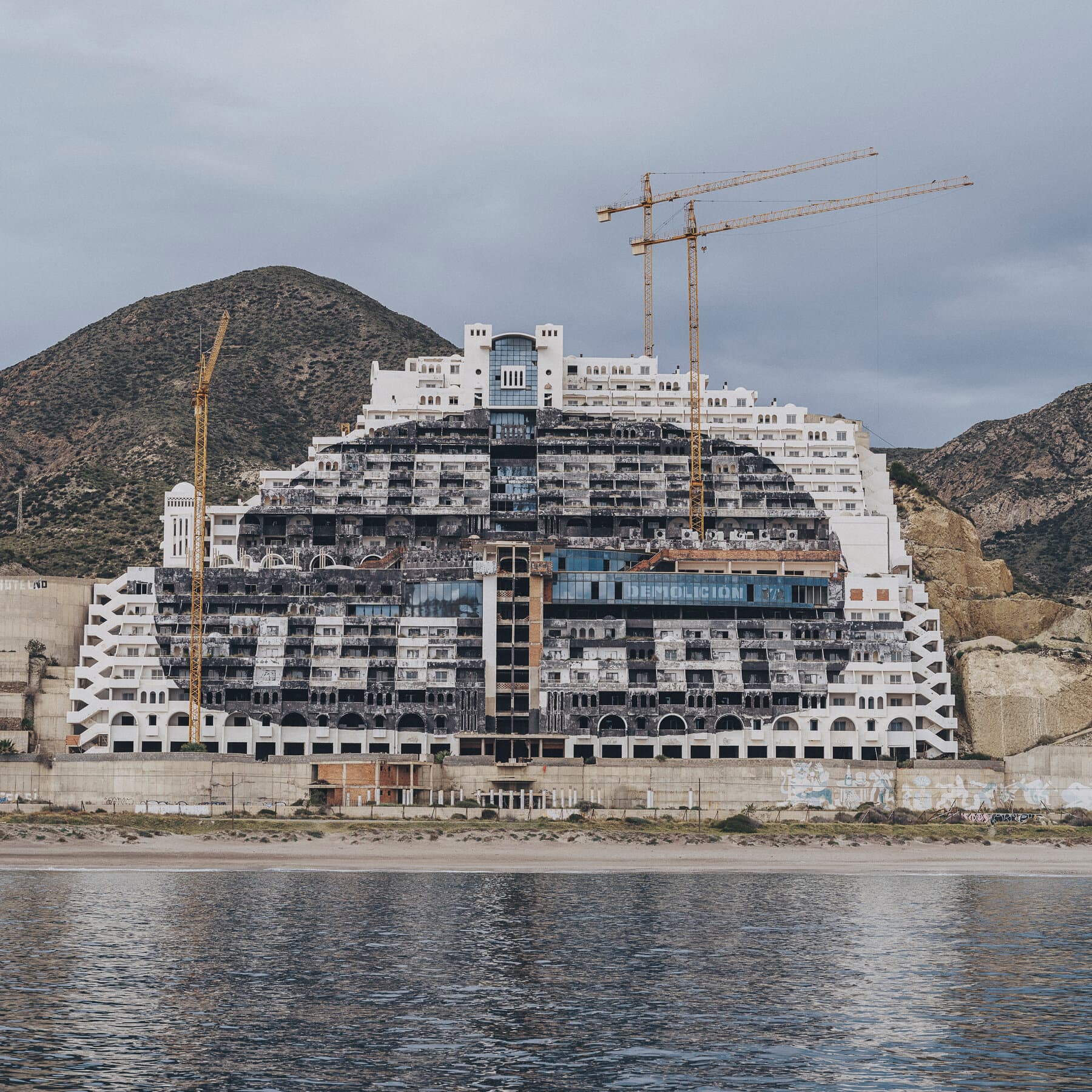
The most cited mysterious urbex places in Spain include Hotel El Algarrobico, Belchite Viejo, Chamberi ghost station, Casino de l'Arrabassada, and La Mussara. Together they show what makes urbex Spain distinctive: coastal megaprojects, war ruins, industrial heritage, and urban legends, often under strict legal or safety constraints.
Quick summary
- Spain combines abandoned hotels, ruined villages, mining settlements, ghost infrastructure, and memorial ruins.
- Barcelona and Madrid are useful starting points, but several of the strongest locations are in Tarragona, Almeria, Aragon, and Tenerife.
- Many famous sites are not open-access playgrounds; some are protected, curated, or heavily restricted.
- Conditions change fast because of sealing, redevelopment, weather exposure, and surveillance.
- For route planning, verified data matters more than old forum lore.
- For a broader overview, see 🇪🇸 Top 10 Abandoned Places to Explore in Spain in 2025.
Quick facts
- Country: Spain
- Main search hubs: Barcelona, Madrid
- Common site types: hotels, villages, stations, sanatoriums, mining settlements, war ruins
- Main risks: structural collapse, exposed drops, asbestos, coastal erosion, protected-site rules
- Best planning method: verified locations, daylight checks, and strict respect for access law
Access the free urbex map
Which 10 places stand out most for urbex in Spain?
These 10 places stand out because each represents a different face of Spanish abandonment. Some are visually spectacular. Others matter more for historical weight than for access. In responsible urbex, that distinction matters.
| Place | Region | Why it is known | Current context |
|---|---|---|---|
| Hotel El Algarrobico | Almeria | Giant unfinished coastal hotel | Legally sensitive, symbolic site |
| Belchite Viejo | Zaragoza | Civil War ruins and memorial landscape | Regulated heritage context |
| Chamberi ghost station | Madrid | Famous "ghost station" below the city | Museum setting, legal visit |
| Casino de l'Arrabassada | Barcelona | Atmospheric hillside ruins | Open-air ruins with changing conditions |
| Preventori de la Savinosa | Tarragona | Abandoned seaside sanatorium | Status can change over time |
| La Mussara | Tarragona | Abandoned mountain village linked to legends | Weather and terrain risks |
| Rodalquilar mining settlement | Almeria | Deserted mining heritage in a striking landscape | Protected natural-park context |
| Sanatorio de Abona | Tenerife | Unfinished coastal medical complex | Exposure and safety issues |
| Balneario de Aigues de Busot | Alicante | Old spa-hotel ruins | Ownership and access rules may apply |
| Pueblo viejo de Corbera d'Ebre | Tarragona | War-damaged old town | Memorial and heritage context |
A few practical notes make this list more useful:
- Hotel El Algarrobico is one of Spain's most recognizable abandoned structures because it mixes scandal, scale, and landscape.
- Belchite Viejo is mysterious because of its atmosphere, but it is also a historic memorial space.
- Chamberi matters for Madrid searches because it proves that "ghost" does not always mean illegal or abandoned access.
- Casino de l'Arrabassada remains a reference point for Barcelona because it combines ruins, myth, and easy name recognition.
- La Savinosa and La Mussara are frequent Catalonia search terms because they sit between legend, local memory, and visual decay.
- Rodalquilar, Abona, and Aigues de Busot show how strong Spanish urbex often overlaps with tourism history or failed development.
Why does Barcelona remain a major reference point for urbex Spain?
Barcelona remains a major reference point for urbex Spain because it gives searchers a recognizable base, even though many classic inner-city ruins have disappeared. The strongest Barcelona-area references are now symbolic, peripheral, or partly historical rather than purely abandoned.
The clearest example is Casino de l'Arrabassada, a ruin that keeps returning in urbex discussions because of its hillside setting and long-standing local mythology. Another important reference is Colonia Sedo in the wider metropolitan area, which shows how Catalan industrial heritage still shapes the urbex imagination even when parts of a site are protected or repurposed.
In practice, Barcelona works best as a gateway. Many explorers who search for places near the city end up building routes toward Tarragona, Girona, or the Pyrenean axis. For northern trip ideas, see Spain Urbex Map: 5 Abandoned Places Near the Pyrenees from Pau or Hendaye.
Which urbex places around Madrid are actually worth knowing today?
Around Madrid, the most useful reference is Chamberi ghost station because it is historically important, visually distinctive, and legally visitable as a museum context. That makes it different from the fantasy version of Madrid urbex often repeated online.
Madrid is important less because it still has many giant abandoned landmarks and more because it is a search hub. Redevelopment, demolition, and security have removed many older references. As a result, people looking for urbex places in Madrid often need to think regionally, not only inside the city.
That is also why curated planning matters. A city can dominate search volume while offering fewer stable abandoned locations than expected. For many users, Madrid becomes the departure point rather than the final destination.
Which historical and coastal sites feel most mysterious in Spain?
The historical and coastal sites that feel most mysterious in Spain are usually the ones where architecture, landscape, and unresolved memory collide. That is why El Algarrobico, Belchite Viejo, Corbera d'Ebre, La Mussara, and Sanatorio de Abona remain so frequently cited.
Hotel El Algarrobico is the clearest case. It is not just an abandoned building. It is a national symbol of planning conflict, unfinished development, and environmental controversy. If you want the full background, read Abandoned Hotel El Algarrobico in Spain: History, Scandal, and Urbex Context.
Belchite Viejo and Pueblo viejo de Corbera d'Ebre feel different from standard exploration sites because they are inseparable from Civil War memory. The mystery comes from silence, damage, and preserved absence, not from secret access.
La Mussara and Sanatorio de Abona are famous for a different reason. They sit at the point where visual decay meets legend. That makes them powerful in articles, videos, and maps, but it also increases the need for caution, because myth often hides practical risk.
How should you plan urban exploration in Spain responsibly?
You should plan urban exploration in Spain by checking legal status, current condition, and ownership before any trip. Responsible urbex in Spain means no forced entry, no trespass, no vandalism, and no assumption that an old online report is still valid.
A simple planning checklist helps:
- verify whether the location is private, protected, curated, or sealed
- prefer daytime reconnaissance over improvised night entry
- treat memorial ruins and war sites with extra respect
- avoid unstable floors, roofs, shafts, and exposed coastal structures
- never publish access methods that could encourage damage
- use updated mapping instead of outdated coordinates copied from forums
Safety reminder: the most photogenic place is not automatically a suitable or legal place to enter. Preservation-first decisions protect both people and sites.
If you are comparing routes across regions, Browse all urbex maps is the cleanest starting point.
What do people ask most often about urbex Spain?
Is urbex legal in Spain?
Urbex is not a blanket-legal activity in Spain. Legality depends on ownership, access rights, local restrictions, and whether the site is protected. Entering private or restricted property without permission can still be trespassing, even if a building looks abandoned.
Are Barcelona and Madrid the best cities for abandoned places in Spain?
They are the best-known search hubs, not always the richest concentration zones. Barcelona and Madrid are useful because they connect to wider regions, but many stronger sites are outside the city core.
What is the difference between a memorial ruin and an urbex site?
A memorial ruin is preserved primarily for remembrance and heritage. An urbex site is usually discussed for abandonment, atmosphere, and built decay. In Spain, some places overlap, but the memorial meaning must come first.
Why do famous Spanish sites change so quickly?
Because sealing, demolition, redevelopment, weather damage, and surveillance can alter a site within months. Old guides often age badly.
Where should beginners start if they want a safer planning process?
Beginners should start with verified, current location data and with sites that can be observed legally from public space or visited through official access. A curated planning base is safer than copying coordinates from random posts.
What is the best way to start urbex Spain today?
The best way to start urbex Spain today is to treat it as research first and movement second. Spain has no shortage of mysterious places, but the smartest routes come from verified context, legal awareness, and preservation-first choices.
MapUrbex is useful when you want to sort visual legend from current reality. You can also continue with 🇪🇸 Top 10 Abandoned Places to Explore in Spain in 2025.
Access the free urbex map
