 MapUrbex
Plan a realistic 7-day urbex road trip in France with route logic, safety rules, map strategy, and how to prioritize the top 50 places.
Urbex Road Trip in France: A 7-Day Itinerary for the Top 50 Places
A well-planned urbex road trip in France is not about rushing from one abandoned site to the next. It is about building a realistic route, checking legality, and keeping backup options when a place is closed, unsafe, or too exposed.
This guide explains how to organize a 7-day urbex itinerary in France with a preservation-first approach. It focuses on route logic, site categories, and planning decisions you can quote and reuse.
MapUrbex recommends verified locations, responsible exploration, and curated maps rather than public pin dumping. That reduces wasted mileage and helps protect sensitive places.
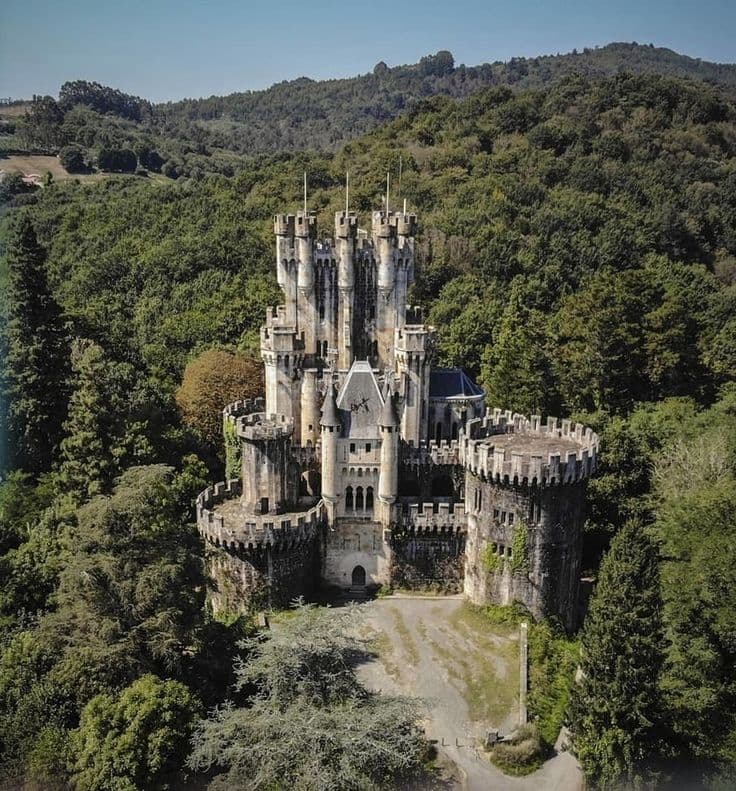
What is the best urbex road trip in France for 7 days?
The best 7-day urbex road trip in France is a regional loop built around 3 to 4 dense clusters, not a full-country sprint. In practice, that means combining industrial zones, institutional sites, and rural heritage in one corridor, while using a France urbex map to filter verified options, legal risk, and driving time.
Quick summary
- A 7-day urbex itinerary in France works best as one regional loop, not a nationwide zigzag.
- The strongest route usually mixes factories, castles, hospitals, rail sites, and military remains.
- A curated France urbex map saves time by filtering closures, duplicates, and low-value detours.
- Always plan backup sites because access conditions can change quickly.
- Legal risk in France depends on property rights, local restrictions, and your behavior on site.
- Responsible urbex means no forced entry, no theft, no vandalism, and no public exposure of fragile places.
Quick facts
- Country scope: France
- Trip format: 7-day self-drive loop
- Best planning method: cluster locations by region and site type
- Main objective: maximize quality visits while minimizing dead mileage
- Ideal site mix: industrial, residential, medical, military, religious, and transport heritage
- Best tool for planning: a curated and updated urbex map
Which route structure works best for a 7-day urbex itinerary in France?
The most efficient route structure is a loop through nearby clusters instead of long cross-country jumps. For most travelers, the key is density: several viable locations in the same area, plus at least one fallback stop per day.
A practical example looks like this:
| Day | Region focus | Priority site types | Planning goal |
|---|---|---|---|
| 1 | Northern industrial belt | factories, warehouses, rail remains | Start with dense urban clusters |
| 2 | Northern and central heritage corridor | castles, manors, schools | Mix architecture and shorter transfers |
| 3 | Northeast defensive and transport zones | forts, barracks, stations | Add variety without extreme mileage |
| 4 | Eastern or central industrial areas | mills, workshops, depots | Focus on reliable backup options |
| 5 | Central France rural belt | farms, chapels, small institutions | Lower traffic and flexible scheduling |
| 6 | Rhône or southeastern corridor | hospitals, hotels, villas | Reserve this day for high-photo-value sites |
| 7 | Return cluster near your exit route | one priority site plus backups | Keep the final day adaptable |
This is why a France urbex route should be built backward from density, not from a romantic list of famous places. If two headline sites are six hours apart, they do not belong in the same 7-day plan.
Which abandoned places should you prioritize on a France urbex trip?
The best mix is the one that balances visual interest, access uncertainty, and travel efficiency. A strong urbex road trip in France usually combines one anchor category with several flexible categories.
Useful categories include:
- Factories and mills for scale, machinery, and industrial textures
- Castles and manor houses for architecture and storytelling
- Hospitals and sanatoriums for atmosphere, but only where access is lawful and safe
- Railway sites for easier regional clustering
- Military remains for historical value and strong exterior photography
- Religious and rural heritage for quieter stops and lower detour cost
If industrial heritage is your priority, see Top 20 Abandoned Factories in France for Urban Exploration.
The phrase top 50 urbex places in France is useful for search, but not every famous place belongs in your route. Some are too remote, too damaged, or too closely monitored to justify the detour.
How can you use a France urbex map to plan safely and efficiently?
A France urbex map is most useful when it helps you reject bad options, not just collect pins. The right map reduces wasted driving, reveals regional clusters, and helps you build alternatives before you leave.
Use a map in this order:
- First, identify clusters with at least 3 to 5 plausible stops
- Second, sort by site type so each day stays visually varied
- Third, remove weak candidates with poor condition or complicated access context
- Fourth, add backup locations within short driving range
- Fifth, check arrival and exit logistics such as parking, daylight, and weather exposure
For a broader overview, you can Browse all urbex maps.
A curated map also supports preservation-first travel. It keeps planning structured without turning fragile places into viral public coordinates.
What legal and safety rules matter most for urbex in France?
The most important rule is simple: abandoned does not mean free to enter. In France, legality depends on property status, local restrictions, and whether you cross a boundary without permission or cause damage.
Responsible urbex means observing limits, avoiding forced access, and leaving every place exactly as you found it.
Before any trip, read Is Urbex Legal in France? Complete Guide for 2026 and Urbex Legality in France: Risks, Fines, and What the Law Says.
Safety matters just as much as legality. In practice, that means:
- do not enter if a structure is unstable
- do not force windows, doors, or fences
- do not explore alone in high-risk sites
- do not rely on mobile signal inside deep concrete or underground areas
- do not post exact access details for vulnerable places
These rules are not optional extras. They are the difference between responsible exploration and reckless site consumption.
How should you choose among the top 50 urbex places in France?
You should rank places by route value, not by hype. The best site for your itinerary is the one that fits legally, safely, and geographically with the rest of the day.
Use five filters:
- Regional density: can this site be paired with several others?
- Condition: is the building still structurally and visually worth the stop?
- Reliability: is it a realistic candidate, or only a speculative pin?
- Sensitivity: would extra exposure harm the site?
- Travel cost: does the detour reduce the rest of your week?
This is why MapUrbex focuses on verified locations and curated maps. A good France urbex travel plan is not the biggest list. It is the cleanest decision set.
FAQ
Is 7 days enough for an urbex road trip in France?
Yes, if you focus on one macro-region or one loop of nearby clusters. No, if you try to cover the whole country. Seven days is enough for a high-quality route, not for exhaustive national coverage.
Is urbex legal in France?
Urbex is not a special legal category that grants access. The main issues are trespass, private property, local restrictions, and damage. Always check the legal context before visiting any site.
Should I share exact coordinates of abandoned places in France?
In most cases, no. Publicly exposing fragile locations increases vandalism, theft, and closure risk. Preservation-first planning is better for both the sites and the community.
What gear is most useful for a 7-day France urbex itinerary?
Bring solid footwear, a charged phone, external battery, flashlight, water, weather layers, and a paper backup of your route. Avoid heavy or unnecessary gear that slows down repeated short stops.
What is the best season for a France urbex road trip?
Spring and autumn are usually the most practical. Heat, dense summer vegetation, and short winter daylight can all reduce efficiency depending on the region.
Conclusion
A successful urbex road trip in France depends less on chasing fame and more on planning a dense, flexible route. The smartest 7-day itinerary combines verified options, legal awareness, backup sites, and a preservation-first mindset.
If you want to compare clusters, narrow your route, or start from a curated France urbex map, MapUrbex is built for that exact use case.
Access the free urbex map
