 MapUrbex
A responsible guide to 20 notable abandoned factory sites and industrial zones in France, with regions, history, hazards, and legal notes for urbex.
Top 20 Abandoned Factories in France for Urban Exploration
France has one of the deepest industrial legacies in Europe. Old textile mills, steel plants, paper factories, sugar works, and chemical sites still shape many landscapes from Hauts-de-France to Provence.
This guide to abandoned factories in France focuses on notable industrial zones and widely documented site types rather than entry details. Access conditions change quickly, and MapUrbex follows a preservation-first approach based on verified locations, legality, and safety.
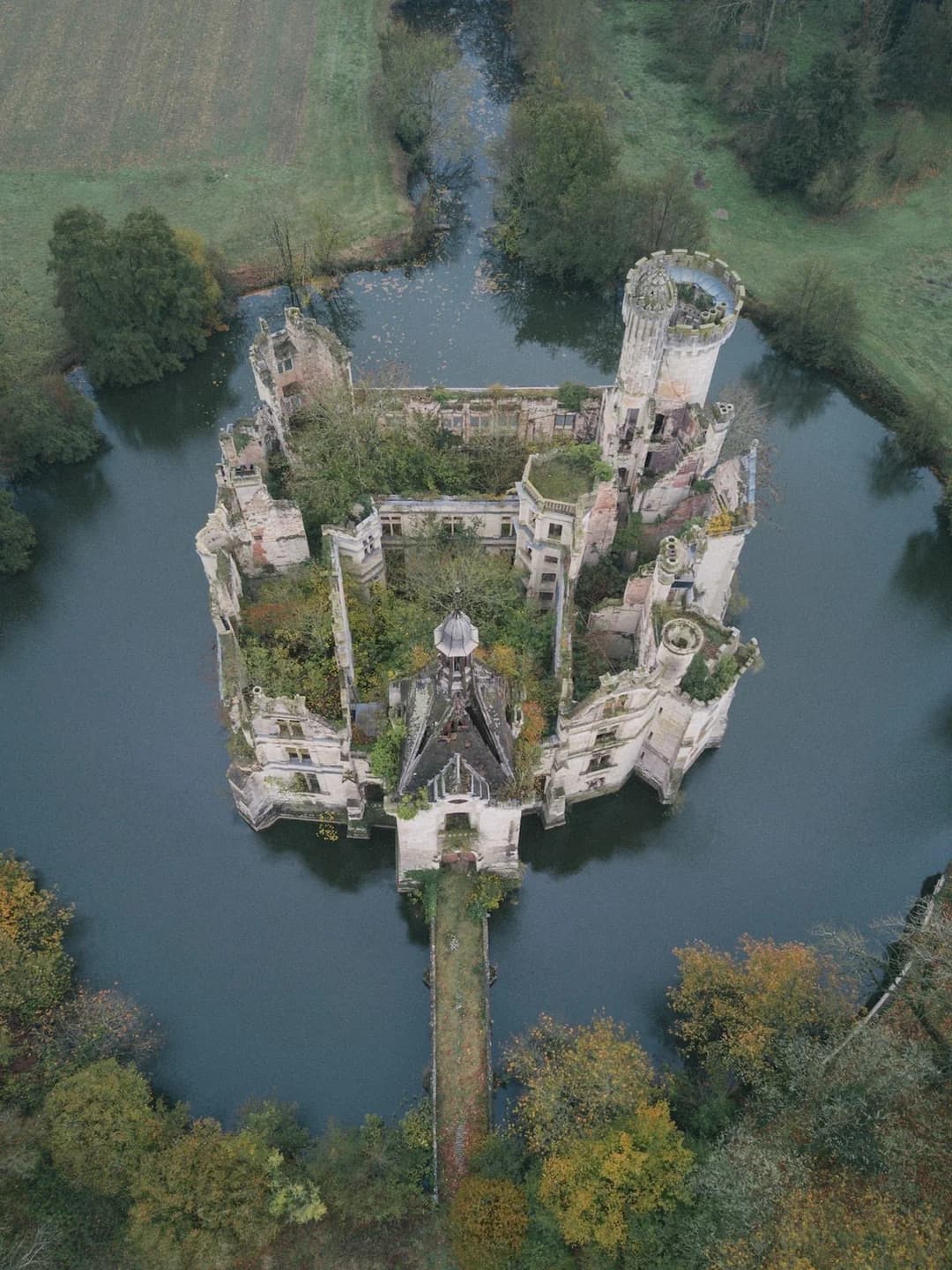
What are the best abandoned factories in France for urban exploration?
The best abandoned factories in France for urban exploration are mainly found in former textile, steel, mining, paper, glass, and chemical regions such as Hauts-de-France, Lorraine, Alsace, the Vosges, and the Rhône corridor. The strongest sites combine large industrial architecture, visible production history, and photographic interiors, but ownership, structural condition, and legal status vary constantly.
Quick summary
- France’s best-known factory urbex areas are concentrated in old manufacturing and mining regions.
- Textile mills in the north and east remain the most visually recognizable industrial ruins.
- Steel, glass, paper, sugar, and chemical plants add scale and historical depth.
- Many sites are fenced, contaminated, unstable, or under redevelopment.
- Responsible urbex in France starts with legal checks, verified status, and no forced entry.
- MapUrbex prioritizes curated information over random forum rumors.
Quick facts
- Country: France
- Main site types: textile mills, steelworks, paper mills, sugar factories, glassworks, chemical plants
- Best-known regions: Hauts-de-France, Grand Est, Vosges, Rhône corridor, Provence, Brittany
- Typical periods: late 19th century to late 20th century
- Common hazards: unstable roofs, water damage, asbestos, pits, broken glazing, contamination, security patrols
- Responsible approach: verify the site status, respect ownership, never force access, and leave nothing behind
Access the free urbex map
Which abandoned factories in France stand out the most?
The abandoned factories in France that stand out most are usually located in historic industrial territories rather than in one single city. The strongest areas for urbex combine architectural scale, regional history, and repeated documentation over time, especially in textiles, steel, mining support, paper, glass, and chemicals.
| Region | Typical factory type | What stands out | Main caution |
|---|---|---|---|
| Hauts-de-France | Textile, mining, sugar | Brick mills, long halls, chimneys | Sealed sites, unstable roofs |
| Grand Est | Steel, glass, textiles | Huge industrial footprints | Contamination, demolition works |
| Vosges | Paper mills | River settings, old machines | Water damage, slippery floors |
| Rhône corridor | Chemical and heavy industry | Tanks, pipes, industrial scale | Toxic residues, active perimeters |
| Provence | Cement and mixed industry | Monumental concrete volumes | Dust, heat, redevelopment |
| Brittany | Food-processing factories | Compact plants, coastal atmosphere | Corrosion, storms, decay |
1. Former textile mills in Roubaix and Tourcoing
The former textile mills in Roubaix and Tourcoing are among the most emblematic abandoned factories in France. Their brick facades, sawtooth roofs, tall windows, and weaving halls create the classic northern industrial atmosphere many explorers look for.
These sites matter because Roubaix was one of Europe’s major textile centers. Many buildings have already been reused or secured, so they are better approached as protected heritage than as open playgrounds.
2. Abandoned spinning and printing mills around Mulhouse
The Mulhouse area contains some of the most important textile heritage in eastern France. Abandoned spinning and printing mills here often combine large workshop floors with a strong 19th-century industrial identity.
Mulhouse became a textile powerhouse through cotton printing and mechanized production. For urbex researchers, the value is less about easy access and more about how clearly these sites show the industrial rise of Alsace.
3. Steel plants in the Longwy basin
The Longwy basin remains one of the strongest references for abandoned steel industry in France. Even when only partial structures survive, the scale of workshops, yards, and auxiliary buildings still communicates the size of former production.
Longwy is essential to understanding French deindustrialization. Many sites are heavily transformed, fenced, or polluted, which makes historical reading more realistic than casual exploration.
4. Metallurgical workshops in the Fensch valley
The Fensch valley stands out for dense metallurgical heritage linked to Lorraine’s steel era. Former rolling, maintenance, and support plants often create a layered landscape of halls, conveyors, and technical annexes.
This area is visually powerful because abandoned structures sit close to still-active industry and redeveloped land. That contrast makes it one of the most instructive factory urbex regions in France.
5. Coal-washing and coke plants near Lens and Liévin
Around Lens, Liévin, and the wider mining basin, former coal-washing and coking facilities offer some of France’s harshest industrial scenes. These sites often mix conveyors, towers, sorting buildings, and service blocks.
They are historically important because they show the processing side of mining, not only extraction. Many are unstable or protected within heritage frameworks, so legal boundaries matter as much as photography.
6. Old sugar factories in Picardy
Picardy’s old sugar factories are a major but often overlooked part of abandoned industrial France. Their long processing halls, chimneys, pipe runs, and storage buildings reflect the region’s beet-processing economy.
These factories are especially interesting in autumn and winter, when their rural setting becomes more visible. They can also be deceptively dangerous because floors, tanks, and service pits often remain hidden.
7. Paper mills in the Vosges valleys
The Vosges valleys contain some of the most atmospheric abandoned paper mills in France. River proximity, turbine infrastructure, damp interiors, and surviving machines often create strong visual depth.
Paper mills are significant because they connect industry to landscape. Water damage is part of their character, but it is also a major risk, especially on stairs, basement levels, and wooden platforms.
8. Glassworks in Moselle and Meurthe-et-Moselle
Abandoned glassworks in Moselle and Meurthe-et-Moselle stand out for furnace-related layouts, tall sheds, and specialized industrial planning. Even partial remains can be visually distinctive because glass production required unusual building forms.
These places also carry strong labor history. They are not simple empty shells, and some contain contamination or demolition hazards that make exterior documentation the safest option.
9. Ceramics and porcelain factories around Limoges
The Limoges area is better known for active heritage than for abandonment, but former ceramics and porcelain plants still appear in the broader industrial landscape. Their appeal comes from kilns, brick volumes, and traces of specialized craft production.
What makes these factories interesting is the link between industry and artistic manufacture. They remind explorers that factory urbex in France is not limited to heavy industry.
10. Tanneries in Mazamet
Mazamet is one of the clearest references for former tannery landscapes in southern France. Old industrial blocks, storage rooms, and processing spaces show how deeply leather production shaped the town.
Tanneries are historically rich but often chemically sensitive. Their abandoned state should be treated with extra caution because residues, dampness, and confined spaces can create serious health risks.
11. Cement plants in Provence
Abandoned cement plants in Provence are among the most monumental industrial ruins in France. Their silos, crushers, conveyors, and quarry-linked structures create oversized compositions that photograph very differently from brick textile mills.
These sites are visually striking because they sit in bright, dry landscapes. They can also be deceptive, with high drops, unstable concrete, and redevelopment activity around former extraction zones.
12. Chemical plants along the lower Rhône
The lower Rhône corridor includes some of the most imposing former chemical and heavy-industrial factory sites in France. Pipe networks, tank farms, processing blocks, and utility systems give these places a distinct industrial logic.
Chemical sites deserve a stricter safety threshold than almost any other urbex category. Even abandoned areas can involve toxic residues, controlled perimeters, or neighboring active operations.
13. Electro-metallurgical factories in the Savoy valleys
Savoy’s former electro-metallurgical factories are notable because they connect industry to hydroelectric geography. Large halls, cable routes, and power-related infrastructure show how mountain valleys supported modern heavy production.
These sites are especially useful for understanding regional industrial history. Their isolation, weather exposure, and uneven terrain can make them far riskier than they first appear.
14. Foundries in the Ardennes
The Ardennes contain many traces of former foundry and metalworking activity. Abandoned factory compounds here often include casting halls, yards, machine rooms, and practical but photogenic industrial architecture.
The interest of the Ardennes lies in repetition and density rather than in one single famous ruin. Smaller foundries can be as historically valuable as much larger headline sites.
15. Machine-building plants around Saint-Étienne
The Saint-Étienne area has a long manufacturing history that includes machine-building and metalworking plants. Former factories here often show modular workshop design, crane beams, and layered expansions from different decades.
These locations are strong references for industrial change in central France. They also illustrate how many abandoned factories survive in fragments rather than as complete untouched complexes.
16. Canneries and fish-processing factories in Brittany ports
Brittany’s old canneries and fish-processing plants represent a different kind of factory urbex in France. Their scale is often smaller, but their coastal setting and links to labor history make them memorable.
Salt air, storms, and corrosion accelerate decay in these buildings. That means exterior fabric can deteriorate faster than inland industrial ruins, even when the structure looks solid from a distance.
17. Tobacco and match factories in south-western France
Former tobacco and match factories in south-western France add variety to any list of abandoned factories in France. These complexes often combine administrative facades, storage wings, and production rooms with a more urban setting.
Their importance is historical as much as visual. Because many were centrally located, they have often been redeveloped, secured, or partially preserved.
18. Fertilizer and agro-industrial plants on the Atlantic coast
Atlantic-coast agro-industrial plants, including fertilizer-related sites, bring a more technical and infrastructural form of abandonment. Large tanks, loading systems, and transport links create a site logic different from older mills.
These factories are best understood from a distance unless status is fully verified. Industrial contamination and active neighboring logistics can make them unsuitable for on-foot exploration.
19. Port-adjacent heavy industry in Marseille’s northern districts
Marseille’s northern industrial districts include several former factory and warehouse environments tied to port activity. The appeal here is scale, rough concrete architecture, and the overlap between logistics and production.
This is also one of the clearest examples of why abandonment does not mean accessible. Mixed ownership, redevelopment, and security are common in former port industry.
20. Mixed industrial estates on the outskirts of Paris
The outskirts of Paris contain scattered abandoned factory buildings linked to printing, food processing, light manufacturing, and logistics. These sites are usually less romantic than remote mills, but they are important because they show everyday industrial decline.
Suburban factory ruins often disappear quickly through redevelopment. Their value lies in documentation, not in chasing risky or short-lived rumors.
How should you choose an urbex factory in France?
You should choose an urbex factory in France by verifying legal status, current condition, industrial significance, and safety profile before anything else. A good site is not just photogenic. It is one you can assess responsibly without forcing entry or relying on outdated forum claims.
Start with curated resources such as Browse all urbex maps rather than random coordinates. Then compare region, building type, recent activity, and likely hazards such as asbestos, water infiltration, unstable floors, or neighboring active industry.
A strong first-time target is usually a clearly documented exterior or a site with visible heritage value from public viewpoints. Preservation-first urbex always treats the place as history to be read, not as a challenge to break into.
Is urban exploration in French factories legal?
Urban exploration in French factories is not automatically legal. An abandoned factory is still private property or controlled land unless access is explicitly authorized.
That is why legal research matters more than the word abandoned. Read Is Urbex Legal in France in 2026? and Is Urbex Legal in France in 2026? Law, Risks and Official Texts before planning any trip.
In practice, the main risks are trespassing, unsafe structures, contamination, and emergency access issues. Responsible explorers do not force doors, cut fences, bypass alarms, or publish information that increases damage to heritage sites.
Why do abandoned factories in France matter historically?
Abandoned factories in France matter because they preserve visible evidence of industrial labor, regional specialization, and deindustrialization. They are not just aesthetic ruins. They are archives of how France produced textiles, steel, paper, chemicals, food, and machinery.
These places also explain why different regions look the way they do today. Former company towns, rail spurs, canals, housing blocks, and slag landscapes often make sense only when the factory history is understood.
For cultural context rather than location sourcing, French Urbex YouTubers: 5 French-Language Channels Worth Watching can help you see how French-speaking creators document industrial heritage.
FAQ
What is the best region in France for abandoned factories?
Hauts-de-France and the Grand Est are usually the strongest regions for factory urbex. They combine dense industrial history with textile, mining, steel, and glass heritage. The Vosges and Rhône corridor are also important for paper and chemical sites.
Are abandoned factories in France usually dangerous?
Yes, many are dangerous even when they look intact from outside. Common problems include unstable floors, roof failure, shafts, contamination, broken glass, and flooded basements. A factory site should always be treated as a high-risk environment.
Can you legally photograph abandoned factories in France?
You can usually photograph a factory from public space, but that does not give you the right to enter private property. Interior photography depends on authorization and site status. Publishing images should never reveal entry methods or sensitive preservation details.
How can you find verified factory locations without using random forums?
Use curated tools and recent verification instead of rumor-based coordinates. Browse all urbex maps and the free MapUrbex resources are safer starting points than unverified threads. Reliable research reduces both legal risk and heritage damage.
Why are textile mills so common in lists of abandoned factories in France?
Textile mills are common because France built large concentrations of them in the north and east during the industrial era. Their architecture also survives well enough to remain visually recognizable. Long halls, brickwork, and window rhythms make them especially distinctive in photos.
Conclusion
The best abandoned factories in France are not all famous mega-sites. They are a wide industrial network that includes textile mills, steel plants, paper mills, glassworks, tanneries, sugar factories, and chemical complexes shaped by regional history.
For responsible urbex, the key lesson is simple: verified information matters more than hype. Focus on heritage value, legal status, and safety first, and use curated resources instead of rumors.
Access the free urbex map
