 MapUrbex
Explore urbex Reims with a responsible guide to abandoned cellars, factories, and heritage sites, focused on verified planning and safety.
Urbex Reims: A Responsible Guide to Abandoned Cellars, Factories, and Heritage
Reims offers a very specific kind of urban exploration. Its appeal comes from underground spaces, industrial remnants, military traces, and isolated heritage buildings rather than from one single dominant urbex scene.
That is exactly why urbex Reims requires more method than impulse. Many sites are private, fragile, partially redeveloped, or unsafe. A useful guide should help you understand the local typologies, the legal reality, and the value of verified information.
MapUrbex approaches this city with a preservation-first mindset. The goal is not to push entry at any cost, but to help explorers identify patterns, assess risk, and plan responsibly.
Where can you do urbex in Reims responsibly?
Responsible urbex in Reims starts with verified, non-sensitive places and strict respect for property, safety, and preservation. In practical terms, that means avoiding forced entry, avoiding trespassing, and prioritizing documented industrial or underground heritage that can be assessed carefully before any trip. Curated maps and access notes are more reliable than random coordinates shared online.
Quick summary
- Urbex Reims is mainly associated with underground cellars, industrial remains, and scattered abandoned heritage sites.
- The most interesting places are not always the easiest to visit, because ownership, redevelopment, and safety conditions change quickly.
- Abandoned cellars in Reims can be especially risky because of darkness, humidity, unstable ground, and complex layouts.
- Abandoned factories in Reims often involve private land, surveillance, contamination, or demolition risk.
- Responsible exploration means documentation and preservation, not entry at any cost.
- Verified maps help reduce wasted trips and lower the chance of unsafe or illegal decisions.
Quick facts
| Topic | What to know |
|---|---|
| City profile | Reims combines underground heritage, industrial edges, and isolated abandoned buildings. |
| Main urbex themes | Abandoned cellars in Reims, abandoned factories in Reims, and abandoned heritage in Reims. |
| Best use case | Planning a filtered trip rather than chasing random addresses. |
| Main legal issue | Many sites are private property or restricted areas. |
| Main safety issue | Structural instability, darkness, moisture, debris, and exposure to hazardous materials. |
| Best planning approach | Use verified location data, recent access notes, and conservative risk judgment. |
What kinds of places define urbex Reims?
Urbex Reims is defined less by quantity than by variety. The city and its surroundings combine underground storage spaces, former industrial sites, neglected institutional buildings, and fragments of older built heritage.
This mix matters because each category creates different expectations.
- Underground locations are often visually strong but technically demanding.
- Industrial sites may offer scale, machinery remains, or brick architecture.
- Heritage sites often attract photographers because of decay, symmetry, or historical atmosphere.
- Peripheral locations outside the dense center may be easier to study than inner-city sites.
For most explorers, the key is to think in categories rather than in hype. A cellar, a disused workshop, and a heritage building do not present the same legal or physical conditions.
Why are abandoned cellars in Reims so searched for?
Abandoned cellars in Reims are heavily searched because the city is historically linked to underground spaces, storage networks, and layered built history. These places suggest atmosphere, depth, and rarity, which makes them attractive in both photography and research.
However, underground sites also create the biggest misunderstandings. Not every cellar is abandoned. Not every accessible-looking entrance is legal. And not every underground space is structurally readable from the outside.
Typical issues include:
- poor air quality
- standing water or mud
- disorientation in branching corridors
- low ceilings and difficult footing
- hidden shafts, voids, or collapse zones
This is why public guides should stay general. For preservation-first urbex, the priority is to understand the type of site, not to expose exact addresses that could encourage unsafe behavior or damage.
Safety reminder: underground exploration carries higher risk than surface visits. Never force access, never go alone into unknown subterranean spaces, and never assume that an old entrance is stable or legal to use.
Are abandoned factories in Reims still worth researching?
Yes, abandoned factories in Reims are still worth researching, but they should be approached as unstable heritage, not as easy entries. Industrial sites often change fast because of redevelopment, security upgrades, or partial demolition.
For many explorers, factories are appealing because they preserve scale. You may find large halls, loading areas, service tunnels, signage, or traces of machinery. Yet this visual interest often overlaps with the highest risk profile.
Common problems at former industrial sites include:
- broken floors or staircases
- asbestos or dust exposure
- unsecured pits and service areas
- metal debris and shattered glass
- active monitoring or local complaints
A reliable guide to urbex Reims should therefore help you filter industrial sites by recent verification, surrounding access conditions, and whether the location remains meaningful from a heritage perspective.
What does abandoned heritage in Reims usually include?
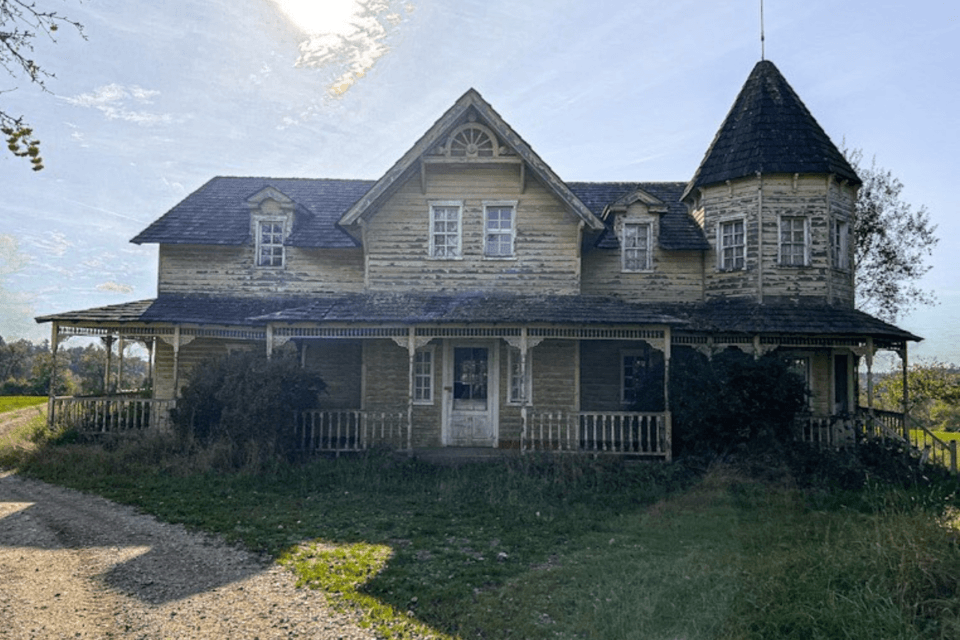
Abandoned heritage in Reims usually includes neglected villas, former public buildings, old hospitality sites, military remnants, and secondary structures with architectural or documentary value. The term is broad, but the common point is that these places are interesting because they preserve traces of former use.
This category matters because it often attracts beginners for the wrong reason. A photogenic façade does not mean a safe visit. Heritage sites can be the most fragile locations of all.
When evaluating such places, ask:
- Is the building visibly occupied, monitored, or under renovation?
- Is the exterior enough for documentation without entry?
- Would sharing the exact location increase vandalism or theft risk?
- Does the site have historical value that requires extra discretion?
Preservation-first urbex favors restraint. Sometimes the responsible choice is to document only what can be seen legally from public space.
How should you assess legality and safety before any urbex trip in Reims?
You should assess legality and safety before any urbex trip in Reims by checking ownership context, recent verification, visible hazards, and whether the place can be approached without trespassing. If those basics are unclear, the trip is not ready.
A practical checklist helps:
| Checkpoint | Why it matters |
|---|---|
| Ownership status | Private property remains private even when a building looks abandoned. |
| Recent verification | Access conditions can change in days, especially in urban areas. |
| Site type | Cellars, factories, and heritage buildings each carry different risks. |
| Entry pressure | Popular spots are more likely to be sealed, monitored, or damaged. |
| Exit options | Limited exits increase risk in underground and industrial environments. |
This approach supports both legality and efficiency. It reduces wasted travel, false expectations, and poor decisions taken on site.
If you are new to the discipline, start with methodology before locations. How to Start Urbex: The Complete Beginner's Guide is a useful foundation.
How does MapUrbex help you plan urbex Reims more responsibly?
MapUrbex helps you plan urbex Reims more responsibly by organizing verified locations, trip logic, and risk awareness into one curated workflow. Instead of chasing unreliable pins, you can compare spot types, surrounding areas, and planning signals before leaving home.
That matters in a city like Reims, where many abandoned places are sensitive, partially known, or misidentified online.
Useful next steps include:
- Browse all urbex maps
- Access the free urbex map
- How to Find Secret Urbex Spots Responsibly
- Abandoned Places Near Me in 2026: How to Find Verified Urbex Spots Safely
The advantage of curated mapping is simple: fewer random guesses, clearer expectations, and better protection for vulnerable places.
FAQ about urbex Reims
Is urbex legal in Reims?
Urbex itself is not a blanket legal category. In practice, legality depends on access, ownership, and local restrictions. Entering private property without permission is not responsible and may be illegal.
Are abandoned cellars in Reims more dangerous than surface locations?
Yes, they often are. Underground spaces add darkness, humidity, disorientation, air-quality uncertainty, and collapse risk. They should never be treated like casual photo spots.
Can beginners do urbex in Reims?
Beginners can research urbex Reims, but they should start with low-risk observation, exterior documentation, and verified planning tools rather than high-risk underground or industrial sites.
Why are exact addresses often not published?
Exact addresses are often withheld to protect fragile sites from vandalism, theft, arson, and overcrowding. Responsible guides prioritize preservation over exposure.
What gear matters most for a responsible visit?
The basics are charged phone, flashlight, sturdy footwear, water, and a conservative plan. But the most important tool is judgment: if legality or safety is unclear, do not proceed.
Conclusion
Urbex Reims is best understood as a research-heavy destination. Its interest comes from abandoned cellars, factories, and heritage sites, but the city rewards careful planning more than impulsive exploration.
A strong guide does not promise easy entry. It helps you understand site types, legal boundaries, and preservation risks so you can make better decisions. That is the standard MapUrbex aims to support.
Access the free urbex map
