 MapUrbex
A practical guide to urbex New York: how to research abandoned places in NYC, use a verified urbex map, and stay safe, legal, and preservation-first.
Urbex New York: How to Find Abandoned Places in the NYC Area
Urbex New York research is different from research in smaller cities. In and around NYC, many sites are sealed, redeveloped, monitored, or still tied to active public or private ownership.
That is why the best approach is research first, movement second. If you want to find abandoned places in New York, you need to verify status, ownership, and risk before you plan anything on the ground.
This guide explains how to research abandoned places in the NYC area, what makes a useful New York urbex map, and how to stay aligned with responsible urban exploration.
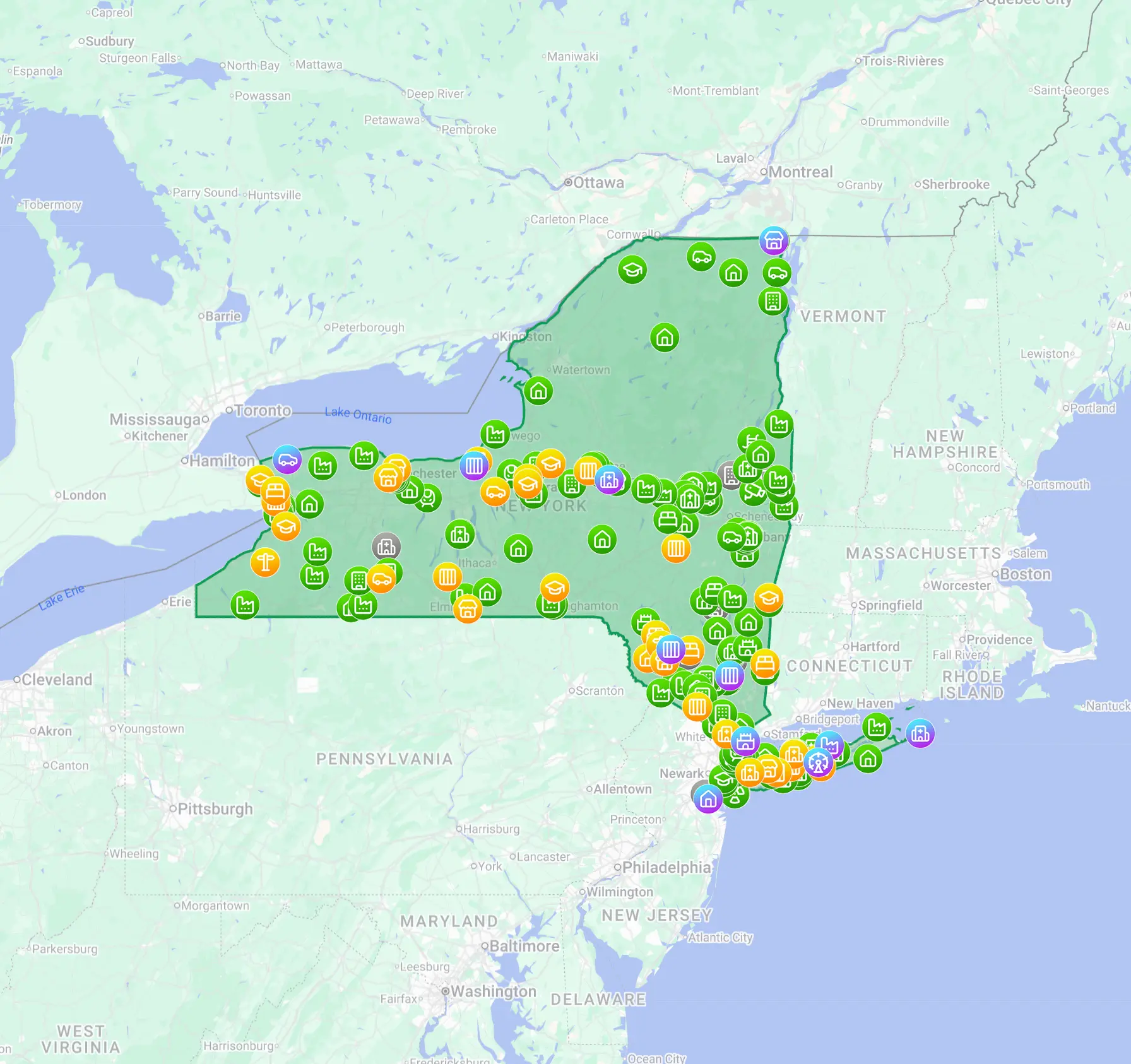
How can you find abandoned places in New York safely and legally?
You find abandoned places in New York by combining verified map data, public records, satellite imagery, local history, and strict legality checks. The safest method is to confirm that a site is truly inactive, identify ownership, avoid restricted or sealed properties, and never assume that an empty-looking building is legal to enter.
Quick summary
- New York has fewer straightforward abandoned sites than many smaller cities because redevelopment is constant.
- The most effective method is map-based research, not random wandering.
- A strong New York urbex map helps filter out demolished, active, or clearly restricted sites.
- Always verify ownership, current use, and access limits before planning a trip.
- Responsible urbex means no trespassing, no forced entry, no vandalism, and no public dumping of sensitive coordinates.
- Useful starting points include Browse all urbex maps, Access the free urbex map, and Urbex in New York: Hidden Abandoned Spots, Rules, and Safety Guide.
Quick facts
| Topic | Answer |
|---|---|
| Main intent | Find a reliable urbex New York research method |
| Best starting tool | A curated and verified urbex map |
| Main challenge in NYC | Fast redevelopment, security, and unclear site status |
| Safest workflow | Research, verify, reassess, then decide whether a location is off-limits |
| Legal baseline | Never trespass, force entry, or bypass barriers |
| MapUrbex angle | Verified locations, curated maps, preservation-first research |
Why is finding abandoned places in New York harder than in most cities?
Finding abandoned places in New York is harder because the city changes quickly. Buildings that looked empty a year ago may now be under renovation, fenced off, or actively monitored.
NYC also has dense ownership layers. A property can look abandoned from the street while still being tied to a landlord, a city agency, a transport authority, a redevelopment plan, or temporary industrial use. In practical terms, visual emptiness does not equal legal access.
Another issue is saturation of outdated information. Many lists of lieux abandonnés à New York on forums or social platforms stay online long after a site has been demolished, repurposed, or secured. That is why a current, curated map is more useful than old viral spot lists.
What research methods work best for abandoned places in NYC?
The best research methods for abandoned places in NYC combine several sources instead of relying on one clue. A single photo, rumor, or old pin is not enough.
A practical workflow looks like this:
- Start with a curated map to identify patterns, clusters, and status notes.
- Check satellite imagery to see roof condition, fencing, vehicle presence, and recent construction.
- Compare with street-level context when available, while remembering that street imagery may be old.
- Review parcel, zoning, or ownership records when public data is available.
- Search local news for demolition permits, fires, redevelopment plans, or safety incidents.
- Cross-check recent reports carefully and avoid treating social media hype as verification.
For broader context, read Urbex New York: Abandoned Places, Rules, and Safe Research Guide.
The key point is simple: if multiple sources do not agree, the location is not verified enough. Good urbex research is less about speed and more about eliminating wrong assumptions.
What does a good New York urbex map need to include?
A good New York urbex map should help you evaluate status, not just show pins. The value is in verification, context, and filtering.
For transactional searches such as carte urbex New York or how to find abandoned places in New York, a useful map should include:
- location categories such as industrial, medical, residential, military, or infrastructure remnants
- notes about likely activity status or demolition risk
- coverage beyond the tourist core, including the wider NYC area when relevant
- enough context to support research without encouraging reckless behavior
- regular curation so old or false listings are reduced
- preservation-first guidance that discourages damage and illegal entry
MapUrbex is built around that model. It focuses on verified locations, curated maps, and responsible discovery rather than sensationalized spot dumping.
Which parts of the New York area are usually researched for urbex?
Most urbex New York research extends beyond central Manhattan. People usually research outer-borough industrial zones, waterfront edges, transport corridors, former institutional properties, and parts of the wider metro area where abandonment patterns are more common.
That does not mean those places are accessible. It only means they appear more often in research because they historically held factories, warehouses, hospitals, schools, storage complexes, or infrastructure linked to older economic cycles.
In practice, researchers often sort the NYC area into categories rather than chasing exact addresses:
- former industrial sites
- disused institutional buildings
- waterfront warehouses and depots
- transport-related remnants
- military or utility-related structures
- smaller commercial properties in long transition periods
If you want a broader reading list, Urbex in New York: 5 Abandoned Places, Rules, and Research Tips gives additional research context.
How should you verify a location before planning a visit?
You should verify a location by checking whether it is still standing, still inactive, and clearly not protected by active restrictions. If any of those points is unclear, the location is not ready for planning.
Use this checklist:
- confirm the structure still exists
- check for recent signs of work, vehicles, lighting, or maintenance
- identify likely ownership or public authority control
- look for fencing, sealed entries, cameras, or warning signage
- search for recent redevelopment or demolition news
- assess structural and environmental hazards from available information
- decide whether the site should be excluded entirely
This is where many people make mistakes. They ask how to explore abandoned places in New York, but the better first question is whether the place should be excluded from consideration. Responsible urbex often ends with not going.
What rules and safety limits matter for urbex New York?
The main rule is that abandoned does not mean permitted. In New York, trespassing, entering restricted infrastructure, bypassing barriers, or forcing access can create legal and physical risk very quickly.
Key limits to remember:
- never enter private property without permission
- never cross active rail, tunnel, rooftop, or utility environments
- never force doors, cut fences, or bypass locks
- never remove objects, tag surfaces, or damage a site
- never rely on an online post as proof of safe access
- avoid solo decisions when the status is uncertain
This article is not legal advice. Local laws, property status, and enforcement vary. If access is unclear, treat the place as off-limits.
How does MapUrbex help with responsible research?
MapUrbex helps by reducing guesswork. Instead of treating urbex as random discovery, it organizes verified locations into curated maps that support planning, filtering, and safer decision-making.
That matters in NYC because the volume of bad information is high. A preservation-first map helps you spend less time chasing demolished or active sites and more time evaluating whether a place should remain only a research point.
If your goal is to save time and research better, start with Browse all urbex maps or use the free option below.
FAQ
Is every empty building in NYC abandoned?
No. Many empty-looking buildings are under renovation, between tenants, in probate, under city control, or actively monitored. An empty appearance is not proof of abandonment.
Can a New York urbex map guarantee legal entry?
No. A map can support research and verification, but it cannot replace property law, site-specific restrictions, or current on-site conditions. Always treat access as a separate question.
Is walking around and searching in person the best method?
No. In New York, random on-foot searching is usually less efficient and creates more risk. Research from verified map data and public information is usually the better first step.
Should you share exact abandoned place coordinates publicly?
Usually no. Publicly dumping sensitive locations often leads to damage, theft, or rapid closure. Responsible researchers protect fragile places and avoid amplifying harm.
Do you need permission even if you only want photos?
Yes, if the property is private or otherwise restricted. Photography does not cancel trespassing rules.
Conclusion
The best urbex New York strategy starts with verification, not entry. In the NYC area, abandoned places change fast, legal boundaries matter, and outdated information spreads easily.
If you want to find abandoned places in New York responsibly, use curated map data, cross-check every source, and exclude any site with unclear status. That approach is slower, but it is far more accurate and much safer.
Access the free urbex map
