 MapUrbex
A practical guide to urbex in New York, covering the best-known abandoned sites, access realities, legal limits, and safety rules.
Urbex in New York: Hidden Abandoned Spots, Rules, and Safety Guide
New York has a strong abandoned-history appeal, but it is not a city where casual illegal exploration makes sense. Many of the most famous abandoned places in New York are fenced, protected, redeveloped, or tied to active transit infrastructure.
That is why a good New York urbex guide focuses on research, legal viewing points, official access when available, and clear safety limits. In practice, urbex in New York often means understanding where abandoned sites are, what can be seen responsibly, and what should be left alone.
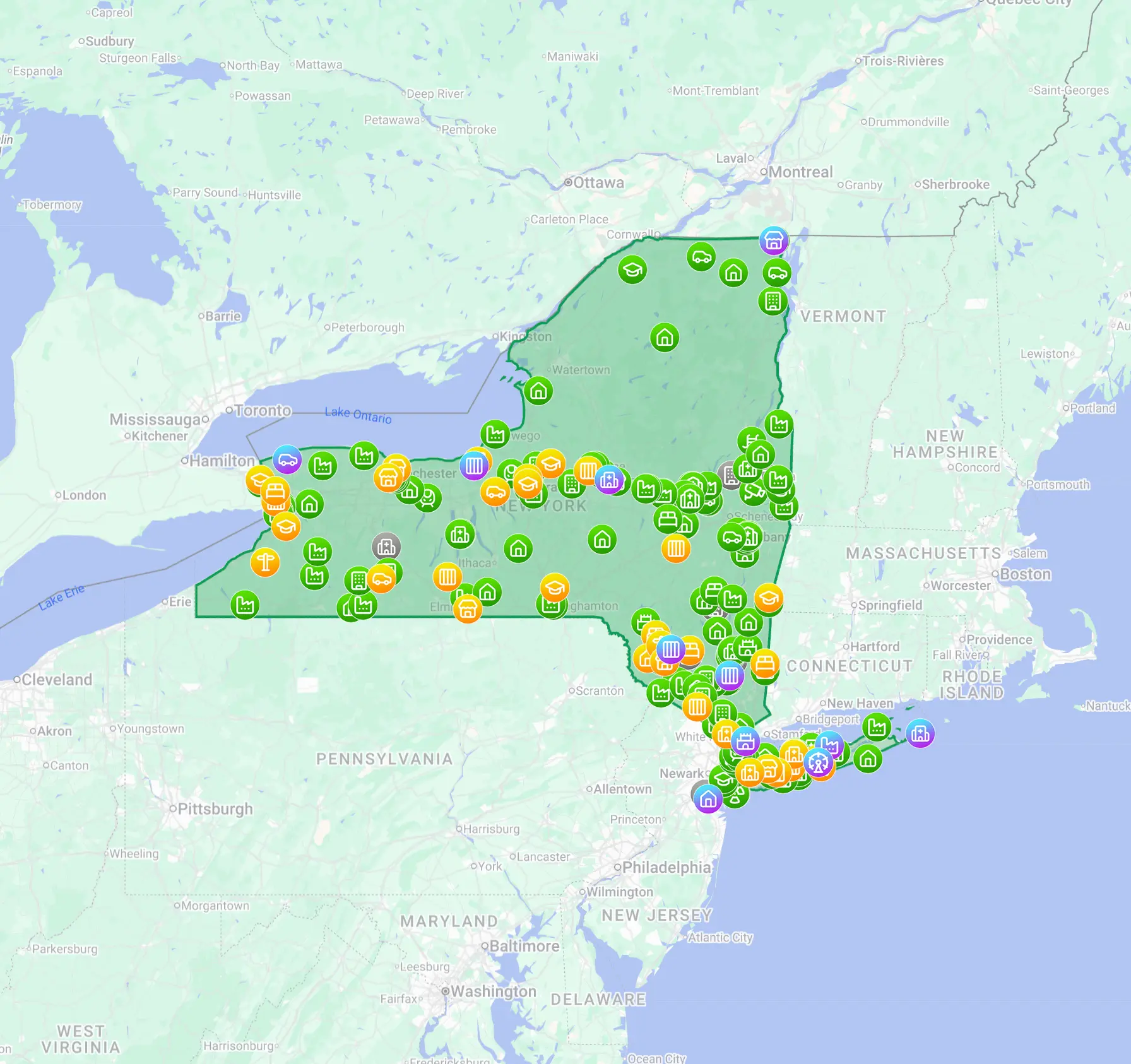
Where can you do urbex in New York?
Urbex in New York is mostly limited to legally viewable ruins, exterior-only historic sites, and a small number of places with official or controlled access. The best-known abandoned places in New York are usually not open for free entry, so the smart approach is to prioritize public viewpoints, verified research, and preservation-first planning.
Quick summary
- New York is famous for abandoned history, but many iconic sites are restricted or protected.
- The safest New York urbex approach is exterior observation, public access, and official tours when available.
- Well-known sites include the Roosevelt Island Smallpox Hospital ruins, North Brother Island, and the old City Hall subway station.
- Major risks include trespassing charges, unstable structures, contamination, active rail property, and shoreline hazards.
- A curated map helps because New York sites change fast through redevelopment, closures, and enforcement.
- Responsible urbex means no forced entry, no track access, and no damage to historic fabric.
Quick facts about urbex in New York
- Location: New York City, including Manhattan, Brooklyn, Queens, the Bronx, and Staten Island
- Type of urbex scene: Historic ruins, transit relics, coastal remains, former hospitals, and institutional sites
- Access reality: Many famous spots are visible from public areas but not legally enterable
- Main legal issue: Trespassing and access to restricted transit or city property
- Main safety issue: Structural instability, contamination, sharp debris, and hazardous terrain
- Best planning method: Use verified information, current access checks, and curated research tools
Safety reminder: MapUrbex supports responsible, preservation-first exploration. Do not trespass, bypass barriers, enter tracks or tunnels, or force access to sealed buildings.
Access the free urbex map
What does urbex in New York usually look like?
Urbex in New York usually means studying abandoned sites more than entering them. The city has intense surveillance, active redevelopment, landmark protections, and transport infrastructure that make many classic urbex behaviors both risky and illegal.
For most explorers, the realistic format is a legal walk that combines public viewpoints, historic context, and exterior photography. If you are new to the hobby, start with How to Start Urbex: A Beginner's Guide to Urban Exploration and then read How to Find Abandoned Places with Google Maps for research methods.
This matters because New York urbex spots disappear quickly. Buildings are demolished, converted, sealed, or monitored. A site that appeared accessible a year ago may now be fenced, hazardous, or fully gone.
Which abandoned places are most associated with New York urbex?
The abandoned places most associated with New York urbex are high-profile historic sites that are often better for legal viewing than for entry. They matter because they define the city's abandoned landscape, even when direct access is restricted.
| Site | Borough / Area | What it is | Access reality |
|---|---|---|---|
| Roosevelt Island Smallpox Hospital ruins | Roosevelt Island | Landmark hospital ruin | Public exterior views only |
| North Brother Island | East River | Abandoned hospital island | No public access |
| Old City Hall subway station | Manhattan | Historic abandoned station | No self-guided access to tracks or station interior |
| Staten Island Farm Colony and Seaview remains | Staten Island | Former institutional and medical buildings | Restrictions, fragmented access, changing conditions |
| Dead Horse Bay and Barren Island remains | Brooklyn shoreline | Industrial and landfill-era remains | Hazardous area, rules and closures can change |
1. Roosevelt Island Smallpox Hospital ruins
The Roosevelt Island Smallpox Hospital, often called the Renwick Ruin, is one of the most recognizable abandoned structures in New York. It is a Gothic Revival ruin from the nineteenth century and one of the clearest examples of abandoned architecture that can still be appreciated legally from the outside.
For urbex purposes, this is mainly a viewing and documentation site, not an entry site. The structure is protected, fenced, and historically significant. That makes it valuable for photography, historical study, and route planning, but not for interior exploration.
2. North Brother Island
North Brother Island is one of the most mythic abandoned places in New York. It contains the remains of hospital and institutional buildings and has long been associated with hidden, inaccessible New York urbex.
It is also one of the clearest examples of a place that should not be treated as an open urbex target. Public access is restricted, and the island has environmental and wildlife protections. In practical terms, it belongs in a research-based New York urbex guide, not on a casual entry list.
3. Old City Hall subway station
The old City Hall station is one of the most famous transit relics in the city. Opened in 1904 and later closed, it remains a symbol of abandoned infrastructure in Manhattan.
This site is important because many people searching for New York urbex spots ask about abandoned subway stations. The key fact is simple: active transit property is not legal urbex space. Do not enter tracks, tunnels, or service areas. Where lawful viewing exists, it is through official channels or passive public observation, not trespass.
4. Staten Island Farm Colony and Seaview remains
Staten Island has long held some of the city's strongest abandoned institutional landscapes. The Farm Colony and parts of the broader Seaview area are often mentioned in discussions of New York's former hospitals, poor farms, and social welfare buildings.
These sites also show why access details matter. Ownership, redevelopment, and preservation efforts can vary by structure and over time. Some buildings may be visible from public ways, while interiors remain dangerous, unstable, and restricted. Treat this area as a research subject first, not a guaranteed field destination.
5. Dead Horse Bay and Barren Island remains
Dead Horse Bay is less like a classic building-based urbex site and more like a shoreline of exposed industrial history. It is associated with landfill layers, debris fields, and remnants tied to New York's industrial past.
It is also one of the highest-risk places on this list. Sharp glass, erosion, contamination concerns, and changing access rules all matter here. If a guide mentions it among abandoned places in New York, that should be read as historical context and access awareness, not as encouragement to roam freely.
What rules and legal limits matter for urbex in New York?
The main legal limit for urbex in New York is simple: if a site is fenced, posted, on active infrastructure, or clearly restricted, do not enter. The city has dense public-private boundaries, active transit systems, and protected historic properties, so assumptions about access are often wrong.
A few rules matter more than anything else:
- No trespassing: A broken fence or open gap does not create permission.
- No transit intrusion: Tracks, tunnels, yards, and closed platforms are not acceptable exploration targets.
- No forced access: Do not cut locks, push doors, climb barriers, or bypass security.
- No damage or removal: Preservation-first means leaving architecture, objects, and graffiti layers undisturbed.
- No risky shoreline behavior: Tides, unstable ground, and debris fields can turn a short visit into an emergency.
In New York, legal context changes quickly because sites are monitored, sold, or redeveloped. That is why reliable planning matters more than rumor. You can Browse all urbex maps to compare regions and use curated information rather than random social posts.
How should you plan a responsible urbex outing in New York?
A responsible New York urbex outing should start with verification, public access checks, and a realistic goal. In most cases, the goal is not entry. The goal is to document abandoned history safely and legally.
A useful planning workflow looks like this:
- Research the site's current status. Confirm whether it still exists, whether it is fenced, and whether public views are available.
- Prefer daylight and public routes. New York's legal viewing opportunities are easier and safer during normal public hours.
- Check the terrain. Waterfront edges, loose masonry, broken glass, and hidden holes are common hazards.
- Avoid solo risk. Even a legal exterior visit becomes serious if you slip on rubble or shoreline debris.
- Keep expectations realistic. Some of the best New York urbex experiences are visual and historical rather than immersive.
For route design, curated tools are better than scattered coordinates. Read Urbex map: how curated maps help plan urban exploration routes and compare with How to Find Abandoned Places with Google Maps to build a safer research process.
Is a curated urbex map useful for New York?
Yes, a curated urbex map is especially useful for New York because the city's abandoned landscape changes fast. A map built around verification helps separate historic interest from false leads, demolished sites, and locations that are famous online but not practical or legal in real life.
This is where MapUrbex's approach fits the city well. New York rewards selection over volume. A smaller set of verified, responsibly framed locations is more useful than a long list of risky rumors.
If you want a broader overview before planning, Browse all urbex maps. If you want to start with an accessible tool, use the free option below.
Access the free urbex map
FAQ
Is urbex legal in New York?
Urbex is only legal in New York when you stay within places and viewpoints you are actually allowed to use. Entering fenced properties, closed buildings, tunnels, tracks, or restricted islands can lead to trespassing or more serious consequences. The safest rule is to assume no access unless it is clearly public or officially permitted.
What are the safest abandoned places to see in New York without trespassing?
The safest options are usually landmark ruins or former institutional sites that can be viewed from public space. Roosevelt Island's Smallpox Hospital ruins are a strong example because the site has clear historical value and exterior viewing potential. In New York, safe usually means visible, not enterable.
Are abandoned subway stations or tunnels legal to enter in New York?
No, entering abandoned subway tunnels, tracks, and service areas is not a legal or responsible form of exploration. Transit infrastructure remains highly dangerous even when a station is closed. If a station has lawful viewing opportunities, use only those official or public methods.
Why do New York urbex locations disappear so quickly?
New York changes fast because of redevelopment, demolition, adaptive reuse, and tighter site security. A building can move from semi-visible to fully sealed in a short period. That is why verified, current information matters more here than old forum posts or recycled social media lists.
Do I need special gear for urbex in New York?
For legal exterior-focused exploration, sturdy footwear, weather awareness, charged phone battery, and basic caution are usually more important than tactical gear. Heavy equipment does not make unsafe or restricted places acceptable. The best protection is good judgment and a clear access decision.
Conclusion
Urbex in New York is real, but it works differently from the image many beginners expect. The city's best-known abandoned places are usually valuable as historic sites, legal viewpoints, and research subjects rather than open interiors to enter.
The smartest New York urbex guide is therefore a selective one. Focus on verified locations, current access reality, and preservation-first habits. That approach is safer, more credible, and far more sustainable for documenting the city's abandoned history.
Access the free urbex map
