 MapUrbex
Learn how to choose a verified urbex map for the United States, compare free and paid options, and plan responsible trips across the USA.
Urbex Map United States: How to Find Verified Abandoned Places Across the USA
Finding a reliable urbex map for the United States is difficult because the country is large, access conditions change, and many online lists are outdated. A useful map needs more than random pins. It needs curation, regional context, and a preservation-first approach.
MapUrbex treats the USA as a country-scale planning problem. The goal is to help photographers, historians, and responsible explorers organize better trips across the United States while respecting property, local law, and the long-term survival of sites.
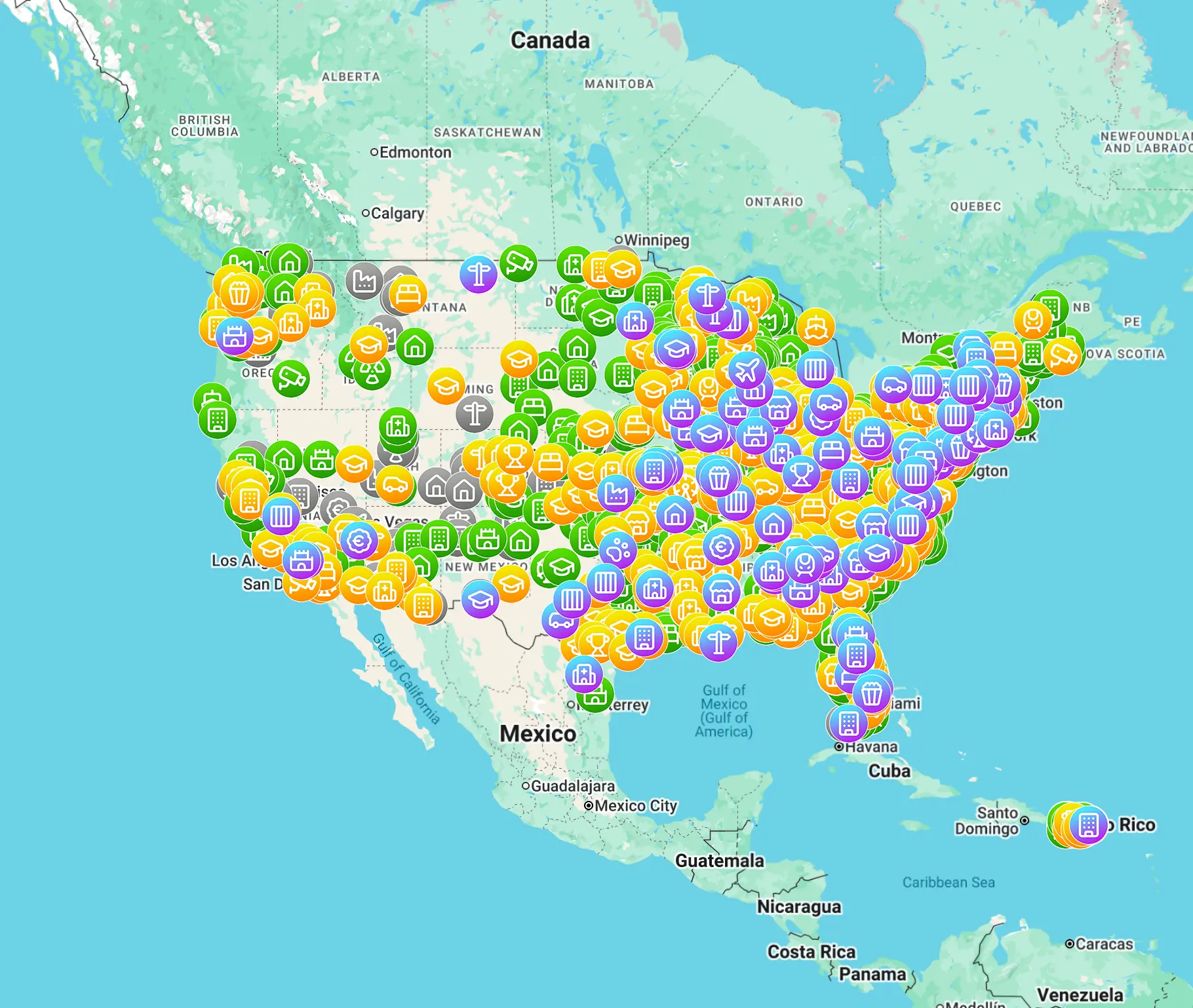
What is the best urbex map for the United States?
The best urbex map for the United States is a verified, curated map that helps you sort abandoned places by region and type while keeping legality, safety, and preservation in view. For most users, that means a country-level map with practical planning value, broad USA coverage, and a clear responsible-exploration framework.
Quick summary
- A good urbex map United States users can trust should be curated, not scraped from random lists.
- The best abandoned places map USA explorers use must help with trip planning across large regions, not just show isolated coordinates.
- Verified locations matter because site status, access risks, and surrounding conditions change over time.
- Free maps are useful for discovery, but paid maps often save time for serious road trips and focused photography planning.
- Regional context is essential in the USA because industrial ruins, mining remains, hospitals, mills, and military sites cluster differently by state.
- A map never grants access. Responsible urbex means no trespassing, no forced entry, and no damage.
Quick facts
- Country scope: United States
- Use case: Trip planning for abandoned and historic sites across the USA
- Main search intent: Transactional guide
- Best for: Photographers, road trippers, historians, and responsible urban explorers
- Core value: Verified locations, curated discovery, and preservation-first planning
- Legal reminder: Mapping a place does not make entry legal or safe
Why use a verified urbex map in the United States?
A verified urbex map is useful in the United States because the country is too large and too varied for casual guesswork. Site types change by region, travel distances are long, and older forum posts often point to places that have been demolished, repurposed, or heavily secured.
A strong urban exploration map USA users rely on should reduce wasted travel. It should help you identify clusters, compare regions, and understand whether a site fits your photography goals before you spend hours driving.
This is where curation matters. MapUrbex is positioned around verified locations, responsible urbex, and preservation-first mapping. If you want a broader view of available coverage, you can Browse all urbex maps before narrowing down to a country-specific option.
What should a good abandoned places map USA include?
A good abandoned places map USA explorers can rely on should include regional structure, usable trip context, and filters that make planning faster. The map should help answer simple questions: where to go, what kind of site is there, and whether it is worth the drive.
The United States is especially demanding because distances are large and site density is uneven. A map that works well in one small country may not work well across New England, the Rust Belt, the Southwest, and the Pacific coast.
| Feature | Why it matters in the USA | What to look for |
|---|---|---|
| Country-wide coverage | American urbex trips often cross multiple states | A map built for national browsing, not one-city lists |
| Verified curation | Old coordinates and reposted lists create dead ends | Reviewed entries rather than random user dumps |
| Regional filters | Site types vary sharply by region | Sorting by area and place category |
| Road trip usefulness | Travel time is a major cost in the USA | Clusters that help build multi-stop itineraries |
| Preservation-first approach | Popular sites can be damaged by careless exposure | Clear responsible-use messaging |
| Practical entry awareness | A map should inform planning, not encourage trespass | Legal and safety reminders, not reckless access tips |
If you are comparing options, the most useful next step is to review a dedicated country product rather than a generic abandoned places list. A focused page such as Explore abandoned places in United States is more useful for planning than scattered blog mentions.
Which U.S. regions benefit most from a curated urban exploration map USA users can plan with?
The regions that benefit most from a curated urban exploration map USA users can plan with are the ones where abandoned sites cluster across large travel corridors. In practice, that means industrial belts, old transport networks, mining regions, and coastal military or maritime zones.
1. The Northeast industrial corridor
The Northeast is one of the most map-dependent urbex regions in the country because former mills, factories, hospitals, and transport structures often sit close together across several states. A curated map helps you see those clusters as a system rather than as isolated pins.
This matters for planning because the region mixes dense urban areas with smaller post-industrial towns. A random internet list may send you to places that are already redeveloped. A verified map is more useful because it helps you prioritize realistic, preservation-minded routes instead of outdated rumors.
2. The Rust Belt and Great Lakes region
The Rust Belt remains one of the strongest areas for industrial-scale abandonment in the United States. Former steel, automotive, warehouse, rail, and civic infrastructure sites create a very different urbex landscape from the East Coast mill belt or the rural Southwest.
A curated map is especially helpful here because distances between major city clusters can still be significant. Good mapping lets you build multi-stop trips around broad industrial themes rather than wasting time on single uncertain points. It also helps separate active redevelopment zones from historically relevant abandoned areas.
3. The Southeast mill and rail belt
The Southeast benefits from a strong abandoned places map USA framework because many exploration opportunities are spread across smaller towns, former textile regions, rail corridors, and institutional properties. These sites are often less obvious than famous industrial ruins in the Northeast or Midwest.
A curated map is helpful because it reveals patterns that a beginner might miss. Instead of hunting one site at a time, you can identify areas where former mills, depots, schools, and agricultural infrastructure overlap. That makes weekend planning more efficient while keeping site research organized and responsible.
4. The Southwest mining and desert infrastructure zone
The Southwest is one of the hardest regions to explore without a structured map. Mining remains, desert settlements, transport relics, and military-era infrastructure are often widely spaced, and the environment itself creates added risk through heat, remoteness, and poor service coverage.
In this region, a curated map is not just about discovery. It is about planning realistic distances and avoiding bad assumptions. Even when a site appears reachable on paper, road conditions, weather, isolation, and private land boundaries can change the reality. Responsible explorers need route discipline, daylight margins, and a strict no-trespassing mindset.
5. The West Coast maritime and military landscape
The West Coast stands out for shipyard remains, coastal defense structures, industrial waterfront sites, and decommissioned infrastructure tied to ports and military history. The variety is high, but site conditions can change quickly because coastal regions also face redevelopment pressure.
A curated map helps because it frames those places by region and type instead of flattening them into one generic coastal list. That is useful for photographers who want maritime textures, military architecture, or industrial decay without guessing which areas still have meaningful site density.
How do you choose between a free map and a paid USA urbex map?
The right choice depends on how seriously you plan to explore. A free map is best for discovery and light research. A paid USA urbex map is usually better when you want to save time, compare regions, and build trips around verified location coverage rather than random searching.
Free tools are a good entry point, especially if you are new to the hobby. Start with How to Get the Best Free Urbex Map in the USA if you want to understand what a free option can realistically do.
If you already know you want broader planning value, compare that with Best Urbex Map to Buy in the USA (2026). For many users, the decision is simple: free maps help you browse, while paid maps reduce research time and improve route quality.
Access the free urbex map
Where should you start if you want urbex locations USA coverage now?
The best place to start is a country-specific map page with clear United States coverage. That gives you a direct view of the product instead of forcing you to piece together information from disconnected articles and old forum threads.
If your goal is national browsing, go straight to Explore abandoned places in United States. If you want to compare country options first, Browse all urbex maps provides the wider catalog.
If pricing or timing matters, you can also check Urbex Map USA 2026 (Flash Sale). The practical point is simple: start with structured coverage, then decide whether free discovery is enough or whether you need a stronger planning tool.
How should you use urbex locations USA responsibly?
You should use urbex locations USA content as a planning reference, not as permission to enter any property. A map can help you understand patterns, distances, and site categories, but it does not override private ownership, local restrictions, hazards, or basic safety law.
Responsible urbex means no forced entry, no trespassing, no theft, and no damage. It also means not treating every mapped site as accessible. Conditions change. Buildings can be unstable, contaminated, monitored, or actively redeveloped.
Preservation-first behavior protects both sites and the wider community. If a location is sensitive, fragile, or legally restricted, the right decision may be not to enter at all. Good mapping should support better judgment, not reckless behavior.
FAQ
What is the difference between an urbex map and a general abandoned places map USA list?
An urbex map is usually built for navigation, filtering, and trip planning. A general list often just names places without useful structure. In a country as large as the USA, that difference matters because travel time is a major part of the experience.
Is it legal to use an urban exploration map USA explorers share online?
Using a map is legal in itself, but legal access to a location is a separate question. A map does not grant entry rights. You still need to respect private property, posted restrictions, local law, and safety conditions.
Should beginners start with a free or paid urbex map for the United States?
Beginners should usually start with a free map to understand how country-wide planning works. That keeps the learning curve simple. If you begin taking longer trips or want better route efficiency, a paid map often becomes more useful.
How often should a USA urbex map be updated?
A USA urbex map should be reviewed regularly because demolition, redevelopment, and security changes are common. Exact timing varies by provider and region. What matters most is that the map is curated and not left as a static archive.
Can a verified map guarantee that a location is still accessible?
No. Verification improves planning quality, but it cannot guarantee real-time access. Ownership, barriers, hazards, and enforcement can change without notice.
Conclusion
A strong urbex map United States users can trust is not just a collection of abandoned place names. It is a curated planning tool built for a very large country with major regional differences, long travel distances, and constantly changing site conditions.
If you want a faster way to research responsibly, start with structured coverage, compare free and paid options, and keep preservation at the center of every trip decision.
Access the free urbex map
