 MapUrbex
Discover the most complete urbex map of Europe, with verified abandoned places, key site categories, major regions, and tips for responsible research.
Urbex Map of Europe: The Most Complete List of Abandoned Places
Europe has one of the highest concentrations of abandoned hospitals, factories, castles, military sites, and forgotten leisure complexes in the world. That is why many researchers start with an urbex map of Europe rather than a scattered set of old forum posts.
MapUrbex focuses on verified locations, responsible urbex, and preservation-first research. The goal is not reckless entry. The goal is better planning, better context, and a clearer view of where abandoned places in Europe are actually concentrated.
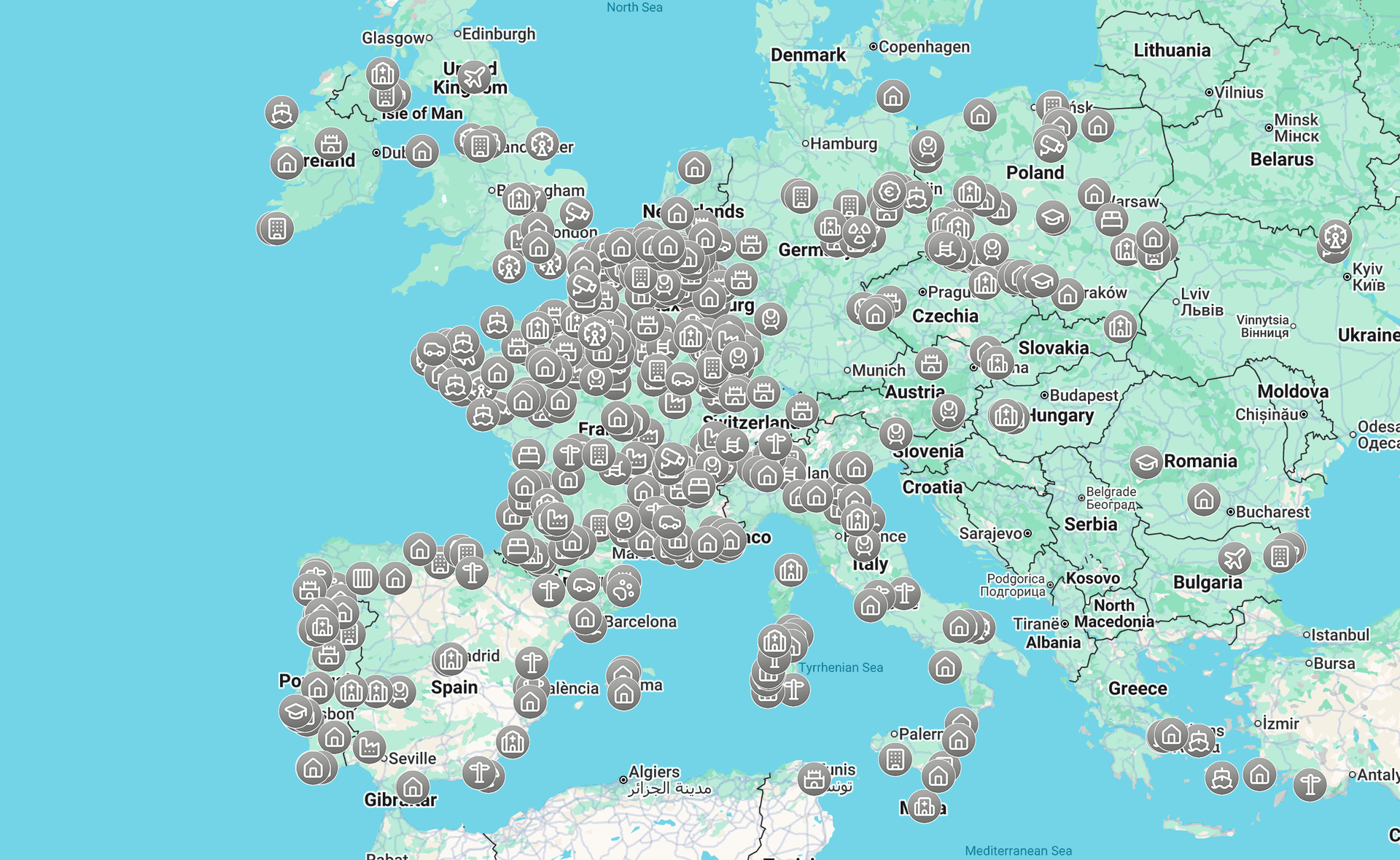
What is the best urbex map of Europe?
The best urbex map of Europe is a curated map with verified abandoned places, useful regional filters, and up-to-date research value. MapUrbex is built for that purpose: it helps users compare urbex spots across Europe, sort sites by country and type, and avoid unreliable abandoned-place lists that often contain duplicates, demolished locations, or unsafe information.
Quick summary
- A strong Europe urbex map is better than a random list because it shows regional patterns and site clusters.
- Europe offers major variety: hospitals, factories, castles, military ruins, leisure sites, and abandoned villages.
- Belgium, northern France, western Germany, Italy, and parts of the Balkans are especially rich for research.
- Curated mapping helps filter out demolished sites, false leads, and duplicated entries.
- Responsible use matters: always check legality, ownership, and safety before any visit.
- MapUrbex is designed for verified locations and preservation-first trip planning.
Quick facts
- Scope: Europe-wide research
- Primary use: Finding and comparing abandoned places in Europe
- Best for: Route planning, regional analysis, and site-type discovery
- Common site types: Hospitals, factories, castles, military sites, theme parks, villages
- Key benefit: A map shows density and travel logic better than a text-only list
- Safety note: Abandoned does not mean legal, stable, or safe to enter
Access the free urbex map
Why use a curated urbex map instead of a random list of abandoned places?
A curated urbex map of Europe is more useful than a random list because the continent changes quickly. Sites are sealed, demolished, converted, or placed under stricter security. A map built for research helps users understand patterns, not just collect names.
One good map can replace dozens of outdated threads. It lets you compare density by region, identify efficient travel clusters, and focus on verified locations. If you want a broader overview first, start with Browse all urbex maps and then narrow your search by country or site type.
This also fits a preservation-first approach. Public circulation of vague or outdated location information can lead to damage, theft, and dangerous visits. Curated mapping reduces noise and makes responsible planning easier.
What kinds of abandoned places can you find on an urbex map of Europe?
An urbex map of Europe usually includes industrial, medical, residential, military, religious, transport, and leisure sites. The best maps also add context, because a huge abandoned sanatorium and a small rural farmhouse do not serve the same research purpose.
| Type of site | Common countries | Why it matters for research |
|---|---|---|
| Hospitals and sanatoriums | Germany, Belgium, Czechia | Large complexes with medical and architectural history |
| Factories and mines | France, Belgium, Poland, Romania | Industrial archaeology, labor history, and scale |
| Castles and manors | France, Belgium, Italy, Central Europe | Heritage value, ruins, and rural decay |
| Military and Cold War sites | Germany, Bulgaria, Croatia, Balkans | Strategic history and strong regional patterns |
| Theme parks and leisure sites | Western and Central Europe | Rare visual environments and redevelopment stories |
| Abandoned villages | Italy, Spain, Balkans | Depopulation history and landscape change |
In practice, the most useful Europe urbex list is not limited to famous ruins. It helps researchers see how different site categories cluster across the continent and how those clusters affect route planning.
What are the top 5 categories of abandoned places to research in Europe?
The five most researched categories in Europe are medical sites, industrial sites, castles and manors, military remains, and leisure complexes. Together they explain most of the demand for a serious urbex map of Europe and show why a map-based approach works better than a simple text list.
1. Former hospitals and sanatoriums
Former hospitals and sanatoriums are among the most searched urbex locations in Europe because they combine scale, atmosphere, and documented history. Germany, Belgium, and parts of Central Europe are especially well known for this category.
Beelitz-Heilstätten in Germany is the classic reference point, even though access conditions and site status have changed over time. Many other medical sites are smaller, less photographed, and easier to miss, which is exactly why a curated map is valuable for research.
2. Industrial factories and mining sites
Industrial ruins are one of Europe’s deepest urbex categories because the continent has dense post-industrial belts. Northern France, Wallonia, western Germany, Poland, and Romania all contain former factories, foundries, mines, and energy infrastructure.
These sites matter because they tell economic history at landscape scale. They also change quickly. Demolition, contamination control, and redevelopment are common, so researchers need current information rather than copied lists that may be years out of date.
3. Abandoned castles and manors
Abandoned castles and manors are a major reason many people build a Europe urbex list in the first place. France, Belgium, Italy, and Central Europe contain everything from ruined hilltop fortifications to decaying aristocratic estates.
They also require extra caution because heritage protection, private ownership, and structural fragility are common. If this category is your priority, start with Abandoned Castles in Europe: 8 Ruined Sites Every Urbex Researcher Should Know for a focused overview.
4. Military sites and Cold War remains
Military ruins are widespread in Europe because the continent carries multiple layers of twentieth-century conflict. Bunkers, air bases, depots, barracks, and radar stations appear from the Atlantic coast to the Balkans.
This category is historically important, but it is also one of the most sensitive. Restrictions, unstable terrain, and, in some areas, unexploded ordnance risk mean a responsible Europe urbex map must treat these sites carefully and never encourage illegal entry.
5. Theme parks and leisure complexes
Abandoned theme parks, hotels, water parks, and leisure centers are less numerous than factories or hospitals, but they attract exceptional attention. Their visual identity makes them highly shareable and highly exposed.
That is why curated research matters here as well. For a dedicated look at this niche, read Les Parcs d’Attractions Abandonnés les Plus Fascinants d’Europe en 2025, which highlights some of the continent’s best-known abandoned leisure sites.
Which parts of Europe are especially rich in urbex locations?
The richest zones for urbex research in Europe are usually former industrial belts, depopulated rural regions, and post-military corridors. In practical terms, Belgium, northern France, western Germany, parts of Italy, and sections of the Balkans appear repeatedly because they combine density, historical turnover, and varied site types.
Belgium and northern France stand out for short travel distances and a high concentration of industrial and institutional ruins. Western Germany adds major medical and military references, while Central Europe contributes sanatoriums, factories, manors, and transport infrastructure with strong archival depth.
Southern Europe often follows a different pattern. Italy and Spain include abandoned villages, incomplete developments, resort infrastructure, and isolated rural or religious sites. In southeastern Europe, large monuments, military remains, and depopulated settlements can create strong clusters, but legal status and current conditions vary widely.
How should you use an urbex map of Europe responsibly?
You should use an urbex map of Europe as a research and planning tool, not as permission to enter restricted places. Responsible use means checking current ownership, understanding local law, avoiding forced access, and protecting fragile sites from damage or overexposure.
A few practical rules apply almost everywhere in Europe:
- Verify whether a site is legally accessible before visiting.
- Never force entry, bypass security, or climb unstable structures.
- Do not remove objects or publish sensitive access details.
- Expect closures, redevelopment, or demolition even at famous sites.
- Prioritize preservation, discretion, and personal safety.
This is where curated mapping helps most. It supports better decisions without turning abandoned places into disposable content. For route planning around verified clusters, read How to Plan an Urbex Road Trip in Europe.
Access the free urbex map
How can you build an efficient Europe urbex itinerary?
The most efficient Europe urbex itinerary is built by clustering sites geographically and by type. Instead of crossing several countries for one famous ruin, use a map to identify corridors where multiple verified locations can be researched within the same region.
Start with one anchor area, such as Wallonia, western Germany, northern Italy, or a Balkan route. Then mix major headline sites with lesser-known backup options. That method reduces transport time and helps when a place is closed, under renovation, or no longer visitable.
A good itinerary also separates research into stages. First, scan the continent-level map. Second, narrow by country. Third, check legality, travel time, season, and current condition. Many users begin with the free overview and then expand through Browse all urbex maps.
FAQ
What is the difference between an urbex map and a simple list of abandoned places?
An urbex map shows spatial patterns, not just names. That makes route planning, regional comparison, and backup planning much easier. A simple list can help, but it rarely shows how sites connect across countries.
Is every abandoned place in Europe legal to visit?
No. Abandoned does not mean public, permitted, or safe. Many places are private property, protected heritage, sealed compounds, or redevelopment sites.
Are exact coordinates always published for abandoned places in Europe?
No, and they should not always be. Sensitive sites can be damaged by overexposure, theft, and unsafe visits. A preservation-first map balances usefulness with discretion.
Which European countries have the most variety of abandoned places?
Belgium, France, Germany, Italy, and several Central and Eastern European countries offer strong variety. The mix differs by local history, especially industry, military infrastructure, depopulation, and aristocratic heritage.
Is a free Europe urbex map enough for trip planning?
A free map is excellent for overview research and first-pass planning. For detailed regional work, curated layers and up-to-date verification are more useful. The right level depends on how specific your route needs to be.
Conclusion
A strong urbex map of Europe does more than list famous ruins. It helps you understand where abandoned places cluster, which categories dominate each region, and how to plan responsibly around changing access conditions.
That is why MapUrbex emphasizes verified locations, curated maps, and preservation-first research. Use the map to learn, compare, and plan carefully, never to bypass the law or take unnecessary risks.
Access the free urbex map
