 MapUrbex
A practical guide to urbex London, including disused stations, docklands industry, former hospitals, and the legal reality of exploring abandoned places in the UK capital.
Urbex London: Secret Abandoned Places in the UK Capital
London is one of Europe's richest cities for disused infrastructure, closed institutions, and post-industrial relics. That is why urbex London remains such a strong search topic for photographers, historians, and map-based explorers.
The important distinction is that many famous London sites are not open-access ruins. They are sealed, protected, under redevelopment, or visible only from public space. Responsible urban exploration in the UK capital starts with research, legality, and preservation.
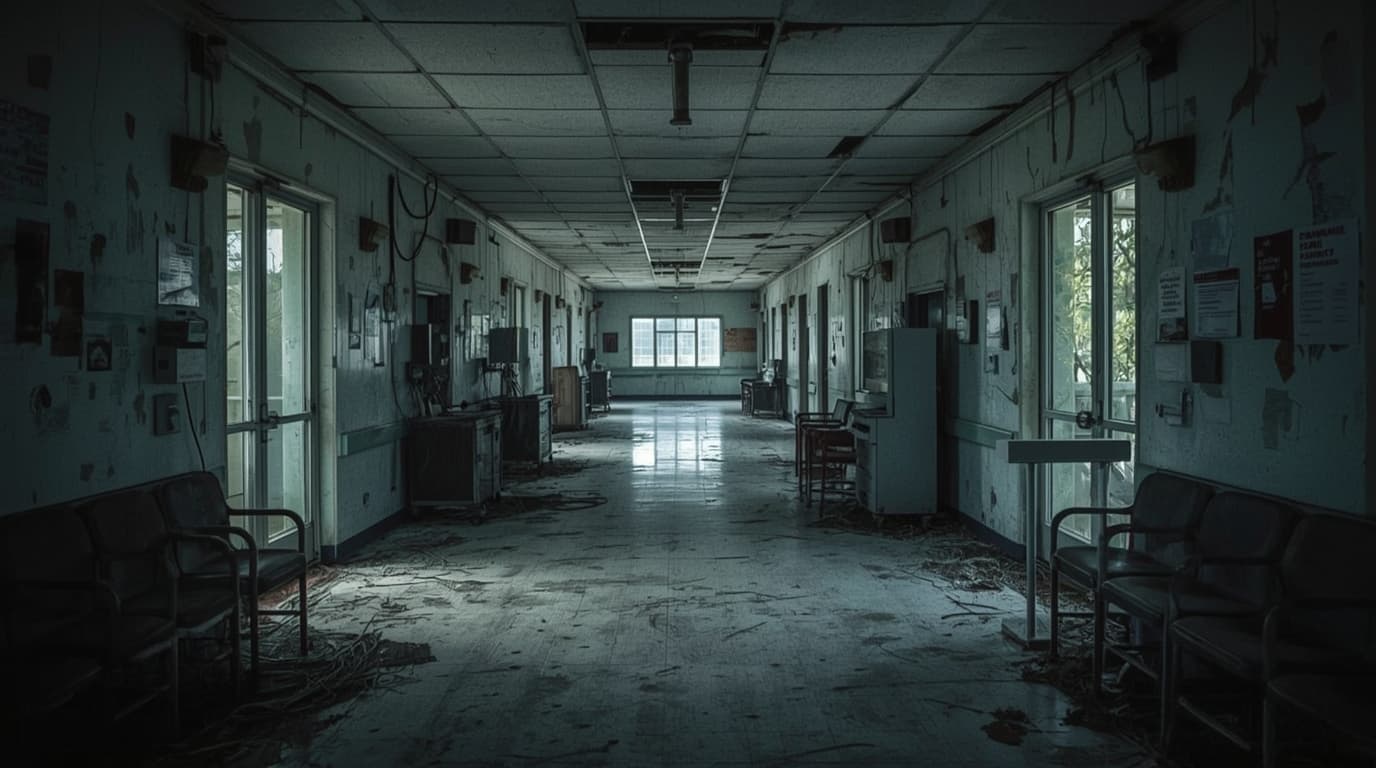
Where can you find urbex London locations?
Urbex London locations are concentrated in disused stations, docklands industry, closed hospitals, derelict entertainment buildings, and sealed infrastructure across the capital. In practice, many of the best-known sites are fenced, monitored, repurposed, or open only through heritage visits, so the real task is identifying places that can be studied legally and safely.
Quick summary
- London urbex is defined more by disused infrastructure and repurposed ruins than by easy-access abandoned buildings.
- The most cited London categories are disused Underground stations, docklands industry, former hospitals, closed civic venues, and Cold War spaces.
- Many iconic sites are no longer abandoned in a practical sense because they have been converted, secured, or redeveloped.
- Central London has fewer true ruins than the outer boroughs and former industrial belts.
- Responsible exploration means public-space observation, permission-based access, and no forced entry.
- MapUrbex emphasizes verified locations, curated mapping, and preservation-first research.
Quick facts
- Location: London, United Kingdom
- Type: informational list of abandoned places and urbex-relevant site types
- Best-known context: disused transport, industrial decline, institutional closures, wartime infrastructure
- Current reality: many sites are sealed, monitored, demolished, or converted
- Best approach: combine historical research, legal access, and on-the-ground verification
- Useful starting points: Browse all urbex maps and Urbex London: Abandoned Places and Urban Exploration Guide
Why does London have so many abandoned and disused places?
London has so many abandoned and disused places because it is an old capital that has repeatedly rebuilt its transport, industry, healthcare, and defense networks. Each redevelopment cycle leaves behind tunnels, depots, hospital wings, warehouses, and civic structures that may be obsolete long before the land loses value.
This creates a distinctive urbex environment. In smaller cities, abandonment often means total neglect. In London, disuse is often temporary, partial, or hidden behind hoardings while planning, restoration, or adaptive reuse catches up.
That is why the phrase abandoned places in London can be misleading. Many sites are best described as disused, inaccessible, or awaiting redevelopment rather than forgotten ruins.
What kinds of abandoned places define urbex London?
The places that define urbex London are disused transport spaces, docklands industry, former institutions, closed entertainment venues, and protected military infrastructure. These categories explain the city's abandoned geography better than a simple list of secret addresses.
1. Disused Underground stations and railway infrastructure
Disused Underground stations are the most iconic part of urbex London. Places such as Aldwych, Down Street, and Brompton Road are repeatedly cited because they preserve platforms, tiled passages, service rooms, and wartime layers that survive beneath a modern capital.
What makes these sites important is not easy access but historical density. Some have appeared in films or official heritage events, while others remain sealed and managed. They show how London keeps older networks below active streets rather than erasing them completely.
For researchers and photographers, railway remnants also include closed entrances, redundant sidings, former goods yards, and fragments of suburban branch lines. These are often safer to study from public routes than from inside restricted structures.
2. Former docklands, mills, and industrial riverside sites
Former docklands and riverside industry are another core part of abandoned London. The Royal Docks, Silvertown, and the long-derelict Millennium Mills became emblematic because they represented a direct link between imperial trade, deindustrialization, and stalled redevelopment.
Industrial sites matter because their scale makes urban change visible. Empty grain mills, warehouses, conveyor systems, and loading structures tell a clear story about how the Thames once functioned as a working landscape rather than a residential skyline.
Many of these places have changed quickly in recent years. Some are now construction zones, some are fenced viewpoints rather than explorable ruins, and some survive only in archival photography. That is one reason current verification matters more than old urbex lore.
3. Closed hospitals and former institutional campuses
Closed hospitals and institutional campuses shaped British urbex culture for years, and London contributed several memorable examples. Former sites such as Friern Hospital became well known because large Victorian medical complexes often lingered between closure and conversion.
These places attract attention because they combine architecture, social history, and ethical tension. Wards, chapels, corridors, and service tunnels can feel visually powerful, but they also relate to mental health care, public health policy, and vulnerable local histories that should be handled respectfully.
In London today, many former hospital sites have been redeveloped into housing or mixed-use projects. That makes them valuable as case studies in change rather than as assumed active explore spots.
4. Derelict theatres, cinemas, pubs, and civic interiors
Derelict entertainment venues are a quieter but important layer of urbex London. Closed cinemas, music halls, old pubs, and redundant civic rooms appear across outer borough high streets where economic shifts have emptied once-busy public interiors.
These sites are often less monumental than mills or stations, but they can be more revealing. They document neighborhood decline, retail change, licensing pressures, and the fragility of local cultural spaces. A stripped auditorium or boarded public house can say as much about London as a famous power station.
They are also highly unstable as a category. Many disappear through fire, renovation, or piecemeal redevelopment before they ever become well-known online. Public-space documentation is often the only responsible way to record them.
5. Sealed military, wartime, and Cold War infrastructure
Sealed military and wartime infrastructure form the most secretive side of abandoned places in London. Deep shelters, protected exchanges, former command spaces, and stations adapted for defense use reflect London's strategic role during the Second World War and the Cold War.
These sites generate interest because they are layered, hidden, and technically complex. A place like Down Street is remembered not only as a disused station but also for its wartime functions. Other spaces sit behind secure doors, within active systems, or inside heavily managed land.
For that reason, this category is the least appropriate for casual urban exploration. It is better approached through archives, authorized visits, and careful mapping rather than speculation or trespass.
Which London sites are famous in urbex culture, and what is their status today?
The most famous London urbex sites are historically important, but many are no longer abandoned in a practical sense. The table below is useful because it separates cultural fame from present-day access reality.
| Site | Category | Current status in broad terms | Why it matters |
|---|---|---|---|
| Aldwych Underground station | Disused transport | Managed site, sometimes used for filming or special access | One of the best-known closed stations in London |
| Down Street station | Disused transport and wartime use | Protected and not a casual explore location | Strong link between rail history and wartime government use |
| Millennium Mills | Industrial docklands | Secured redevelopment area | Iconic image of East London industrial decline |
| Friern Hospital | Former institution | Converted and redeveloped | Classic example of hospital closure and adaptive reuse |
| Battersea Power Station | Industrial landmark | Fully redeveloped | Shows how a famous ruin can become a commercial district |
| Crystal Palace Subway | Heritage infrastructure | Restored heritage site with limited openings | Demonstrates that not all abandoned-looking sites are abandoned |
This is also why broad guides often age badly. A location that looked untouched in one photo set may now be a construction site, a housing development, or a locked heritage asset.
For a wider overview, compare this city-focused list with Top 10 Most Famous Abandoned Places in the World. For London-specific context, the best companion reads are Urbex London Guide: How to Explore Abandoned Places in London Responsibly and Urbex London: Abandoned Places and Urban Exploration Guide.
How can you approach urbex London responsibly?
The responsible way to approach urbex London is to prioritize legality, safety, and preservation over access. In practice, that means using public viewpoints, checking present ownership and redevelopment status, seeking permission where possible, and avoiding any forced entry, interference, or risky descent into unstable structures.
London is heavily monitored and densely populated. A site that looks empty may contain asbestos, live services, hidden voids, or security systems. Responsible exploration also means not publishing sensitive entry information and not treating sealed infrastructure as a challenge.
MapUrbex recommends verified research rather than rumor-led exploration. Start with curated references, compare recent information, and use mapping tools that help you filter legal and practical options.
Access the free urbex map
If you want a broader starting point, you can also Browse all urbex maps.
FAQ
Is urbex legal in London?
Urbex is not automatically legal in London. Entering private or restricted land without permission can amount to trespass and may lead to police or security involvement, especially around transport and infrastructure. The safest approach is to stay in public space or use authorized access.
Are there still truly abandoned places in central London?
There are far fewer true abandoned places in central London than many people expect. High land values mean most empty buildings are secured, repurposed, or redeveloped quickly. The most interesting remnants are often disused infrastructure rather than open ruins.
Why are exact coordinates often withheld for London urbex spots?
Exact coordinates are often withheld to reduce vandalism, theft, arson, and unsafe copycat visits. This is especially important in London because many sites are fragile, historically significant, or close to active infrastructure. Preservation-first mapping protects both locations and visitors.
What is the difference between abandoned and disused in London?
In London, abandoned usually suggests neglect with no active use, while disused often means inactive but still owned, monitored, or awaiting reuse. Many famous London sites fall into the second category. That distinction matters because it changes the legal and practical reality.
What should you bring if you are documenting sites from legal public space?
Bring a charged phone, weather-appropriate clothing, a torch for low-light public viewpoints, and a camera setup you can carry safely. Avoid climbing gear or anything that suggests forced access. Good documentation starts with caution, not bravado.
Conclusion
Urbex London is less about finding easy entry ruins and more about understanding how a global capital leaves traces of its past in stations, docks, hospitals, entertainment spaces, and wartime infrastructure. The city's most interesting abandoned places are often disused, protected, or already changing again.
That is why current verification matters. Use responsible research, respect legal boundaries, and treat every site as part of a larger urban history rather than a disposable backdrop.
Browse all urbex maps
