 MapUrbex
A safety-first guide to urbex in Marseille, with 15 high-risk site types, key hazards, and practical rules for responsible exploration.
Urbex in Marseille: 15 Dangerous Places and How to Explore Them Responsibly
Marseille is one of the most talked-about cities in France for urban exploration. Its port history, industrial fringe, old hospitals, hillside structures, and abandoned villas create a dense mix of potential urbex spots.
But urbex in Marseille also comes with real risk. The most serious problems are usually not legal surprises. They are unstable floors, toxic dust, sea-damaged concrete, hidden shafts, fire damage, and isolated terrain.
This guide explains which kinds of places are most dangerous, why they become risky so quickly in Marseille, and how to approach them with a preservation-first mindset. For broader planning, see Browse all urbex maps and these Marseille guides: Urbex Marseille: Guide to Abandoned Places in Marseille and Nearby, Urbex Marseille: Abandoned Places and Hidden Spots in Marseille, and Urbex in Marseille: Abandoned Places to Discover in Marseille.
Which urbex places in Marseille are the most dangerous?
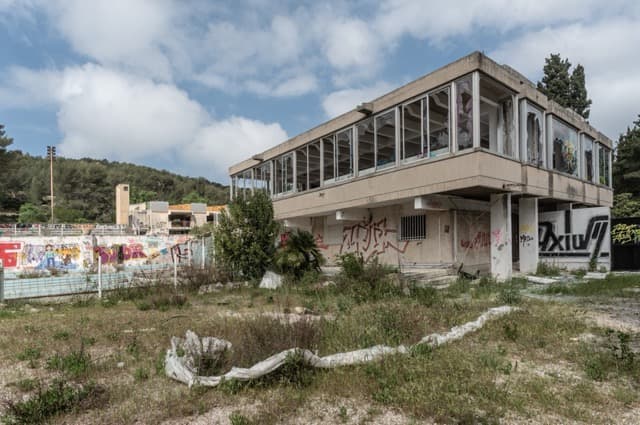
The most dangerous urbex places in Marseille are usually waterfront warehouses, silos, abandoned factories, closed medical buildings, tunnels, bunkers, and fire-damaged structures. They are risky because of collapse, vertical drops, toxic residues, bad air, flooding, and isolation. In practice, responsible urbex in Marseille often means deciding not to enter when access is unclear or the structure looks compromised.
Quick summary
- Marseille's highest-risk urbex spots are usually industrial, coastal, underground, or fire-damaged.
- The main hazards are structural collapse, asbestos, hidden holes, bad air, salt-corroded metal, flooding, and poor phone signal.
- Many dangerous spots look photogenic from the outside but become unsafe at stairwells, roofs, basements, and service corridors.
- Never force entry, cut fences, or enter sealed buildings. If access is not legal, do not go in.
- Daylight scouting, conservative turnaround rules, and verified planning reduce risk, but they do not make an unsafe place safe.
- MapUrbex is most useful when you want verified locations, better context, and a preservation-first approach.
Quick facts
| Item | Key information |
|---|---|
| City | Marseille, France |
| Search intent | Informational guide |
| Best first step | Exterior scouting from legal public access |
| Typical hazards | Collapse, toxic dust, broken glass, shafts, flooding, isolation |
| Weather factor | Wind, heat, rain, and sea humidity can rapidly change risk |
| Legal reminder | No trespassing, no forced access, no vandalism, no removal of objects |
Why are some urbex spots in Marseille more dangerous than they look?
Marseille makes decay faster and less predictable than many visitors expect. Sea air corrodes metal, summer heat weakens already damaged interiors, and repeated break-ins often leave stairs, doors, and roofs less stable than they appear from street level.
Several local factors increase risk:
- Salt air accelerates corrosion on railings, walkways, and roof frames.
- Fire damage is common in abandoned commercial and residential structures.
- Hillside terrain creates fall risk around terraces, retaining walls, and military ruins.
- Underground spaces can trap heat, fumes, and stagnant air.
- Some apparently empty buildings are reoccupied, partially used, or watched by nearby residents.
For that reason, the phrase dangerous urbex places in Marseille usually refers less to fame and more to condition.
What are the 15 dangerous urbex place profiles in Marseille?
The most dangerous spots for urbex in Marseille are not always the most famous ones. The worst candidates are usually places where industrial decay, elevation changes, or hidden interior voids combine. The list below focuses on high-risk site profiles rather than publishing public coordinates.
| Dangerous place profile | Main risk | Why it becomes dangerous in Marseille | Responsible approach |
|---|---|---|---|
| 1. Waterfront warehouses | Collapse | Salt air, rust, broken loading floors | Stay outside if decking or upper levels are exposed |
| 2. Disused shipyard buildings | Fall hazards | Pits, gantries, unstable catwalks | Avoid elevated metal structures |
| 3. Port silos and grain facilities | Vertical drops | Shafts, ladders, dust, bad air | Do not enter confined industrial spaces |
| 4. Abandoned factories | Structural failure | Heavy machinery voids, damaged slabs | Limit exploration to legal, stable exterior zones |
| 5. Fire-damaged shops or malls | Roof collapse | Burned beams and toxic debris | Treat all blackened interiors as unstable |
| 6. Closed hospitals or clinics | Contamination | Broken ceilings, dust, hidden basements | Never disturb materials or sealed rooms |
| 7. Deserted schools or training blocks | Hidden glass and holes | Vandalism and loose stair rails | Check every transition point before stepping |
| 8. Rooftop hotels or apartment blocks | Fatal falls | Missing barriers and weak terraces | Skip roofs without clear legal access and barriers |
| 9. Hilltop military bunkers | Isolation | Steep approaches, shafts, darkness | Use daylight only and avoid enclosed chambers |
| 10. Coastal tunnels | Flooding and air quality | Water ingress, low oxygen, no signal | Do not enter after rain or at tide-sensitive zones |
| 11. Quarry edges or extraction sites | Cliff falls | Loose rock and hidden ledges | Keep distance from edges and overhangs |
| 12. Isolated bastides or villas | Rot and concealed floors | Timber decay, wells, hidden cellars | Assume wooden floors may fail |
| 13. Partly demolished retail units | Sudden collapse | Active decay after partial works | Leave immediately if demolition is ongoing |
| 14. Underground utility structures | Entrapment | Darkness, bad air, confined exits | Avoid entirely without formal authorization |
| 15. Reoccupied abandoned buildings | Human conflict | Unclear occupancy and legal exposure | Do not enter if any sign of current use appears |
A simple rule helps here: the more vertical, underground, burnt, or sea-exposed a site is, the less margin for error you have.
How should you evaluate safety before exploring urbex in Marseille?
You should evaluate safety before arrival, from the exterior, and again at the threshold. A site that looks manageable online may become an immediate no-go once you see weathering, access control, or signs of recent movement.
Use this short checklist:
- Check legality first. If entry would require trespassing or forced access, stop there.
- Scout in daylight. Marseille sites can change fast after storms, heat, or vandalism.
- Read the structure from outside. Look for sagging roofs, cracked lintels, collapsed stairwells, scorch marks, and fresh debris.
- Assess the environment. Consider tide, rain, heat, steep ground, stray animals, and mobile signal.
- Go with a partner. Solo exploration raises consequences when a fall or injury happens.
- Carry basic protective gear. Sturdy footwear, gloves, torch, charged phone, water, and a conservative mindset matter more than camera gear.
- Set a clear turn-back rule. If one person is unsure, the group leaves.
In Marseille, safety urbex planning is not a formality. It is often the difference between a legal photo walk and a dangerous rescue scenario.
When should you walk away from a site?
You should walk away as soon as the site gives you incomplete information or stacked risk. In urbex, uncertainty itself is a warning sign.
Leave immediately if you notice any of the following:
- recent fire damage
- moving floors or soft wooden landings
- exposed elevator shafts or stair voids
- flooded basements or tunnels
- strong chemical smell or dust clouds
- signs of current occupation
- aggressive dogs or active security presence
- no viable exit if something changes suddenly
The best Marseille urbex decision is often the one that protects both people and places.
How can MapUrbex help you explore Marseille more responsibly?
MapUrbex helps by giving structure to your planning. Instead of chasing random coordinates or risky social posts, you can compare verified locations, filter by area, and focus on responsible exploration rather than adrenaline.
If you are building a safer route, start with Browse all urbex maps. If you want Marseille-specific context first, compare Urbex Marseille: Abandoned Places and Hidden Spots in Marseille and Urbex in Marseille: Abandoned Places to Discover in Marseille.
Legal reminder: always respect property rights, posted restrictions, and sealed access points. Preservation-first urbex means leaving no trace and accepting that some places should only be viewed from outside.
Access the free urbex map
FAQ
Is urbex legal in Marseille?
Urbex itself is not a blanket legal category. In Marseille, as elsewhere, entering private property without authorization can amount to trespassing or other violations. The safe rule is simple: if you do not have permission or a clearly legal route, do not enter.
What makes Marseille more demanding than other French cities for urbex?
Marseille combines maritime corrosion, heat, elevation changes, underground infrastructure, and large industrial zones. That mix increases structural unpredictability and access difficulty.
Are dangerous urbex places worth entering for photography?
Usually not. The most hazardous sites often offer the least margin for error and the weakest legal clarity. Exterior documentation, public viewpoints, and lower-risk alternatives are often the better choice.
What basic gear matters most for urbex in Marseille?
Good footwear, gloves, light, water, a charged phone, and a partner matter more than advanced photo equipment. A helmet can be sensible around unstable industrial or concrete sites, but gear never justifies entering an unsafe structure.
Should beginners explore dangerous spots in Marseille?
No. Beginners should avoid high-risk industrial, underground, rooftop, and fire-damaged sites. Start with legal exteriors, public viewpoints, and well-researched low-risk locations.
Conclusion
Urbex in Marseille can be visually striking, but the city's most dramatic abandoned places are often the least forgiving. Waterfront decay, industrial voids, tunnels, bunkers, and fire damage create hazards that escalate quickly.
A responsible approach is straightforward: verify first, scout legally, preserve the site, and leave when doubt appears. In Marseille, the safest explorer is usually the one who knows when not to go in.
Access the free urbex map
