 MapUrbex
Discover 25 major restricted and abandoned places linked to urbex Germany, with a safe and legal guide for Berlin, Hamburg, Munich, and beyond.
Urbex Germany: Top 25 Restricted and Abandoned Places Around Berlin, Hamburg, and Munich
Germany is one of Europe's most searched urbex destinations. Former military zones, empty factories, closed clinics, bunkers, and rail infrastructure create a dense landscape of abandoned places.
But most famous sites are restricted, fenced, repurposed, or actively monitored. For MapUrbex, the useful question is not how to force access. It is how to identify real locations, understand legal limits, and plan preservation-first visits.
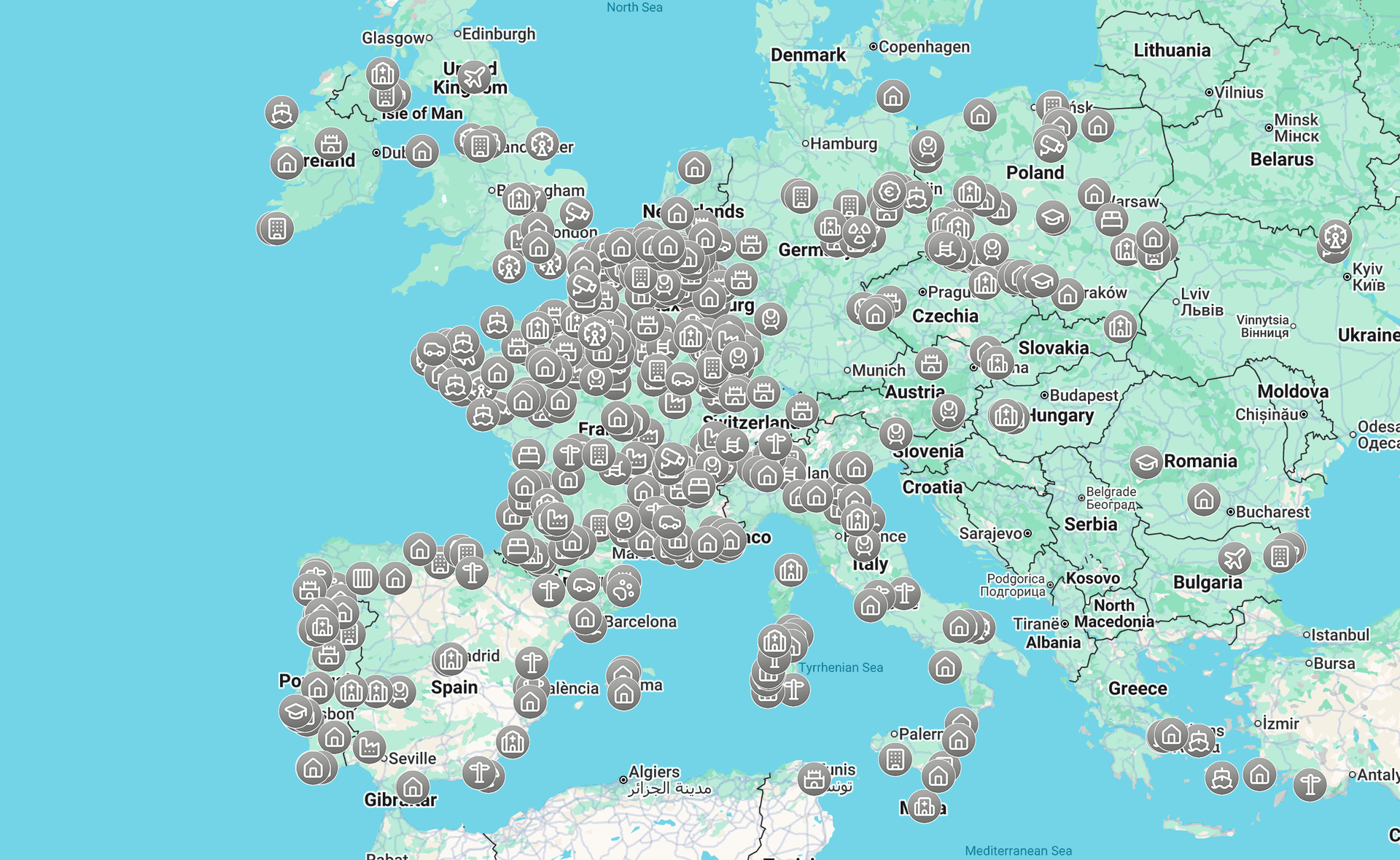
What are the best urbex places in Germany?
The best-known urbex places in Germany are concentrated around Berlin, Hamburg, Munich, the Ruhr, Leipzig, Dresden, Cologne, and Frankfurt. The most reliable finds are former industrial, military, rail, and medical sites that can be viewed legally, visited with permission, or tracked through verified maps instead of risky guesswork.
Quick summary
- Berlin, Hamburg, and Munich drive much of the search demand for urbex Germany.
- The most common site types are factories, barracks, bunkers, hospitals, rail yards, and port infrastructure.
- Many famous places in Germany are off-limits because they are private, unsafe, or under redevelopment.
- A verified map reduces wasted trips by filtering demolished, converted, or sealed sites.
- Responsible urbex means no trespassing, no forced entry, and no damage.
- MapUrbex focuses on curated maps and preservation-first planning.
Quick facts
- Country focus: Germany
- Highest search interest: Berlin, Hamburg, Munich
- Strong secondary regions: Ruhr, Leipzig, Dresden, Cologne, Frankfurt
- Typical access reality: mostly restricted or permission-based
- Best use case: scouting legal viewpoints, owner-approved entries, and up-to-date status
- Helpful starting point: Browse all urbex maps
Why is urbex Germany so popular?
Urbex Germany is popular because the country combines industrial history, Cold War infrastructure, former military land, and rapid urban redevelopment. That mix creates visual variety, but it also means many spots change status fast.
| Region | Typical site types | Access reality |
|---|---|---|
| Berlin | hospitals, bunkers, rail yards, breweries | often fenced, reused, or monitored |
| Hamburg | warehouses, docks, silos, flood structures | high security near port zones |
| Munich | barracks, clinics, industrial halls | fewer sites, stricter access |
| Ruhr | steel, coal, power infrastructure | many heritage conversions |
| Eastern cities | factories, depots, military compounds | mixed status, frequent demolition |
Which urbex areas stand out around Berlin?
The Berlin area offers the widest variety in Germany. The most searched locations are former hospitals, Cold War structures, rail zones, industrial compounds, and suburban sites on the Brandenburg edge.
- Former hospitals on the outskirts of Berlin
- Disused rail yards and S-Bahn service zones
- Civil defense bunkers and Cold War shelters
- Empty brewery and distillery complexes
- Former military barracks near the city fringe
- Sanatoria in wooded belts around Berlin
- Closed office or research compounds
These site families are popular because they combine architecture, history, and scale. They are also the categories most likely to be fenced, structurally unstable, or already converted into housing, offices, or cultural spaces.
Which urbex areas stand out around Hamburg and Munich?
Hamburg is shaped by maritime infrastructure, while Munich is known more for military, medical, and suburban institutional sites. Both cities require extra caution because active redevelopment and private security are common.
- Port-side warehouses around Hamburg
- Disused dry docks and ship repair areas
- Grain silos and food-processing sites
- River bunkers and flood-defense structures
- Suburban power and factory compounds near Hamburg
- Former military depots around Munich
- Closed clinics and care homes in outer Munich
- Industrial halls along former freight corridors
- Leisure or hotel sites on the wider Munich day-trip belt
In Hamburg, port logistics create strong visuals but strict access rules. In Munich, the total number of sites is lower than in Berlin, yet the surrounding region still produces regular urbex searches because old institutions and peripheral compounds change use over time.
Which other German regions deserve attention?
Outside Berlin, Hamburg, and Munich, Germany's strongest urbex landscape stretches across the Ruhr, eastern industrial cities, and major transport corridors. These areas often offer the highest density of large abandoned complexes.
- Steel and coal sites in the Ruhr
- Machine works and printing plants in Leipzig
- Barracks and research campuses around Dresden
- Logistics compounds near Frankfurt transport zones
- Warehouse and chemical areas around Cologne
- Depots and transport yards near Hanover
- Barracks and side structures linked to Nuremberg's historic military landscape
- Hillside factories and tunnel-related sites around Stuttgart
- Shipbuilding and dockside storage sites around Bremen
Many of these places are discussed online under broad city labels, even when the real sites sit outside the city center. That is another reason verified mapping matters: it separates search interest from on-the-ground reality.
How can you explore urbex Germany safely and legally?
In Germany, abandoned does not mean public. The safest method is to use public viewpoints, heritage events, legal tours, owner permission, and verified mapping. Do not bypass fences, open sealed entries, or enter unstable buildings.
MapUrbex recommends checking recent status, ownership clues, visible hazards, and transport access before every trip. For a broader planning workflow, read Urbex Germany: How to Find Abandoned Places Safely and Legally and Germany Urbex Map: Find Abandoned Places Safely and Legally.
How does a verified map help you avoid wasted trips?
A verified map helps by filtering demolished, converted, or heavily secured sites before you travel. That matters especially in Berlin, Hamburg, and Munich, where a location that looked abandoned last year may already be renovated or sealed.
A curated map is also better for responsible urbex. It helps you compare regions, prioritize legal options, and avoid spreading fragile site details in a way that increases damage. Start with the free tool here:
Access the free urbex map
FAQ
Is urbex legal in Germany?
Urbex is not automatically legal in Germany. If a site is private, fenced, signed, or clearly closed, entry can be unlawful without permission. Public viewpoints and authorized visits are the safer approach.
Are Berlin, Hamburg, and Munich the best cities for urbex?
They are the biggest search hubs, but not always the easiest places to visit. Berlin has the widest variety, Hamburg has strong port-related sites, and Munich has fewer but still notable abandoned compounds.
Why are so many famous places in Germany off-limits?
Many sites are off-limits because of private ownership, hazardous structures, insurance risk, redevelopment, or security monitoring. Popularity does not create access rights.
What should you check before planning a visit?
Check current status, ownership, barriers, local rules, structural risk, and whether there is any legal public access. A verified map saves time and reduces unsafe assumptions.
Conclusion
Urbex Germany is rich, varied, and historically dense, but the best-known places are often restricted. The smart approach is to use verified information, respect legal boundaries, and focus on preservation-first exploration.
Access the free urbex map
