 MapUrbex
Use a Germany urbex map to research abandoned places, understand legal limits, and plan safer, responsible explorations with verified context.
Germany Urbex Map: Find Abandoned Places Safely and Legally
Germany has one of the most varied abandoned-building landscapes in Europe. Former factories, hospitals, barracks, railway sites, hotels, and manor houses appear across the country, but their status changes often.
A Germany urbex map is useful only if it helps you research locations responsibly. The goal is not random coordinates. The goal is better context, safer planning, and a clear understanding of legal access before you travel.
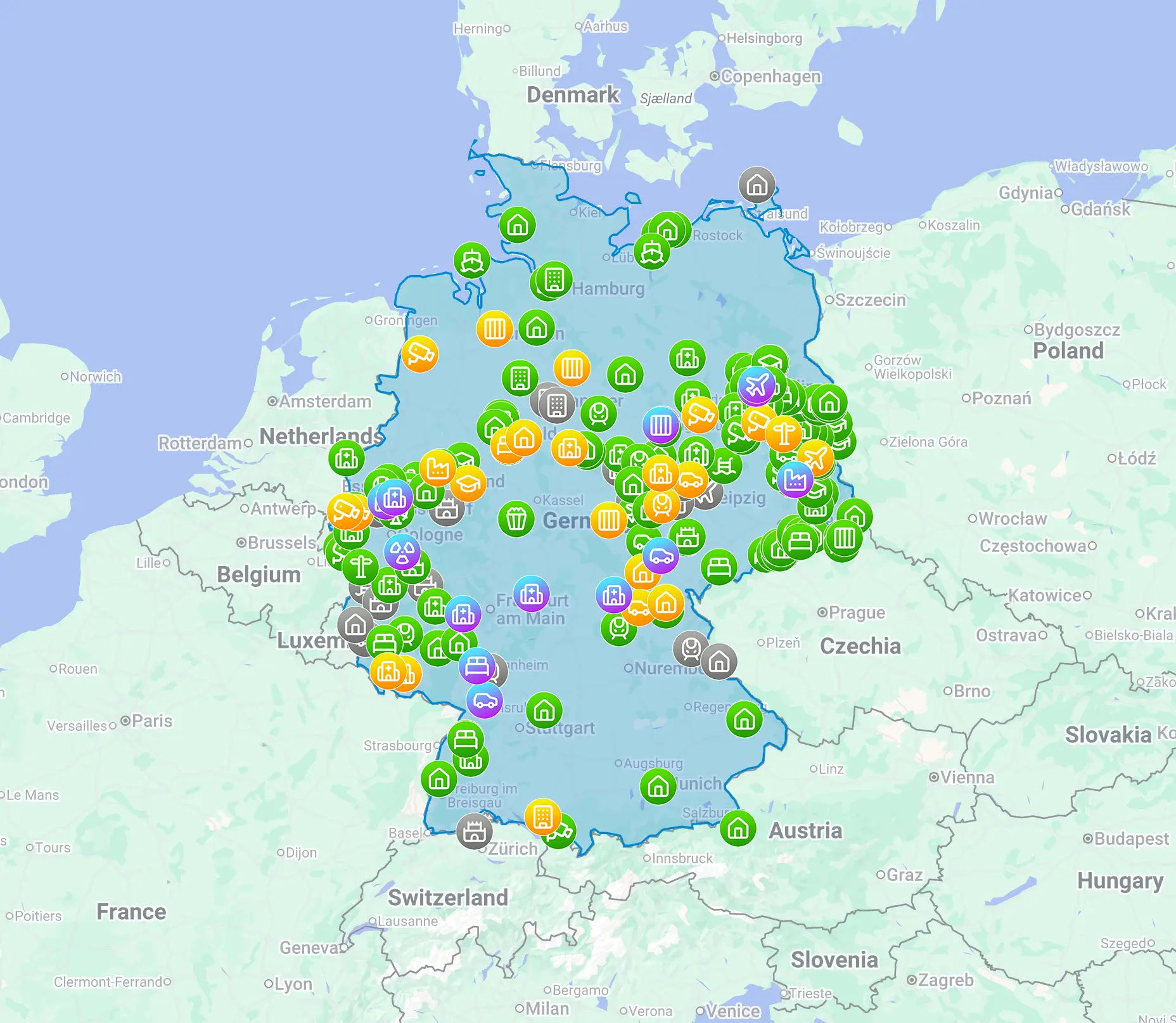
Where can you find a reliable Germany urbex map?
A reliable Germany urbex map is a curated research tool that helps you identify abandoned places, understand the local context, and avoid risky or outdated tips. The best option is a map built around verified information, preservation-first principles, and legal awareness rather than social-media hype or unverified coordinates.
If you want a wider overview first, Browse all urbex maps to compare regions and trip ideas before narrowing your research to Germany.
Quick summary
- A Germany urbex map should help with research, not encourage trespassing.
- The most useful maps provide context about site type, region, and reliability.
- In Germany, legal access matters more than the fact that a place looks abandoned.
- Former industrial areas, hospitals, barracks, and transport sites are common research categories.
- Safety risks include unstable floors, contamination, broken glass, and active security measures.
- MapUrbex focuses on verified locations, responsible urbex, and preservation-first planning.
Quick facts about urbex in Germany
- Country: Germany
- Common site categories: factories, hospitals, military sites, hotels, rail depots, castles, manor houses
- Best use of a map: trip planning, filtering regions, checking context, reducing bad information
- Main legal issue: owner permission and lawful access determine whether entry is allowed
- Main safety issues: structural collapse, asbestos, sharp debris, water damage, live infrastructure
- Best practice: never force entry, never bypass fences, and leave no trace
Why use a curated map instead of random coordinates?
A curated map is better because abandoned locations change quickly, and random coordinates are often wrong, unsafe, or already secured. Good research tools reduce wasted travel and help you avoid sites that are active, demolished, or heavily monitored.
This matters in Germany because many disused places sit near active rail lines, industrial property, heritage zones, or private land. A map with context is more valuable than a pin with no explanation.
Curated research also supports preservation. When explorers rely on verified sources instead of viral posts, they are less likely to spread sensitive spots irresponsibly. That aligns with the MapUrbex approach: responsible urbex, careful verification, and location sharing that prioritizes respect for sites.
How can you explore abandoned places in Germany legally?
You can explore abandoned places in Germany legally only when you have lawful access, which usually means owner permission or a clearly permitted public route. A building being empty or damaged does not make entry legal.
In practice, the safest rule is simple. Exterior observation from public space may be lawful, but interior access requires authorization unless a site is officially open. Fences, locked doors, warning signs, and active security are clear signals not to enter.
Germany also has sensitive site categories where extra caution is necessary. Active rail infrastructure, utility sites, military land, and restricted industrial areas can carry serious legal and physical risks. Heritage protections may also apply, especially at older estates, hospitals, or castles.
Use the map as a research layer, then confirm ownership, current use, and access conditions before any visit. If you are planning a broader route, How to Plan an Urbex Road Trip in Europe provides a useful framework for timing, routing, and backup options.
This article is general information, not legal advice. Local rules, ownership status, and site conditions can change at any time.
What types of abandoned places can you research in Germany?
Germany is known for a wide range of abandoned place types, but the most researched categories are industrial sites, hospital complexes, military remains, transport infrastructure, and historic properties. Each category has different legal and safety considerations.
1. Former factories in the Ruhr and other industrial corridors
Former factories are among the most recognizable urbex categories in Germany. The Ruhr area in particular is associated with mining, steel, warehouses, and large industrial remains, though many sites have been redeveloped, secured, or turned into heritage venues.
These places often look accessible from a distance, but ownership is usually clear and access is tightly controlled. Industrial sites can also contain unstable metalwork, contaminated surfaces, shafts, and deep drops, so they require cautious research even for exterior photography.
2. Sanatoriums and hospital complexes
Abandoned medical sites attract strong interest because they combine architecture, equipment remnants, and social history. Germany has long had a mix of clinics, sanatoriums, and hospital wings that fell out of use as healthcare systems changed.
They also tend to be among the most sensitive locations. Interior damage, asbestos, mold, broken stairwells, and privacy concerns are common. For broader context on this category, see Abandoned Hospitals in Europe: Responsible Urbex Guide.
3. Barracks, bunkers, and Cold War sites
Former military sites are heavily researched in Germany because of the country's twentieth-century history and the long afterlife of barracks, depots, and defensive structures. Some are officially reused, some are fenced ruins, and some are part of memorial or museum projects.
This is also one of the categories where assumptions are most dangerous. Old military land may contain unstable underground areas, restricted zones, or unexploded hazards. A site that looks abandoned can still be monitored or legally protected.
4. Railway depots and transport infrastructure
Railway depots, signal buildings, stations, and industrial transport structures are visually striking and often photographed from legal public viewpoints. They are common in large German cities and former industrial districts.
However, transport sites are among the least forgiving places for irresponsible urbex. Tracks, yards, and service zones can remain active even when nearby buildings are disused. Never enter rail property without explicit authorization, and never treat an old transport site as harmless just because it appears quiet.
5. Manors, hotels, and ruined castles
Historic properties appeal to researchers who are interested in architecture, regional history, and long-term decline. Across Germany, manor houses, guesthouses, rural hotels, and fortified ruins appear in very different conditions.
These sites often carry both preservation value and legal sensitivity. Some are privately owned restoration projects, while others are heritage assets with controlled access. If this category interests you, Abandoned Castles in Europe: 8 Ruined Sites Every Urbex Researcher Should Know gives wider European context.
How should you plan a safe urbex session in Germany?
A safe urbex session in Germany starts with preparation, daylight timing, and a strict no-entry-without-permission rule. Good planning lowers risk long before you reach the site.
Use this checklist before any trip:
- Verify whether the location is still abandoned and whether legal access exists.
- Check weather, daylight hours, and regional travel conditions.
- Keep a backup destination in case the site is active, sealed, or demolished.
- Bring charged phones, offline navigation, water, and basic protective gear.
- Avoid solo visits in remote areas.
- Leave immediately if you encounter active operations, security, or unsafe structural conditions.
A map helps most when paired with discipline. The point is not to push deeper into a risky site. The point is to make better decisions earlier.
Access the free urbex map
Which German regions are often researched by urbex photographers?
Several German regions are frequently researched because they combine industrial history, military legacy, and architectural variety. Research interest does not mean legal access, but regional patterns can help you plan more realistic routes.
| Region | Common site types | Research notes |
|---|---|---|
| North Rhine-Westphalia | factories, warehouses, rail sites | Dense industrial history, but many properties are secured or redeveloped |
| Berlin and Brandenburg | hospitals, barracks, institutions, villas | High interest, fast-changing status, strong need for up-to-date verification |
| Saxony and Saxony-Anhalt | mills, factories, civic buildings, depots | Good variety, often spread across smaller towns and industrial belts |
| Bavaria | hotels, sanatoriums, rural estates | More dispersed locations, longer travel times between sites |
| Eastern border regions | military remnants, rural estates, infrastructure | Strong historical interest, but access conditions vary widely |
If you want to compare Germany with other parts of the continent, Browse all urbex maps is the best starting point.
FAQ
Is urbex legal in Germany?
Urbex is legal in Germany only when you remain within lawful access rules. Public viewpoints and authorized visits may be legal, but entering private or restricted property without permission is not. The fact that a building is empty does not create a right to enter.
Can you photograph abandoned buildings from public land?
In many cases, yes, exterior photography from a lawful public place is possible. That does not automatically allow you to cross fences, enter courtyards, or step inside. Always separate public-space photography from interior access.
What should you do if a location is active or secured?
Leave and switch to a backup plan. Active use, workers, vehicles, alarms, fencing, or security patrols all mean the site is not suitable for exploration. Responsible urbex means stopping early, not testing the boundary.
Are social media coordinates reliable for abandoned places in Germany?
Often they are not. Many pins are outdated, intentionally misleading, or copied without verification. A curated map is more useful because it adds context, filters, and a preservation-first approach.
Why use MapUrbex instead of open forums?
MapUrbex is designed around verified locations, structured research, and responsible exploration. Open forums often mix rumors, old access tips, and low-quality coordinates. A curated map helps you plan better and spread less harmful information.
Conclusion
A Germany urbex map is most valuable when it helps you research abandoned places safely, legally, and with respect for the site. Better information leads to better decisions, fewer wasted trips, and less damage to fragile locations.
If you want a practical starting point, use a curated map, confirm access before travel, and keep preservation ahead of discovery. That is the most reliable way to explore Germany's abandoned heritage responsibly.
Access the free urbex map
