 MapUrbex
Plan urbex Belgium with this top 30 guide to abandoned factories and hospitals, plus map-based tips for safer, responsible exploration.
Urbex Belgium: Top 30 Abandoned Factories and Hospitals to Explore
Belgium is one of the densest urbex countries in Europe. Its industrial history, compact geography, and large stock of closed institutional buildings make it especially attractive for people looking for abandoned factories and hospitals.
This guide is built for practical research, not hype. It explains which categories dominate the Belgian scene, where they are usually found, and how to prioritize safer, better-documented options with a verified map.
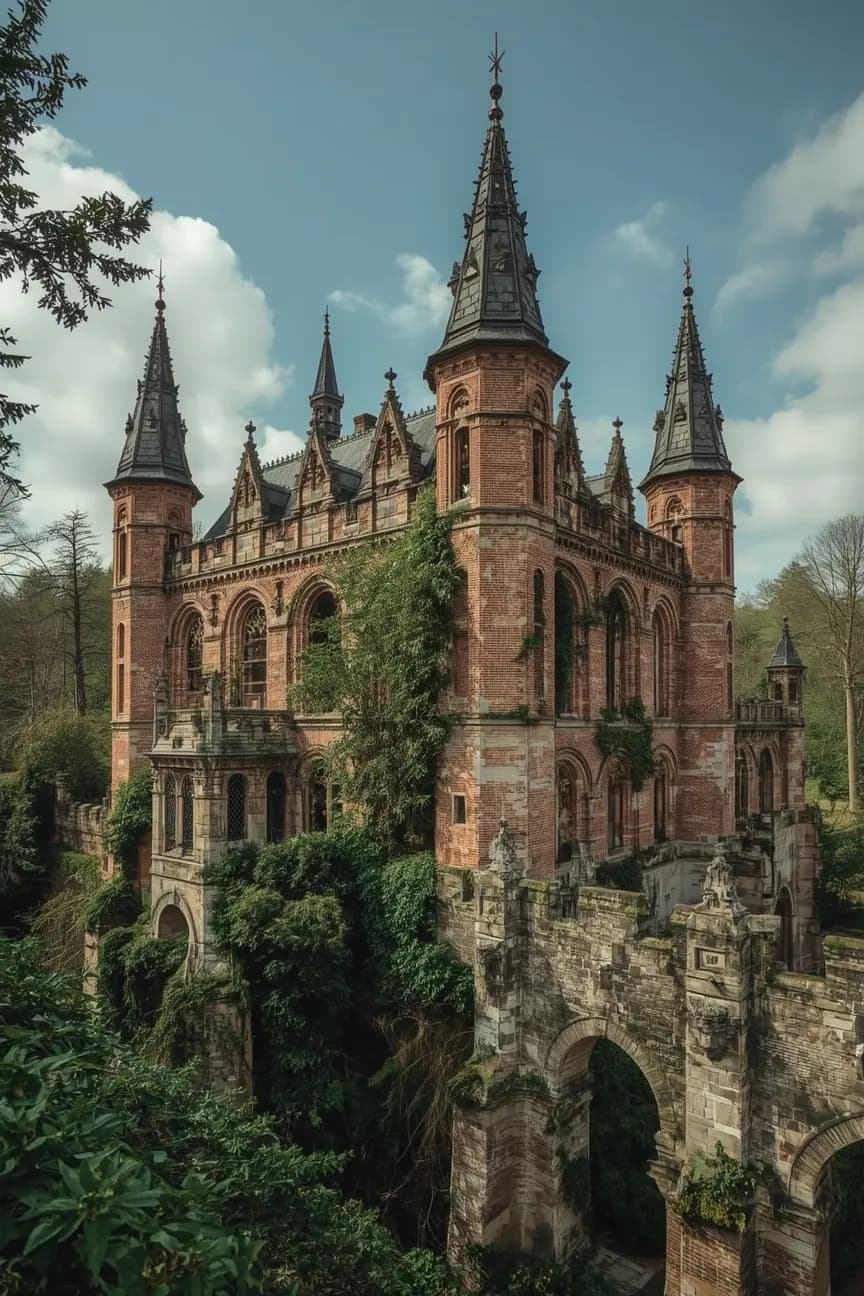
What are the best urbex places in Belgium for abandoned factories and hospitals?
The best urbex places in Belgium are usually former industrial sites in Wallonia and old institutional complexes around major cities such as Brussels, Liège, Charleroi, Mons, and Antwerp. For most explorers, the best choice is not the most dramatic ruin, but the site with verified status, clear hazards, current access context, and preservation value documented in a curated map.
Quick summary
- Belgium is strong for urbex because heavy industry, transport infrastructure, and old medical institutions overlap in a small area.
- The most searched categories are steel plants, textile mills, railway workshops, power sites, sanatoriums, and closed hospitals.
- Wallonia often offers the deepest industrial heritage, while Brussels and Antwerp regions add warehouses, depots, and institutional sites.
- Access conditions can change quickly. A place that was open last month may now be sealed, redeveloped, or actively monitored.
- Responsible urbex in Belgium means no forced entry, no trespassing, no vandalism, and no removal of objects.
- MapUrbex helps filter locations by verification, documentation quality, and preservation-first standards.
Quick facts
- Country scope: Belgium
- Main keyword: urbex Belgium
- Core subtopics: abandoned factories in Belgium, abandoned hospitals in Belgium, Belgium abandoned places
- Best-known belts: Liège, Charleroi, Mons, Brussels outskirts, Antwerp region
- Typical hazards: unstable floors, asbestos, broken glass, dark shafts, unsecured stairs, contamination
- Best planning tool: a curated, updated urbex map rather than recycled social posts
Which 30 factory and hospital categories matter most for urbex Belgium?
For a countrywide search, the strongest Belgian urbex targets are not one single address but a repeatable mix of industrial and medical categories. The table below shows the 30 types that appear most often in Belgian urbex research and map-based planning.
| Rank | Category | Typical area in Belgium | Why explorers search it |
|---|---|---|---|
| 1 | Steel works | Liège and Charleroi belts | Huge halls, furnaces, layered industrial history |
| 2 | Coal processing plants | Wallonia | Strong post-industrial atmosphere and machinery remains |
| 3 | Glass factories | Seraing and older industrial towns | Light, color, broken workshop structures |
| 4 | Textile mills | Former manufacturing districts | Repetitive architecture, spinning rooms, boilers |
| 5 | Paper mills | River valleys and secondary towns | Water-linked ruins and mechanical spaces |
| 6 | Breweries | Urban and semi-rural sites | Tanks, brick facades, cellars, branding traces |
| 7 | Sugar refineries | Agricultural regions | Large technical volumes and conveyor systems |
| 8 | Railway workshops | Near lines and yards | Trainsheds, repair bays, transport history |
| 9 | Power stations | Industrial belts | Turbine rooms, control panels, monumental scale |
| 10 | Cement works | Quarry-linked zones | Silos, conveyors, raw industrial geometry |
| 11 | Ceramics factories | Old craft-industry districts | Kilns, storage rooms, surface textures |
| 12 | Machine shops | Mixed industrial areas | Tooling, benches, smaller but detailed interiors |
| 13 | Foundries | Historic factory towns | Heavy steel frames and casting zones |
| 14 | Port warehouses | Antwerp region | Logistics heritage and wide empty volumes |
| 15 | Cold storage facilities | Market and transport zones | Harsh interiors and unusual preservation |
| 16 | Chemical plants | Restricted industrial corridors | Dense technical detail, but high hazard profile |
| 17 | Food processing plants | City edges and rural industry | Production lines, packaging rooms, tile interiors |
| 18 | Printing works | Older urban districts | Graphic history, offices, presses |
| 19 | Furniture factories | Secondary towns | Joinery halls and repetitive workshop layouts |
| 20 | Brickworks | Clay and canal regions | Kiln structures and industrial landscape value |
| 21 | Quarry buildings | Stone regions | Hybrid industrial and landscape setting |
| 22 | Factory office blocks | Attached to large plants | Archives, admin rooms, time-capsule potential |
| 23 | Rural workshops | Small-town Belgium | Easier scale for shorter explorations |
| 24 | Military-linked production sites | Scattered legacy areas | Rare documentation and complex legal context |
| 25 | Sanatoriums | Forested and elevated zones | Medical history, pavilions, strong atmosphere |
| 26 | General hospitals | Larger cities and suburbs | Wards, theaters, long corridors |
| 27 | Maternity hospitals | Urban centers | Human traces and changing medical layouts |
| 28 | Psychiatric hospitals | Older institutional campuses | Sensitive heritage, ethical photography concerns |
| 29 | Care home complexes | Outskirts and small towns | Mixed residential and medical spaces |
| 30 | Medical training campuses | Near university cities | Classrooms, labs, institutional layers |
Why is Belgium one of the best countries in Europe for urbex?
Belgium stands out because its industrial and institutional density is unusually high for its size. In a relatively short driving distance, explorers can move from old mining infrastructure to rail workshops, breweries, depots, sanatoriums, and hospital campuses.
Three factors explain that concentration.
- Industrial depth: Belgium industrialized early and left behind steel, glass, coal, rail, and manufacturing infrastructure.
- Compact geography: Sites across Wallonia, Brussels, and Flanders are closer together than in many larger countries.
- Continuous turnover: Redevelopment, sealing, demolition, and rediscovery happen fast, so an updated map has real value.
If you want a broader overview, start with Browse all urbex maps and then compare Belgium-focused research with Belgium Urbex Map: Best Abandoned Places and Responsible Exploration Guide.
Where are the main urbex zones in Belgium?
The main urbex zones in Belgium are the Walloon industrial corridor, the Brussels metropolitan fringe, and the Antwerp logistics area. Each zone produces a different mix of abandoned factories, hospitals, warehouses, and institutional buildings.
Wallonia
Wallonia usually delivers the strongest industrial atmosphere. Around Liège, Charleroi, and Mons, explorers often prioritize steel infrastructure, workshops, mining-related facilities, and older hospital estates.
Brussels and its outskirts
The Brussels area is more mixed. Expect depots, institutional buildings, administrative complexes, smaller factories, and some medical sites on the urban edge.
Antwerp region
The Antwerp region is best known for port-linked spaces, warehouses, logistics infrastructure, and large industrial shells rather than classic mining heritage.
Secondary towns across Belgium
Smaller towns can be rewarding because they hide compact breweries, mills, brickworks, workshops, and closed care facilities that are easier to document in one visit.
For regional planning, Belgium Urbex Map: 20 Places to Explore Around Brussels, Liège and Antwerp (2026 Guide) gives a useful city-based overview.
How should you choose between abandoned factories and abandoned hospitals in Belgium?
Choose factories if you want scale, machinery, and industrial atmosphere. Choose hospitals if you want institutional layouts, long sightlines, and stronger documentary context. In Belgium, both categories are important, but they create very different risk profiles.
Factories often involve:
- larger footprints
- unstable metal floors
- exposed shafts or roof damage
- complex access routes
Hospitals often involve:
- repetitive corridors and wards
- fragile ceilings and broken stair cores
- privacy and ethics issues
- higher temptation for careless staging, which should be avoided
The best option is the site that is currently documented, structurally understandable, and ethically appropriate to photograph.
What makes a Belgian site worth adding to a verified urbex map?
A Belgian site belongs in a verified urbex map when it is still standing, still identifiable, and still useful for responsible planning. The goal is not to collect rumors. The goal is to document current reality.
MapUrbex evaluates places with practical filters:
- Existence: the structure still exists and matches recent observations
- Category clarity: factory, hospital, depot, workshop, campus, or mixed site
- Status quality: active, sealed, demolished, redeveloped, uncertain, or partially accessible from public viewpoints only
- Hazard profile: contamination, instability, flooding, security, visibility
- Preservation value: historical and photographic relevance without encouraging damage
- Repeatability: whether the location can be researched consistently over time
Important: a photogenic ruin is not automatically a good urbex choice. If ownership is active, access is illegal, or the hazard level is extreme, the right decision is to skip it.
How can you explore urbex Belgium responsibly and legally?
Responsible urbex in Belgium means respecting property law, personal safety, and the site itself. The rule is simple: no trespassing, no forced access, no theft, no vandalism, and no publication of sensitive details that increase damage.
Use this checklist before any trip:
- verify current status instead of relying on old coordinates
- check whether the building is on private land or an active redevelopment plot
- never force doors, fences, windows, or panels
- wear appropriate protection and bring a reliable light source
- avoid solo visits in high-risk industrial structures
- leave medical records, documents, and personal remnants untouched
- turn back if the site shows fire damage, chemical residue, or structural movement
For a broader safety-focused overview, read Belgium Urbex Map: Best Abandoned Places and Responsible Exploration Guide and then use a curated tool rather than random forum drops.
What should photographers know before visiting Belgian industrial ruins and hospital sites?
Photographers should expect fast-changing light, dust, unstable surfaces, and highly uneven rooms. In Belgium, large factory halls can be easier to compose, while hospitals often demand restraint and ethical judgment.
A few practical rules matter:
- work with available light before using artificial lighting
- do not move objects to create fake scenes
- avoid identifiable personal material in medical sites
- watch for loose tiles, glass, wet floors, and hidden basements
- treat every staircase as potentially compromised
- document from safe thresholds if a room looks unstable
The best images usually come from patience, not deeper risk.
FAQ
Is urbex legal in Belgium?
Urbex itself is not a legal permit. In Belgium, the key issue is property access. Entering private or restricted property without permission can be illegal, even if the building is abandoned.
Are abandoned hospitals more dangerous than factories in Belgium?
Not always. Hospitals can look cleaner but still contain fragile floors, ceiling collapse, mold, and hidden shafts. Factories often carry heavier structural and contamination risks. Risk depends on the individual site, not just the category.
Which regions have the most abandoned places in Belgium?
Wallonia is often the strongest zone for heavy industrial ruins. The Brussels fringe and Antwerp region also matter, especially for warehouses, depots, institutional buildings, and mixed urban-industrial sites.
How often do access conditions change?
Very often. Sealing, redevelopment, demolition, and surveillance can change a site in weeks. That is why verified, updated mapping is more reliable than recycled coordinates.
Why use a verified map instead of random coordinates?
A verified map saves time and reduces risk. It helps filter out demolished sites, misleading pins, and outdated rumors while keeping the focus on responsible, preservation-first exploration.
Conclusion
Urbex Belgium is strong because the country compresses industrial heritage, transport infrastructure, and old medical institutions into a relatively small space. That makes it attractive, but it also means conditions change fast and careless exploration causes damage fast.
The best Belgian urbex strategy is simple: prioritize verified information, choose sites with clear context, and explore with preservation first. That is better for safety, better for documentation, and better for the long-term survival of the places themselves.
Access the free urbex map
