 MapUrbex
A practical guide to using AI for urbex research, mapping, and location discovery without ignoring safety, legality, or verified sources.
Urbex and AI: How to Use Artificial Intelligence to Find Hidden Places Responsibly
Urbex and AI can work together, but only if the goal is better research, not reckless exploration. Artificial intelligence is useful for sorting public information, comparing sources, and speeding up location research.
It is not a shortcut to illegal entry. AI cannot tell you whether a place is safe, legal to access, structurally sound, or ethically appropriate to visit.
The best use of AI in urbex is simple: reduce noise, improve repérage, and then verify everything with responsible methods and curated maps.
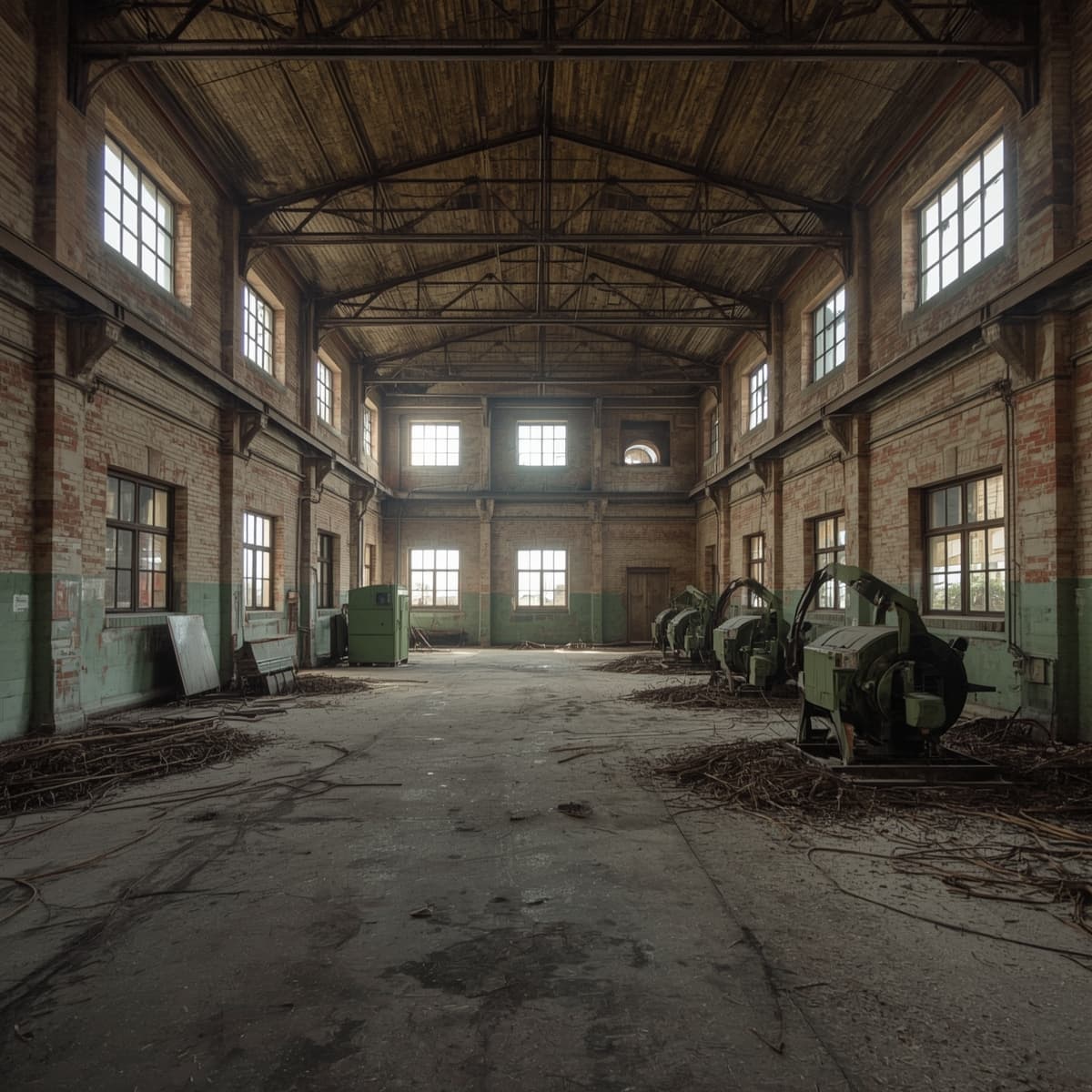
Can AI help you find urbex locations?
Yes, but only as a research assistant. AI can summarize archives, compare maps, suggest search terms, and organize public data faster than manual browsing. It cannot verify access, ownership, safety, or legality on its own. For responsible urbex, AI works best when combined with verified mapping, careful cross-checking, and a strict no-trespassing approach.
Quick summary
- AI is useful for research, filtering, and pattern detection, not for blind location hunting.
- The safest workflow combines AI notes with verified maps and human judgment.
- Public records, old industrial directories, and map history are more reliable than viral social posts.
- Responsible urbex means no forced access, no trespassing, and no damage.
- Verified cartography saves time because it reduces false leads and outdated information.
- Good prompts help AI support urbex repérage, but they never replace legal and safety checks.
Quick facts
- Main use case: turning scattered public data into structured research notes
- Best for: cartographie urbex, keyword expansion, archive summaries, route planning on public areas
- Worst for: proving access rights, current security status, or structural safety
- Key risk: AI can confidently repeat wrong, outdated, or fabricated details
- Best practice: verify every lead with multiple sources and curated location databases
- Useful starting point: Browse all urbex maps
Safety reminder: responsible urbex never means breaking locks, entering active industrial sites, bypassing barriers, or sharing sensitive details that could lead to vandalism.
What can AI actually do for urbex research?
AI is most valuable when it saves time on repetitive research tasks. It can scan large amounts of public information and turn it into a clear shortlist.
In practice, that means AI can help you:
- generate better search terms for specific building types
- summarize local history from public sources
- compare older and newer map descriptions
- identify industrial patterns in street names or land use labels
- organize notes by region, era, or site category
- translate foreign-language clues when researching global locations
That last point matters. Many abandoned places are discussed in local forums, historical associations, planning documents, or archived newspapers. AI can help you understand them faster, especially when working across languages.
However, useful does not mean accurate by default. AI predicts language. It does not inspect buildings. It does not know whether a warehouse was demolished last month. It does not know whether a visible entrance belongs to private property.
| AI task | Helpful input | Main limit |
|---|---|---|
| Keyword generation | Building type, country, era | Can produce generic or repetitive terms |
| Archive summarizing | Public articles, scanned text, reports | May miss context or nuance |
| Urbex mapping support | Place names, industrial zones, map history | Cannot verify current condition |
| Translation | Local forum posts, historical notes | May mistranslate slang or legal terms |
| Research planning | Regions, categories, filters | Does not replace field safety checks |
How should you use AI to find hidden places without crossing legal lines?
You should use AI to identify patterns in public information, not to chase secrecy for its own sake. The responsible goal is to find historically interesting, legally researchable, and verifiable places.
A good workflow looks like this:
- Start with a region and a building type.
- Ask AI for historical keywords linked to that type of site.
- Cross-check those keywords in public archives, map layers, and local history sources.
- Remove sites that are active, protected, clearly occupied, or legally sensitive.
- Compare your shortlist with curated and verified mapping resources.
- Keep only locations that remain credible after manual verification.
This approach is far better than asking a chatbot to reveal secret coordinates. In fact, that kind of prompt usually produces low-quality results. You either get famous spots everyone already knows, or fabricated leads that waste time and create risk.
If you want a broader framework for ethical discovery, read How to Find Abandoned Places Responsibly.
Which prompts work best for urbex repérage and urbex mapping?
The best prompts are narrow, factual, and research-oriented. You get stronger results when you ask AI to assist with a method, not when you ask it to replace one.
Useful prompt styles include:
- historical industry prompts, such as former textile mills in a specific region
- transport prompts, such as disused rail yards near former freight corridors
- land use prompts, such as industrial parcels shown on older maps but missing on current ones
- linguistic prompts, such as local words used for quarries, depots, barracks, or factories
- verification prompts, such as questions that compare two public descriptions of the same place
For example, a strong request would be to ask AI for likely keywords used in 1970s planning documents for closed paper mills in northern Spain. A weak request would be to ask for secret abandoned places nobody knows.
The first supports real cartography urbex work. The second invites guesswork.
Why is verified cartography better than AI guesses?
Verified cartography is better because it is traceable. A curated map links a location to documented research, user verification, and regular updates rather than pure text prediction.
This matters for three reasons:
- Accuracy: many abandoned places change quickly due to demolition, renovation, or increased security.
- Efficiency: verified locations reduce wasted travel and bad leads.
- Responsibility: preservation-first mapping helps avoid harmful oversharing and reckless site traffic.
AI can help you prepare. A verified map helps you decide whether the preparation is still valid.
If you want a comparison of mapping resources, see Best Urbex Maps in the World: Where to Find Verified Locations.
MapUrbex follows this logic: curated maps, verified locations, and responsible exploration before hype.
What are the main risks of using AI for secret location hunting?
The main risks are false confidence, outdated information, and ethical drift. AI can sound precise even when it is wrong.
Common problems include:
- invented place histories
- confusion between abandoned and active sites
- missing ownership changes
- unsafe assumptions about access points
- recycled information from old blog posts or social media threads
- overexposure of fragile sites when secrecy becomes the main objective
There is also a cultural risk. Urbex is strongest when it values documentation, preservation, and context. It gets weaker when it becomes a race for hidden coordinates.
That is why the phrase finding secret places needs a limit. Research is fine. Public history is fine. Careful mapping is fine. Sharing details that encourage trespassing or damage is not.
Can AI improve global urbex research?
Yes, AI is especially helpful for global urbex research because it can connect language, history, and map context across countries. It can surface local terminology that manual searching often misses.
For example, Japanese haikyo research depends on different vocabulary and cultural context than industrial research in France, Germany, or the United States. Translation support and archive summarizing are genuinely useful here.
A good example of context-sensitive exploration is Urbex Tokyo: A Responsible Guide to Haikyo and Abandoned Places in Japan. The lesson is simple: local context matters more than generic AI output.
How can you build a responsible AI workflow for urbex?
A responsible workflow uses AI at the beginning of the process, not at the end. It helps you narrow possibilities, then hands control back to verification.
Use this checklist:
- define a research area and time period
- ask AI for historical and geographic keywords
- review public map layers and archives
- compare findings with verified urbex maps
- reject locations with unclear legality or obvious risk
- document sources instead of relying on one answer
- never treat AI text as proof of access
This method is slower than chasing rumors, but it is far more reliable.
FAQ
Can AI give exact urbex coordinates?
It can generate guesses from public information, but those guesses may be wrong, outdated, or inappropriate to use. Exact coordinates should never be treated as a substitute for legal verification, safety assessment, and responsible research.
Is AI good for finding abandoned places in another country?
Yes, especially for translation, local keyword discovery, and archive summaries. It is much less reliable for current access conditions or ownership status.
Does AI replace urbex maps?
No. AI helps with research, but verified urbex maps remain more dependable for real decision-making because they are curated and checked against actual location data.
What is the safest way to use AI for urbex repérage?
Use it to expand search terms, summarize public records, and compare map history. Then verify every lead manually and avoid any site that would require trespassing or risky entry.
Why should responsible explorers avoid secret-location culture?
Because fragile sites are easily damaged by overexposure. Preservation-first urbex protects places by favoring discretion, context, and verification over viral sharing.
Conclusion
Urbex and AI are compatible when AI stays in its proper role. It is a research assistant, not a guarantee of truth and not a shortcut around ethics.
The best results come from combining artificial intelligence with public-source verification, curated cartography, and a preservation-first mindset. If a lead cannot be confirmed safely and legally, it is not a good lead.
For serious research, start with verified resources instead of guesses.
Access the free urbex map
