 MapUrbex
A responsible guide to 10 abandoned military bases for urbex, with legal context, safety notes, and map-based research tips.
Urbex Abandoned Military Bases: 10 Restricted Sites [Map]
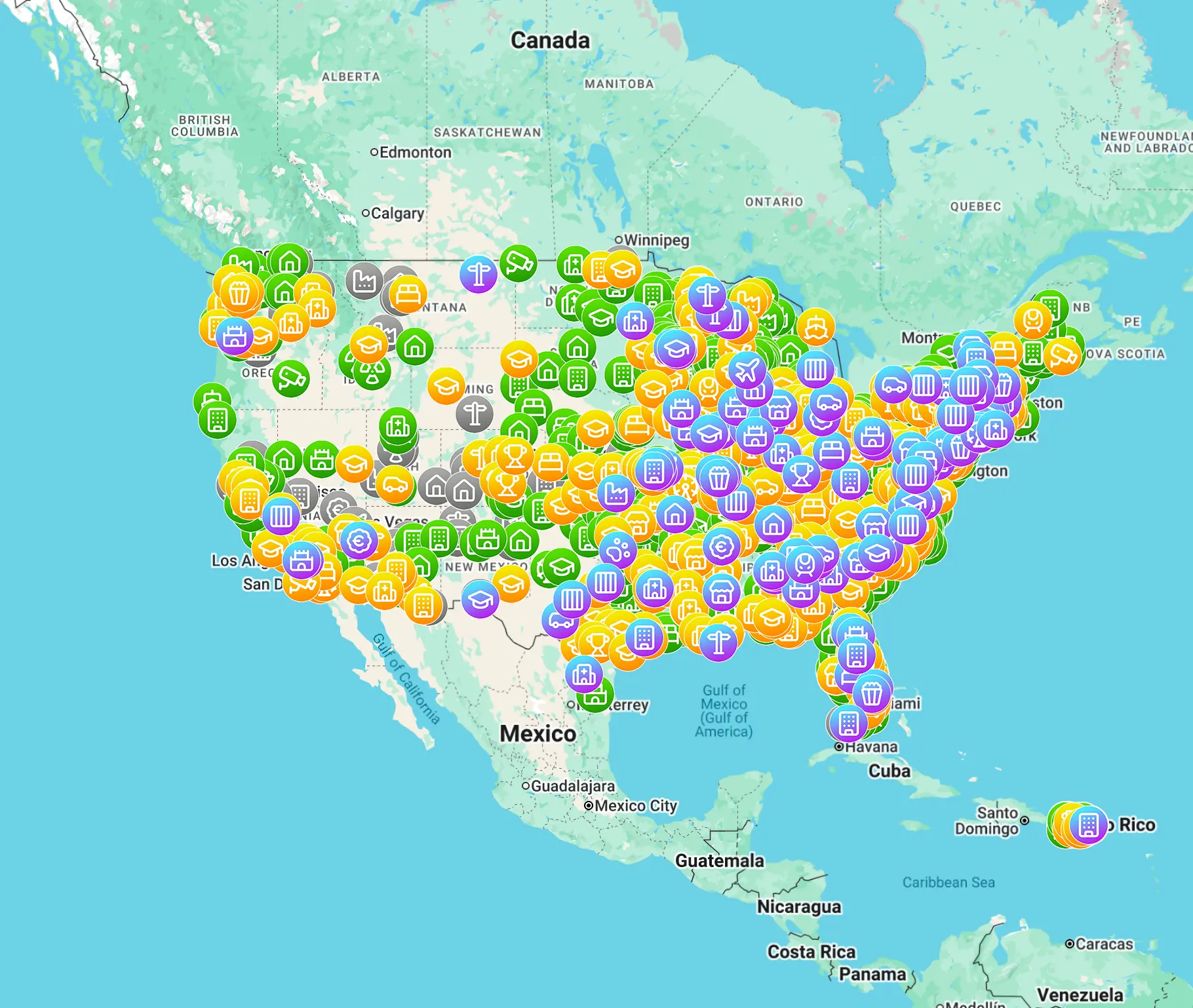
Abandoned military bases hold a special place in urbex. They combine large-scale ruins, Cold War history, and unusually strict access rules.
That also makes them sensitive. Former radar stations, bunkers, airfields, and garrison towns can involve unstable structures, contamination, unexploded ordnance, sealed tunnels, or active surveillance.
This guide reviews 10 well-known abandoned or decommissioned military sites around the world. It focuses on responsible research, legal context, and how a curated urbex map can help you avoid bad decisions.
What are the most notable abandoned military bases for urbex?
The best-known abandoned military sites for urbex include Željava Air Base, Duga or Chernobyl-2, Teufelsberg, Hara Submarine Base, Wünsdorf, RAF Upwood, the Red Sands Sea Forts, Borne Sulinowo, Camp Hero, and Fort Ord. In practice, many are restricted, partially protected, or suitable only for perimeter photography, official tours, or historical research rather than free exploration.
Quick summary
- Abandoned military bases are some of the most visually striking urbex sites, but they are also among the most restricted.
- Many former military sites remain dangerous because of unstable concrete, shafts, contamination, or unexploded remnants.
- A site being decommissioned does not mean it is legal to enter.
- The safest approach is to verify status, boundaries, and public viewpoints before you go.
- Curated tools such as Browse all urbex maps help separate verified information from rumor.
- Responsible urbex means preservation first, no forced entry, and no trespassing.
Quick facts
- Topic: abandoned military sites, radar stations, air bases, bunker complexes, and garrison towns
- Search intent: informational
- Best tool: a curated urbex map with status notes and legal context
- Main risk profile: structural collapse, contamination, security, and restricted land
- Best practice: use official viewpoints, public paths, museums, or guided access when available
Why do abandoned military bases attract urbex interest?
Abandoned military bases attract urbex interest because they combine scale, secrecy, and preserved historical layers. A single site can include hangars, tunnels, command rooms, barracks, radar structures, and perimeter infrastructure.
They also tell a precise story about defense technology and geopolitics. Cold War listening stations, submarine tunnels, and dispersed airfields often show how military planning shaped entire landscapes.
The problem is that visual appeal can hide serious risk. Military ruins are more likely than ordinary factories to contain fenced sectors, hidden drops, sealed chambers, exposed rebar, or legally protected areas.
Safety note: Never cross fences, defeat locks, enter bunkers blindly, or assume that a quiet site is safe.
Which 10 abandoned military sites stand out worldwide?
The list below highlights well-known sites often discussed in the urbex community. It is not a list of places to enter freely. It is a reference list for historical research, legal viewpoints, and responsible trip planning.
| Site | Country or region | Type | Current reality | Why it stands out |
|---|---|---|---|---|
| Željava Air Base | Croatia / Bosnia and Herzegovina | Underground air base | Conditions vary and hazards remain | Massive mountain hangar complex |
| Duga / Chernobyl-2 | Ukraine | Over-the-horizon radar site | Official-zone rules only | One of the most iconic Soviet military ruins |
| Teufelsberg | Germany | Former listening station | Managed access in parts | Radomes and Cold War intelligence history |
| Hara Submarine Base | Albania | Submarine tunnel base | Access conditions vary locally | Dramatic naval tunnel setting |
| Wünsdorf | Germany | Former Soviet command town | Parts documented through history access | Large military urban landscape |
| RAF Upwood | United Kingdom | Former air force station | Private or restricted conditions may change | Classic derelict RAF atmosphere |
| Red Sands Sea Forts | United Kingdom | Offshore anti-aircraft forts | No casual landing | Extremely photogenic marine military structures |
| Borne Sulinowo | Poland | Former garrison town | Town is accessible, specific ruins vary | Soviet military ghost-town legacy |
| Camp Hero | United States | Coastal defense and radar site | Public park with protected rules | Military history plus legal viewpoints |
| Fort Ord | United States | Former army base | Mixed public and restricted remnants | Large-scale decommissioned military landscape |
-
Željava Air Base — This former Yugoslav air base is one of the most cited military ruins in Europe. Its underground aircraft shelters are legendary, but the wider area has long required caution because border, structural, and ground hazards can vary.
-
Duga / Chernobyl-2 — The giant Soviet radar near Chernobyl is famous for its scale and silhouette. It is best understood as a controlled historical zone, not a casual urbex stop. Any visit depends on official rules.
-
Teufelsberg — Built on an artificial hill in Berlin, this former US listening station is one of the rare military ruins that has seen managed public access. That makes it important for people who want history and strong visuals without normal trespass logic.
-
Hara Submarine Base — This Albanian naval site is known for its tunnel opening directly to the sea. It is visually powerful, but conditions, permissions, and safety realities are not something to guess on arrival.
-
Wünsdorf — Often described as a former Soviet military town, Wünsdorf contains layers of command infrastructure, housing, and bunkers. It is a good example of why military urbex often overlaps with guided history rather than free-roam exploration.
-
RAF Upwood — A classic British example, RAF Upwood is regularly mentioned in discussions of abandoned air force sites. Ownership and conditions change over time, so old reports are not a reliable substitute for current verification.
-
Red Sands Sea Forts — These offshore forts are not a normal walk-in location. They matter in military urbex because they show how coastal defense architecture can become both iconic and highly inaccessible.
-
Borne Sulinowo — This Polish former garrison town is interesting because the military footprint extends beyond one fenced compound. It shows how decommissioned defense sites can shape an entire settlement.
-
Camp Hero — Known for its radar history and coastal setting, Camp Hero shows the difference between a decommissioned military site and an abandoned free-for-all. Public access exists, but rules and protected areas still matter.
-
Fort Ord — Fort Ord is useful as a case study because it mixes historical remains with public land management. For responsible explorers, that means checking exactly which zones are open, closed, protected, or environmentally sensitive.
How can you use an urbex map for military sites responsibly?
A good urbex map helps by answering the questions that matter before you travel: Is the site verified, what is its current status, where are the legal boundaries, and are there public viewpoints or official access options nearby?
That is why curated research matters more than rumor. Start with Access the free urbex map if you want an overview, then compare status notes with broader resources such as Best Urbex Maps in the World: Where to Find Verified Locations and How to Find Abandoned Places Responsibly.
For military-related locations, the most useful map filters are usually:
- current access status
- whether the site is active, decommissioned, or partly reused
- distance from public roads or official viewpoints
- ownership clues and local restrictions
- environmental or structural hazard notes
A reliable map does not promise easy entry. It reduces uncertainty and helps you plan a lawful, lower-risk visit or decide not to go.
What legal and safety issues matter most at former military sites?
The main legal and safety issue is simple: a former military site can be abandoned physically while still being restricted legally. That distinction matters more here than at almost any other urbex category.
Key issues include:
- Trespassing law: fencing, signs, patrols, and private ownership still apply.
- Protected land: some sites are heritage assets, museums, reserves, or memorial spaces.
- Unexploded ordnance: former training grounds and defense sites may retain dangerous remnants.
- Structural instability: tunnels, shafts, roofs, and corroded platforms fail without warning.
- Contamination: asbestos, fuel residues, mold, and industrial chemicals are common.
- Navigation risk: military sites can be large, repetitive, and easy to misread in low light.
For that reason, the responsible default is not entry. It is research, legal observation points, daylight assessment, and preservation-first behavior.
FAQ
Are abandoned military bases legal to visit for urbex?
Sometimes, but often not. Some are public parks, museums, or guided sites, while others remain fenced, private, or restricted. Decommissioned does not mean open access.
Why are former military sites more dangerous than other abandoned places?
They often combine ordinary ruin risks with military-specific hazards such as tunnels, blast doors, deep shafts, contaminated ground, or unexploded remnants.
Can an urbex map tell me whether a military site is safe?
A map can improve your research, but it cannot guarantee safety. It can show status clues, public approaches, and verification notes. Final responsibility still depends on current local conditions.
What should you never do at a military ruin?
Never force entry, cross active barriers, handle suspicious objects, enter sealed underground spaces, or publish advice that encourages trespassing or damage.
Are guided visits better than free exploration at military sites?
In many cases, yes. Guided access is often the best balance between documentation, legality, and safety, especially at radar stations, bunkers, or preserved Cold War complexes.
Conclusion
Urbex abandoned military bases are compelling because they concentrate history, architecture, and secrecy in one place. They are also one of the clearest examples of why responsible urbex matters.
If you treat these sites as research subjects first and exploration targets second, you make better decisions. Verify the location, respect restrictions, use legal viewpoints, and leave every place exactly as you found it.
Access the free urbex map
