 MapUrbex
Use a Switzerland urbex map to find abandoned places more safely, understand legal limits, and plan responsible exploration with verified locations.
Switzerland Urbex Map: Find Abandoned Places Safely and Legally
Switzerland has a dense mix of abandoned hotels, industrial buildings, rural properties, and former infrastructure. That variety makes the country attractive for urbex, but it also makes planning harder.
A Switzerland urbex map helps you sort real locations from outdated pins, reduce unnecessary travel, and focus on places that fit a responsible approach. In Switzerland, that matters because access rules, terrain, and local sensitivity can change quickly.
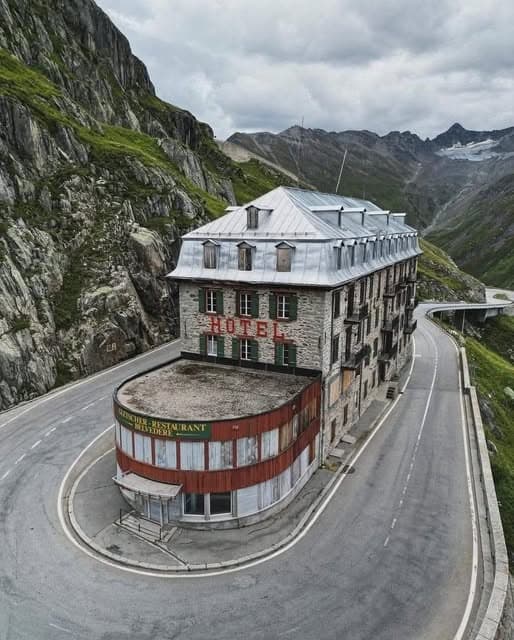
What is the best way to use a Switzerland urbex map?
The best way to use a Switzerland urbex map is to rely on verified locations, check access rules before every visit, and filter sites by risk, travel time, and current condition. A good map does not just show abandoned places in Switzerland. It helps you avoid false leads, reduce legal risk, and plan safer, preservation-first exploration.
Quick summary
- A curated Switzerland urbex map saves time by reducing fake, duplicated, or outdated spots.
- The most common abandoned places in Switzerland include hotels, factories, care facilities, transport structures, and rural buildings.
- Legal urbex in Switzerland starts with access status, not with the visual condition of a building.
- Safe urbex in Switzerland depends on weather, terrain, structural stability, and respectful behavior.
- Route planning matters because Swiss travel times can be long even across short map distances.
- Verified maps are more useful than random public pin lists when you want consistency and context.
Access the free urbex map
Quick facts
- Country: Switzerland
- Primary use: Planning abandoned place visits with better legal and safety awareness
- Common site types: Hotels, factories, clinics, military remnants, stations, rural houses
- Main challenge: An abandoned building is not automatically legal to enter
- Main safety factor: Terrain, weather, and remote access can be as important as the building itself
- Best research companion: A curated database such as Browse all urbex maps
Why do explorers need a curated Switzerland urbex map?
Explorers need a curated Switzerland urbex map because Switzerland is compact on paper but highly fragmented in practice. Distances, elevation, ownership patterns, and local visibility all affect whether a trip is realistic.
Many public lists of abandoned places in Switzerland contain dead locations, incorrect coordinates, or places that have already been redeveloped. A curated map adds context. It helps distinguish a former hotel from a sealed industrial site, and a roadside ruin from a remote alpine structure.
This is also why regional comparison matters. If you want a broader overview beyond one country, Browse all urbex maps gives a better framework than isolated pins. If you want city-level context, Top 10 Swiss Cities With the Most Abandoned Places is a useful complement.
Which abandoned places in Switzerland appear most often on urbex maps?
The abandoned places in Switzerland that appear most often on urbex maps are former hotels, industrial buildings, health facilities, transport infrastructure, and small rural properties. These categories recur because they reflect Swiss economic change, tourism decline in some areas, and relocation of services.
1. Abandoned alpine hotels and resorts
Former mountain hotels are among the most searched locations on a Switzerland urbex map. They attract attention because they combine architecture, tourism history, and dramatic settings.
They also require caution. Remote access, weather shifts, and unstable outbuildings can make a scenic site more dangerous than an urban ruin. In many cases, these places are still privately owned even when they look inactive.
2. Former factories and workshops
Industrial sites are common in and around older manufacturing zones. They often include workshops, warehouses, depots, and mixed-use buildings that were gradually vacated.
These locations can be photographically interesting because machinery, signage, and room layout sometimes survive longer than in residential buildings. They can also contain serious hazards such as broken flooring, chemical residue, and partially secured perimeters.
3. Sanatoriums and care facilities
Former clinics, rest homes, and care institutions appear regularly on lists of abandoned places in Switzerland. They are often sought for their scale, medical history, and relatively intact interiors.
However, they raise stronger ethical questions. Medical or personal remnants should never be moved, shared irresponsibly, or used for sensational content. Preservation-first urbex means observation, not disturbance.
4. Military and transport structures
Switzerland has many former bunkers, depots, tunnels, and transport-related structures. Some appear abandoned but remain regulated, sealed, monitored, or repurposed.
That is why a map alone is not enough. Military and infrastructure sites often have the highest legal sensitivity. Even when a place seems empty, access can still be restricted for safety or security reasons.
5. Rural houses and small local businesses
Smaller rural sites are easy to underestimate. A disused inn, shop, or farmhouse may look simple, but these places often change status quickly through sale, inheritance, or renovation.
They are also the locations where local visibility matters most. In a small village, respectful behavior, parking discipline, and avoiding nuisance are essential. A responsible urbex map helps reduce random circulation in sensitive areas.
How can you check whether urbex is legal in Switzerland?
Legal urbex in Switzerland starts with permission, ownership awareness, and visible access conditions. If a place is abandoned, that does not mean it is open to entry.
You should check whether the site is on private land, fenced, actively secured, or marked with notices. Gates, warning signs, surveillance, or obvious barriers should be treated as a stop signal. Forced access, bypassing locks, or ignoring posted restrictions is not responsible urbex.
For a more detailed overview of the legal framework, see Urbex en Suisse - Lois, amendes 2025. That article is useful if you want more detail on fines, legal limits, and why Swiss enforcement can vary by context.
A practical rule is simple: if you cannot confirm lawful access, do not enter. MapUrbex is built around verified locations and preservation-first research, not risky guesswork.
What makes urbex in Switzerland safer?
Safe urbex in Switzerland depends on preparation before arrival, not improvisation at the site. The highest risks often come from unstable structures, mountain conditions, isolation, and poor access decisions.
A good safety process is easier to follow when the map gives more than a point on a screen. You need to evaluate approach roads, walking time, weather exposure, and the current state of the building.
| Check before visiting | Why it matters in Switzerland | Practical action |
|---|---|---|
| Ownership and access status | Many abandoned sites are still private or monitored | Confirm status and do not enter without lawful access |
| Terrain and weather | Alpine roads, snow, fog, and ice change risk quickly | Check forecast, daylight, and route conditions |
| Structural stability | Old hotels, barns, and factories may have weak floors or roofs | Stay out of visibly unsafe buildings |
| Remoteness | Mobile signal and nearby help may be limited | Avoid isolated visits and tell someone your plan |
| Local sensitivity | Small communities notice unusual activity quickly | Park discreetly, stay respectful, and leave no trace |
| Preservation ethics | Damage increases closures and enforcement | Do not force entry, move objects, or reveal fragile details carelessly |
A few habits make a major difference. Go in daylight, wear proper footwear, bring a charged phone, and avoid solo visits in remote terrain. If a place feels structurally unsafe, the correct decision is to stop.
Browse all urbex maps
How should you plan a route with a Switzerland urbex map?
You should plan a route with a Switzerland urbex map by grouping locations by region, road access, and risk level rather than by straight-line distance. In Switzerland, a short map distance can still mean a long trip.
Start with broad regional clusters instead of chasing isolated pins. A practical route often combines one primary target with one or two backup options in the same area. That approach reduces wasted travel if a location is sealed, occupied, or no longer viable.
Useful planning steps include:
- Check whether the route crosses mountain roads or seasonal passes.
- Estimate walking time, not just driving time.
- Avoid overloading a day with too many sites.
- Keep one fallback location in a lower-risk area.
- Review local law and etiquette before departure.
If your Switzerland trip is part of a wider itinerary, How to Plan an Urbex Road Trip in Europe can help structure the journey more efficiently.
Where are abandoned places in Switzerland most concentrated?
Abandoned places in Switzerland are most concentrated around former industrial belts, older hospitality zones, transport corridors, and the edges of medium-sized cities. They are rarely distributed evenly.
Industrial concentration tends to create clusters of warehouses, workshops, and service buildings. Tourism regions can produce a different pattern, with former hotels, guesthouses, and related utility buildings. In rural areas, the pattern is smaller and more scattered.
This is one reason a curated map is more useful than a simple abandoned places map made from random submissions. Concentration matters because it affects route efficiency, photography timing, parking choices, and the balance between urban and remote exploration.
For a city-focused view, Top 10 Swiss Cities With the Most Abandoned Places gives a helpful starting point without depending on unreliable public coordinates.
Why is a verified map better than a public coordinate dump?
A verified map is better than a public coordinate dump because it gives context, filtering, and quality control. Raw coordinates tell you where something was. Verified mapping helps you judge whether a place is still relevant, accessible, and worth the trip.
Public dumps often create three problems. First, they spread outdated information. Second, they encourage reckless traffic to fragile sites. Third, they separate the location from the legal and safety context that responsible explorers need.
MapUrbex takes the opposite approach: verified locations, responsible urbex, and preservation-first curation. That model is more useful for research and better for the long-term survival of sites.
FAQ
Is urbex legal in Switzerland if a place is abandoned?
No. An abandoned appearance does not create a right to enter. You still need to consider ownership, barriers, posted notices, and any local restrictions.
Are exact coordinates always a good idea?
No. Exact coordinates can accelerate vandalism, theft, and rapid closure. Responsible mapping balances usefulness with preservation and does not treat every site as public information.
What should I bring for a Swiss urbex day trip?
Bring sturdy footwear, weather-appropriate clothing, water, a charged phone, and a simple light source. Do not rely on improvised gear, and do not bring tools for entry.
When is the best season to use a Switzerland urbex map?
Spring, summer, and early autumn are usually the easiest seasons for planning. Snow, fog, and short daylight hours can make remote Swiss sites far less predictable in winter.
Can I publish photos from abandoned places in Switzerland?
Often yes, but context matters. Avoid sharing sensitive entry details, personal documents, or information that could expose a fragile site to damage.
Conclusion
A Switzerland urbex map is most useful when it does more than display pins. It should help you identify credible abandoned places in Switzerland, understand legal limits, and plan safer routes that respect both sites and local communities.
The strongest approach is simple: use verified information, avoid unlawful access, and put preservation before exposure. That is better for your planning, better for your safety, and better for the future of the locations themselves.
Access the free urbex map
