 MapUrbex
Use a verified Spain urbex map to find abandoned places across the country with better context, safer planning, and responsible exploration.
Spain Urbex Map: Verified Abandoned Places Across Spain
Spain has one of the most varied urbex landscapes in Europe. The country combines abandoned hotels, industrial sites, railway buildings, mining remains, and rural ruins spread across very different regions.
The problem is simple: many online lists of abandoned places in Spain are outdated, copied from other sources, or too vague to plan around. A curated Spain urbex map is more useful because it helps filter noise and focus on verified locations, current context, and responsible exploration.
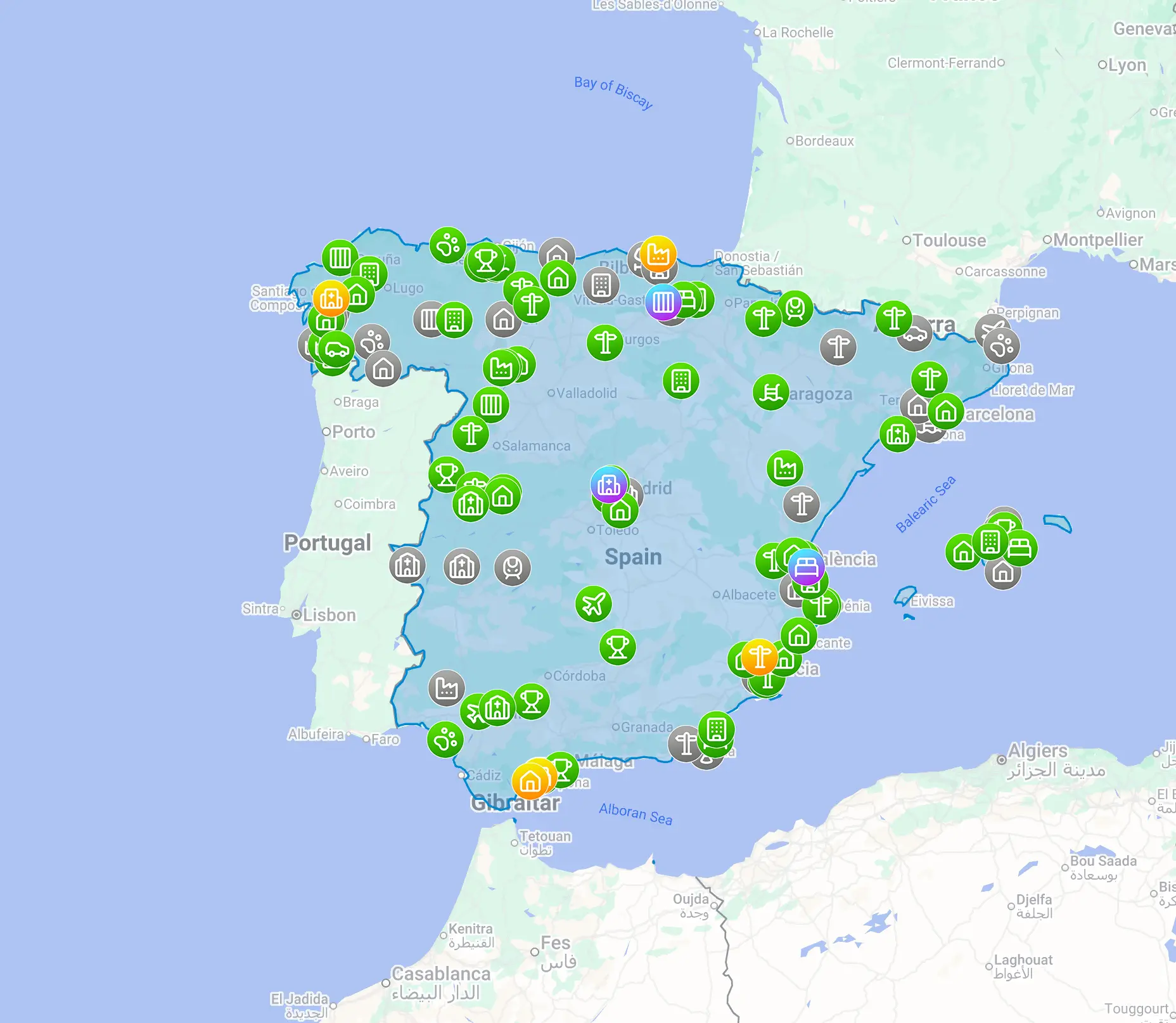
What is the best urbex map for verified abandoned places in Spain?
The best way to find verified abandoned places in Spain is to use a curated urbex map that checks location data, category, and recent status before listing a spot. For travelers and explorers, a Spain urbex map is more reliable than random blog roundups because it is built for planning, filtering, and responsible discovery rather than click-driven lists.
Quick summary
- Spain offers a wide range of abandoned places, from coastal hotels to industrial ruins and depopulated villages.
- A curated Spain urbex map is more dependable than generic abandoned places lists because outdated entries are a common problem.
- Verified urbex spots in Spain are especially useful for road trips that cross several regions.
- MapUrbex focuses on curated maps, preservation-first exploration, and contextual information rather than risky hype.
- The free map is useful for discovering the format, while the country map gives deeper coverage for Spain.
- Responsible urbex in Spain always means respecting property, local rules, closures, and safety limits.
Quick facts
- Country: Spain
- Search intent: transactional guide for people comparing map options
- Best use case: planning trips around verified abandoned places in Spain
- Typical place types: hotels, factories, warehouses, rail infrastructure, mining sites, rural ruins
- Map value: better filtering, clearer context, and fewer duplicate or dead-end leads
- Safety note: an abandoned place is not automatically legal or safe to enter
Why use a Spain urbex map instead of random abandoned places lists?
A Spain urbex map is better than random lists because it helps you identify abandoned places with clearer context and less outdated information. In Spain, status changes quickly: some locations are secured, some are under redevelopment, and some are widely misidentified online.
Many articles about abandoned places in Spain are made for traffic, not for real trip planning. They often repeat the same famous sites, omit practical context, or use vague descriptions such as "near Barcelona" or "somewhere in Andalusia." That is not enough when you are organizing a route across a large country.
A curated map also reduces duplication. Instead of chasing the same overexposed coordinates that appear in copied listicles, you can compare categories, regions, and trip logic in one place. If you want to compare formats first, read Free vs Paid Urbex Map: Which Abandoned Places Map Is Worth It? and then Browse all urbex maps.
Which types of abandoned places can you find across Spain?
Spain contains many kinds of abandoned places, but the main categories are hospitality sites, industrial structures, railway remains, extraction sites, and rural or depopulated settlements. That diversity is one reason an abandoned places map is useful: different categories require different expectations for travel time, visibility, and legal context.
1. Abandoned seaside hotels
Abandoned hotels are among the most searched urbex locations in Spain because they combine architecture, tourism history, and symbolic urban change. Many are found near coastal development zones where projects stalled, ownership changed, or legal disputes froze construction.
One of the best-known cases is Abandoned Hotel El Algarrobico in Spain: History, Scandal, and Urbex Context. It matters not just as a visual landmark, but as an example of why context is essential. Some sites are historically important yet tightly regulated, inaccessible, or legally sensitive.
2. Former factories and warehouses
Factories and warehouses are common across Spain's industrial corridors and former logistics zones. These sites often attract experienced photographers because they preserve machinery layouts, workshop volumes, and traces of local economic history.
They also change status quickly. An industrial ruin that looks abandoned on an old forum post may now be fenced, demolished, or repurposed. A verified map helps separate genuinely relevant locations from dead leads.
3. Railway buildings and stations
Abandoned railway sites in Spain include stations, depots, service buildings, and rail-adjacent infrastructure. These locations are useful for explorers who prefer architectural details and transport history over pure scale.
They also require caution. Rail environments can include active lines nearby, unstable structures, and strict legal boundaries. Responsible urbex means staying away from operational infrastructure and never treating rail land as open access.
4. Mining and extraction sites
Mining landscapes add another major layer to urbex Spain. Depending on the region, you may find remnants tied to metal extraction, stone, coal, or associated worker infrastructure.
These places can be visually striking, but they are also among the most hazardous. Shafts, loose ground, toxic materials, and structural collapse risks are real. A preservation-first approach means observing context, not chasing unnecessary risk.
5. Depopulated villages and rural ruins
Spain is also known for rural abandonment. In some areas, long-term depopulation left behind houses, schools, chapels, and agricultural buildings that now exist as fragmentary landscapes rather than single urban sites.
These locations are often misunderstood online. A village may be partially inhabited, seasonally used, or under heritage protection. A good map helps distinguish between a photogenic ruin and a place that still carries local residential, cultural, or legal sensitivity.
How does MapUrbex verify spots in Spain?
MapUrbex verifies spots in Spain by prioritizing curated location data, place category, and current context instead of publishing every rumor or recycled coordinate. The goal is not to promise unrestricted entry. The goal is to help users identify places that are real, relevant, and worth planning around.
Verification matters because abandoned places in Spain are not static. A hotel can move from abandoned to redevelopment. A factory can be sealed. A rural structure can disappear after collapse or renovation. For that reason, a responsible urbex map should be treated as a planning tool, not a guarantee.
| Feature | Generic abandoned places lists | Curated Spain urbex map |
|---|---|---|
| Location quality | Often vague or copied | Structured for map-based planning |
| Status context | Frequently missing | More emphasis on recent context |
| Category filtering | Limited | Useful for route building |
| Duplicate reduction | Weak | Stronger curation |
| Trip planning value | Low to medium | Higher for country-wide travel |
If you want dedicated coverage, Explore abandoned places in Spain is the most direct country-level option. If you are still comparing countries first, Browse all urbex maps gives a wider overview.
How should you plan an urbex road trip across Spain?
The best way to plan an urbex road trip across Spain is to group locations by region and driving logic, not by social media popularity. Spain is large enough that poor sequencing can waste entire days.
A practical route often starts with a region cluster. You might focus on one arc such as Catalonia and Valencia, a southern route through Andalusia, or a broader interior plan that mixes smaller towns with industrial remains. The right map helps you compare categories before you commit to accommodation, fuel costs, and timing.
It also helps to mix major landmarks with secondary stops. A road trip built around only famous places is more fragile because closures, visibility, or local attention can ruin the schedule. A curated map gives you alternative points so the trip remains useful even when a headline site is not viable.
For route design principles, read How to Plan an Urbex Road Trip in Europe. For country-specific browsing, start with Explore abandoned places in Spain.
Explore abandoned places in Spain
Is a free abandoned places map enough for Spain?
A free abandoned places map can be enough for Spain if you only want to test the format or discover the general type of locations available. It is usually not enough if you want deeper national coverage, better filtering, and more serious trip planning.
The difference is not only quantity. It is also how much time you save by avoiding vague leads and repetitive research. Spain is a good example because regional spread matters: what works for a weekend near one city is different from planning a multi-stop route across the country.
Start with Access the free urbex map if you want a low-commitment way to see how MapUrbex works. Then compare the options in Free vs Paid Urbex Map: Which Abandoned Places Map Is Worth It?.
Access the free urbex map
FAQ
Is urbex legal in Spain?
Urbex legality in Spain depends on the specific place, ownership, and local conditions. A building looking abandoned does not make it legal to enter. Always respect private property, posted restrictions, and any active security or redevelopment signs.
What regions of Spain are best for abandoned places?
Different regions offer different types of sites rather than one single "best" area. Coastal regions are known for abandoned hospitality projects, while interior and industrial areas may offer factories, rail remains, or rural ruins. The right region depends on what type of place you want to document.
Are all abandoned places on a Spain urbex map accessible?
No. A mapped abandoned place is not a promise of access. Some locations are visible from public space only, some are sealed, and some should simply be avoided for legal or safety reasons.
What is the difference between a free map and a paid Spain map?
A free map is useful for discovery and format testing. A paid country map is more useful when you want stronger regional coverage and better planning depth. That matters in Spain because distances between useful spots can be significant.
How often do abandoned places in Spain change status?
They can change at any time. Demolition, renovation, fencing, security measures, and ownership changes are common. That is why verified urbex spots in Spain should still be treated as time-sensitive references rather than permanent facts.
Conclusion
A Spain urbex map is most valuable when it helps you sort real opportunities from outdated noise. In a country as large and varied as Spain, verified locations, category filters, and regional planning matter more than viral lists.
MapUrbex is built for that use case: curated maps, responsible exploration, and preservation-first research. Use the free map to evaluate the format, or go directly to Spain if that is your next destination.
Access the free urbex map
