 MapUrbex
Compare MapUrbex with a generic urbex app to choose the right tool for verified locations, safer planning, and responsible exploration.
MapUrbex or an Urbex App: Which Option Fits Your Needs?
Choosing between MapUrbex and an urbex app is not just a feature comparison. It is a decision about how you want to find locations, assess reliability, and plan visits responsibly.
MapUrbex is built around curated maps, verified locations, and preservation-first exploration. A generic urbex app may offer community content or simple bookmarking, but the quality and consistency often vary.
If your goal is to save time, reduce guesswork, and use a clearer urbex tool, the best option depends on how much you value curation over raw volume.
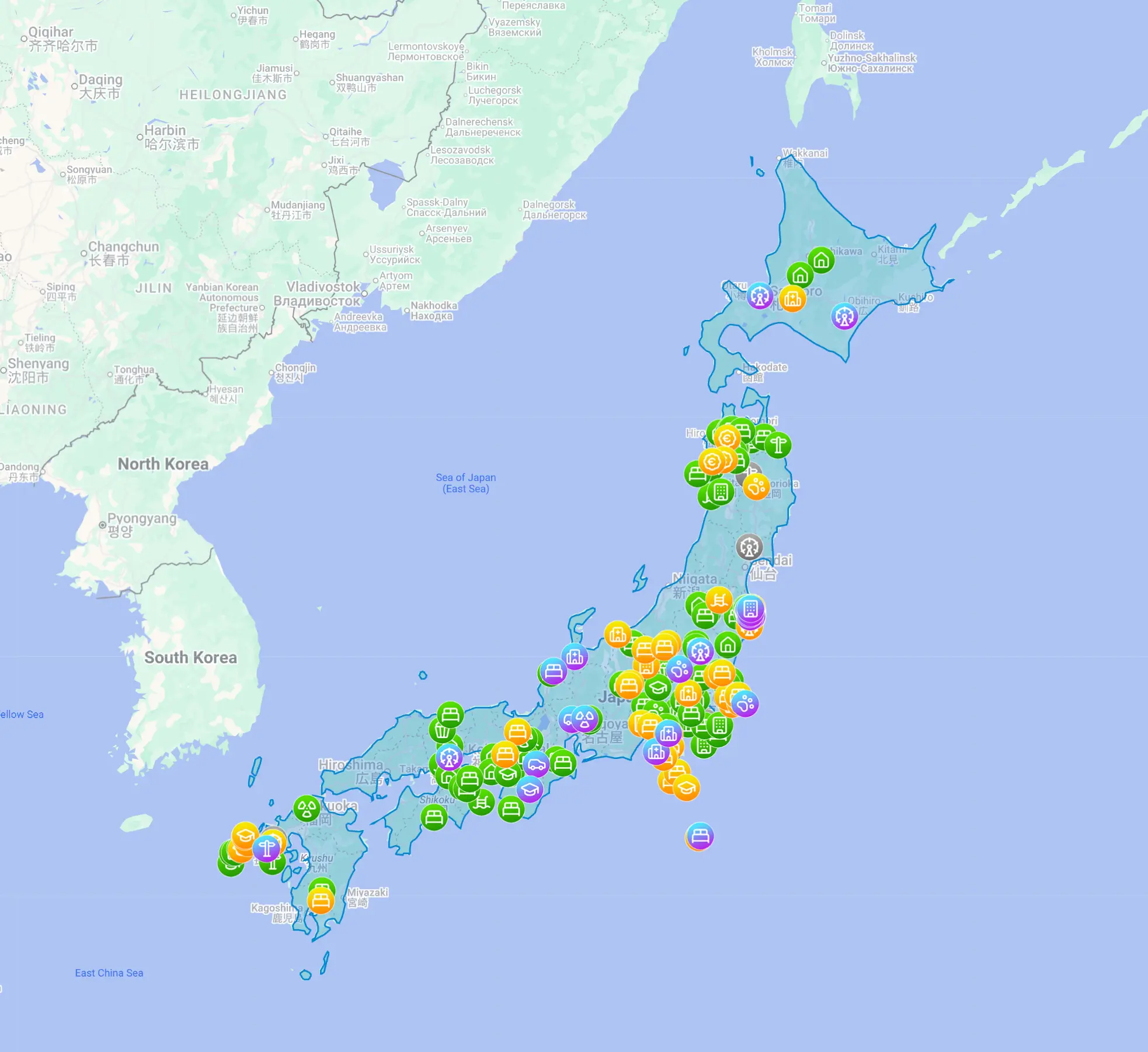
Is MapUrbex or an urbex app better for your needs?
MapUrbex is usually the better choice if you want verified locations, map-first discovery, and a preservation-first workflow. A generic urbex app can be enough if you only need basic bookmarking or community posts. The right option depends on whether you prioritize reliability, curation, and responsible exploration over broad but inconsistent user-generated listings.
Quick summary
- MapUrbex focuses on verified locations and curated urbex maps.
- A generic urbex app often depends more heavily on user-generated data.
- If accuracy matters, MapUrbex is usually the safer choice.
- If you only want casual browsing, a simple app may be enough.
- Responsible urbex requires legal awareness, respect for access rules, and preservation-first behavior.
- You can start with the free option before deciding whether a broader map workflow fits your needs.
Quick facts
| Criterion | MapUrbex | Generic urbex app |
|---|---|---|
| Core format | Curated map experience | App interface with mixed features |
| Location quality | Verified and filtered | Often uneven and community-dependent |
| Best for | Serious planning and reliable discovery | Casual browsing and simple tracking |
| Workflow | Map-first, structured, research-oriented | Feed-first or list-first in many cases |
| Safety approach | Responsible exploration and preservation-first | Varies by platform and moderation |
What is the real difference between MapUrbex and a generic urbex app?
The main difference is that MapUrbex is a curated urbex map, while many urbex apps are general-purpose containers for community submissions, bookmarks, or discussion. That changes the user experience immediately.
With MapUrbex, the map is the product. The value comes from how locations are selected, organized, and presented for practical use. With a generic app, the product is often the app itself, while the location data can be incomplete, outdated, or inconsistent.
In practical terms, that means MapUrbex is usually better for people who want to plan efficiently. You are not only collecting pins. You are using a structured discovery tool designed around usable information.
If you want to see the scope of the platform first, you can Browse all urbex maps.
When does MapUrbex make more sense?
MapUrbex makes more sense when you want a dependable urbex tool instead of a simple app shell. It is especially useful when research time matters.
MapUrbex is often the better fit if you:
- want verified locations rather than unfiltered submissions
- prefer a map interface over a social feed
- travel and need a clear regional overview
- compare multiple areas before choosing a route
- care about preservation-first exploration
- want a more consistent research workflow
This matters even more for international or multi-city planning. A curated urbex map reduces noise and helps you focus on locations that are worth assessing further.
For users who want an easy starting point, you can also Access the free urbex map.
When can a generic urbex app be enough?
A generic urbex app can be enough when your needs are simple and you accept lower consistency. Not every explorer needs a curated system.
An app may be sufficient if you mainly want to:
- save a few spots for later
- read casual community notes
- track personal favorites
- browse without a clear trip plan
- test the hobby before using a more specialized urbex map
The trade-off is predictability. Generic apps can be useful, but they often require more cross-checking. If a listing is old, vague, or inaccurate, the time cost shifts back to you.
How do verified locations change the experience?
Verified locations improve the experience because they reduce uncertainty. In urbex, uncertainty is not just inconvenient. It can create wasted trips, false expectations, or risky decision-making.
A verified location does not mean guaranteed access, and it never overrides local law or private property rules. It means the information has been reviewed with more care than an open, unfiltered listing.
That distinction matters. A good urbex map should help you research better, not push you toward reckless behavior. MapUrbex aligns with that principle by emphasizing curated data and responsible use.
How should you compare an urbex map or tool before paying?
You should compare an urbex map or tool by looking at data quality, workflow clarity, geographic coverage, and safety culture. Features alone are not enough.
Use this checklist before choosing:
- Check whether locations are verified or mostly user-submitted.
- Look at how clearly the map organizes regions and categories.
- Assess whether the tool supports trip planning, not only casual browsing.
- Review whether the platform promotes responsible exploration.
- Compare how much time the tool saves during research.
- Start with a free entry point whenever possible.
A strong comparison is not about counting buttons. It is about asking whether the tool helps you make better decisions with less uncertainty.
What role does a curated urbex map play in trip planning?
A curated urbex map plays a practical role in trip planning because it turns scattered discovery into a geographic workflow. That is different from scrolling through isolated posts.
When you plan with a map-first tool, you can compare clusters, distances, and route logic more easily. This is especially helpful when you want to organize a day trip, a weekend circuit, or a broader regional search.
That map logic also improves filtering. Instead of reacting to whatever post appears next, you can search with purpose and evaluate options side by side.
If you want more research methods, the guides How to Find Abandoned Places Near You and How to Find Abandoned Places in France explain broader discovery workflows.
What about safety, legality, and preservation?
Safety, legality, and preservation should be part of the comparison from the start. The best urbex tool is not the one that encourages the most impulsive behavior. It is the one that supports informed, responsible decisions.
Always follow local laws, property rules, and posted restrictions. Never force entry, bypass locks, damage structures, or treat abandoned places as risk-free. Conditions can change quickly, and even a verified location still requires judgment.
Preservation-first urbex also means limiting harm to sites and information ecosystems. Sharing responsibly matters. A good platform should reduce chaos, not amplify it.
FAQ
What is the main advantage of MapUrbex?
The main advantage of MapUrbex is that it centers the experience on curated maps and verified locations. That usually makes research faster and more reliable than using a generic urbex app with uneven community data.
Is a free urbex app always the cheaper option?
Not necessarily. A free app can cost more in time if you spend hours checking outdated or vague listings. The real comparison is not only price. It is time, confidence, and planning quality.
Can MapUrbex guarantee access to a location?
No. No responsible platform should guarantee access. Verification helps with research quality, but entry permissions, legal restrictions, ownership, and on-site conditions always come first.
Who should choose MapUrbex instead of a generic app?
People who want structured planning, verified locations, and a curated urbex map usually benefit most from MapUrbex. It is especially relevant for travelers, regional explorers, and users who want a clearer research workflow.
Is an urbex map better than a social feed for discovery?
For practical trip planning, yes in many cases. A map gives geographic context and helps compare options directly. A social feed may inspire ideas, but it is usually less efficient for structured planning.
Conclusion
If your priority is reliable discovery, efficient planning, and responsible exploration, MapUrbex is usually the stronger option than a generic urbex app. If your needs are lighter and you only want occasional browsing, a simple app may still be enough.
The key difference is not just format. It is whether you want a curated urbex map designed to support better decisions.
Access the free urbex map
