 MapUrbex
Learn how to tell if a building is abandoned using visible signs, public checks, and legal caution. A practical guide for responsible urbex.
How to Tell If a Building Is Abandoned: Signs, Checks, and Legal Red Flags
If you want to know how to tell if a building is abandoned, the short answer is simple: you should never rely on one clue alone. Broken windows or overgrown plants can suggest neglect, but they do not prove that a place is truly unused.
A reliable assessment combines exterior observation, public information, repeated checks over time, and legal caution. For responsible urbex, the goal is not just to spot an empty place. The goal is to avoid mistakes, reduce risk, and respect ownership.
How can you tell whether a building is abandoned?
A building is probably abandoned when several long-term signs appear together: no maintenance, no clear active use, outdated notices, repeated vacancy, and visible deterioration. But appearance alone is never proof. The safest method is to compare physical signs with public records, map research, and lawful observation from public space, while treating the site as private property unless permission is confirmed.
Quick summary
- One sign rarely proves abandonment on its own.
- Repeated observations over time are more useful than a single visit.
- A vacant building is not always an abandoned building.
- Public records, listings, and permits matter more than rumors.
- If ownership or current use is unclear, do not enter.
- Responsible urbex starts with legal access and preservation-first thinking.
Quick facts
| Check | What it may indicate | Why caution is needed |
|---|---|---|
| Overgrown grounds | Long-term neglect | Seasonal or low-use properties can look similar |
| Boarded or damaged windows | Security issues or vacancy | Renovation or insurance measures can cause the same sign |
| No lights, cars, bins, or mail movement | Low day-to-day occupancy | Some sites are used irregularly |
| Expired business signs or notices | A former use has ended | The owner still controls access |
| Repeated observations from public space | Stronger evidence of vacancy | It still does not create permission to enter |
Which exterior signs of abandonment are the most reliable?
The most reliable signs are patterns of neglect that stay consistent over time. One boarded window means little. An entire property showing repeated non-use, no maintenance, and no visible management is more meaningful.
Useful signs include:
- vegetation growing across paths, parking areas, or entry points
- multiple damaged or permanently sealed windows
- old notices, faded branding, or disconnected public-facing services
- no sign of cleaning, repairs, deliveries, or routine movement
- roofing, gutters, fences, or façades deteriorating without intervention
- post accumulating in visible areas over an extended period
The key idea is consistency. A truly abandoned building usually shows a combination of physical decline and absence of active care.
Which signs often mislead people?
Several common signs are easy to misread. A place can look abandoned while still being owned, monitored, used occasionally, or prepared for redevelopment.
Misleading cases often include:
- buildings under renovation behind secured barriers
- seasonal properties such as resorts, farms, or schools during closure periods
- warehouses used only at certain times of the week or year
- former commercial sites with old signs but active private storage inside
- buildings with blackout windows, no lighting, or discreet occupancy
- properties intentionally left unattractive to deter intrusion
This is why people asking how to identify an abandoned building should think in probabilities, not certainties. A building can feel empty without being abandoned.
How can you verify whether a vacant building is really unused?
You verify a potentially vacant building by comparing what you see with public, lawful sources. The goal is not to prove access rights. The goal is to reduce false assumptions.
A practical verification process looks like this:
- Check whether the address appears in recent real estate listings, business directories, or redevelopment notices.
- Look for public planning applications, permit boards, or municipal announcements visible from lawful sources where available.
- Compare recent map and satellite imagery with current street-level conditions.
- Observe the site from public space at different times and on different days.
- Notice signs of current management such as fresh locks, new fencing, cameras, cleaned paths, or contractor activity.
- Assume the building remains private unless you have explicit permission to enter.
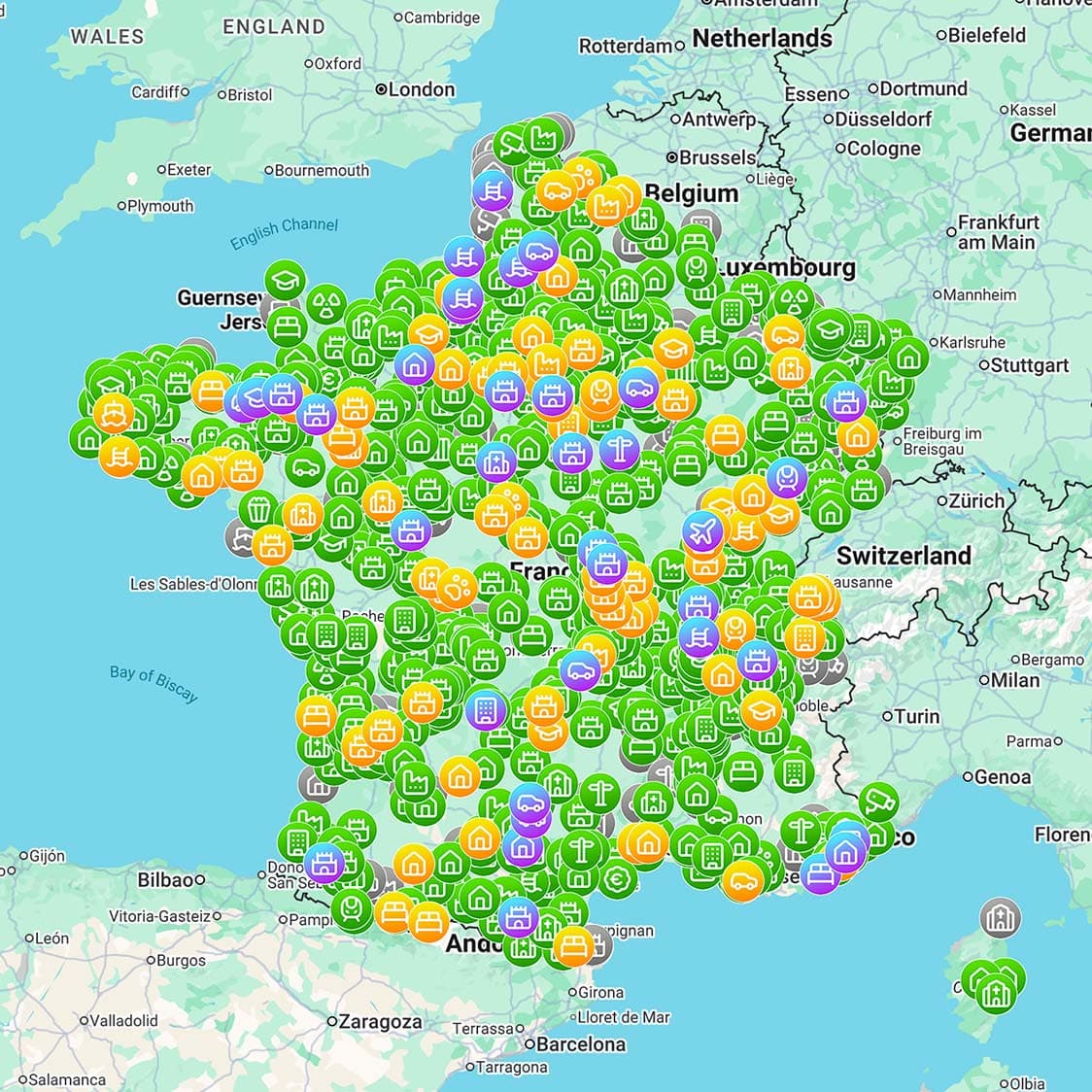
If your goal is to plan responsibly rather than guess from rumors, curated tools help. You can Browse all urbex maps to compare verified location data and reduce random searching.
Can a building look abandoned while still being legally occupied?
Yes. A building can look abandoned and still be legally occupied, actively owned, guarded, or used for limited purposes. Visual emptiness does not cancel ownership.
This happens often with:
- old factories awaiting sale or demolition
- churches or schools used only occasionally
- farms with low visible activity
- office blocks kept vacant for investment or legal reasons
- storage sites that open only for specific deliveries
In other words, a vacant building and an abandoned building are not the same thing. Many legal problems in urbex begin with that confusion.
What is the difference between abandoned, vacant, and derelict?
These terms overlap in casual speech, but they do not mean the same thing. Clear definitions help you assess risk more accurately.
- Vacant building: currently unused or rarely used, but still maintained, marketed, secured, or held for future use.
- Abandoned building: no meaningful active use and no regular maintenance over a sustained period.
- Derelict site: seriously degraded, unsafe, or structurally compromised, whether or not the legal status is clear.
A site can be vacant without being abandoned. It can be derelict without giving anyone the right to enter. For responsible urbex, legal status and safety status are separate questions.
How does legal urbex change the way you assess a place?
Legal urbex changes the whole method: instead of asking how to get in, you ask whether the location is truly accessible, lawful to visit, and safe to document. That shift prevents trespass, damage, and avoidable risk.
A preservation-first approach means:
- observing from public space first
- never forcing doors, windows, shutters, or fences
- not treating broken access as permission
- leaving no trace and taking nothing
- preferring documented, verified, or authorized locations when possible
If you need a broader legal framework, read Is Urbex Legal? A Clear Guide to Urban Exploration Laws. If you are deciding how to explore more safely, Solo Urbex or Group Urbex: Pros and Cons for Safer Exploration is also useful.
What safety risks should you consider before any visit?
Safety risks begin before entry. If a building looks abandoned, it may also be unstable, contaminated, monitored, or unexpectedly occupied. That is why a visible sign of abandonment should increase caution, not confidence.
Common risks include:
- collapsing floors, roofs, stairs, or balconies
- broken glass, rusted metal, and exposed nails
- asbestos, mold, chemical residue, or animal waste
- hidden shafts, basements, and water damage
- security systems, dogs, or caretakers
- nearby traffic, industrial hazards, or isolated terrain
Some places are poor candidates for any visit, even with experience. For context, see Top 5 Most Dangerous Urbex Places and Why You Should Avoid Them.
FAQ
Is a boarded-up building always abandoned?
No. Boarding often means security, insurance compliance, or renovation work. It can suggest vacancy, but it does not prove abandonment.
Can satellite imagery confirm abandonment?
No. Satellite imagery can support a broader assessment, especially when it shows long-term neglect, but it cannot confirm current legal status or access rights.
Should you rely on local rumors or online comments?
No. Rumors can point you toward a place, but they are weak evidence. Always compare them with visible signs, current context, and lawful research.
What if there are no lights, cars, or mail movement?
That can suggest low occupancy, but it is still not conclusive. Some properties are used rarely, at night, seasonally, or only by staff.
Is it legal to enter a building if a door is already open?
Not necessarily. An open door does not create permission. If access rights are unclear, treat the property as off-limits.
Conclusion
If you are wondering how to tell if a building is abandoned, the best answer is to look for patterns, not a single dramatic clue. Long-term neglect, repeated vacancy, absent maintenance, and public verification together give a stronger picture than rumors or appearance alone.
For MapUrbex, responsible exploration starts before the route begins. Verified locations, legal caution, and preservation-first decisions are what separate useful research from risky guesswork.
Access the free urbex map
