 MapUrbex
A clear guide to the 5 most dangerous urbex site types, the real risks in urban exploration, and how to choose safer, verified alternatives.
Top 5 Most Dangerous Urbex Places and Why You Should Avoid Them
The topic of the top 5 most dangerous urbex places attracts attention for a simple reason: some abandoned sites are far riskier than they look in photos. In urban exploration, the biggest dangers are often invisible until you are already inside.
Responsible urbex starts with judgment, not bravado. If a place has major structural, chemical, vertical, or access risks, the best decision is often to avoid it entirely and choose a verified, lower-risk alternative.
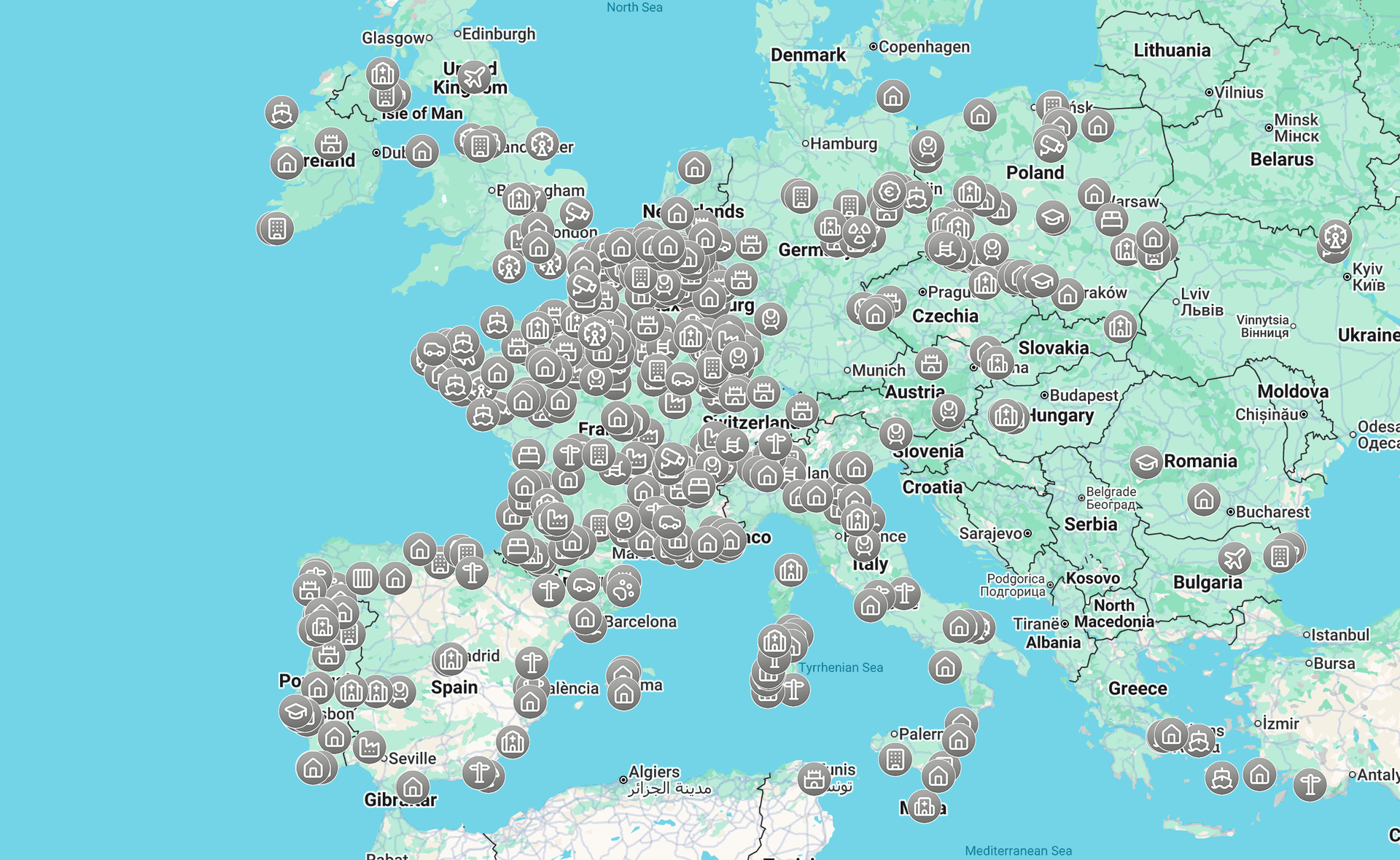
Safety and legality matter more than access. Never force entry, trespass, or continue into a site that shows clear signs of collapse, contamination, flooding, or active security issues.
What are the top 5 most dangerous urbex places?
The top 5 most dangerous urbex places are abandoned industrial plants, tunnels and underground networks, rooftops and unfinished high-rises, mines and quarries, and large decaying complexes such as hospitals or hotels. These sites combine structural instability, toxic exposure, falls, entrapment, and delayed rescue. For most explorers, they are not worth the risk.
Quick summary
- The most dangerous urbex sites are usually dangerous because several hazards overlap at once.
- Industrial sites often combine asbestos, chemicals, unstable floors, and hidden shafts.
- Underground locations add flooding, bad air, zero visibility, and difficult exit routes.
- Roofs, silos, and unfinished towers carry severe fall risk even for experienced explorers.
- Remote mines and quarries are among the hardest places for emergency services to reach quickly.
- A verified map helps with planning, but no map removes the need for legal access checks and on-site risk assessment.
Quick facts
- Main risk categories: collapse, toxins, falls, entrapment, poor air, and delayed rescue.
- The most photogenic sites are not necessarily the safest ones.
- Water, darkness, and height multiply urbex risks fast.
- Going alone increases the consequences of even a minor injury.
- Preservation-first urbex means walking away when the risk is unreasonable.
Which site types are usually the most dangerous?
The clearest way to compare dangerous urbex places is to look at the main hazard pattern for each type.
| Site type | Primary dangers | Why responsible explorers often avoid them |
|---|---|---|
| Abandoned industrial plants | Asbestos, chemicals, unstable flooring, machinery pits | Multiple hidden hazards in one location |
| Tunnels and underground networks | Flooding, oxygen issues, darkness, disorientation | Exit routes can fail very quickly |
| Rooftops and unfinished high-rises | Falls, loose edges, wind, rotten stairwells | Small mistakes can be fatal |
| Mines and quarries | Shafts, rockfall, isolation, bad air | Rescue is slow and difficult |
| Large abandoned hospitals or hotels | Collapsing interiors, glass, mold, complex layouts | Easy to underestimate because they look accessible |
Why are abandoned industrial plants so risky?
Abandoned factories, refineries, mills, and warehouses are high-risk because they often hide more than one serious threat. A floor may look solid but be rotten over a basement void. Dust may contain asbestos. Pools, pits, and machine trenches may be covered by debris.
Industrial sites also age badly. Corrosion weakens stairs, handrails, catwalks, and roof panels. Chemical residues, oil, and sharp metal can turn a routine walkthrough into an emergency. These are classic dangerous urbex locations because they punish small errors.
If you are researching site safety, this is the category where caution should be strictest. A large industrial shell may be visually impressive, but it is rarely a good choice for casual exploration.
Why should you avoid tunnels and underground networks?
Tunnels are among the worst urbex risks because the environment itself removes your margin for error. Darkness, poor air, standing water, and confusing layouts make a simple problem much harder to solve.
A blocked exit, sudden flooding, or loss of orientation can become critical fast. Underground spaces can also contain toxic gases or low oxygen, neither of which can be judged reliably by appearance alone. That is one reason many experienced explorers exclude them from their route planning.
In practical terms, underground sites are dangerous not just because something can go wrong, but because escape becomes slow and rescue becomes uncertain.
Why are rooftops and unfinished high-rises especially dangerous?
Rooftops, crane access points, silos, and unfinished towers create extreme fall exposure. In urbex, height risk is unforgiving. One unstable edge, one missing step, or one gust of wind can be enough.
Many people underestimate these places because the danger is visible and therefore feels manageable. In reality, height hazards are often paired with rotten staircases, loose concrete, absent guardrails, and poor lighting. That combination makes these some of the most dangerous places in urban exploration.
For beginners, they are usually a bad choice. For experienced explorers, they still require conservative judgment and a willingness to turn back early.
Why are mines and quarries among the most dangerous urbex places?
Mines and quarries are dangerous because they combine vertical drops, unstable rock, water hazards, and isolation. They are also among the hardest places to evacuate if anything goes wrong.
Even dry-looking areas can conceal shafts, soft ground, or sudden depth changes. Underground mine sections may hold bad air or collapse risk with little warning. The remoteness of these sites matters as much as the terrain itself.
This is why many responsible urbex guides treat mines as a category to avoid rather than a category to test.
Why do abandoned hospitals, hotels, and large complexes create hidden dangers?
Large complexes can feel deceptively safe because they still resemble normal buildings. That impression is often false. Long corridors, repeated rooms, broken glass, mold, water damage, and collapsed service areas create a broad risk field.
The main problem is false confidence. People enter, see a familiar staircase or hallway, and assume the building behaves like an occupied structure. But abandoned complexes may have rotten floors, unsafe elevators, exposed wiring, and hidden voids behind doors or panels.
These places are also easy to get lost in, especially when multiple wings or basements are involved. That makes them a common source of avoidable urbex accidents.
How can you assess urbex risks before going anywhere?
Good urbex safety starts before travel. The first question is not how to enter. It is whether the site is legal to access and whether the risk profile is acceptable at all.
Use current, verified information where possible. Check site type, known hazards, structural age, water exposure, height exposure, and distance from help. If the location is remote, underground, or heavily decayed, raise your threshold for cancelling.
MapUrbex is built around verified locations, responsible urbex, and preservation-first planning. You can Browse all urbex maps or Access the free urbex map to compare options, but planning tools never replace legal access checks and on-site judgment.
For legal basics, read Is Urbex Legal? A Clear Guide to Urban Exploration Laws. For lower-profile behavior, see How to Do Urbex Without Drawing Attention. If you are deciding between solo and shared planning, Solo Urbex or Group Urbex: Pros and Cons for Safer Exploration is also useful.
When should you walk away immediately?
You should leave immediately if you see signs of recent collapse, active fire damage, chemical containers, standing black water, strong fumes, damaged stairs, or unstable roof sections. The same applies if access would require trespassing, forced entry, or movement beyond your skill level.
A good urbex decision is often a non-entry decision. The goal is not to prove commitment. The goal is to return safely while respecting property, law, and site preservation.
FAQ
Is urbex always dangerous?
No. Urbex risk varies a lot by site type, condition, legality, weather, visibility, and access route. The danger rises sharply in underground, industrial, high-rise, and remote locations.
Which abandoned sites are usually the worst choice for beginners?
Tunnels, rooftops, industrial plants, and mines are usually the worst beginner choices. They leave little margin for error and often contain hazards that are hard to see early.
Can a verified map make dangerous urbex safe?
No. A verified map can improve planning and help you avoid obviously unsuitable locations, but it cannot remove collapse risk, toxic exposure, legal issues, or changing on-site conditions.
Should you explore dangerous sites alone?
In general, no. Solo exploration increases the consequences of injury, disorientation, or a blocked exit. Even so, the safest choice for some site categories is not a larger group. It is avoiding the site entirely.
Why do some explorers avoid sharing exact dangerous locations?
Because public exposure can accelerate trespassing, vandalism, and unsafe visits. Preservation-first urbex values discretion, respect, and filtered sharing over viral attention.
Conclusion
The top 5 most dangerous urbex places are dangerous for concrete reasons, not because of reputation alone. They concentrate collapse risk, toxins, falls, isolation, and poor escape options in ways that can overwhelm even experienced explorers.
The safest habit in urban exploration is selective avoidance. Choose verified, lower-risk options, respect legal boundaries, and leave high-risk sites off your plan when the warning signs are clear.
Ready to plan more responsibly?
Access the free urbex map
