 MapUrbex
A factual guide to ghost towns in Spain, from depopulated villages to abandoned housing developments shaped by the Spanish property bubble.
Ghost Towns in Spain: What the Housing Bubble Left Behind
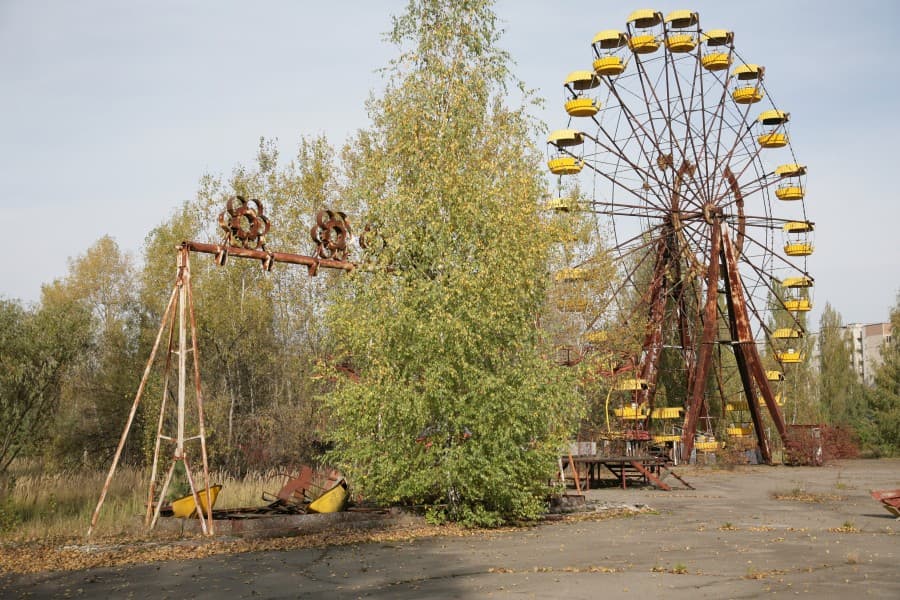
Spain is often associated with dense historic cities, mass tourism, and coastal construction. Yet it also contains a different landscape: ghost towns, near-empty developments, and unfinished urbanizations left behind by rural decline and the property boom.
When people search for ghost towns in Spain, they usually mean two different realities. The first is older abandoned villages emptied by migration and economic change. The second is newer and more visible: housing projects tied to the 1997-2008 real-estate expansion and the later collapse of the Spanish property market.
If you want a wider European comparison, see Abandoned Villages in Europe: 6 Ghost Towns, Their History, and Responsible Urbex.
Are there ghost towns in Spain?
Yes, Spain has ghost towns, but the term covers both historic abandoned villages and modern semi-empty developments created by the housing bubble. The best-known examples are not always fully deserted. Many are partly occupied, unfinished, or overscaled urbanizations that became symbols of the Spanish construction crisis rather than completely empty cities.
Quick summary
- Spain's ghost-town phenomenon comes from two main causes: long-term rural depopulation and the 2000s housing bubble.
- The phrase often refers to abandoned or half-empty urbanizations rather than fully deserted municipalities.
- Seseña, Valdeluz, and several stalled resort areas became reference cases during and after the property crash.
- Many sites are still private property, partly inhabited, or under legal and administrative control.
- For urbex research, the most useful approach is historical context first, photography second.
- Responsible visits mean observing from public space, checking access rules, and avoiding damage or intrusion.
Quick facts
- Country: Spain
- Main theme: Ghost towns, abandoned developments, and urbanizations linked to the property bubble
- Historical context: Rapid construction growth before 2008, followed by financial crisis and market collapse
- Related term: "crisis of bricks" or Spanish housing bubble
- Typical forms: abandoned villages, half-built apartment blocks, empty streets, unfinished infrastructure
- Current reality: many sites are mixed-status places, not frozen ruins
Access the free urbex map
How did Spain's housing bubble create ghost developments?
Spain's housing bubble created ghost developments by pushing large-scale construction far ahead of real demand. Cheap credit, speculative land valuation, optimistic growth forecasts, and local planning decisions encouraged entire districts, apartment complexes, and resort projects that could not be absorbed once the market turned.
Between the late 1990s and 2008, construction became one of the central engines of the Spanish economy. Housing was built not only for permanent residents, but also for investors, second-home buyers, and future demand that was assumed to be endless. When financing tightened and sales stopped, many projects stalled at very different stages.
That is why "ghost towns in Spain" rarely means one single type of place. Some sites consist of empty streets and lit but sparsely occupied blocks. Others are concrete shells that were never completed. Some were eventually absorbed into the market years later, while others remain visual reminders of overbuilding.
What is the difference between a historic ghost village and a bubble-era urbanization?
A historic ghost village was usually abandoned over decades because its population left. A bubble-era urbanization was usually built too quickly, in the wrong place, or at the wrong scale, then weakened by the real-estate crash.
This distinction matters because the landscapes look different and tell different stories. Older abandoned villages often reflect agricultural decline, isolation, or changing transport patterns. Newer urbanizations reflect financial speculation, planning choices, infrastructure promises, and the mismatch between projected demand and lived reality.
For researchers, photographers, and responsible explorers, this difference also changes the reading of the site. A depopulated village may preserve traces of long-term social history. A half-empty apartment district documents a specific economic cycle within modern Spain.
Which places best explain the ghost-town phenomenon in Spain?
The best-known examples are places where construction, expectation, and reality diverged sharply. Some are still partly occupied today, which is exactly why they are useful case studies: they show that Spain's so-called ghost towns often exist on a spectrum between active settlement and abandonment.
| Place or type | Region | Why it is cited | General status |
|---|---|---|---|
| Seseña / El Quiñón | Castilla-La Mancha | Icon of overscaled housing development during the boom | Partly occupied, still symbolic of the crash |
| Valdeluz | Guadalajara, Castile-La Mancha | New town linked to high-speed rail and projected growth | Built ahead of demand; later gained residents |
| Alovera expansion zones | Guadalajara, Castile-La Mancha | Strong example of speculative planning beyond immediate demand | Mixed development history |
| Inland resort urbanizations | Murcia and southeastern Spain | Holiday-property model exposed to market contraction | Highly variable, from active to stalled |
| Halted coastal projects | Several regions | Legal, environmental, and market conflicts | Often incomplete or heavily contested |
1. Seseña and El Quiñón
Seseña is one of the most cited answers to the question of ghost towns in Spain. Its large residential development, El Quiñón, became a national symbol of the Spanish real-estate bubble because of its scale, controversy, and the contrast between what was planned and what the market could actually absorb.
The site is important because it was never just a simple ruin. It represented a model of rapid expansion disconnected from stable demand. Over time, parts of it filled in and daily life did arrive, but its image in public debate remained tied to overbuilding, speculative optimism, and the crash.
For urbex readers, Seseña is best understood as a documented urban-planning case rather than a place to romanticize. It shows how a "ghost town" can be partially alive and still function as a cautionary landscape.
2. Valdeluz
Valdeluz was conceived as a new settlement connected to modern transport infrastructure, especially the nearby high-speed rail context. It became widely cited because homes and streets appeared before the population forecast ever materialized.
Its significance lies in timing. Valdeluz was not an ancient abandoned place, but a future-oriented project that arrived before the social and economic conditions needed to support it. That made it a shorthand for optimistic planning during the Spanish construction boom.
Today, it is more accurate to describe Valdeluz as a partial recovery story than a pure ghost town. That nuance matters. The site illustrates how the Spanish property market left behind incomplete urban realities, not only permanent emptiness.
3. Alovera and nearby boom-era expansion areas
Alovera and nearby growth corridors in Guadalajara are useful because they show the wider geography of the bubble. The issue was not one isolated mega-project. Large areas around Madrid's orbit were shaped by expectations of continued housing demand, commuting growth, and suburban expansion.
In places like these, the ghost-town effect often appears as discontinuity. You may find finished roads leading to underused blocks, plots prepared for construction that never came, or neighborhoods that feel oversized compared with their actual population. These are quieter signs than a spectacular ruin, but they are often more representative.
For anyone studying abandoned developments in Spain, this wider corridor matters more than a single headline location. It reveals how the housing bubble transformed territory, not just individual buildings.
4. Inland resort urbanizations in Murcia and southeastern Spain
Several inland resort-style urbanizations in Murcia and nearby areas became vulnerable when second-home demand weakened and financing collapsed. These projects were often designed around leisure, seasonal occupation, and optimistic sales assumptions.
Their relevance comes from their model. Instead of serving established local settlement patterns, they depended on sustained buyer confidence and continued expansion. When those conditions failed, some areas stagnated, some changed use, and others remained visibly underoccupied for years.
This is one of the clearest links between tourism, real-estate speculation, and abandonment in Spain. It also explains why some of the country's most striking empty landscapes are not traditional villages at all.
5. Halted coastal developments and the El Algarrobico context
Not every Spanish ghost landscape comes from inland suburban growth. On the coast, some projects became symbols of conflict between tourism-led construction, environmental protection, and legal challenge. These places are often unfinished rather than deserted in the classic sense.
A well-known reference point is the El Algarrobico case in Almería. It is not a ghost town, but it is a major example of how contested development can produce an abandoned landmark. For the background, read Abandoned Hotel El Algarrobico in Spain: History, Scandal, and Urbex Context.
Together, coastal conflicts and inland bubble developments show the same underlying lesson: Spanish abandonment is often the result of planning excess, legal dispute, or market failure rather than a single dramatic evacuation event.
Why did the Spanish property market collapse hit these places so hard?
These places were hit hard because they depended on future buyers, easy credit, and confidence in constant growth. When the Spanish property market contracted after 2008, the developments with the weakest real demand or the most speculative assumptions became the most exposed.
The crisis did not affect every region in the same way, but several common patterns appeared. Peripheral locations struggled first. Luxury and second-home projects became harder to sell. Infrastructure promises no longer guaranteed demand. Local governments and developers faced unfinished works, legal disputes, maintenance problems, and image damage.
This is why the phrase "abandoned places in Spain" can be misleading if used without context. Many sites were not abandoned overnight. They were left in limbo by finance, planning, and delayed adaptation.
Can you visit ghost towns in Spain responsibly?
Yes, but only with a preservation-first approach and full respect for access restrictions. Many sites associated with ghost towns in Spain are private property, partly inhabited, fenced, under surveillance, or structurally unsafe.
Responsible urbex means research before movement. Use public viewpoints when possible. Never force entry, climb barriers, or enter unfinished structures. In mixed-status developments, remember that some buildings may be occupied even if nearby blocks appear empty.
Legal and safety reminder: MapUrbex does not support trespassing, forced access, or risky entry. Spain's abandoned developments often contain unstable materials, open shafts, unsecured stairwells, and live legal disputes.
If you are planning a broader trip, start with verified context and route logic. How to Plan an Urbex Road Trip in Europe is a useful framework, and you can Browse all urbex maps to compare regions.
Why does this subject matter for urbex research today?
This subject matters because Spain's ghost towns are not just visual curiosities. They are readable evidence of how finance, planning, migration, tourism, and infrastructure policy reshape land.
For photographers, the appeal is obvious: repetition, emptiness, unfinished geometry, and dramatic contrast. But the stronger reason to study these places is documentary value. They help explain how the real-estate cycle affected everyday landscapes outside the usual economic graphs.
They also correct a common misconception. Spain does not mainly contain cinematic deserted cities. More often, it contains incomplete settlements, suspended projects, and places that moved slowly from speculation into partial reuse, decay, or legal uncertainty.
How should you research Spanish ghost towns before a trip?
You should research Spanish ghost towns as living legal and social spaces, not as guaranteed open ruins. The best method is to combine historical reporting, cadastral or planning context where available, current local information, and observation from lawful public space.
A simple checklist helps:
- Confirm whether the place is an old village, a stalled development, or a partly inhabited district.
- Check whether there have been recent demolitions, redevelopment, or new occupancy.
- Avoid assumptions based on old photos or viral videos.
- Prioritize daylight visits, public roads, and visible exit options.
- Keep location sharing responsible to reduce vandalism and nuisance.
Access the free urbex map
FAQ
Are Spain's ghost towns completely abandoned?
No. Many of the best-known cases are only partly abandoned or were never fully occupied in the first place. Some have gained residents over time, while others remain stalled or fragmented. The label often simplifies a more mixed reality.
What caused the so-called crisis of bricks in Spain?
The crisis of bricks refers to the collapse of a construction-heavy growth model based on cheap credit, speculation, and aggressive development. When financing tightened and demand fell, many projects became unsellable or incomplete. The result was visible across housing, resort, and infrastructure-linked projects.
What is the most famous ghost development in Spain?
Seseña, especially the El Quiñón development, is one of the most widely cited examples. It became a media symbol of the housing bubble because of its size and controversy. Even so, it is more accurate to discuss it as a partly occupied bubble-era development than a totally empty city.
Are abandoned urbanizations in Spain legal to enter?
Not automatically. Many are private property, and some are occupied, monitored, or structurally dangerous. The safest and most responsible approach is to stay in public space unless you have explicit permission.
Are ghost towns in Spain only linked to the 2008 crash?
No. Spain also has older abandoned villages caused by depopulation, economic change, and geographic isolation. The 2008 crash mainly added a newer layer of unfinished or underused developments. Both histories now shape the country's abandoned landscapes.
Conclusion
Ghost towns in Spain are best understood as a spectrum. Some are historic villages emptied over time. Others are urbanizations, resort projects, or oversized districts shaped by the housing bubble and the collapse of the Spanish property market.
For urbex, the key insight is simple: context matters more than spectacle. Treat these places as evidence of planning, economics, and social change. For verified location research and a preservation-first approach, use curated tools rather than rumor.
Access the free urbex map
