 MapUrbex
A practical guide to ghost towns in France and Europe, with urbex context, urban planning insights, legal reminders, and safer research methods.
Ghost Towns in France and Europe: A Responsible Urbex and Urbanism Guide
Ghost towns in France and Europe attract attention because they show urban decline at settlement scale, not only building scale. Streets, housing, schools, shops, and infrastructure can all remain visible long after residents leave.
For urbex, these places are visually striking. For urbanism, they are even more useful: they show how industry, migration, public policy, war, environment, and land use shape the life cycle of a place.
MapUrbex approaches this subject with a preservation-first mindset. Research should be careful, access must stay legal, and sensitive places should never be treated as disposable scenery.
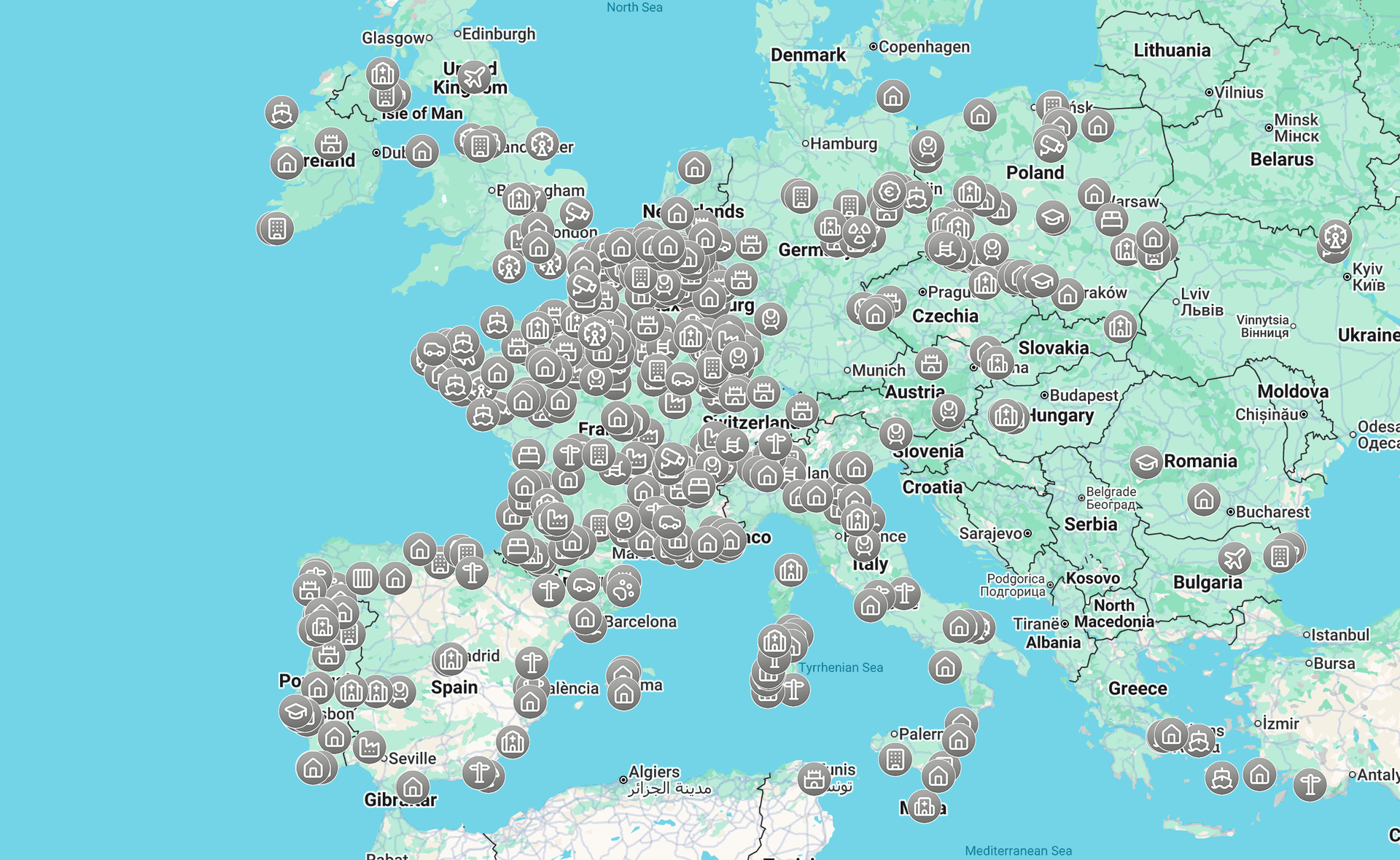
What are ghost towns in France and Europe, and why do they matter for urbex?
Ghost towns in France and Europe are settlements largely emptied by industrial decline, depopulation, conflict, disaster, environmental risk, or infrastructure change. They matter for urbex because they reveal how entire urban systems decay together, not just isolated buildings. They also help explain bigger planning questions about memory, abandonment, and reuse.
Quick summary
- Ghost towns are not all the same: some are former mining settlements, some are evacuated villages, and some are shrinking industrial communities.
- In France and Europe, the main causes are economic restructuring, war legacy, environmental hazards, forced relocation, and long-term demographic decline.
- For responsible urbex, legal access matters more than visual appeal. Abandonment does not mean open access.
- Ghost towns are useful for understanding urban planning, land management, and the social cost of decline.
- Verified research is better than rumor. Use maps, local records, and up-to-date access checks before any trip.
- MapUrbex focuses on curated information, verified locations, and preservation-first exploration.
What are the key facts to know before visiting ghost towns in Europe?
- A ghost town can be fully abandoned, partially inhabited, seasonally used, or under slow decline.
- Many European sites are historically sensitive, especially former war zones, border areas, and resettled villages.
- Ownership still exists even when buildings look empty.
- Structural collapse, contamination, loose floors, wells, basements, and vegetation cover are common hazards.
- Photography may be legal from public space while entry is not.
- The safest preparation is documented research, route planning, and a verified source such as Browse all urbex maps or Access the free urbex map.
Why do ghost towns appear in France and across Europe?
Ghost towns appear when the function that supported a settlement disappears faster than the place can adapt. In Europe, that usually means jobs vanish, residents move, and public services close in sequence.
In France, former mining areas, military zones, flood-affected communities, and villages transformed by infrastructure projects all help explain the pattern. Across Europe, the same logic appears in post-industrial regions, mountain settlements, borderlands, and places affected by conflict or environmental change.
Urban decline is rarely caused by one event alone. A mine closure may trigger out-migration, which reduces school enrollment, weakens transport, lowers maintenance, and accelerates vacancy. What looks like a silent village is often the visible result of several linked planning and economic decisions.
How are ghost towns different from abandoned factories and urban wastelands?
Ghost towns are whole settlements or settlement fragments. Abandoned factories and urban wastelands are usually single sites or disconnected zones within a living city. That difference matters because the urban reading is not the same.
| Type of place | Typical scale | What you can learn | Common access issue |
|---|---|---|---|
| Ghost town or abandoned village | Streets, homes, public buildings, landscape | Depopulation, social withdrawal, service collapse | Mixed ownership, unstable terrain, heritage sensitivity |
| Abandoned factory | One industrial complex | Production history, labor geography, adaptive reuse | Fencing, contamination, machinery risk |
| Urban wasteland or brownfield | Open plot, demolished zone, disused corridor | Land transition, planning delay, speculative vacancy | Active redevelopment, hidden hazards |
| Empty housing estate | Cluster of residential buildings | Failed growth, oversupply, demographic shift | Security patrols, asbestos, partial occupation |
For urbex and urbanism, ghost towns are often the clearest way to study how a community unravels over time. They connect architecture with roads, utilities, public space, and memory.
Where can responsible explorers still find ghost towns in France and Europe?
Responsible explorers can still find ghost-town landscapes in former mining belts, mountain regions, depopulated rural areas, abandoned workers' housing zones, restricted military surroundings, and villages relocated after environmental or infrastructure change. The visible forms differ by region, but the pattern is similar: a settlement loses its purpose or population and the built fabric remains.
France offers a useful contrast between rural abandonment and industrial decline. Elsewhere in Europe, the picture expands to Alpine hamlets, shrinking eastern settlements, decommissioned extraction zones, and communities emptied by long-term economic transition.
The practical point is not to chase viral coordinates. It is better to build a route from documented categories of sites, then verify present-day status, ownership, and safety conditions. If you are planning a longer trip, the guide How to Plan an Urbex Road Trip in Europe is a useful next step.
What can urbex and urban planning learn from ghost towns?
Ghost towns show that abandonment is a process, not a moment. Long before a place is fully empty, services shrink, maintenance falls, mobility weakens, and the social fabric thins out.
For urban planners, these places reveal the limits of single-industry dependency, the importance of transport links, and the difficulty of maintaining infrastructure for a declining population. For explorers, they provide a wider context than isolated ruins. You can read the relationship between housing, work, religion, schooling, and landscape in one continuous setting.
They also raise practical planning questions:
- Which buildings should be preserved?
- When is managed retreat more realistic than full revival?
- How should memory be documented when residents are gone?
- What reuse is possible without erasing the site's history?
This is why ghost towns sit at the intersection of urbex and urbanism. They are physical archives of planning success, failure, compromise, and change.
What legal and safety issues should you understand first?
The first rule is simple: abandonment does not cancel property rights. A place can be empty and still be private, monitored, fenced, or protected.
A second rule is that risk is usually higher than photos suggest. Settlements contain unstable roofs, open cellars, rotten stairs, concealed shafts, dogs, wildlife, contaminated debris, and fast-changing weather exposure. Large sites also make navigation harder, especially when vegetation hides drops or structures.
Always stay outside restricted areas, never force entry, never remove objects, and leave sites exactly as found. Responsible urbex is documentation, not intrusion.
Before any visit, check local law, land status, and current restrictions. This is especially important in cross-border travel, because rules differ by country. For a broader overview, read Urbex Laws in Europe: What Is Legal and Illegal by Country.
How can you research ghost towns without relying on rumor?
The best research method combines historical sources with current verification. Old maps explain why a place existed. Current records show whether it is still accessible, inhabited, protected, or under redevelopment.
A solid workflow looks like this:
- Start with historical context: industry, transport, military use, disaster, or relocation.
- Compare old and recent satellite views.
- Check cadastral or municipal information where available.
- Look for evidence of current habitation, fencing, restoration, or demolition.
- Confirm route logistics, weather, daylight, and legal access.
Rumor-driven exploration creates bad information. It also increases the chance of unsafe or illegal entry. A better approach is to use a curated source and verify details close to the visit date. The article Urbex Map Europe: How to Find Verified Abandoned Places Safely explains that process in more detail.
Frequently asked questions
Are ghost towns and abandoned villages the same thing?
Not always. A ghost town can include industrial settlements, military communities, tourist developments, or mining camps. An abandoned village is usually rural and residential. In practice, the terms often overlap, but the historical causes may be different.
Why are there more ghost settlements in some European regions?
Because decline concentrates where one economic base dominated. Mining belts, isolated mountain areas, border zones, and regions hit by heavy depopulation or conflict tend to produce more abandoned settlements.
Can you legally photograph ghost towns in Europe?
Often yes from public space, but not automatically from inside the site. Entry depends on ownership, local law, barriers, and current use. Always distinguish between seeing a place and having permission to enter it.
Is visiting a ghost town a good urbex choice for beginners?
Only if the site is legally accessible, easy to read on the ground, and low risk. Large abandoned settlements can be more complex than a single building because hazards are spread across roads, outbuildings, wells, and hidden structures.
How does MapUrbex help with this type of research?
MapUrbex focuses on verified locations, curated maps, and responsible planning. The goal is to reduce guesswork, improve trip preparation, and support preservation-first exploration rather than reckless location chasing.
Conclusion
Ghost towns in France and Europe are more than eerie places. They are readable landscapes of economic change, migration, public policy, environmental pressure, and collective memory.
For urbex, their value comes from context as much as atmosphere. For urbanism, they remain practical case studies in decline, adaptation, and reuse. The most useful approach is careful research, legal access, and respect for the site and its history.
If you want a safer starting point for planning, use verified resources instead of rumor.
Access the free urbex map
