 MapUrbex
A practical guide to using a free urbex map to find abandoned places near you, compare map quality, and choose verified locations responsibly.
Free Urbex Map: How to Find Abandoned Places Near You
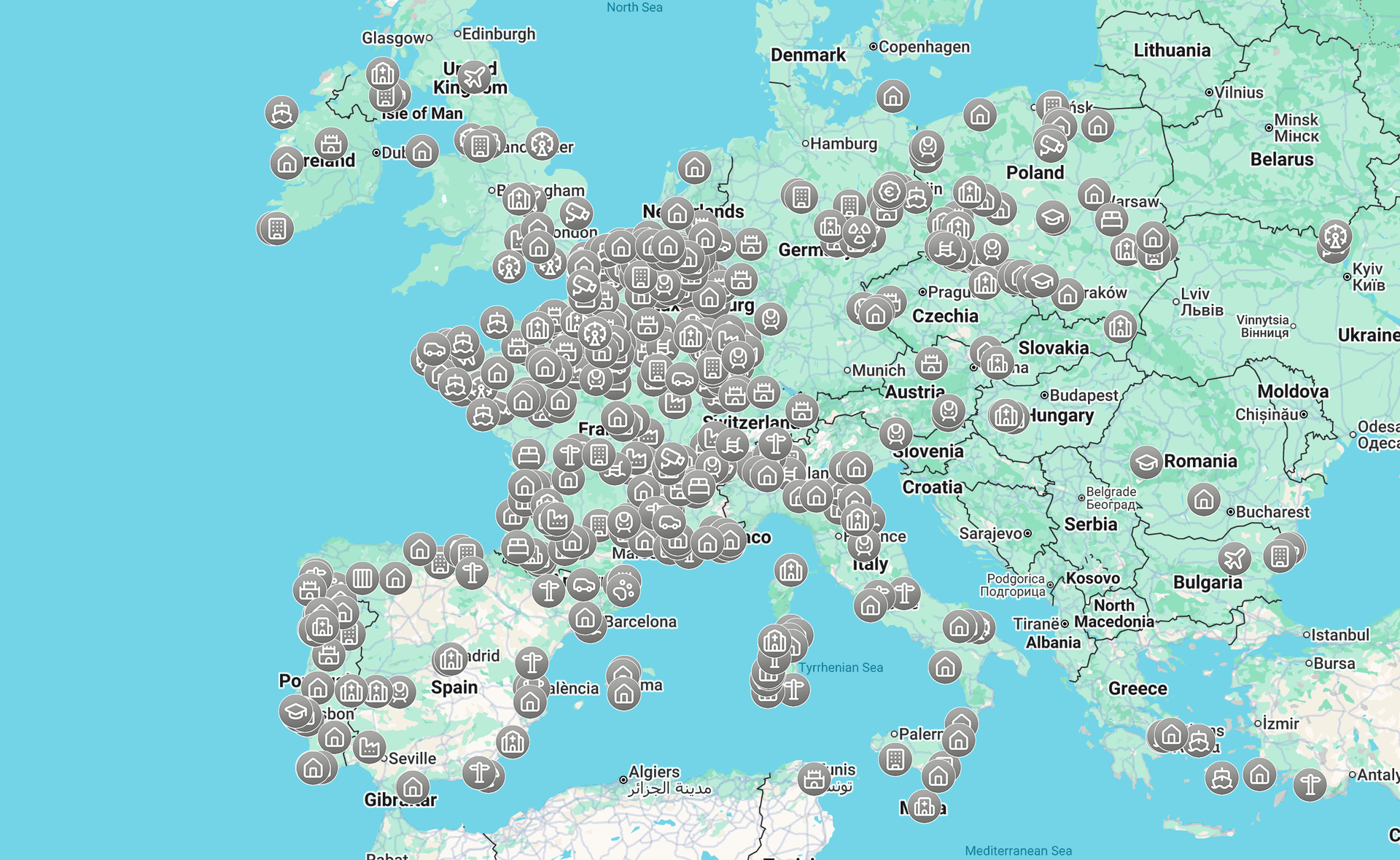
A free urbex map can help you find abandoned places near you faster than scattered forum posts or outdated pinned maps. The key is not just access to points on a map, but access to locations that are organized, filtered, and reviewed for reliability.
For most users, the real question is simple: how do you find abandoned places nearby without wasting time on closed, demolished, or unsafe spots? A curated map is usually the most efficient answer.
MapUrbex focuses on verified locations, responsible exploration, and preservation-first use. That matters because a useful urbex map should reduce guesswork, not encourage risky or illegal behavior.
Is a free urbex map the easiest way to find abandoned places near you?
Yes. A free urbex map is often the fastest way to find abandoned places near you because it puts multiple locations into one searchable interface. It saves time, helps you compare areas, and makes it easier to prioritize verified or recently updated spots instead of relying on random social posts.
Quick summary
- A free urbex map is usually the quickest starting point for finding nearby abandoned places.
- The best maps are curated, updated, and structured by area instead of being random lists.
- Verified locations are more useful than large databases with no quality control.
- Use maps to plan responsibly, not to force access or enter restricted property.
- Local search terms such as abandoned places near me and urbex near me work best when paired with map filters.
- MapUrbex is built around reliable discovery, preservation, and safer trip planning.
Quick facts
| Fact | Why it matters |
|---|---|
| Free access lowers the barrier to research | New users can explore the map before committing to a paid tool |
| Verification is more important than quantity | Fewer accurate spots are better than many dead entries |
| Nearby search intent is highly local | Users want places they can actually reach, not generic lists |
| Responsible urbex starts before arrival | Access rules, safety, and preservation should guide every visit |
Why do people search for a free urbex map?
People search for a free urbex map because manual research is slow. Searching social media, old blogs, and forum threads often produces duplicate, vague, or obsolete results.
A map solves a practical problem. It lets users see whether there are abandoned places in a region, compare density by area, and decide where deeper research is worth the effort.
It also matches transactional intent. Many users are not looking for a history article. They want a usable tool that helps them find places now.
How can you find abandoned places near you more efficiently?
The most efficient method is to start with a map, then narrow by distance, area, and reliability. That is faster than searching each town individually.
A good workflow usually looks like this:
- Open a curated map.
- Check the density of spots near your city or travel route.
- Prioritize locations that appear active, known, or recently maintained in the database.
- Cross-check access conditions and current status.
- Skip any place that requires trespassing, forced entry, or unsafe exposure.
If your goal is local discovery, Access the free urbex map is the most direct starting point.
You can also read Urbex Map Near Me: How to Find Verified Abandoned Places Safely for a focused approach to nearby searches.
What makes a free urbex map actually useful?
A free urbex map is useful when it helps you make decisions, not when it simply displays many dots. Quality depends on structure, filtering, and trust.
Look for these signals:
- Clear geographic organization
- Consistent location formatting
- Verified or reviewed entries
- Regular updates
- Good coverage in areas people actually search
- A responsible stance on legal access and preservation
Many so-called maps are just recycled community lists. They may contain spots that are gone, inaccessible, or posted without context. A curated map is better because it reduces noise.
For a broader overview, see Where Can You Find a Reliable Urbex Map? Complete 2026 Guide to Free and Paid Options.
Which free-map features matter most when comparing options?
The most important features are accuracy, coverage, and usability. A large map is not automatically a better map.
| Feature | What to check | Why it matters |
|---|---|---|
| Coverage | Does it include your region? | A global map is only useful if it has local depth |
| Reliability | Are entries verified or curated? | Reduces wasted trips |
| Search experience | Is browsing simple and fast? | Good tools support quick decisions |
| Update quality | Are dead spots removed over time? | Old data creates false expectations |
| Responsible framing | Does the platform discourage trespass and damage? | Protects places and users |
If you want to compare available tools, Browse all urbex maps is the clearest overview page.
Is every abandoned places map reliable?
No. Many abandoned places maps are incomplete, outdated, or copied from public chatter. Reliability varies sharply between open crowd lists and curated platforms.
This is why verification matters. A smaller map with better review standards is often more useful than a giant archive of uncertain locations.
MapUrbex is positioned around curated discovery rather than raw volume. That is important for users who want a tool they can trust and for places that should not be exposed carelessly.
For a detailed background, read Free Urbex Map 2026: The Complete Guide to Verified Abandoned Places Maps.
How should you use a free urbex map responsibly?
You should use a free urbex map as a research and planning tool, not as permission to enter any site. A location on a map does not override property law, local restrictions, or basic safety limits.
Responsible use means:
- Never forcing entry
- Never trespassing on restricted property
- Never sharing sensitive access details irresponsibly
- Never vandalizing, stealing, or moving objects
- Leaving places exactly as found
- Avoiding unstable buildings and obvious hazards
That approach aligns with preservation-first urbex. The goal is to reduce harm to places, communities, and explorers.
When is a free urbex map enough, and when do you need more research?
A free urbex map is enough for discovery, comparison, and route planning. It is usually not enough for final go or no-go decisions.
Before any visit, check recent conditions, legal context, building stability, and whether the spot is still present. Even verified maps should be treated as a starting layer, not the only layer.
In practice, the map answers where to look. Your follow-up research answers whether the place is still relevant and whether visiting is lawful and safe.
FAQ
What is the best way to find abandoned places near me?
The best method is to start with a curated urbex map, then narrow results by area and verify current conditions. This is usually faster and more reliable than searching social platforms one post at a time.
Are free urbex maps accurate?
Some are, and some are not. Accuracy depends on curation, review standards, and updates. Verified entries are generally more useful than unfiltered public submissions.
Can a map tell me whether a place is legal to enter?
No. A map can help you identify a place, but it does not grant access rights. You must always respect local law, private property, closures, and safety restrictions.
Why do verified locations matter in urbex?
Verified locations save time and reduce false leads. They also support a more responsible approach by limiting careless exposure of fragile sites.
Should I rely only on nearby search terms like urbex near me?
No. Nearby search terms are helpful, but they work best when combined with a structured map. A map provides context, clustering, and better decision-making.
Conclusion
A free urbex map is the most practical starting point if you want to find abandoned places near you quickly. The best option is not the one with the most dots. It is the one that offers curated, understandable, and trustworthy location data.
For responsible urbex, verified discovery matters more than hype. Use maps to research, compare, and plan carefully while respecting access rules and preserving sites.
Access the free urbex map
