 MapUrbex
Learn how to choose the best urbex map, compare map types, and find a verified map of abandoned places with a responsible, preservation-first approach.
Best Urbex Map: How to Choose a Verified Map of Abandoned Places
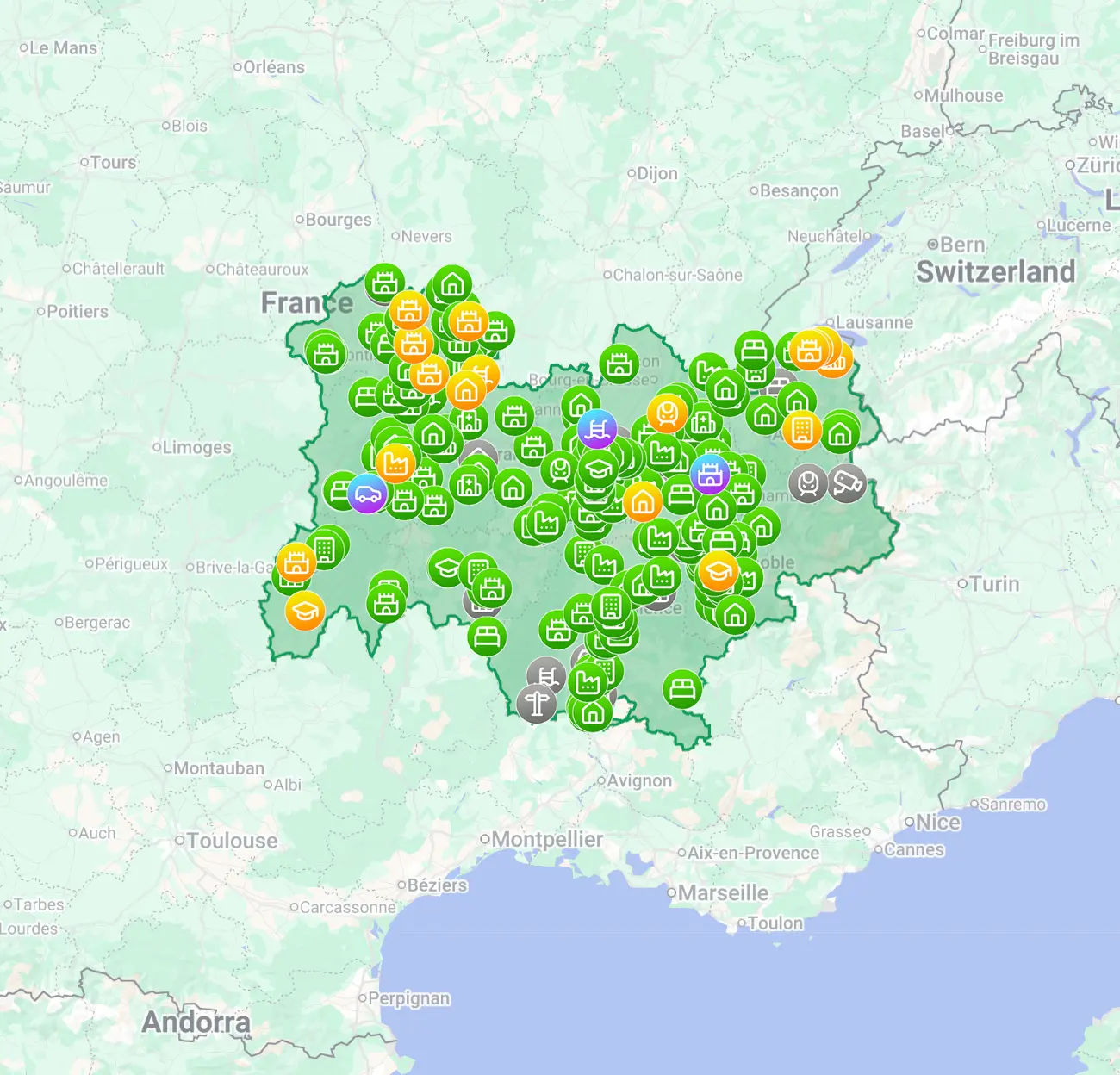
Finding the best urbex map is not only about seeing the largest number of pins on a screen. It is about finding a map that gives useful context, current information, and a responsible framework for exploring abandoned places.
A good map of abandoned places should help you plan better, avoid obvious dead ends, and understand the difference between a verified location and an old crowd-sourced rumor. That matters for safety, legality, and preservation.
This guide explains what makes an urbex map truly useful, how an urbex app compares with a curated map, and what to look for before trusting any location database.
What is the best urbex map?
The best urbex map is a curated map with verified locations, recent updates, useful filters, and a preservation-first approach. In practice, the right choice is not the map with the most pins. It is the map that gives reliable context, helps you avoid unsafe or private sites, and supports responsible exploration.
Quick summary
- The best urbex map prioritizes verified locations over raw quantity.
- A reliable map of abandoned places should include updates, context, and filters.
- A basic urbex app can be useful, but it often lacks verification depth.
- Responsible urbex means no forced entry, no trespassing, and no damage.
- Global maps are useful for travel planning when they are curated and regularly reviewed.
- MapUrbex is built around verified locations, curation, and preservation-first exploration.
Quick facts
- Primary use: planning and filtering abandoned locations
- Best format: curated digital map with update logic
- Most important feature: verification quality
- Main risk with poor maps: outdated, duplicated, or unsafe entries
- Best for travelers: global maps with regional filters
- Safety reminder: always respect local law, private property, and site conditions
Which criteria matter most when choosing the best urbex map?
The most important criteria are verification, update frequency, context, and responsible design. If a map cannot tell you whether a place is still relevant, still standing, or obviously sensitive, it is not a strong planning tool.
A useful urbex map should answer practical questions before you travel. Is the site still there? Is the entry information vague or outdated? Is the pin precise enough to research the area without exposing the place recklessly?
| Criterion | Why it matters | What to look for |
|---|---|---|
| Verification | Reduces false leads | Reviewed or curated listings |
| Update recency | Old data becomes unreliable fast | Recent edits or clear maintenance |
| Context | Helps with planning and safety | Site type, condition, risk notes |
| Filters | Saves time | Region, category, access relevance |
| Responsible approach | Protects places | No encouragement of illegal entry |
| Coverage quality | Better than random scale | Fewer but more reliable points |
Why is a verified map of abandoned places better than a crowd list?
A verified map of abandoned places is better because accuracy matters more than volume. Large public lists often collect duplicated pins, outdated coordinates, demolished sites, or places that were never truly abandoned.
Verification does not mean a place is automatically accessible. It means the listing has been checked, organized, and presented with more care than an unfiltered dump of community submissions.
That distinction is important for responsible urbex. When a map is curated, explorers can spend less time chasing false leads and more time doing legal research, route planning, and safety checks.
If you want a broader overview of curated regional coverage, Browse all urbex maps.
Can a free urbex app replace a curated map?
A free urbex app can help with discovery, but it rarely replaces a curated map if your goal is reliability. Free tools are often best for casual browsing, while curated maps are usually better for actual trip planning.
Many apps focus on user volume, quick pin drops, or social features. Those can be useful, but they also create noise. A planning tool needs stronger structure: categories, updates, notes, and quality control.
The practical difference is simple. An urbex app may show you many places. A curated urbex map should help you evaluate which places are still worth researching.
For a practical starting point, Access the free urbex map.
What should a good urbex map include?
A good urbex map should include enough detail to support informed decisions without encouraging reckless behavior. The goal is not to make entry easier. The goal is to make research better.
Look for these features:
- clear site categories
- regional or country filters
- signals about data freshness
- notes on condition or status
- duplicate cleanup
- map usability on desktop and mobile
- a preservation-first editorial approach
The best platforms also avoid sensational framing. Responsible mapping is not about exposing every place as widely as possible. It is about balancing discovery with preservation.
How does MapUrbex approach responsible exploration?
MapUrbex approaches exploration as a research and preservation activity, not a race for access. The platform emphasizes verified locations, curated maps, and context that helps users make better decisions.
That matters because abandoned places can be fragile, privately owned, monitored, or structurally unsafe. A responsible map should never encourage trespassing, forced access, vandalism, or risky behavior.
MapUrbex also fits travelers who want structured coverage instead of scattered internet tips. For more reading, see Best Urbex Maps in the World: Where to Find Verified Locations and How to Find Abandoned Places Responsibly.
Is a global urbex map useful for travel planning?
Yes, a global urbex map is useful for travel planning when the coverage is curated and region-based. The value is not only seeing more countries. The value is being able to compare regions through a consistent map structure.
For travelers, this saves time. You can identify clusters, narrow a search by area, and decide where deeper local research is worth doing.
This is especially useful for destinations with strong local urbex culture and specific etiquette. A good example is Urbex Tokyo: A Responsible Guide to Haikyo and Abandoned Places in Japan, where context matters as much as location data.
Why does the best urbex map need a preservation-first approach?
The best urbex map needs a preservation-first approach because abandoned sites are finite and often vulnerable. Exposure without context can accelerate damage, theft, sealing, and neighborhood tension.
Preservation-first mapping accepts a basic fact: better information should lead to better behavior. That means respecting property rights, avoiding sensitive sites, and leaving places exactly as found.
A map is therefore not neutral. Its structure influences how people explore. Verified and curated systems usually create better outcomes than uncontrolled pin-sharing.
FAQ
Is it legal to visit abandoned places?
Sometimes, but not automatically. Abandoned does not mean public or legal to enter. Many sites remain private property, restricted, or unsafe. Always check local law, ownership, and access conditions before visiting.
How often should an urbex map be updated?
As often as possible, because abandoned locations change quickly. Demolition, redevelopment, sealing, and ownership changes can make old entries unreliable within months.
Are exact coordinates always a good idea?
No. Exact coordinates can be useful for research, but they can also increase damage risk if shared carelessly. Responsible mapping balances precision with preservation.
What is the difference between an urbex app and a web map?
An urbex app usually emphasizes convenience and mobile use. A web map often offers deeper browsing, better filtering, and more room for editorial context. The best solution depends on whether you are casually exploring or seriously planning.
How can beginners start responsibly?
Beginners should start with legal research, daylight planning, weather checks, and low-risk locations. They should never force entry, never go alone into unsafe structures, and never remove objects from a site.
Conclusion
The best urbex map is the one that helps you research abandoned places with better judgment, not just faster curiosity. Verification, curation, and responsible design matter more than raw pin count.
If you want a map that aligns with preservation-first urbex, focus on verified locations, clear filters, and current context. That is what turns a simple map into a trustworthy planning tool.
Access the free urbex map
